
NEW
Font size
 Worksheets
3G6 SS G2L3 - Changes in Philippine Government and Econom.
Total questions: 63
Worksheet time: 32mins

What is one of the learning objectives related to the American colonial government?
To describe the framework of the American colonial government
To analyze the economic policies of the British Empire
To evaluate the changes introduced under American rule
Both A and C
Which of the following is a task related to evaluating changes under American rule?
Identifying the structure of the colonial government
Analyzing the impact of new policies introduced by the Americans
Listing the names of American leaders
Memorizing the timeline of American rule

What was the purpose of the Military Government established in the Philippines between 1898 and 1901?
To establish control after the U.S. took over from Spain.
To promote trade and commerce in the Philippines.
To establish a monarchy in the Philippines.
To create a new constitution for the Philippines.
Which U.S. generals were involved in leading the Military Government in the Philippines during 1898-1901?
Merritt, Otis, MacArthur
Washington, Lincoln, Jefferson
Roosevelt, Truman, Eisenhower
Grant, Sherman, Lee
What was one of the main focuses of the Military Government in the Philippines during 1898-1901?
Suppressing rebellion and establishing order
Promoting cultural exchange between the U.S. and the Philippines
Building new trade routes in Asia
Establishing a democratic government immediately

What is the role of the Executive branch in the structure of military government?
Military control
Creation of schools
Establishment of courts
Local elections
Under whose control were judicial courts created in the structure of military government?
Local government
U.S. control
Military control
Legislative branch
What was established alongside schools in the structure of military government?
Military bases
Courts
Local elections
Legislative branches
What significant event began in the structure of military government after schools and courts were established?
Military control
Local elections
Judicial reforms
Legislative meetings

What was the primary purpose of the Schurman Commission in 1899?
To study the economic conditions in the Philippines after the Spanish-American War.
To investigate the political conditions in the Philippines after the Spanish-American War.
To establish trade relations between the Philippines and the United States.
To promote American culture in the Philippines.

What did the Schurman Commission aim to assess regarding the Filipino people?
Their military strength and resources.
Their aspirations, culture, and capacity for self-governance.
Their ability to trade with neighboring countries.
Their willingness to adopt American traditions.

Which war preceded the Schurman Commission's investigation in the Philippines?
World War I.
Spanish-American War.
Philippine-American War.
Civil War.

Under whose rule did the Schurman Commission study the government of the Philippines?
Spanish rule.
Filipino rule.
American rule.
British rule.

What was the primary declaration of the Schurman Commission in 1899 regarding America's intentions in the Philippines?
To colonize the Philippines
To uplift and civilize the Filipinos
To establish trade relations with the Philippines
To withdraw from the Philippines
What did the Schurman Commission recommend for the Philippines?
Establishing public schools, local governments, and civil law
Building military bases
Promoting trade and commerce
Encouraging migration to the United States
What was the outcome of the Schurman Commission's findings?
The creation of the next commission
The withdrawal of American forces
The establishment of a monarchy in the Philippines
The signing of a trade agreement
What was the primary purpose of the Taft Commission (1900-1902) in the Philippines?
To establish civil and local government in the Philippines
To expand military rule in the Philippines
To promote trade between the Philippines and the United States
To create a new constitution for the Philippines
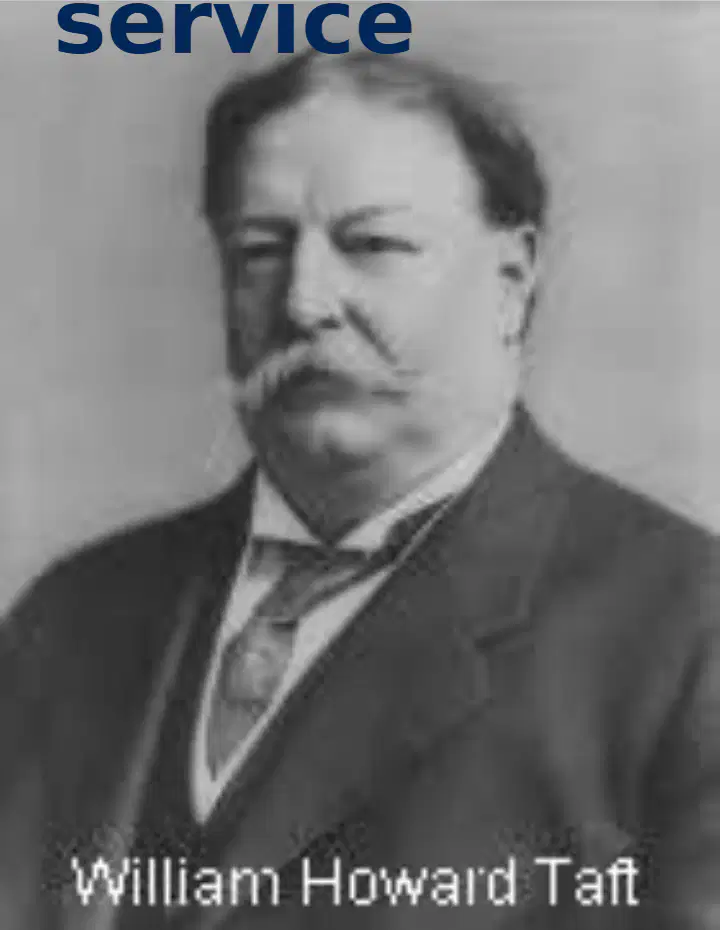
Who led the Taft Commission?
William Howard Taft
Theodore Roosevelt
Emilio Aguinaldo
Woodrow Wilson
What did the Taft Commission aim to replace in the Philippines?
Military rule with a stable civilian administration
Local governance with foreign rule
Civil administration with military control
The existing constitution with a new one
What was the primary role of the Taft Commission (1900–1902)?
To establish the Philippine Organic Acts and create important institutions
To declare independence for the Philippines
To abolish the Department of Education
To promote Spanish as the medium of instruction in schools
Which institution was created by the Taft Commission and was previously known as the Bureau of Education?
Department of Health
Department of Education
Civil Service System
Local Government Unit
What language was introduced as the medium of instruction in public education by the Taft Commission?
Spanish
Filipino
English
French
What type of government units were established by the Taft Commission?
National government units
Local government units (municipal and provincial governments)
Federal government units
International government units

Who was the Governor General of the Philippines in 1903 during the Civil Government period?
Luke E. Wright
William Howard Taft
Henry C. Ide
James F. Smith

Which Governor General served from 1904 to 1906 during the Civil Government period?
Henry C. Ide
James F. Smith
William C. Forbes
Luke E. Wright

What was the policy of Governor General William C. Forbes during his term from 1909 to 1913?
The Philippines is for Americans.
The Philippines is for Filipinos.
Unity and Progress for All.
Equality for All Nations.

Who succeeded James F. Smith as Governor General during the Civil Government period?
William Howard Taft
Luke E. Wright
William C. Forbes
Henry C. Ide

When was the civil government established in the Philippines?
July 1, 1941
June 12, 1898
August 21, 1983
September 21, 1972

What was the legislative structure of the civil government in the Philippines?
Governor and Supreme Court
Philippine Commission (Upper House) and Philippine Assembly (Lower House)
President and Congress
Senate and House of Representatives

Who were elected to the Philippine Assembly in 1907?
Americans
Filipinos
Europeans
Spaniards

What judicial bodies were part of the civil government structure in the Philippines?
Supreme Court and lower courts
Senate and Congress
Governor and Assembly
President and Cabinet
Who was the first Chief Justice of the Supreme Court in the Philippines?
Gregorio Araneta
Cayetano Arellano
Rafael Palma
Benito Legarda
Who was the first Filipino Secretary of Justice and Finance?
Trinidad Pardo de Tavera
Jose Luzuriaga
Gregorio Araneta
Rafael Palma
Which of the following individuals was NOT a member of the Taft Commission?
Trinidad Pardo de Tavera
Benito Legarda
Cayetano Arellano
Jose Luzuriaga
Which of the following reforms introduced the use of English in administration?
Civil Service Exam
English in administration
Local elections for towns and provinces
Establishment of public education

What reform was introduced to allow local elections for towns and provinces?
Civil Service Exam
English in administration
Local elections for towns and provinces
Establishment of public education

Which reform focused on the establishment of public education?
Civil Service Exam
English in administration
Local elections for towns and provinces
Establishment of public education

What was the purpose of the Civil Service Exam reform?
To establish public education
To introduce English in administration
To ensure merit-based selection for government jobs
To allow local elections for towns and provinces
What was the main purpose of the Spooner Amendment of 1901?
To establish military rule in the Philippines
To transition military rule to civil rule in the Philippines
To declare independence for the Philippines
To create a new constitution for the Philippines
Who became the first Civil Governor under the Spooner Amendment?
John Spooner
Theodore Roosevelt
William Howard Taft
Woodrow Wilson
Who led the Spooner Amendment?
William Howard Taft
Senator John Spooner
Theodore Roosevelt
Franklin D. Roosevelt
What authority did the Spooner Amendment give to the U.S. President?
To establish civil government in the Philippines
To declare war on the Philippines
To create a new military base in the Philippines
To appoint a new military leader in the Philippines

What was the primary purpose of the Philippine Bill of 1902 (Cooper Act)?
To establish trade relations with neighboring countries
To serve as the upper house of the legislature before Filipinos gained greater political participation
To abolish taxation policies in the Philippines
To create a monarchy system in the Philippines

Which of the following was a key contribution of the Philippine Bill of 1902?
Built roads, bridges, and improved public health
Established a monarchy system
Abolished agriculture and trade policies
Removed infrastructure development plans

What areas did the Philippine Bill of 1902 aim to create policies for?
Economy, taxation, infrastructure, and governance
Education, monarchy, and trade relations
Agriculture, monarchy, and taxation
Infrastructure, monarchy, and education
Who retained the top positions in the government during the period of limited democracy?
Americans
Filipinos
Europeans
Property-owning women
Who were allowed to vote during the period of limited democracy?
All men
Property-owning men
All citizens
Women and men
What was the Philippine Commission (Upper House) primarily responsible for?
Electing leaders
Making laws
Collecting taxes
Organizing elections
Who made most of the laws during the period of limited democracy?
Filipinos
Americans
Europeans
Local leaders

What does "Co-optation" refer to in the context of the policies mentioned?
Filipinos took the oath of loyalty.
Suppressing resistance with force and laws.
Establishing trade agreements.
Promoting cultural exchange.

What is the primary goal of "Pacification" as described in the policies?
Suppress resistance with force and laws.
Encourage loyalty through rewards.
Promote education reforms.
Develop infrastructure projects.

What did the Sedition Law ban?
Anti-speech/publications
Forced relocation of rural Filipinos
Display of the Philippine flag
Labeling revolutionaries as bandits

What was the purpose of the Brigandage Act?
To ban anti-speech/publications
To label revolutionaries as bandits
To force the relocation of rural Filipinos
To ban the display of the Philippine flag

What did the Reconcentration Act enforce?
Banning anti-speech/publications
Forced relocation of rural Filipinos
Labeling revolutionaries as bandits
Banning the display of the Philippine flag

What did the Flag Law (1907–1919) prohibit?
Anti-speech/publications
Forced relocation of rural Filipinos
Display of the Philippine flag
Labeling revolutionaries as bandits
What was one of the impacts of Filipino nationalism as mentioned in the image?
Formation of political parties for independence
Complete eradication of nationalist sentiments
Nationalist sentiments were suppressed but did not grow underground
Resistance against independence movements
What happened to nationalist sentiments during the impact of Filipino nationalism?
They were completely eradicated
They were suppressed but also grew underground
They were ignored by the public
They were openly supported by the government

What was the main purpose of the Jones Law of 1916?
To increase Filipino participation in government
To establish trade relations with other countries
To abolish the Philippine House of Representatives
To create a monarchy in the Philippines

What did the Jones Law of 1916 establish in the Philippines?
An elected Philippine House of Representatives
A monarchy system
A trade agreement with neighboring countries
A military government

How did the Jones Law of 1916 contribute to the Philippines' political development?
It was a step toward self-government
It abolished all forms of government
It created a monarchy system
It reduced Filipino participation in politics

What was the purpose of the Wood-Forbes Mission sent by the US in 1921?
To establish trade relations with the Philippines
To search for natural resources in the Philippines
To assess the readiness of the Philippines to become independent
To promote cultural exchange between the US and the Philippines

In what year did the US send the Wood-Forbes Mission to the Philippines?
1919
1921
1925
1930

What conclusion did the Wood-Forbes Mission reach regarding the Philippines' readiness for independence?
The Philippines was ready for independence
The Philippines was partially ready for independence
The Philippines was not yet ready for independence
The Philippines had already achieved independence

