
 Worksheets
Recap What is Earth? and Earthing Arrangements Overview
Total questions: 10
Worksheet time: 5mins
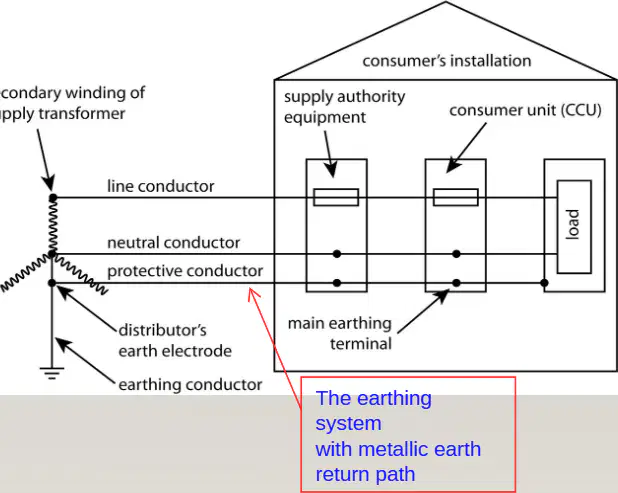
In a TN-S earthing system, which path carries fault current back to the supply transformer?
Through the protective conductor bonded to MET
Through the soil via multiple earth rods
Through the line conductor to the consumer unit
Through the gas pipe acting as main earth
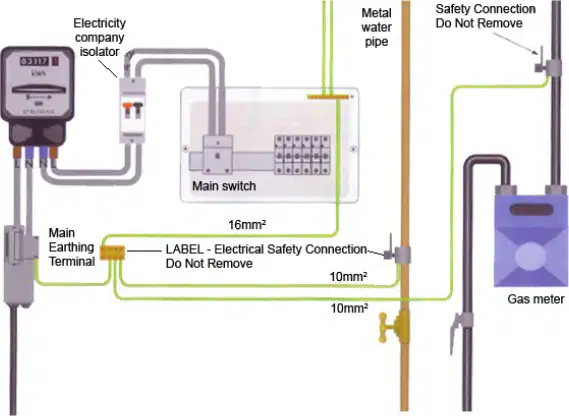
In a TN-C-S earthing system, what is the role of the Main Earthing Terminal (MET) shown linking the consumer unit to service pipes?
Provides the main protective bonding connection point
Acts as the supplier’s neutral fuse and disconnector
Replaces the consumer unit main isolating switch
Serves as the sole distributor’s earth electrode
In a TT earthing system, why is an RCD typically required for fault protection?
The earth path impedance can be high, limiting fault current
The line conductor is always undersized, increasing resistance
The neutral is bonded to gas pipes, creating stray currents
The supplier provides a low-impedance earth, raising touch voltage
Which component provides the installation’s connection to earth in a TT system?
Customer’s earth electrode installed on site
Distributor’s combined neutral earth terminal
Protective multiple earthing street cabinet
Transformer tank bonded to the neutral
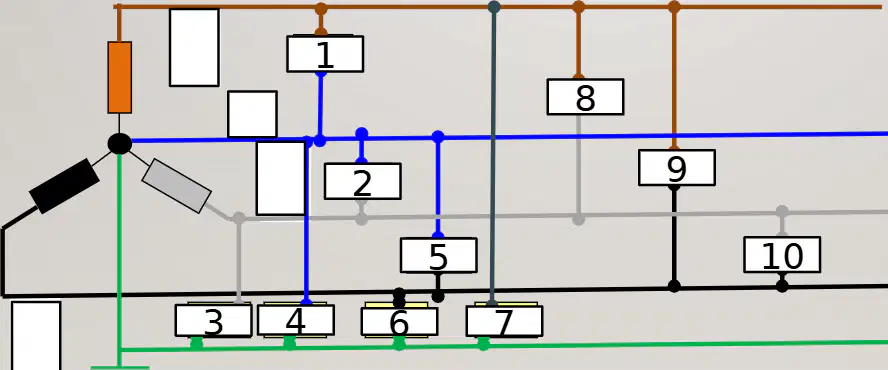
In a typical three‑phase supply, what voltage would you expect between any Line conductor and Neutral, assuming standard low‑voltage distribution? Refer to the diagram.
About 230 volts RMS nominal
About 110 volts RMS nominal
About 400 volts RMS nominal
About 24 volts RMS nominal
What is the primary purpose of bonding using a protective conductor?
To create equipotential conditions reducing touch voltage risk
To provide a low resistance path for fault currents
To isolate live conductors from exposed metal cases
To raise system impedance during normal operation
Which item is an example of an extraneous conductive part in a building?
Metal water pipe entering from ground outside
Metal casing of a kettle connected to supply
Plastic trunking enclosing insulated cables
Wooden handrail mounted to a brick wall
Which statement best describes one primary function of earthing in an electrical installation?
Connecting exposed conductive parts to the main earth terminal
Isolating all live conductors from protective conductors entirely
Raising exposed conductive parts above the source earth potential
Providing a high resistance path to limit earth fault current
Which of the following best describes the purpose of protective bonding in electrical installations?
To provide a direct path for neutral current
To isolate all exposed metalwork from earth
To connect extraneous conductive parts to the main earthing terminal
To increase the resistance of the earth path
Which of the following is considered an exposed conductive part in an electrical installation?
Plastic water pipe entering the building
Rubber insulation on a cable
Wooden door frame in a kitchen
Metal casing of a washing machine connected to supply

