
 Worksheets
mrin 2024 tyepshi
Total questions: 75
Worksheet time: 38mins
cellular dna is extracted by breaking open the cell wall, destroying the membrane (lysing the cells) and denaturing proteins and rna. which of the following agents destroy the membranes and denatures proteins, respectively?
saline sodium citrate buffer and tris-edta buffer
proteinase k and phenol-chloroform-isoamyl alcohol solution
sodium dodecyl sulfate and proteinase k
phenol-chloroform-isoamyl alcohol solution and proteinase k
saline sodium citrate buffer and proteinase k
which of the following molecule(s) can be detected by ELISA?
proteins
hormones
antibodies
antigen
all of the above

this is a photograph of an agarose gel that has been run with a sample of DNA. which lane shows the results for sample #1 AND #4 together
lane b
lane c
lane e
lane a
lane d
in order to avoid contamination from protein, what reagent should we use in dna isolation procedure?
TE buffer
SSC buffer
proteinase k
nuclease-free water
RNase
which of the following methods cannot be used to detect sugar level in blood?
oxidation-reduction reaction using CuSO4
condensation reaction using o-toluidine
PCR
HbA1c test
glucometer test
which of the following statements about blood is true?
blood consists of two types of cells: red blood cells (rbc), called also erythrocytes and white blood cells (wbc), called lymphocyte
plasma containing blood clotting factors, sugar, lipids, vitamin, hormones, enzymes, antibodies, and other proteins
serum is blood without the clotting factors, mainly fibrinogen
blood cells are suspended in a yellowish substance called bluffy coat; consisting of proteins, glucose, clotting factors, hormones, and carbon dioxide
plasma is closes int composition to cerebrospinal fluid (csf) which is a clear liquid that surrounds the brain and spinal cord
a student wants to dilute dna from 50µm to 20µm. how much dna and water are needed to reach final volume of 500µl?
0.2ml and 0.3ml
0.125ml and 0.375ml
125ml and 375ml
200ml and 300ml
0.15ml and 0.35ml
why was polyacrylamide gel used instead of agarose gel in a conventional sequencing?
agarose is more fragile that polyacrylamide gel
polyacrylamide can separate dna molecule that differ in length by just single nucleotide
agarose is more complicated in preparation than polyacrylamide because it requires addtion of EtBr
polyacrylamida has lower toxicity than agarose
polyacrylamide is cheaper than agarose
if a patient's dna is isolated and found to have polymorphin regions, what does this information indicate?
clonal origin of the na
homogineity in dna structure
high dna purity
lac of repetitive sequences
presence of genetic mutations
mponent that can be used to stop the coagulation of the blood?
TE
TAE
SSC
EDTA
NaOAc
what is one of the major advantages of ELISA in comparison ot other biological quantification techniques?
low specifity
detection of a molecule at a low concentration
inexpensive
low sensitivity
easily available
you are performing a dna test on a human blood sample. you want to isolate the dna from the blood sample that you are evaluating. what technique should you use?
phenol-chloroform extraction
polymerase chain reaction (pcr)
southern blotting
dna sequencing
gel electrophoresis
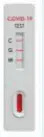
what is the interpretation of this rapid test result?
suspected to have recent infection
invalid result
suspected to have past infection
the patient has been vaccinated
false positive result
the immediate goal of the human genome project was to...
map and sequence the genome of important research organisms
compare the genomes of a large number of individuals from different parts of the world
map all the human genes and determine the nucleotide sequence of the entire human genome
develop new technologies for studying dna
find cures for human genetic disorders
the purity of dna to protein can be assessed by calculating the ratio between the absorbance value at
260nm to 230nm
260nm to 280nm
230nm to 280nm
280nm to 230nm
280nm to 260nm
what can a scientist conclude about the bands of DNA closest to the wells within an agarose gel?
these fragments have the weakest charge
these are the smallest fragments
these fragments have the strongest charge
these fragments are neutrally charged
these are the largest fragments
chain termination for dna sequencing
requires two primers
uses piperidine to cleave modified bases
uses double-stranded dna
uses trieoxynucleotides
requires a dna polymerase
if you dilute 10μL DNA with 40μL TE buffer and the absorbance at 260nm of about 0.7. therefore, the concentration of your dna (mg/mL) is...
1.75
1.4
0.175
0.28
0.14
which of the following is the basic requirement of pcr reaction
two oligonucleotide primers
dna segment to be amplified
a heat-stable dna polymerase
b and c
all of the above
what is the correct sequence that corresponds with this DNA sequencing chromatogram?
3'-TCCTTGATTCGA-5'
5'-TCCTTGATTCGA-3'
5'-ACCAAGTTACGT-3'
5'TCCTTGAATCGA-3'
3'-TCCTTGAATCGA-5'
this is a true statement about gel electrophoresis, except?
once run in the gel, dna strands are visible to the naked eye
dna is negatively charged and travels towards the positive charge at the far end of the gel
the shorted dna strands of dna will move faster through the gel
2% agarose gel concentration gives a good resolution for large fragments (2-10kb)
voltage is one of the factors that will affect the rate of migration of dna in agarose gel
we used BLAST to
identify and find error in our sequence
identify and find similarity in our sequence
find error in our sequence
find identity in our sequence
find similarity in our sequence
imagine a scenario where a lateral flow assay for a respiratory pathogen yields conflicting results with pcr testing. what factors might contribute to such discrepancies?
presence of viral mutants
differences in target analytes
antibody cross-reactivity
both b and c
all of the above
of the following is true about spectrophotometry and agarose gel electrophoresis
agarose gel electrophoresis can precisely calculate the purity and concentration of dna samples
molecular weight in gel agarose indicates the concentration of loaded dna sample
agarose gel electrophoresis will show the absorbance value of dna samples
spectrophotometry assesses dna concentration purity quantitatively
spectrophotometry only can evaluate the concentration of dna samples
what is the difference between pcr and dna sequencing?
dna sequencing used to duplicate the entire specific dna sequence while pcr can generate every possible length of dna
dna sequencing does not require polymerase enzyme
dna sequencing requires ddNTPs while pcr does not
dna sequencing does not need amplification process
pcr can amplify with a specific primer, while dna sequencing need different direction primers
the method to measure blood glucose concentration that uses reaction in heat and alkaline condition is
alkaline copper reduction method
chemical reaction
glucose oxidase method
condensation reaction using o-tuluidine
enzymatic methods
y did we add in o-toluidine inside a fume hood?
the sample and o-toluidine must be kept sterile and clean
because it is not dark enough in the room
because the assistant told us to do so
because it is dissolved in a volatile concentrated acid
o-toluidine itself is highly volatile and mutagenic

the following image is the resulting sequencing gel using_method. what is the sequence of the original dna?
maxam and gilbert (5'-AGTCAGGCAT-3')
Sanger (3'-AGTCAGGCAT-5')
maxam and gilbert (5'-AGTCAGGCAT-3')
sanger (5'-AGTCAGGCAT-3')
sanger (5'-TACGGACTGA-3')
as a medical student, explain the ethical considerations surrounding the use of rapid diagnostic tests in the diagnosis and management of infectious diseases
patient confidentiality
informed consent
reporting results to public health authorities
all of the above
none of the above
which step stops the color forming reaction in blood glucose test/
wrapping glucose + o-toluidine container with aluminum foil
heating up the glucose o-toluidine
addition of stop solution
addition of acetic acid to glucose + otoluidine
cooling down the glucose + o-toluidine
during dna isolation, what is the purpose of the "phenol saturation" step, and how does it contribute to the extraction process
improves buffer efficiency
enhances dna stability
increases dna yield
facilitates rna degradation
reduces protein contamination
a patient suffers from diabetes which is caused by a mutation in the insulin receptor gene. the following analysis will be required to confirm the result
electrophoresis
elisa
sequencing
rapid test for glucose detection
immunoassay
the big hulk measure absorbing of glucose standard and sample using o-tuluidine method. he found that the glucose standard equation is y=154.6x+18.95; R2=0.994 and the sample absorbance is 1.5. what is the level glucose status of the student? (y=concentration, x=absorbance)
250,85 mg/dl; diabetes
250 mg/dl; healthy
cannot be calculated because the data is not complete
250 mg/L; healthy
250,85 ng/L; diabetes

__ is used in our elisa experiment to measure AFP concentration
D
C
A
B
A, B, and C
where can we find dna in eukaryotes?
membrane cell and mitochondria
cell wall and ribosome
mitochondria and nucleus
cytoskeleton and nucleus
golgi apparatus and mitochondria
what are the conditions that makes the glucose +o-toluidine reaction work?
high temperature and a closed container
high temperature and high pH
high temperature and a closed container protected from light
high temperature and low pH
high temperature
in blood sugar level experiment, how much percent of o-toluidine that we used?
10% in acetid acid glacial
10% in absolute ethanol
10% in dH2O
1% in CH3COOH
1% in dH2O
a researcher is performing pcr to amplify a sample of dna. unfortunately, he forgot to add the dna primers prior to starting the experiment. which of the following results will he most likely observe?
the reaction will work, but the product will contain many undesired mutations
the reaction will work, but his target region will not be amplified
the reaction will work but at a significantly slower rate
the reaction will be completely unsuccessful
the reaction will be fine because it is just the primers that he forgot to add
a patient is suspected to have diabetes after thse following symptoms except
extreme thirst
frequent urination
unexpected weight loss
significant weight gain
feeling hunger and tired
what is the principle of condensation reaction using o-toluidine in measuring blood glucose level?
the reaction between aldehyde group of o-toluidine and amino group of glucose generate red which can be detected by colorimetric method
the reaction between gluconic acid and ferricyanide formed ferrocyanide which generates a current that is directly proportional to the glucose level
the cupric ion and glucose in alkaline and high temperature condition generate red cuprous ion which can be detected by colorimetric method
o-toluidine is reacted with the glucose ina cid and high temperature condition to generate blue color and can be detected by colorimetric method
hot acetic acid glacial generates blue color after incubated with glucose
the breakdown of the molecule glycogen in the liver, kidney or muscle into glucose to be subsequentyly modified into glucose-6-phosphate for use in glycolysis pathway is called...
glucoselysis
glycogenolysis
glycogenesis
metabolism
gluconeogenesis
after the healing step at 94oC, why do we have to set the thermo cycler to reduce the temperature to 55oC?
to allow primers to bind to the dna template strands
to allow the dna template strands to bind to eachother
to allow extension process
to optimize dna polymerase activity
to separate the dna template strands
the major components of blood is
platelet
protein
monocyte
water
buffy coat
what is the main process that happens in a sequencing machine?
colorimetric
elecgrophoresis
spectrophotometry
chromatographic
pcr
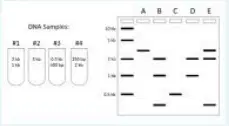
this is a photograph of an agarose gel that has been run with a sample of dna. which lane shows the results for sample #3 only?
lane a
lane e
lane b
lane c
lane d

after adding PCI ( phenol, chloroform, isoamyl alcohol) solution and performing the centrifugation, there will be 3 layers formed. what are the components in A, B, and C layer respectively?
DNA, phospholipid bilayer, lipid
phospholipid bilayer, dna, lipid
lipid, rna, phospholipid bilayer
rna, dna, lipid
rna, phospholipid bilayer, dna
in lateral flow assays, the control line serves a crucial role. what is the primary purpose of the control line, and why is it absence or failure significant?
it indicates the presence of the target analyte
enhances the test's sensitivity
it prevents false-positive results
it confirms the functionality of the test kit
it monitors the sample's quality
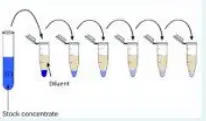
as shown in the picture, you want to make a solution with 1100 dilution and 1mL of total volume. how much volume (μL) should we add from stock solution and the diluent?
10μL stock +990μL diluent
100μL stock + 900μL diluent
0.1μL stock + 999.9μL diluent
1μL stock + 999μL diluent
0.01μL stock + 999.99μL diluent
which of the following is immobilized on the microtiter well in sandwich elisa?
sample
secondary antibody conjugated to an enzyme
antigen
capture antibody
detection antibody
dideoxynucleotide triphosphate molecule is lacking oxygen in c atom in the position
3 and 5
2 and 5
3 and 4
1 and 5
2 and 3
maxam-gilbert sequencing is a method of dna sequencing developed by allan maxam and walter gilbert in 1976-1977. this method is called a chemical degradation. one of the chemicals used is piperidine. what is the function of this chemical?
to cut phosphodiester bond
to cut glycosidic bond
to cut ribose bond
to cut chemical bond
to cut hydrogen bond
the lid is placed on the electrophoresis chamber and power was turned on with voltage of 100V, and the gel has to run for 1 hour 30 minutes. what would happen if the gel was run for too long?
it can cause smearing or distortion of dna band on agarose
it will be too hot and possibly will melt the agarose gel
the dna would move too far and leave the bottom of the gel
the tracking dye will intercalate within dna band
the dna will migrate to opposite direction from positive pole to negative pole
dna can be dissolved in both water and tris-EDTA buffer because dna contains _ and together with sugar deoxyribose that forms the _ of dna
nitrogenous bases; nucleobase
phosphate group; backbone
phosphate group; nucleobase
nitrogenous bases; backbone
ribose; backbone
the wavelengths in which nucleic acid, organic compounds (eq. phenol), and protein can absorb light respectively, are
280nm, 260nm, 230nm
260nm, 280nm, 230nm
280nm, 230nm, 260nm
230nm, 260nm, 280nm
260nm, 230nm, 280nm
the wavelength that we used in o-toluidine reaction is
450nm
630nm
280nm
720nm
540nm
why did we use different wavelengths for spectrophotometry in elisa and blood glucose test?
because we use enzyme in elisa detection method and use condensation reaction in blood glucose test
protein and glucose have different spectrums
yellow and blue0green color have different spectrum wavelength
the antibody and glucose have different spectrum wavelength
stop solution and o-toluidine have different colors

barbara and celine amplified a certain segment of extracted dna using pcr, and the result was subjected to agarose gel electrophoresis for analysis.
you are shown the image of the gel loaded with the following samples (A) negative control, (B) size ladder, (c) extracted DNA, and (D) pcr product. however, they forgot to take notes while loading the gel with the samples and were not sure which lane for each loaded samples. please label each lane of the gel, respectively
D-C-A-B
B-D-C-A
C-D-B-A
B-C-D-A
A-B-C-D
in lateral flow assay, the choice of conjugate plays a crucial role in the detection process. what is the primary function of the conjugate, and how does it contribute to the accuracy of the test?
acts a s a control for the assay
improves the visual appearance of the test result
accelerates the reactions kinetics of the test
facilitates the binding of antibodies to the test line
enhances the stability of the test strip

where should the primers bind to enable this reaction to occur?
each primer binds to the 5' end of its complementary strand
each primer binds to the 3' end of its complementary strand
primers only bind at sense strand
both primers will bind randomly
primers only bind at anti sense
in order to measure the glucose level in blood, following component of the blood can be used, except
plasma
red blood cells
buffy coat
whole blood
serum
imagine an error occurring during dna replication in a cell, so that where there is supposed to be a T in one of the genes there is instead a G. what effect will this probably have on the cell?
one of its kind of protein might contain an incorrect amino acid
an amino acid will be missing from one of its kinds of protein
an amino acid will be missing from each of its kinds of protein
the amino acid sequence of one of its kinds of proteins will be completely changed
each of its kinds of protein will contain an incorrect amino acid
calculate dsDNA concentration with a dilution of 1:100 and absorbance value A260=0.08, A230=0.04, A280=0.02 for 1cm path length measurement! (ε dsDNA=20L/g cm)
300μg/mL
100μg/mL
400μg/mL
800μg/mL
200μg/mL
why do scientists load dna of known sizes (also called "marker" or "ladder") into the agarose gel?
to practice loading the dna before you get into the important dna
as a "gps" so we can track the migration of dna samples
it makes easier to determine the size of unknowns using comparison techniques
to fill in all the slots on the gel so you can run it
to know how long the gel needs to run
the blood sample from a patient with a suspected viral hemorrhagic fever is subjected to a lateral flow assay. the result shows that both the test and control lines are absent. what could be the possible interpretation?
invalid test
late stage of infection
inconclusive result
antibody deficiency in the patient
early stage of infection
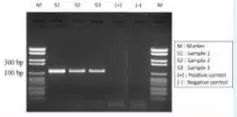
the following image represents the agarose gel electrophoresis result from a pcr reaction. which statement is incorrect about this pcr results?
according to the marker on the left, the pcr product size may be 100 bp in length
negative controls are particular samples included in the pcr that are treated the same as all the others but are not expected to have positive results
we cannot conclude that this pcr has a valid result
the pcr should not be repeated, because the pcr product has the same size and valid result
the positive control sample should show expected results, helping the scientist understand that the experiment was performed properly
in dna isolation, what role do chelating/stabilizing agents play, and how do they impact the quality of the isolated dna?
promote dna denaturation
facilitate rna degradation
inhibit nuclease activity
increase dna yield
enhance dna amplification
a female patient was suspected to have breast cancer and the hospital want to check the mutation in her BRCA1 gene. which component of the blood should be isolated to analyze the diseases
leucocytes
thrombocytes
serum
plasma
erythrocytes
how is the purity of the dna sample wiht a dilution of 1:100 and absorbance value A260=0.08, A230=0.02 for 1cm path length measurement! (ε dsDNA=20L/g cm)
contaminated with protein
contaminated with organic compound
contaminated with RNA
pure without contamination
A, B, and C
the following is the purpose of sequencing analysis, except
to analyze the amount of dna in a sample
to detect the presence of mutation
to analyze the single nucleotide polymorphism
to analyze mutation that caused high protein expression
to assign function to genes and proteins by the study of the similarities between the compared sequences
when developing a lateral flow assay for the diagnosis of a specific infectious disease, what factors should be considered in selecting the antibodies for the test lines?
antibody cost and availability
cross-reactivity with other pathogens
stability of the antibodies during storage
B and C
A and C

which number represents immunoreaciton between antigen-antibody complex with detection atibody in this picture of elisa test
3
2
5
1
4
what is the effect of ethidium bromide?
fluorescent dye that used to coloring the gel
fluorescent dye that intercalates between bases of nucleic acid
fluorescent dye that incorporated into nucleic acid
fluorescent dye that binding with bases of nucleic acid
fluorescent dye that used to visually tract the progress of sample running through the gel
a student wants to determine size of dna, what should he prepare?
TAE buffer, polyacrylamide gel, ethidium bromide
TAE buffer, polyacrylamide gel, ethidium bromide
TBE buffer, agarose gel, ehtidium bromide
TBE buffer, water, agarose gel, ethidium bromide
water, TAE buffer, agarose gel, ethidium bromide
which of the following statements is false?
pcr is a cell based dna cloning that allow much greater dna amplification
pcr is usually used to amplify specific dna sequences of interest using oligonucleotide primers
pcr requires the use of a heat-stable dna polymerase to make copies of the template dna
the polymerase chain reaction (pcr) is a cell-free method of dna amplification
pcr has three important steps, denaturation, annealing, and extension
which of the following statements is true concerning human blood?
some human population normally lack the ability to produce plasma
monocyte are the first response for our immune system
protein are not components human blood
the blood of normal humans containing red blood cell, white blood cell, platelets, plasma, and proteinase
the blood of normal humans containing red blood cell, white blood cell, platelets and plasma

