
NEW
Font size
 Worksheets
Transfer Function (Review)
Total questions: 15
Worksheet time: 8mins

Inputs and outputs can be voltage or current. Which expression corresponds to transfer admittance?
H(ω)=I_o(ω)/V_i(ω)
H(ω)=V_o(ω)/V_i(ω)
H(ω)=V_o(ω)/I_i(ω)
H(ω)=I_o(ω)/I_i(ω)
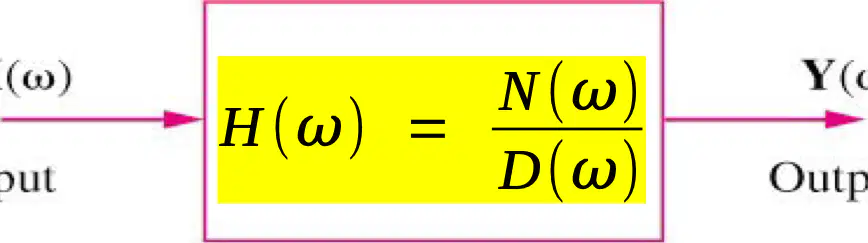
A transfer function is written as H(ω)=N(ω)/D(ω). What are zeros and poles in this form?
Zeros are roots of N(ω)=0; poles are roots of D(ω)=0
Zeros are roots of D(ω)=0; poles are roots of N(ω)=0
Zeros and poles are both roots of N(ω)−D(ω)=0
Zeros and poles are frequencies where |H(ω)| equals one
Which statement best defines a passive filter in electronic circuits?
A network using only R, L, and C elements
A circuit requiring active transistor gain stages
A DSP algorithm implemented in software only
A device that always increases signal amplitude
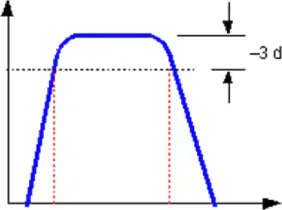
A band-pass filter has lower and upper cutoffs fc1 and fc2. Which description matches its frequency response?
Passes between fc1 and fc2, attenuates outside
Passes below fc1 only, attenuates above fc1
Passes above fc2 only, attenuates below fc2
Attenuates between fc1 and fc2, passes outside
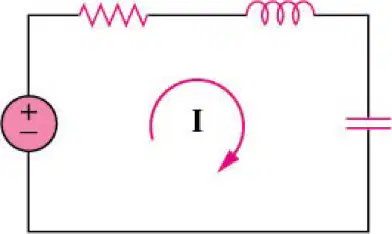
In a series RLC circuit at resonance, which condition holds for the reactances and impedance?
Inductive and capacitive reactances cancel, impedance equals R
Inductive reactance dominates, impedance equals jωL
Capacitive reactance dominates, impedance equals −j/ωC
Both reactances add, impedance equals R+jX
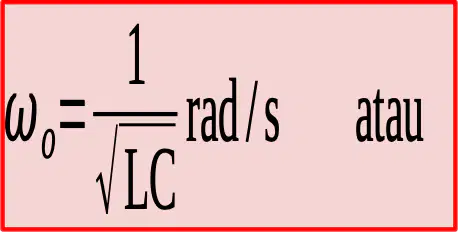
The resonance angular frequency ω0 for a series RLC circuit is given by which expression?
ω0 = 1/√(LC) in radians per second
ω0 = √(L/C) in radians per second
ω0 = 1/(LC) in radians per second
ω0 = √(C/L) in radians per second
In a series RLC circuit with impedance Z=R2+(ωL−ωC1)2 , the half-power condition occurs when current drops to I0/2 . Which impedance magnitude should be set to find the half-power angular frequencies?
Z equals R exactly
Z equals √2 times R
Z equals R divided by √2
Z equals 2 times R
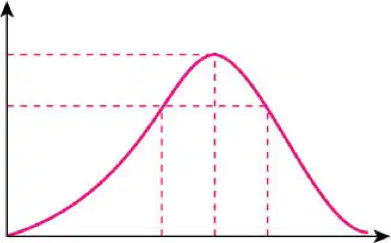
For a lightly damped series RLC circuit (R ≪ √(4L/C)), the resonant angular frequency is best approximated by which expression?
ω0 = R/(2L) + 1/√(LC)
ω0 = 1/√(LC)
ω0 = √(R/L)
ω0 = √(1/LC) + R/L
In a series RLC circuit at resonance, the quality factor Q primarily indicates which of the following?
Ratio of peak stored energy to energy dissipated per period
Difference between inductive reactance and capacitive reactance
Sum of resistance and reactance at resonance frequency
Absolute amplitude of source voltage at resonance
For the same case with L = 0.5 H and ω = 500 rad/s at resonance, what is the capacitance C?
8 μF
0.8 μF
80 μF
1.6 μF
0.08 μF
Which expression gives the resonant frequency fo in a series RLC?
1/(2π√(LC))
1/(2πLC)
1/(2πR C)
R/(2πL)
1/(2πR√L)
If R is doubled in a series RLC at resonance with fixed V, how does the current magnitude change?
It halves
It doubles
It is unchanged
It becomes zero
It increases slightly
In a series RLC at resonance, how do the magnitudes of VL and VC compare to supply voltage magnitude?
Each can exceed supply while canceling
Each equals supply individually
Each is less than supply
Each equals R times supply
Each equals zero at nodes
From v = 70.7 sin(500 t + 30°) and i = 2.83 sin(500 t + 30°), what is the phase angle between v and i at resonance?
0°
30°
90°
−90°
180°
In the parallel problem, which mathematical step ensures resonance when summing branch admittances?
Set imaginary parts to zero
Set real parts to zero
Set magnitudes equal
Set powers equal
Set energies equal

