
 Worksheets
BSBPMG530 Unit Focus Quiz
Total questions: 15
Worksheet time: 8mins

What is the main focus of the unit BSBPMG530?
Manage project scope
Manage project budget
Manage project team
Manage project risks
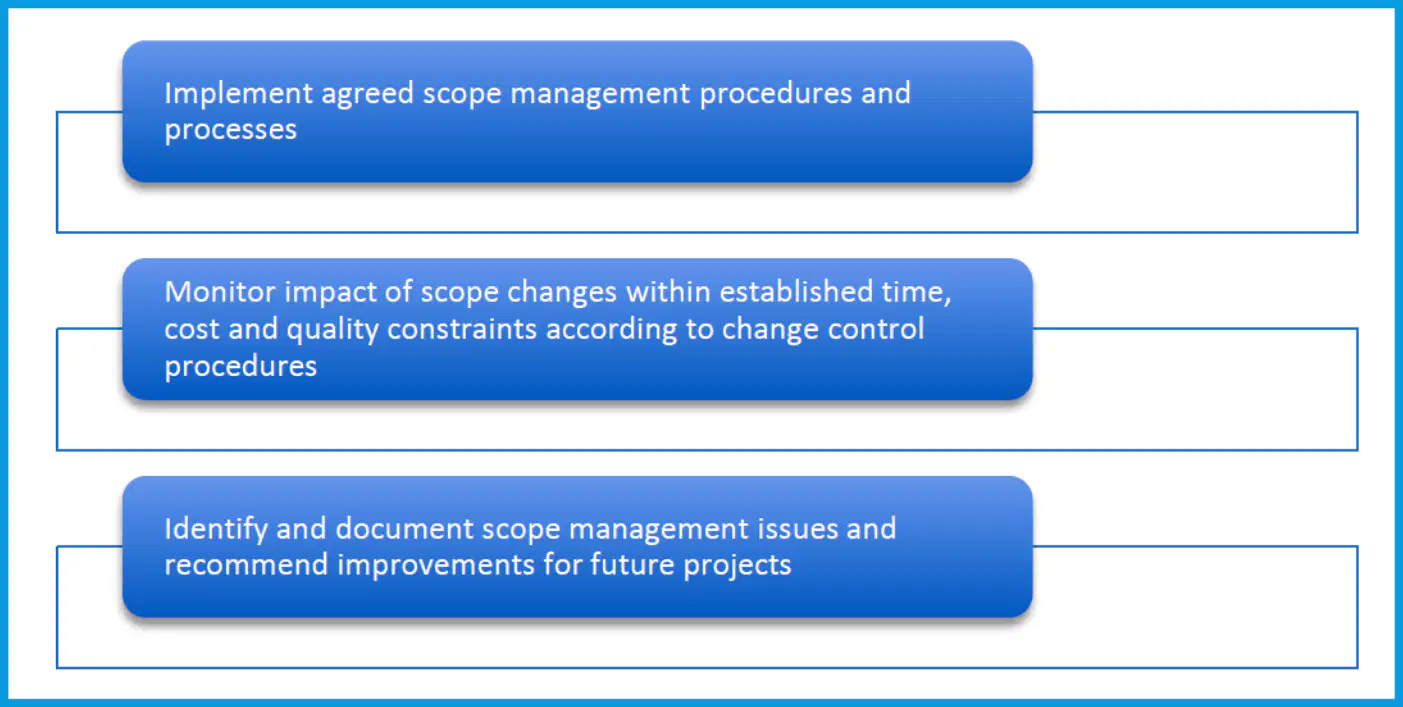
Which of the following is a key step in managing the project scope control process?
Implement agreed scope management procedures and processes
Ignore scope changes and continue with the original plan
Focus only on cost management and neglect scope control
Delay documentation of scope management issues until project completion
Which of the following is a key objective related to scope management in this session?
Implement agreed scope management procedures and processes.
Design a new project from scratch.
Develop marketing strategies for a product.
Conduct financial audits for a company.
Which Australian standard is referenced for understanding the contractual process for Variations?
AS 4000
AS 9001
AS 1200
AS 2000
Why is scope control critical in project management?
It ensures work is done according to agreed procedures, prevents unapproved work (scope creep), and ensures all changes are authorised and paid for.
It increases the number of team members.
It reduces the project timeline automatically.
It guarantees the project will never go over budget.
In construction, what is the formal term for "Scope Change"?
Variation
Escalation
Deviation
Amendment
Which factor influencing scope change is associated with unexpected ground conditions such as rock, water, or old pipes found during excavation?
Latent Conditions
Deadline Pressure
Legislative Changes
Resource Constraints
A construction project faces a delay because new safety regulations have been introduced. How should the project manager address this scope change?
Review and update project plans to comply with new legislative changes
Ignore the new regulations and continue as planned
Blame resource constraints for the delay
Focus only on design errors
Which of the following is the first step in the Change Control Process?
Assess
Plan
Record
Implement
Why is the "Gain Acceptance" step important in the Change Control Process?
It ensures the work is executed
It provides a formal sign-off from the client
It determines how to execute the change
It documents the request
Why is it important to consider EOT (Extension of Time) when managing variations in a contract?
To determine if the variation delays "Practical Completion"
To increase the contract value
To reduce the scope of work
To avoid paying taxes
A contractor receives a direction to vary the work but has not yet agreed on the price and time in writing. What is the recommended action according to AS 4000 - Clause 36?
Wait until price and time are agreed in writing before proceeding
Proceed with the work immediately
Ignore the direction
Submit a complaint to the superintendent
A project team is worried that rushing a change might lower the standard of work. Which aspect of the Iron Triangle does this concern relate to, and what could be a potential consequence?
Time; the project may be delayed
Cost; the budget may be exceeded
Quality; the work may not meet required standards
Resources; more staff may be needed
Analyze how latent conditions can impact the cost and timeline of a major infrastructure project.
Latent conditions can cause unexpected changes, leading to delays and increased costs.
Latent conditions always reduce project expenses.
Latent conditions have no effect on project outcomes.
Latent conditions only affect the aesthetics of the project.
How can you say "No" to a client who requests a "small favor" (Scope Creep) without damaging the relationship?
By ignoring the request and hoping the client forgets
By politely explaining the impact on the project and offering alternatives
By immediately agreeing to the favor to keep the client happy
By blaming someone else for not allowing the favor

