
Font size
 Worksheets
N5 Bus Man Finance Quiz
Total questions: 97
Worksheet time: 49mins
Which of the following best describes a bank overdraft?
When a business takes out more money than it has in its bank account
When a business borrows money from a bank and repays it over time
When a business receives money from investors
When a business pays off all its debts
Which is an advantage of using a bank overdraft?
It allows a business to take out more than it has in its bank account
It provides long-term cash flow solutions
It eliminates daily interest charges
It requires no repayment
What is a disadvantage of a bank overdraft?
Daily interest or daily charges may apply
It is useful for long-term cash flow problems
It is interest-free
It is only available for personal accounts
Which statement about bank loans is correct?
A bank loan is repaid over a specified period of time in regular instalments with interest
A bank loan does not require repayment
A bank loan is only available for periods less than one year
A bank loan is the same as a bank overdraft
A business needs to address short-term cash flow issues. Which source of finance is most suitable?
Bank overdraft
Bank loan for 15 years
Issuing shares
Government grant
Explain why a bank overdraft may not be suitable for solving long-term cash flow problems.
Because it is usually a short-term source of finance and may have daily charges
Because it is interest-free
Because it is only available to individuals
Because it does not require repayment
A company is considering whether to use a bank overdraft or a bank loan to finance a new project that will last for 10 years. Which option is more appropriate and why?
Bank loan, because it can be repaid over a longer period with regular instalments
Bank overdraft, because it is interest-free
Bank overdraft, because it is suitable for long-term projects
Bank loan, because it does not require repayment
Which of the following is an advantage of a bank loan for a business?
Easier to budget with regular repayments
Does not need to be repaid
Usually only a one-off payment
Can gain good publicity
What is a disadvantage of a bank loan?
Interest can be expensive, making monthly repayments costly
Can gain good publicity
Does not need to be repaid
Usually only a one-off payment
A government grant is best described as:
Money given to a business by the government that does not need to be repaid
Money borrowed from a bank that must be repaid with interest
Money invested by shareholders in a business
Money earned from selling products or services

Which of the following is an advantage of receiving a government grant?
Does not need to be repaid
Can affect credit ratings
Interest can be expensive
Must be repaid in regular instalments
Which is a disadvantage of a government grant?
Can be time-consuming due to many forms to fill out
Can be taken out over a long period of time
Easier to budget with regular repayments
Can affect credit ratings
A business receives a government grant but must be located in a specific area and employ a set number of people. What does this illustrate?
Grants can come with strict conditions
Grants are always repaid with interest
Grants are given only to large businesses
Grants are always given without any requirements
A business is considering sources of finance. If it wants to avoid monthly repayments and gain positive publicity, which option is most suitable?
Government grant
Bank loan
Credit card
Overdraft
Which of the following best describes "hire purchase"?
Paying for an item with regular instalments, usually with a deposit required
Renting an item for a specified period without ownership
Buying an item outright with a single payment
Receiving an item as a gift from a supplier
What is one advantage of hire purchase for businesses?
Easier to budget as payment is made with regular instalments
No interest is paid on repayments
The item is owned immediately after the first payment
Payments are made only at the end of the term
Which of the following is a disadvantage of hire purchase?
Interest has to be paid on top of regular repayments
The item can be updated at the end of the period
The business owns the item from the start
Payments are made only once
What happens once a business has made its final payment under a hire purchase agreement?
The business will own the item
The item must be returned to the seller
The business can lease the item to others
The business must pay additional fees
Which of the following is a disadvantage of leasing?
A business does not own the leased item
Payments are made in regular instalments
The item can be updated after the leasing period
Leasing is always cheaper than hire purchase
Why might leasing be considered more expensive than hire purchase?
Leasing can have higher overall costs compared to hire purchase or using a bank loan
Leasing always includes free maintenance
Leasing allows immediate ownership of the item
Leasing requires no regular payments
A business is considering acquiring new IT equipment. What is a potential advantage of leasing rather than buying through hire purchase?
The item can be updated and a new leasing period can begin after the current one ends
The business will own the item immediately
No regular payments are required
Leasing is always the cheapest option
If a business does not keep up with repayments under a hire purchase agreement, what can happen?
The business can face repossession of the item
The business will own the item regardless
The repayments are cancelled
The item is automatically leased to another company
Which of the following best describes a mortgage?
A special type of loan used to pay for property or land, usually over 20-25 years.
A short-term loan used for daily expenses.
A grant given by the government for business expansion.
A type of insurance for property damage.
What is one advantage of taking out a mortgage for a business?
It is taken out over a long period of time.
It does not require any repayments.
It is interest-free.
It can only be used for buying equipment.
Which of the following is a disadvantage of a mortgage?
A business can face repossession if it does not keep up with monthly repayments.
There is no need to pay interest.
It is only available to large corporations.
It can be paid back at any time without penalty.
Why might a loan from family or friends be advantageous for a business?
No interest has to be paid.
It always comes with a government guarantee.
It must be repaid within one year.
It requires collateral.
What is a potential disadvantage of borrowing money from family or friends for a business?
It can cause disagreements.
It always requires high interest payments.
It is only available to public companies.
It must be repaid in foreign currency.
A business has been turned down for a bank loan. What is a possible alternative source of finance mentioned in the material?
A loan from family or friends.
Issuing company shares.
Applying for a government grant.
Leasing equipment.

What does the image of stacked coins next to a small wooden house most likely represent in the context of sources of finance?
A mortgage loan used to purchase property or land.
A business's daily cash flow.
A government grant for housing.
A savings account for emergencies.
If a business chooses a mortgage as a source of finance, what must it consider regarding repayments?
Interest must be paid on top of repaying the loan.
Repayments are optional.
No interest is charged.
Repayments are only required at the end of the loan period.
How does the repayment period of a mortgage typically compare to other types of loans?
It is usually much longer, often 20-25 years.
It is always shorter, less than 1 year.
It is the same as a payday loan.
It is only for 5 years.
Why might borrowing from family or friends be considered if a business is unable to secure a bank loan?
Family or friends may still offer a loan when banks do not.
It is required by law.
It always comes with government subsidies.
It is the only way to get a loan.
Which type of company is allowed to issue shares to existing or new shareholders?
Private limited company
Sole trader
Partnership
Public sector organization
What is one advantage of a share issue for a company?
Can raise a large amount of capital
The money does not need to be repaid
It is a one-off source of finance
It is unlikely to inject large sums of cash
What is a disadvantage of issuing more shares in a private company?
It can be expensive to issue more shares
The money will not need to be repaid
It is easy to inject large sums of cash
There is no limit to the number of shareholders
Why might a sole trader use personal savings as a source of finance?
The money will not need to be repaid
It can raise a large amount of capital
It allows for unlimited shareholders
It is always available for repeated use
Explain why personal savings are considered a one-off source of finance for a business.
Once used, savings cannot be used again
Savings can be used repeatedly
Savings always generate interest
Savings are provided by shareholders
A private limited company wants to raise capital but is concerned about the cost and the number of shareholders. What are two disadvantages they should consider before issuing more shares?
It can be expensive to issue more shares; a private company can only have a maximum of 50 shareholders
The money will not need to be repaid; savings can be used again
It is easy to inject large sums of cash; there is no limit to shareholders
Shareholders must be partners; shares are only issued to the public
A sole trader is considering using personal savings to finance their business. What strategic factors should they consider before making this decision?
The amount of savings available and the fact that once used, savings cannot be reused
The ability to issue shares and raise capital from shareholders
The possibility of unlimited shareholders and repeated use of savings
The cost of issuing shares and the need to repay the money
Which of the following best describes trade credit?
A supplier provides goods to a business and payment is delayed until a future date.
A business pays for goods immediately upon delivery.
A business receives a loan from a bank to purchase goods.
A supplier offers a discount for immediate payment.
Which is an advantage of trade credit for a business?
It improves cash flow by allowing the business to sell goods before paying the supplier.
It guarantees discounts for immediate payment.
It is always offered to new businesses.
It eliminates the risk of penalties for late payment.
Which of the following is a disadvantage of trade credit?
It is less likely to be offered to new businesses without a good payment history.
It always provides discounts for immediate payment.
It guarantees no penalties for late payments.
It is available to all businesses regardless of their payment history.
If a business does not make payments on time when using trade credit, what can happen?
Penalties can be incurred.
The business receives a discount.
The supplier increases the credit limit.
The business is offered more trade credit.
Describe the role of a finance department in a business.
Managing the financial resources and ensuring proper allocation of funds.
Designing marketing campaigns.
Overseeing product development.
Handling customer service inquiries.
Which of the following is a source of finance available to short to medium sized businesses?
Trade credit
Government grants for large corporations only
Personal savings of customers
International stock market investments
Explain one reason why a business may be unable to take advantage of discounts offered for immediate payment when using trade credit.
Because payment is delayed, immediate payment discounts are not available.
Because the business always pays immediately.
Because suppliers do not offer any discounts.
Because the business does not purchase goods.
A bank overdraft is a _______ source of finance.
short-term
long-term
medium-term
permanent
Daily interest can apply to a bank loan.
True
False
A bank loan can be taken out over a long period of time.
True
False
One advantage of a government grant is that it:
does not need to be repaid.
can be paid back in monthly instalments.
can make it easier to budget.
Hire purchase means that a business can receive an item immediately.
True
False
Leasing is:
putting a deposit down on an item and paying for it in monthly instalments.
taking out more than you have in your account.
'renting' an item and paying for it over a specified period of time.
A government grant can be given as an incentive for a business to locate in a location of high unemployment.
True
False
Only for large businesses
Only for international businesses
A grant can be requested more than once.
True
False
Only by non-profit organizations
Only by government agencies
A mortgage can be used to pay for new machinery.
True
False
Only for property purchases
Only for vehicles
A loan from family/friends does not have to be repaid by a business.
True
False
Only if agreed in writing
Only for partnerships
Share issue is available to sole traders and partnerships.
True
False
Only to public limited companies
Only to private limited companies
Personal savings are likely to bring large amounts of finance into the business.
True
False
Only for established businesses
Only for partnerships
Which of the following best defines a fixed cost?
A cost that does not change with the level of output
A cost that varies directly with production
The total of all costs incurred by a business
The point at which total revenue equals total cost
What is meant by a variable cost?
A cost that changes depending on the level of output
A cost that remains constant regardless of output
The sum of fixed and variable costs
The point where profit equals zero
Which of the following is the best definition of total cost?
The sum of fixed and variable costs
The cost that does not change with output
The cost that changes with output
The point at which costs equal revenue
What does "break-even" mean in business?
The point where total revenue equals total cost
The point where variable costs exceed fixed costs
The point where profit is maximized
The point where losses are minimized
Given a break-even chart, how would you identify the break-even point?
By finding where the total revenue and total cost lines intersect
By locating the highest point on the chart
By finding where variable cost equals fixed cost
By identifying the lowest cost on the chart
Which of the following best describes fixed costs?
Costs that change depending on the level of output
Costs that stay the same no matter how many units are produced
Costs that only occur when a business makes a profit
Costs that are paid only for raw materials
Which of the following is an example of a variable cost?
Insurance
Factory staff wages (paid per item produced)
Loan repayments
Salaried staff
What are total costs in a business context?
Only fixed costs
Only variable costs
Fixed and variable costs added together
Only costs related to production
At the break-even point, what is true about a business’s profit or loss?
The business is making a profit
The business is making a loss
The business is making no profit or loss
The business is only covering variable costs
A business wants to find out how many units it needs to produce before making a profit. What tool is commonly used for this purpose?
A break-even chart
A balance sheet
A cash flow statement
A marketing plan
Which of the following costs would most likely increase as the level of output increases?
Insurance
Loan repayments
Raw materials
Salaried staff
Which statement best explains how the break-even point is identified on a chart?
Where total costs are less than sales revenue
Where sales revenue and total costs meet
Where fixed costs equal variable costs
Where profit is maximized
If a business pays rent regardless of how many units it produces, what type of cost is this?
Variable cost
Fixed cost
Total cost
Marginal cost
Which of the following best defines a fixed cost?
A cost that does not change with the number of units produced.
A cost that increases as more units are produced.
A cost that is only paid when profit is made.
A cost that varies depending on sales revenue.
What is meant by a variable cost?
A cost that changes depending on the number of units produced.
A cost that remains constant regardless of production.
A cost that is only paid at the break-even point.
A cost that is included in total revenue.
How would you define total cost in the context of break-even analysis?
The sum of fixed costs and variable costs.
The amount of money earned from sales.
The cost of producing one unit.
The cost that remains unchanged regardless of output.
What does the term "break-even" refer to?
The point where total costs and sales revenue are equal.
The point where only fixed costs are covered.
The point where losses are maximized.
The point where variable costs exceed fixed costs.
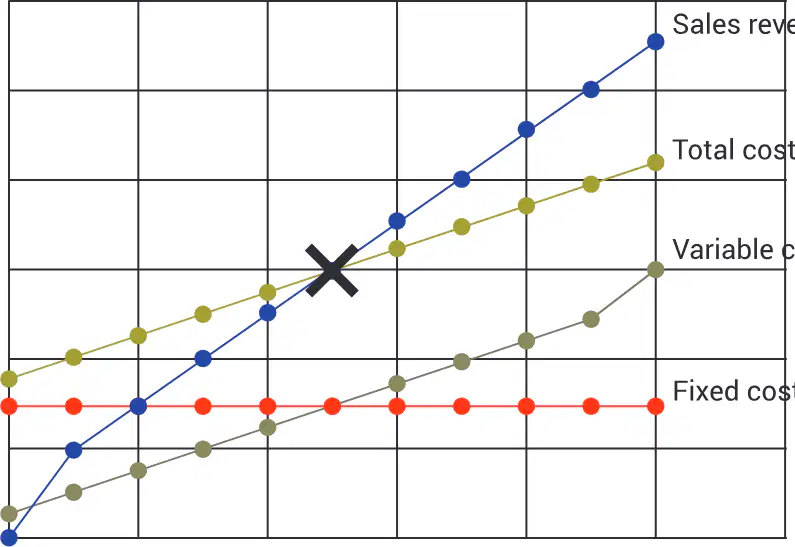
Identify the break-even point from a break-even chart.
The point where the sales revenue line crosses the total costs line.
The point where the variable costs line crosses the fixed costs line.
The point where the fixed costs line meets the sales revenue line.
The point where the total costs line is at its lowest.
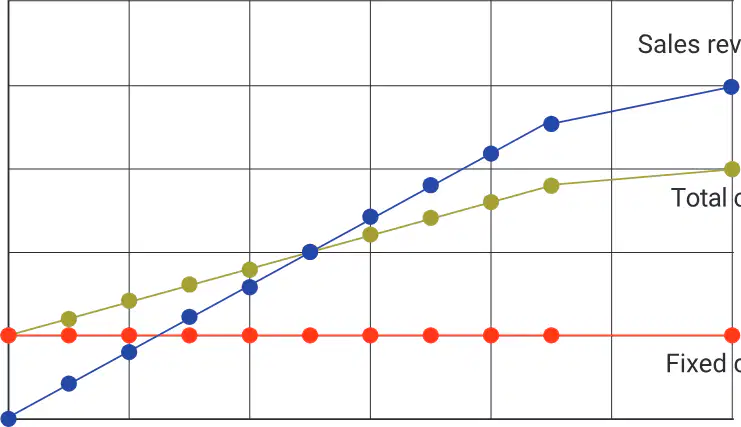
Identify the number of units to be produced in order to break-even.
20 units
10 units
30 units
50 units
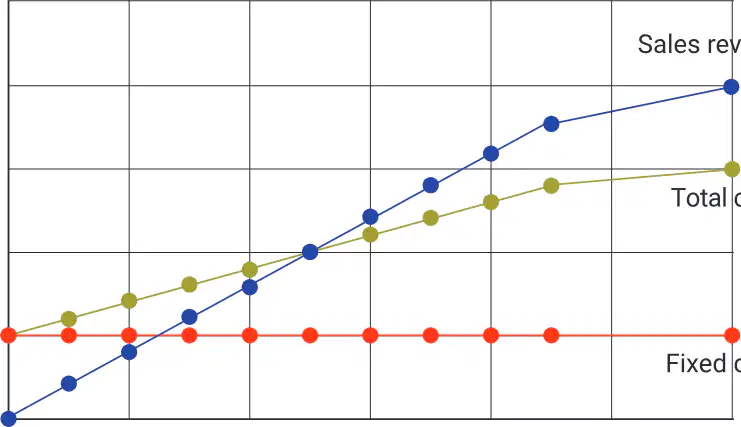
Identify the sales revenue needed in order to break-even.
100
50
200
150
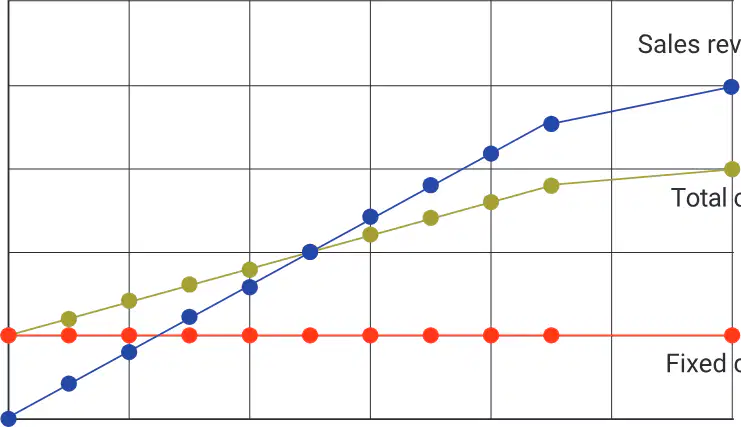
Identify the value of fixed costs.
50
100
0
150
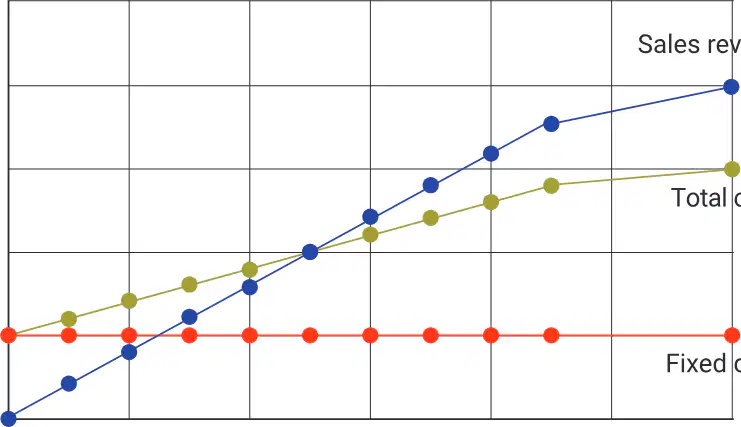
If 15 units have been produced, has Portobello Enterprises made a profit or a loss?
Loss
Profit
Break-even
Cannot be determined
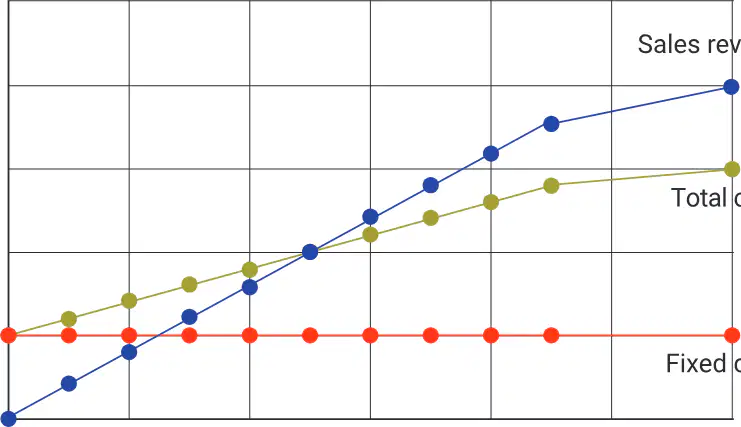
If 40 units have been produced, has Portobello Enterprises made a profit or a loss?
Profit
Loss
Break-even
Cannot be determined
Which of the following best defines a cash budget?
A plan that estimates future cash inflows and outflows for a business
A record of all sales transactions
A summary of employee salaries
A list of company assets
Which is a reason why a business would produce a cash budget?
To monitor and manage cash flow
To calculate annual profits
To determine employee bonuses
To record inventory levels
Which of the following could be a possible reason for cash flow problems in a business?
Delayed customer payments
High employee satisfaction
Increased advertising
Efficient production processes
How can cash flow problems typically be resolved in a business?
By improving the collection of receivables
By ignoring financial statements
By reducing product quality
By increasing unpaid invoices
Which of the following is an area of concern that can be identified in a cash budget?
Periods of negative cash balance
Employee attendance rates
Marketing campaign effectiveness
Product design features
If a business identifies an area of concern in its cash budget, what should it do to resolve it?
Take corrective financial actions such as adjusting expenses or improving collections
Ignore the issue and continue as usual
Increase spending in all departments
Hire more employees without analysis
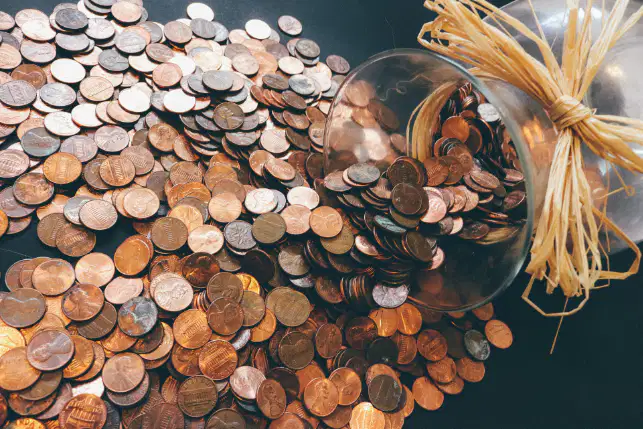
Which of the following best defines a cash budget?
A plan of how a business expects to spend and receive money
A record of all profits and losses in a business
A list of all assets owned by a business
A summary of annual tax payments
What is a reason for a business to draw up a cash budget?
To see if it is facing a surplus or deficit
To calculate employee salaries
To determine the value of company shares
To estimate future tax rates
Which of the following is NOT typically included in a cash budget?
Profit and loss figures
Payments and receipts
Projected and actual figures
Periods of high expenses
How can a cash budget help a business avoid cash flow problems?
By identifying when more money is going out than coming in
By increasing the value of company assets
By reducing employee numbers
By setting higher sales targets
A manager compares projected and actual figures in a cash budget to:
Investigate discrepancies and possible reasons for them
Calculate annual profits
Determine the company’s market share
Set employee bonuses
Why might a business take a cash budget to a bank?
To show that repayments for a loan or mortgage are affordable
To apply for a business license
To pay employee salaries
To file annual tax returns
If a business finds that expenses are particularly high during certain periods, what can a cash budget help them do?
Highlight those periods for better financial planning
Increase sales automatically
Reduce the number of employees
Avoid paying taxes
A business is facing a deficit according to its cash budget. What should it consider doing?
Think about how the deficit can be avoided
Increase employee salaries
Expand into new markets immediately
Ignore the deficit and continue as usual
Which of the following is an example of a liquidity problem identified by a cash budget?
Difficulty paying bills due to more money going out than coming in
Having too many assets
Excessive profit margins
Rapid business expansion
How does a cash budget assist in decision-making for a business?
By helping determine when to make a purchase
By setting employee work schedules
By calculating annual profits
By choosing new office locations

