
 Worksheets
surveying leveling objective type
Total questions: 107
Worksheet time: 54mins
Which statement best defines leveling in surveying?
Measuring horizontal angles between station points
Computing traverse closures using azimuth observations
Determining vertical distances to find elevations of points
Mapping surface curvature with geodetic arcs
A level surface is described as which of the following?
A plane parallel to the mean sea level
A curved surface perpendicular to gravity at every point
A flat surface tangent to the plumb line at one point
A straight surface equidistant from the Earth's center
What is a level line?
A vertical line parallel to the gravity direction
A horizontal line tangent to a level surface at one point
A curved line on a level surface equidistant from Earth’s center
A straight line normal to gravity everywhere
What is a horizontal line in leveling terminology?
A line equidistant from the Earth’s center
A straight line parallel to the vertical plane
A curved line perpendicular to gravity
A straight line lying in a horizontal plane
Which option correctly describes a vertical line?
A line tangent to a level surface at one point
A line equidistant from the Earth's center everywhere
A line perpendicular to the horizontal plane everywhere
A line parallel to the direction of gravity at a point
Mean sea level is best described as which concept?
Actual water surface during high tide only
Imaginary sea surface midway between high and low tides
Fixed national datum identical worldwide
Measured tidal surface averaged over a single day
What is a datum in vertical measurements?
A specific benchmark at the project starting station
A mathematical model of Earth’s ellipsoid height
Any convenient level surface related to mean sea level
The instantaneous tide level during observation
Elevation of a point refers to which quantity?
Vertical distance above or below a selected datum
Horizontal distance from the nearest benchmark
Angle between the plumb line and level line
Difference in slope distance along the ground
Difference in elevation between two points means what?
Horizontal offset between their projected positions
Vertical distance between the corresponding level surfaces
Variation in barometric pressure across both points
Change in slope angle measured along a profile
Direct or spirit leveling primarily determines elevations by what setup?
Photogrammetric measurements from aerial images
Single setup with total station trigonometry
GPS observations tied to national geoid models
Series of instrument setups along a selected route
Which are subtypes of direct or spirit leveling?
Reciprocal leveling approach
Three-wire leveling technique
Double-rodded leveling procedure
Differential leveling method
Reciprocal leveling is used to address which situation?
Profile plotting along uniform slopes
Short sight distances with smooth terrain
Rapid GPS-based height transfer between stations
Long distances between intervisible points across obstructions
Profile leveling is mainly used for what purpose?
Calibrate the bubble tube of a level instrument
Determine differences in elevation along an established line
Measure atmospheric refraction for long sights
Compute vertical angles between two distant points
Trigonometric leveling determines elevation differences using which data?
Barometric pressure variations over time
Horizontal or slope distance and vertical angle
Three-wire crosshair readings on a staff
Relative water surface heights in a tide gauge
Stadia leveling combines features of which methods?
Profile leveling with cross-section leveling
Borrow-pit leveling with differential leveling
Reciprocal leveling with barometric leveling
Direct leveling with trigonometric leveling
Cross-section leveling is commonly applied in which context?
Highway or railroad construction to map ground on either side
Hydrographic surveys to map underwater contours
Urban cadastral mapping of property boundaries
Astronomical observations for geodetic deflection
Borrow-pit leveling is used primarily to determine what?
Bench mark stability over seasonal temperature cycles
Absolute elevations with respect to national datums
Tidal fluctuations for coastal engineering projects
Relative elevations in excavations for earthwork volumes
Which leveling instrument is characterized by a fixed telescope mounted rigidly to the instrument body and is known for stability?
Hand level with simple sight
Transit used primarily for angles
Dumpy level with rigid telescope
Wye level with adjustable telescope
Which leveling instrument allows the telescope to be removed and reversed to check adjustments?
Builders level with auto-compensator
Dumpy level with fixed telescope
Laser level with electronic beam
Wye level with reversible telescope
Which instruments from the list are commonly used for leveling tasks rather than solely angular measurement?
Laser level
Hand level
Geodetic level
Transit as a level
A self-reading rod is primarily read by which person and how?
Recorder using laser reflection
Foreman by direct eye estimate
Instrumentman through telescope
Rodman reading target on rod
What feature distinguishes a target rod from a self-reading rod?
Metal tape looped on frame
Graduated ribbon markings
Sliding target set by rodman
Invar strip for precision
Which description best matches rod ribbons used in leveling work?
Automatic rod with rollers
Improvised canvas or metal strips
Hand rod with bubble level
Rigid wooden rod with invar
A precise rod uses which material feature to improve accuracy?
Nilvar metal strip alternative
Laser-etched plastic markings
Sliding target for alignment
Graduated invar strip fastened
What is the main difference between a geodetic rod and a precise rod?
Precise is canvas ribbon
Geodetic has sliding target
Geodetic uses nilvar strip
Precise uses metal tape
Which statement best describes a tape rod?
Three-meter metal tape looped
Invar strip on wooden frame
Canvas ribbon with staples
Sliding target for readings
Select all items that are types of levels listed in the material.
Laser level
Automatic level
Tilting level
Builders level
Which item is NOT a type of level from the list provided?
Hand level
Geodetic level
Dumpy level
Precise level
What is the purpose of a leveling rod in field surveying?
Measure vertical distance in sight line
Calibrate lenses in telescope
Determine magnetic north direction
Measure horizontal angles precisely
Which roles correctly pair with reading methods for rods?
Recorder reads rod ribbons
Rodman sets and reads target rod
Foreman reads geodetic rod
Instrumentman reads self-reading rod
What is the primary function of a surveying telescope on an instrument?
Store readings digitally
Fix line of sight and magnify
Compute elevations automatically
Generate laser beam for targets
Which components best describe the telescope assembly used in surveying instruments?
Metal tube with lens system
Wooden frame with tape rollers
Plastic housing with bubble vial
Canvas strip with graduated marks
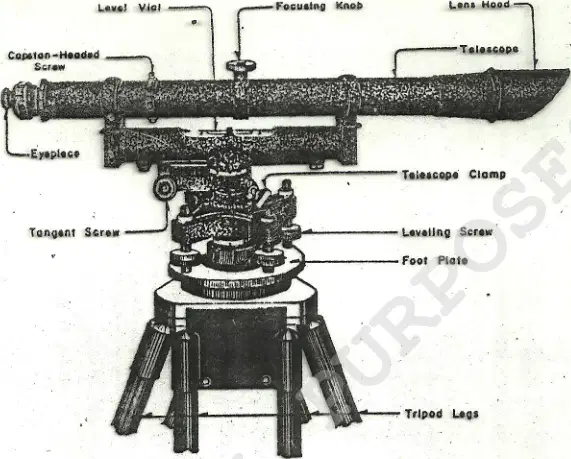
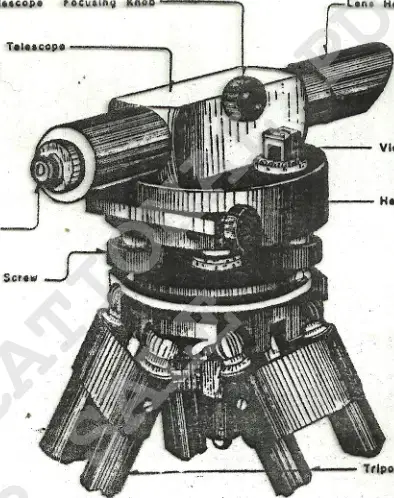
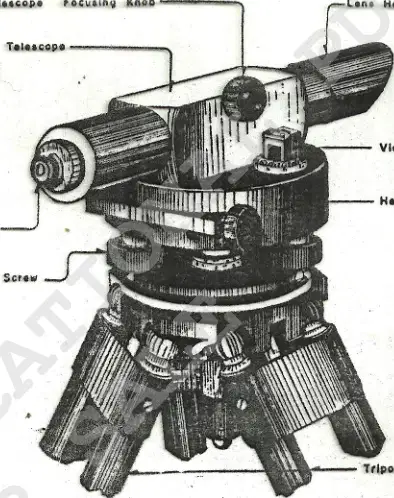
In the top diagram of the Dumpy level, which component is primarily used to bring the staff image into sharp focus?
Capstan-headed screw on the telescope
Focusing knob near the level vial
Levelling screw on the foot plate
Tangant screw below the cross bar
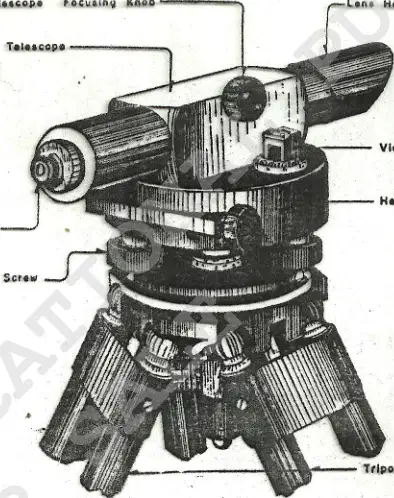
Which pair of components are found on both Dumpy and Wye level diagrams and serve alignment and observation functions?
Tangant screw and wye support
Lens hood and detachable telescope
Tripod legs and foot plate
Eyepiece and level vial
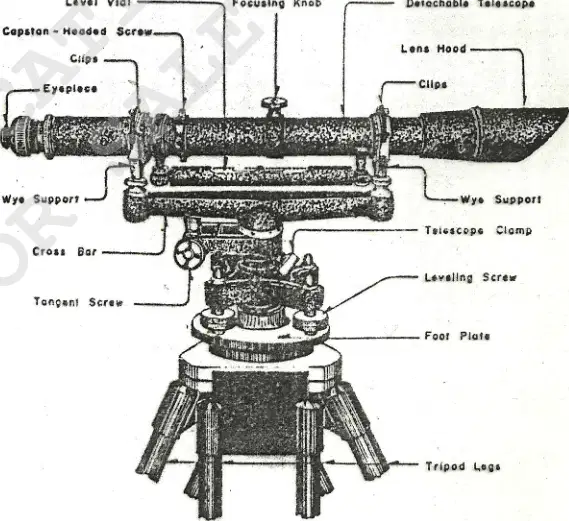
In the Wye level diagram, what distinguishes the telescope assembly from that of the Dumpy level?
Fixed telescope with permanent clips
Telescope locked by levelling screws
Detachable telescope held by clips
Telescope integrated into the foot plate
Which component in either instrument is adjusted to level the line of sight horizontally before reading?
Tangant screw near the vertical circle
Telescope clamp on the support
Levelling screw around the base
Capstan-headed screw on the tube
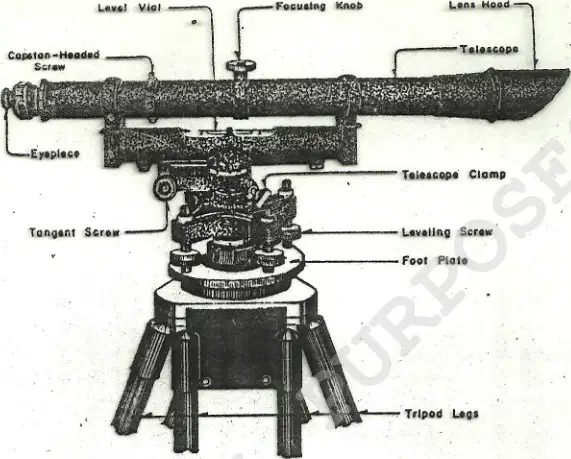
On the Dumpy level, which part secures the telescope against rotation while sighting?
Lens hood at the objective
Tripod legs beneath the foot plate
Capstan-headed screw on the tube
Telescope clamp on the support
Which components are closest to the observer’s eye when using either instrument?
Lens hood at the objective end
Level vial along the telescope
Focusing knob above the tube
Eyepiece at the rear end
Identify the structural elements that transfer load from the instrument to the ground.
Wye support arms
Lens hood and clips
Tripod legs below the base
Foot plate connecting screws
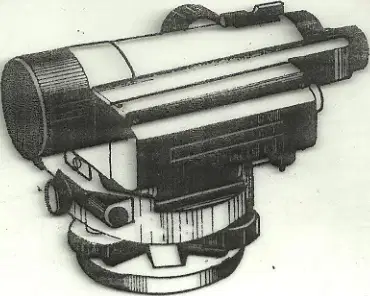
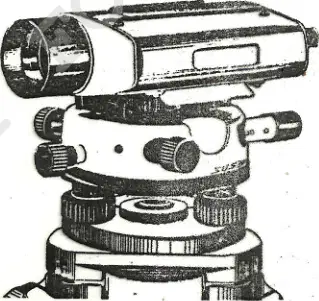
In the Builder's level diagram (top image), which feature primarily distinguishes it from the automatic level shown below?
Rotatable telescope with reversible bubble
Micrometer fine elevation screw control
Manual bubble-based leveling only
Internal compensator for auto-leveling
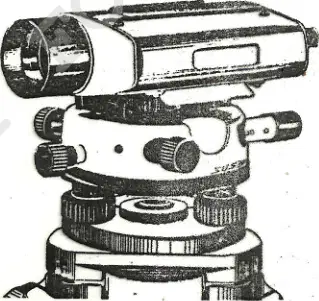
In the automatic level diagram (middle image), what component ensures the line of sight is horizontal after rough leveling with tripod legs and leveling screws?
Viewing prism assembly
Internal compensator mechanism
Eyepiece focusing unit
Lens hood attachment
Which pair of components in the automatic level diagram work together for image clarity rather than instrument leveling?
Eyepiece and focusing knob
Leveling screw and tripod legs
Head and tripod legs
Viewing prism and lens hood
Compared to the Builder's level, the Wild tilting level (bottom-left image) adds which operational capability?
Automatic compensator for leveling
Reversible tubular level for fine tilt
Detachable tripod for transport
Integrated prism for parallax removal
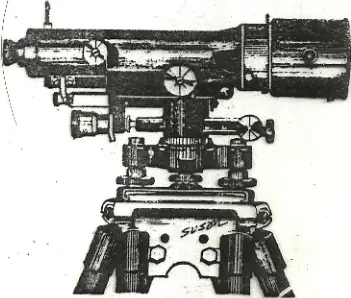
In the Wild geodetic level (bottom-right image), which design feature best supports higher-precision geodetic work?
Rotatable telescope with reversible bubble
Robust base with stable foot screws
Lens hood for glare reduction
Single leveling screw under the head
Match each instrument to its characteristic shown in the diagrams.
Geodetic level: rigid multi-screw base
Tilting level: reversible tubular level
Automatic level: internal compensator
Builder's level: manual bubble leveling
When setting up the automatic level, which sequence aligns with the components shown?
Rotate telescope, reverse tubular level, tighten base clamp
Attach lens hood, adjust prism, lock eyepiece focus
Set micrometer, fix foot screws, adjust vertical circle
Extend tripod legs, use leveling screws, let compensator settle
Which statement correctly contrasts the tilting level and geodetic level as shown?
Tilting level has single foot screw; geodetic level has no foot screws
Tilting level uses compensator; geodetic level uses manual bubble only
Tilting level emphasizes telescope rotation; geodetic level emphasizes base stability
Tilting level lacks reversible bubble; geodetic level includes prism hood
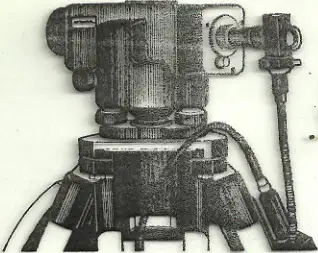
In the top-left diagram, a Wild N24 is converted to a laser level. Which component is used for this conversion?
GL2 laser eyepiece
GLD laser eyepiece
G12 laser eyepiece
GLO laser eyepiece
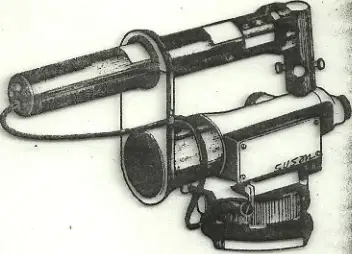
In the top-right diagram, where is the laser system mounted?
On a tribrach adapter
On a transit telescope
On a leveling instrument
On a theodolite head
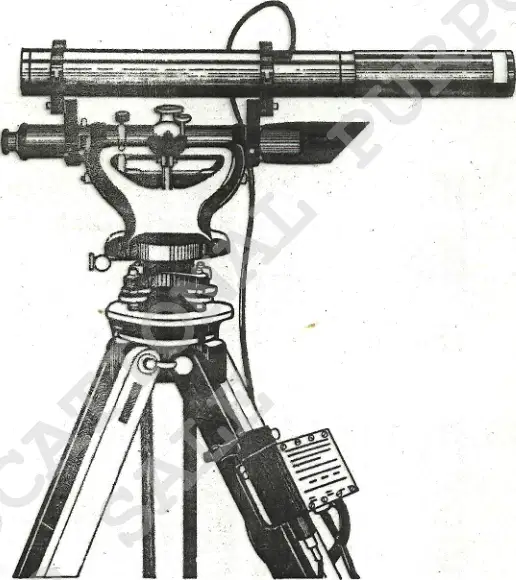
Refer to the large middle diagram. Which statement best describes the instrument shown?
Dump y level on tripod
Hand level on tripod
Automatic level on tripod
Engineer’s level on tripod
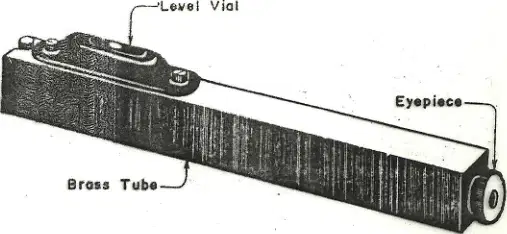
In the bottom diagram of the hand level, which labeled part ensures the line of sight is horizontal?
Objective window
Level vial bubble
Brass tube body
Eyepiece component
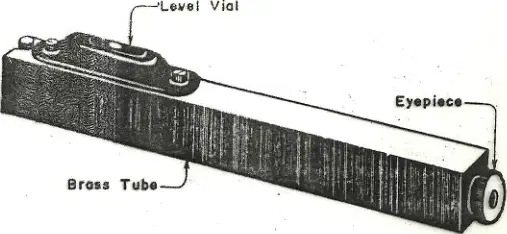
Which components are explicitly labeled in the hand level diagram? Select all that apply.
Brass tube
Objective lens
Focusing knob
Eyepiece end
Level vial
When converting a Wild N24 to a laser level, which misconception would lead to incorrect assembly?
Replacing eyepiece with GLO unit
Mounting laser on leveling base
Swapping telescope objective lens
Attaching laser to tripod legs

In the diagram of Philadelphia rods, which component provides fine alignment for reading small subdivisions on the scale?
Clamp screw pair
Brass sleeve segment
Vernier scale attachment
Elliptical target plate

Which graduation type is shown in the center rod of the diagram?
Metric meters and decimeters
English inches and eighths
English feet and tenths
Metric centimeters and millimeters
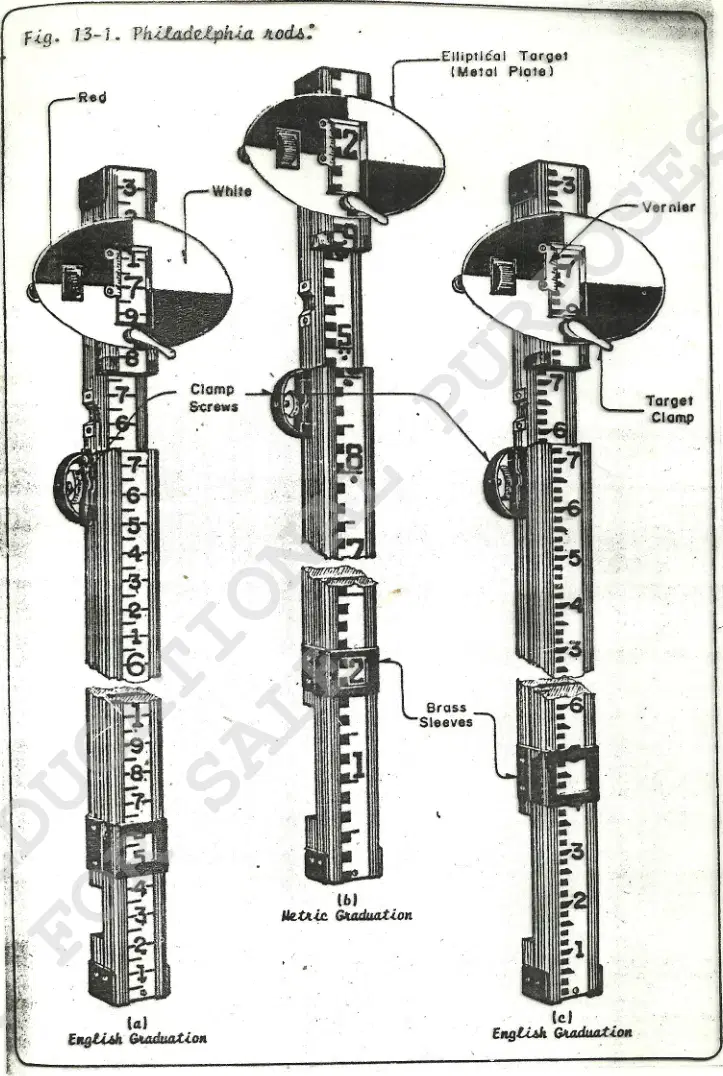
The elliptical target on a Philadelphia rod is primarily used to
protect the rod from wear
reduce parallax when sighting marks
convert metric to English units
calibrate the vernier zero point

Which set of components allows the sliding target to be fixed at a reading on the Philadelphia rod?
Vernier scale segments
Brass sleeves on the rod
White-black target face
Clamp screws on the target
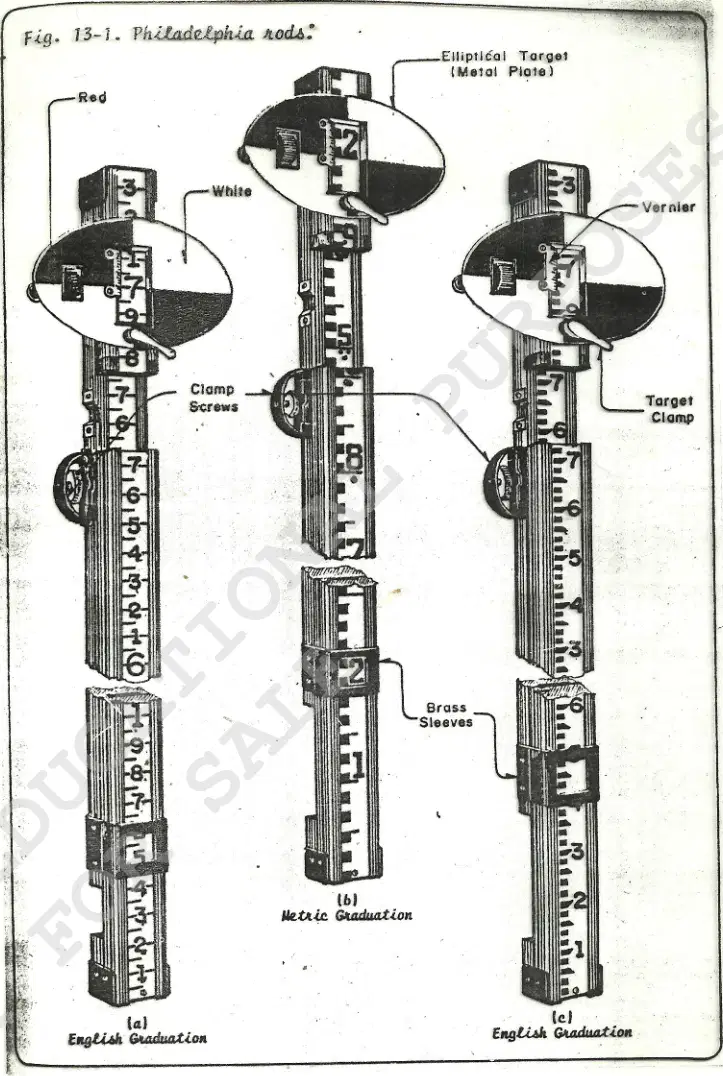
On the rightmost rod, the label near the target indicates
target clamp location
metric zero reference
English graduation units
elliptical plate material

When switching between English and metric readings on Philadelphia rods, which feature helps ensure consistent alignment across scales?
Clamp screws with detents
Common brass sleeve positions
Dual vernier with shared zero
White and red target colors

Which statement best describes the two English graduations displayed in the diagram?
Both use feet and hundredths marks
One uses meters, the other decimeters
One uses feet tenths, one inches eighths
Both use inches and sixteenths marks
Which component moves in an external focusing telescope to bring an object into focus?
Draw tube with cross hairs
Objective lens on a sleeve
Auxiliary lens inside barrel
Eyepiece with reticle
In an internal focusing telescope, what additional element shifts during focusing?
Objective lens mounted on sleeve
Dust cap rotating over objective
Auxiliary lens between objective and cross hairs
Eyepiece sliding within tube
Which list correctly names standard parts of a survey telescope?
Draw tube, micrometer, clamp, plummet
Objective lens, prism box, staff, bubble
Tube, prism, diaphragm, tripod
Tube, objective lens, eyepiece, cross hairs
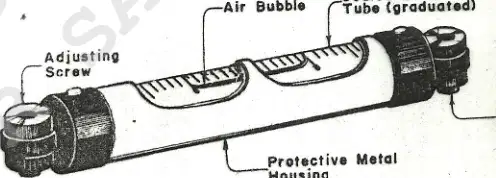
What is the primary role of the level vial in surveying instruments?
Protect objective lens from dust
Magnify distant objects
Determine direction of gravity
Support instrument on the ground
Which statement best distinguishes internal from external focusing telescopes?
Internal rotates dust cap; external moves eyepiece reticle
Internal slides prism box; external changes bubble position
Internal uses auxiliary lens motion; external moves objective sleeve
Internal extends draw tube; external shifts cross hairs
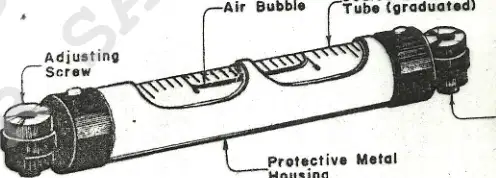
Which set correctly identifies features labeled on a level vial?
Objective lens
Sealed graduated glass tube
Protective metal housing
Air bubble
Adjusting screws
Tripods primarily serve what function when instruments are set up?
Calibrate the level vial
Provide optical magnification
Prevent movement after setup
Focus the auxiliary lens
Which description correctly characterizes a tripod's construction?
Single telescoping leg with rubber footpad
Two legs with chain brace and clamp
Three wooden or aluminum legs fastened to a hinged head
Four carbon-fiber legs with fixed cap
Which pair correctly matches telescope type to focusing motion?
External: prism slide; Internal: cross hair travel
External: objective sleeve; Internal: auxiliary lens
External: bubble movement; Internal: draw tube extension
External: eyepiece shift; Internal: dust cap rotation
Which component is associated with sighting precision rather than support or focus?
Cross hairs inside the eyepiece
Auxiliary lens motion
Tripod hinged head
Adjusting screw on vial
When leveling an instrument with four leveling screws, which paired motions should you use to move the bubble along its axis?
Oppose screws with alternating thumbs
Single screw adjusted while others fixed
Adjacent screws rotated in same direction
Diagonal screws turned independently
In a three-screw leveling base, what is the typical strategy to center the bubble?
Turn one screw fully, then back off
Rotate two screws together, then the third
Use only the screw nearest the bubble tube
Adjust all three equally and slowly
For instruments with four screws, which pair is commonly turned simultaneously with thumbs to drive the bubble?
Left and right opposing pair
Front and back adjacent pair
Any two nonadjacent screws
Only front screw with slight turns
Place the steps for taking a rod reading in correct order.
Focus on the rod
Read the rod
Record the reading
Position the rod
When positioning the rod for a reading, which practice ensures accuracy?
Hold rod plumb and steady
Lean rod slightly toward instrument
Rotate rod to face the sun
Place rod behind the instrument
During focusing on the rod, what adjustment should be made first to avoid parallax?
Focus eyepiece for reticle sharpness
Adjust objective for target clarity
Close one eye to reduce blur
Tilt telescope a small amount
Which action completes the rod reading after focusing and centering the crosshairs?
Read the staff at the crosshair
Tighten all leveling screws firmly
Refocus to blur the background
Rotate the instrument 180 degrees
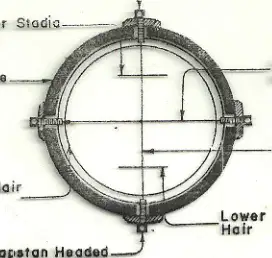
In the labeled cross hair ring diagram, which pair defines stadia hairs used for distance measurement within the telescope reticle?
Upper and lower stadia hairs
Cross hair ring and telescope tube
Horizontal and vertical cross hairs
Capstan headed screws
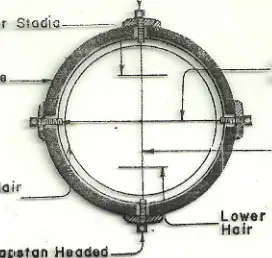
Which component in the cross hair ring assembly is primarily for adjustment, not sighting?
Capstan headed screw
Vertical cross hair
Upper stadia hair
Lower stadia hair
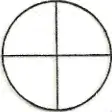
Several reticle patterns are shown. Which feature consistently provides a reference for leveling in many patterns?
Triangular spur indicator
Horizontal cross hair line
Diagonal stadia markings
Circular outer ring
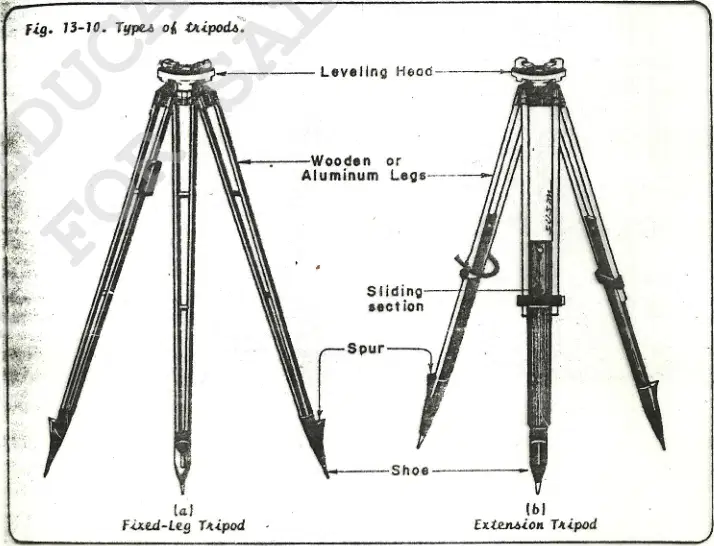
Compare fixed-leg and extension tripods in the diagram. What structural difference is highlighted?
Presence of sliding sections on extension legs
Different leveling head geometry
Fixed tripod lacking shoes entirely
Extension tripod missing spurs
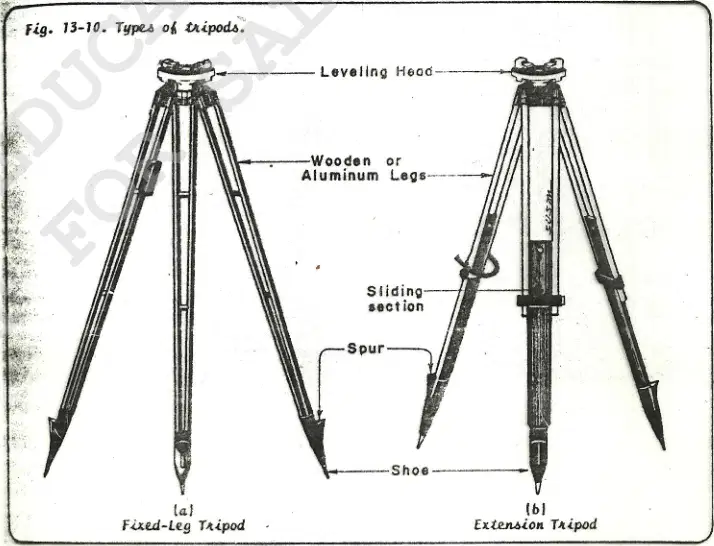
In the tripod diagram, which part interfaces with the ground to resist slip during surveying?
Shoe with spur at leg end
Sliding section mid-leg
Leveling head atop the tripod
Wooden or aluminum legs
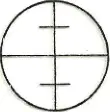
Multiple reticle patterns include added short marks near the horizontal hair. What measurement do these short marks support?
Capstan screw torque
Vertical angle centering
Stadia interval readings
Focus ring calibration
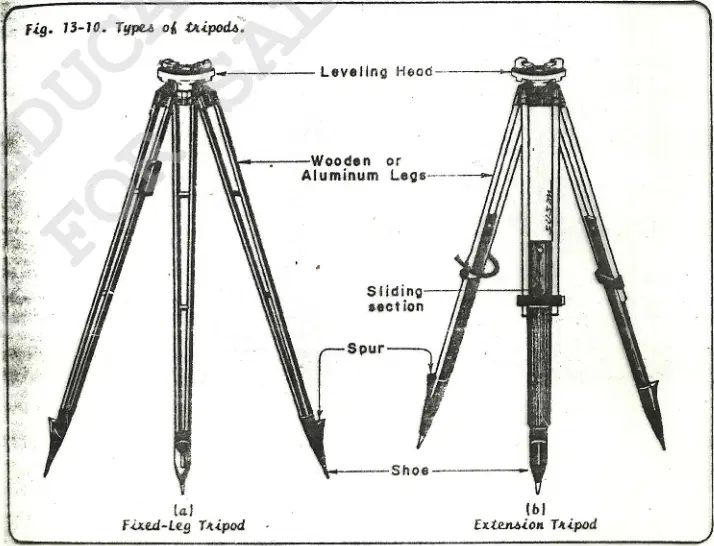
Which statement about the leveling head shown on both tripods is accurate?
It is absent on fixed-leg tripods
It replaces the need for shoes and spurs
It allows fine adjustment for leveling
It provides a platform to mount instruments
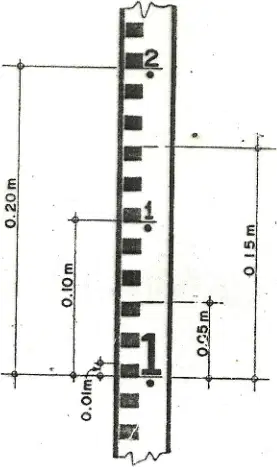
In the rod graduation diagram, the distance between consecutive large numbered marks (e.g., between 2.0 m and 2.1 m) is subdivided into which sequence of intervals?
Five 0.02 m segments alternating sizes
Four 0.025 m segments alternating sizes
Nine 0.01 m segments with one 0.02 m
Ten 0.01 m segments evenly spaced
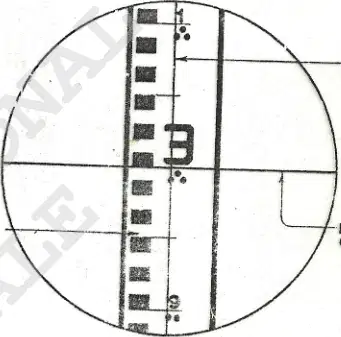
A leveling telescope view shows a vertical cross hair and a horizontal cross hair on the rod. What does the horizontal cross hair determine?
Line of sight orientation only
The staff reading at the cross hair
Parallax correction reference
Rod plumbness check line
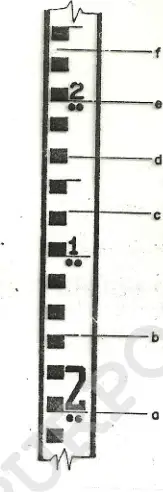
Using the readings listed beside the rod image (a=2.000 m, b=2.050 m, c=2.130 m, d=2.165 m, e=2.200 m, f=2.235 m), what reading corresponds to the cross hair hitting just above the 2.20 m mark?
2.050 m as near lower section
2.235 m as slightly above 2.20 m
2.200 m as exactly at 2.20 m
2.165 m as slightly below 2.20 m
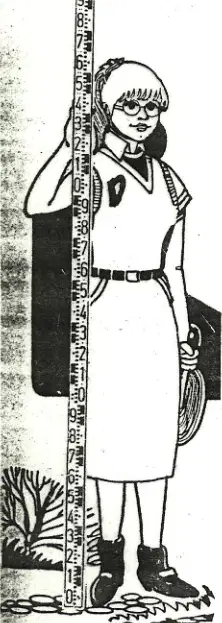
When sighting the rod, why is keeping the rod vertical essential?
Prevents focus blur at long range
Ensures the reading is not overstated
Aligns with magnetic north for mapping
Avoids cross hair parallax with eyepiece
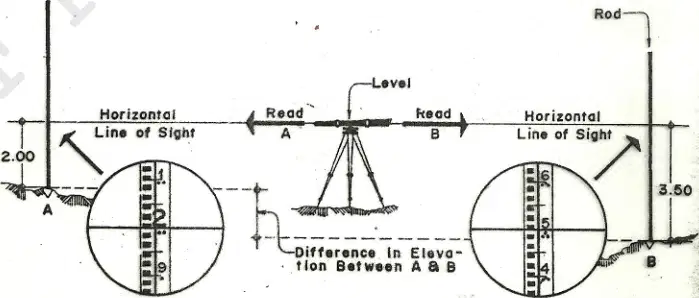
In the leveling instrument diagram comparing readings at A and B, the horizontal line of sight cuts A at 2.00 m and B at 3.50 m. What is the difference in elevation between A and B (Elevation of B relative to A)?
B is 5.50 m lower than A
B is 5.50 m higher than A
B is 1.50 m higher than A
B is 1.50 m lower than A
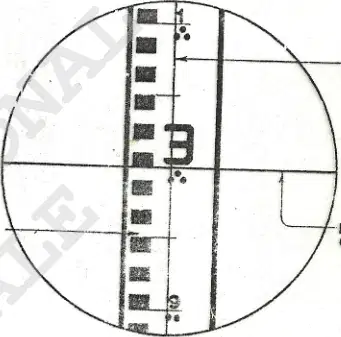
Which combination of actions lead to a correct rod reading through the telescope?
Align horizontal cross hair on the graduation
Center the vertical cross hair on zero
Tilt the instrument slightly for clarity
Keep the rod plumb with a bubble level
Focus objective to remove parallax
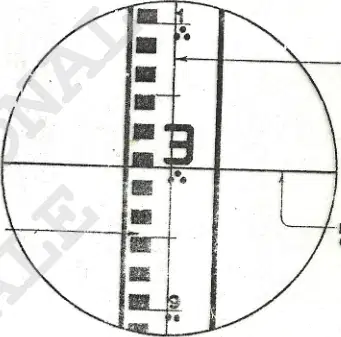
When the horizontal cross hair falls midway between the 2.10 m and 2.11 m marks, what reading should be recorded?
2.10 m as lower mark dominates
2.105 m as the midway value
2.11 m as nearest upper mark
2.1005 m as interpolated micrometric
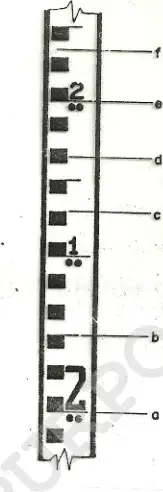
A student records a back sight of 2.235 m on a benchmark and a fore sight of 2.050 m on a turning point with the same instrument setup. What is the change in elevation from the benchmark to the turning point?
−0.500 m fall to the turning point
−0.185 m fall to the turning point
+0.185 m rise to the turning point
+0.500 m rise to the turning point
In leveling work, which signal is used to command the rodman to move in a specified direction across the line of sight?
Rotate the body 180 degrees and step back
Swing one arm horizontally toward direction
Point both index fingers at the instrument
Raise the rod vertically above the head
When the instrument operator wants the rodman to move back along the line of sight, what signal is appropriate?
Tap the rod base on the ground
Rotate the rod clockwise twice
Cross arms above the head
Wave hand backward over shoulder
Which action directs the rodman to plumb the rod (make it vertical)?
Circular wrist motion around rod
Both hands lifting the rod ends
Vertical up‑down motion of hand
Two thumbs pointing downward
The command to establish a turning point is communicated by which signal?
Point downward with firm motion
Raise both hands and clap twice
Spin the rod then stop abruptly
Hold open palm facing instrument
In leveling, what does raising one arm straight up and then lowering it typically indicate to the rodman?
Record and close the notebook
Take a foresight immediately
Turn around and face instrument
Raise or lower the rod slowly
Which signal is commonly used to tell the rodman to pick up the instrument?
Trace a rectangle in the air
Point to tripod and nod twice
Make a lifting gesture with hand
Clap hands above the head
To command “hold steady,” which motion best fits standard rod signals?
One hand raised palm outward
Both arms extended palms down
Index finger circling slowly
Arms crossed at chest level
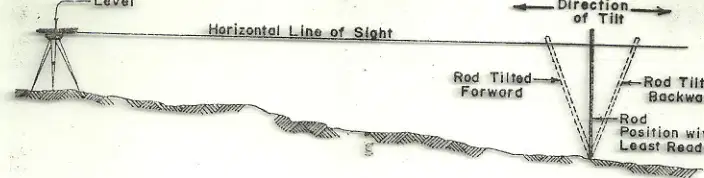
During rod tilting, which is the rod position that yields the least reading on the level?
Rod tilted backward from instrument
Rod rotated around its long axis
Rod tilted forward toward instrument
Rod vertical under line of sight
What signal would reverse a previous movement command without adding a new direction?
Wave hand in a short arc back
Raise both hands, then pause
Cross the forearms in front
Point down and hold for two counts
Which combination correctly matches purpose to gesture in leveling signals?
Move back — hand waved backward over shoulder
Turning point — point sharply to ground
Move forward — both arms raised upward
Give a backsight — closed fist waved sideways
Plumb the rod — vertical up‑down hand motion
A rodman faces away from the instrument and sees the operator sweeping an arm to the left. What should the rodman do?
Step backward along line
Rotate rod left in place
Lower the rod toward ground
Shift left perpendicular to sight
Which signal would most likely be used to initiate a turn‑in or set up on a new station?
Roll hand to indicate rotation
Tap notebook twice with pen
Point decisively to ground spot
Raise hat and spin once
When the operator makes a broad circular arm motion then points down, what is the intended action?
Signal to change instrument height
Request a re‑read of current sight
Indicate a backsight will be skipped
Designate the turning point location
If the rod reading fluctuates, which signal from the operator helps achieve a stable reading?
Pick up the instrument now
Give backsight with fist waved
Hold steady with palms down
Move forward two small steps
Select all signals that communicate motion along the line of sight rather than lateral motion.
Move back along line of sight
Move forward toward instrument
Move left across the line
Hold steady at current point
Move right across the line

