
 Worksheets
Rules of Composition Midterm Review
Total questions: 20
Worksheet time: 20mins
Name
Class
Date
1.
What is composition?
a)
Composition is the rules you have to follow in every photograph you take.
b)
Composition is the placement or arrangement of visual elements in your photograph.
c)
Composition is the story you tell in a photograph.
d)
Composition is how you determine your subject in a photograph.
2.
Why is composition important? (Select all that apply)
a)
It directs viewers where we want them to look
b)
It can help you effectively tell your story
c)
It will help make your image visually pleasing
d)
All of the above
3.
What is it called when we split the frame into 9 equal boxes and place our subject on one of the lines (or the intersection of two lines)?
a)
Leading lines
b)
Rule of thirds
c)
Symmetry
d)
Golden rule
4.
When you can draw a line down the center of your image and your subjects "reflect" nearly identically on the left and right (or on the top and bottom), that's called:
a)
Asymmetry
b)
Symmetry
c)
Leading lines
d)
Balance
5.
When the VISUAL WEIGHT of objects in your image is equal on both sides of the photograph, that's called:
a)
Asymmetry
b)
Symmetry
c)
Leading lines
d)
Balance
6.
When objects (such as railings or roads) in your image guide your viewers eye from one part of your image to another, that's called
a)
Rule of thirds
b)
Direction
c)
Symmetry
d)
Leading lines
7.
When an element in your image creates a border around your subject, this is called
a)
Leading lines
b)
The fourth wall
c)
Natural border
d)
Natural framing
8.

Does this photo demonstrate the rule of thirds?
a)
Yes
b)
No
9.

Does this photo demonstrate the rule of thirds?
a)
Yes
b)
No
10.
How does natural framing help tell your story?
a)
It makes your subject seem small and insignificant
b)
It can distract your viewer from the bad parts of the photo and make them look at the good parts
c)
It can lead the viewer's eye to your subject and bring a sense of order and structure to your photo
11.

What is the natural frame in this photo?
a)
The cat
b)
The window
c)
The snow
d)
There is not one
12.
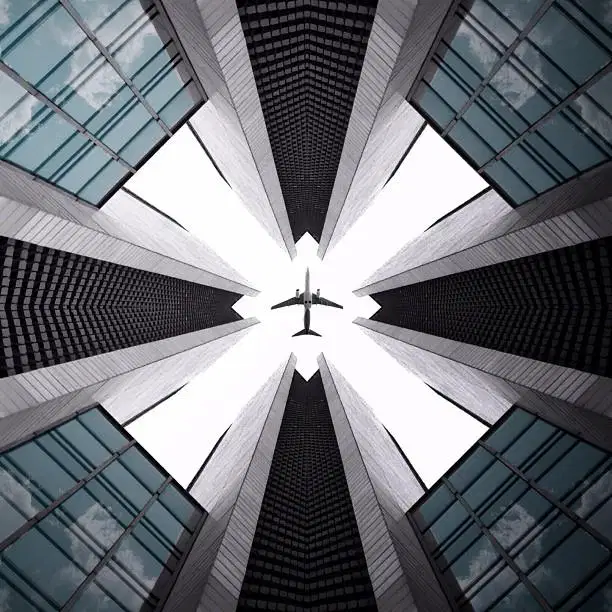
What is the natural frame in this photo?
a)
The buildings
b)
The airplane
c)
The windows
d)
There is not one
13.
What is the definition of leading lines?
a)
Drawing lines on the photo when you are editing
b)
Repeating objects that make you look at the background
c)
Bright shapes next to dark shapes
d)
Using lines within the composition of the photo to draw a viewer's attention to a specific part of the frame
14.
How do leading lines help to tell your story?
a)
They draw the viewer's eye to the subject/focal point
b)
They can lead the viewer through the photo to multiple focal points
c)
They create a sense of depth and perspective
d)
All of these things
15.

What are the leading lines in this image?
a)
The headlights
b)
The lines on the road
c)
The tires
d)
There are no leading lines
16.
What are implied lines?
a)
Leading lines that don't lead anywhere
b)
Leading lines that frame your subject
c)
Leading lines in your photo that are not actual lines
d)
Leading lines the leave your viewer guessing
17.
What is balance in composition?
a)
The elements in your photo create an image that feels evenly "weighted"
b)
Symmetry
c)
Both sides of the photo have asymmetrical lines that are not the same
d)
The photo is weighted unequally
e)
If you placed the photo on a scale it would weight the same as another photo placed on the scale
18.

What type of balance does this photo demonstrate?
a)
Formal balance
b)
Informal balance
c)
Radial symmetry
d)
It is not balanced
19.

What type of balance does this photo demonstrate?
a)
Formal balance
b)
Informal balance
c)
Radial symmetry
d)
It is not balanced
20.

What type of balance does this photo demonstrate?
a)
Radial symmetry
b)
Asymmetrical balance
c)
It is not balanced
100 %

