
 Worksheets
Introduction to the unit106 intro 1
Total questions: 31
Worksheet time: 16mins
Which topic focuses on using digital models to plan and manage buildings in construction?
Emerging technologies and materials
Traditional site supervision
Offsite construction methods
Building Information Modelling (BIM)
What best describes offsite construction in this unit’s themes?
Using paper blueprints for planning
Installing only electrical systems
Making building parts away from the site
Testing materials in a laboratory
How does the Internet of Things with advanced analytics support construction projects?
More physical storage of documents
Manual inspection for every asset
Eliminating all human supervision
Intelligent asset management and decisions
Future-proof design and construction mainly aim to:
Ignore long-term project lifecycle
Reduce digital tools on job sites
Use materials and methods ready for tomorrow
Focus only on current budget limits
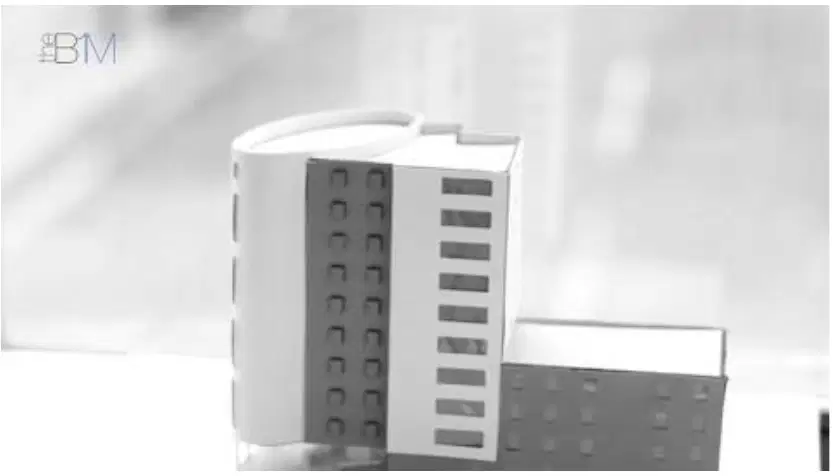
Which statement best describes Building Information Modelling (BIM)?
A finance spreadsheet for project costs
A 2D sketch method for quick drawings
A 3D model-based process for teamwork
A paper-based workflow for site reports
Which option lists the typical BIM process stages in the correct order?
Plan, Build, Design, Operate
Design, Plan, Operate, Build
Plan, Design, Build, Operate
Operate, Build, Design, Plan

In the Design stage of BIM, teams primarily use the captured data to do what?
Train the maintenance staff
Schedule site deliveries
Inform and develop the design
Approve contractor payments
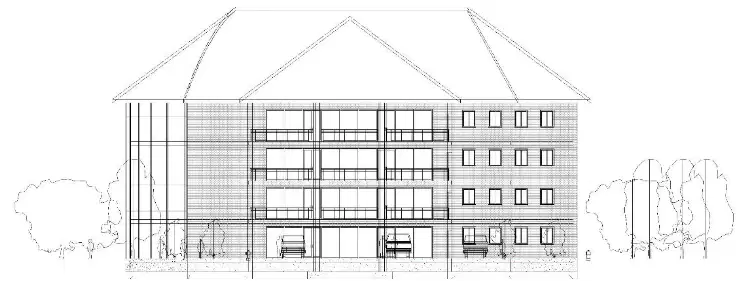
Which description matches BIM Level 0?
No collaboration, using 2D CAD
Shared single 3D model for all
Using 2D CAD for drafting
All parties use 3D CAD models
At BIM Level 2, what is expected of project parties?
Work only with paper drawings
Draft solely in 2D without sharing
Use one shared 3D model
Use 3D CAD and share via common format
Which statement correctly defines BIM Level 3?
Everyone uses one shared 3D model
3D models exist but are not shared
Teams use 2D CAD for production
No collaboration, drawings only
Which term refers to a shared digital space where project information is stored and accessed by the team?
BIM Protocol
Soft landings
Common Data Environment (CDE)
Digital Plan of Work
Which acronym relates to organizing project information during design and construction phases?
COBie
AIM
PIM
EIR
Asset Information Modelling (AIM) is primarily used for which stage of a building’s life?
Tender bid evaluation
Operations and maintenance
Construction site logistics
Concept design planning
Employer’s Information Requirements (EIR) are best described as what?
Rules for contractor payments
Client’s data needs and standards
Software licensing agreements
Government building codes
Which option best matches the idea of smoother building handover with post-completion support?
Digital Plan of Work
Common Data Environment
BIM Protocol
Soft landings
COBie mainly focuses on what kind of information exchange?
Live site CCTV feeds
Structural analysis models
Construction operations asset data
3D laser scan point clouds
What does the Digital Plan of Work help teams to do?
Encrypt all project communications
Set staged deliverables and responsibilities
Schedule only site inspections
Replace the need for contracts
Which list shows three types of immersive technologies used in construction visualization and training?
Video Conferencing, Drones, Photogrammetry
Holography, Projection Mapping, Laser Scanning
Thermal Imaging, GPS, BIM Coordination
Virtual Reality, Mixed Reality, Augmented Reality
What best describes Virtual Reality in a construction context?
Real models combined with digital elements interacting live
Digital labels overlaid on physical objects on site
Fully digital environment viewed with a headset
2D drawings displayed on a portable tablet
A crew is fabricating curved wall sections by layering material from a nozzle following a programmed path. Which technology are they using?
Precast panel lifting with tower cranes
Shotcreting with mesh reinforcement only
Traditional slipforming with timber shuttering
3D printing of buildings with concrete
Which is a likely benefit of 3D printing buildings using concrete?
Only possible for straight walls without openings
Increased need for manual shuttering on every pour
Rapid creation of complex shapes with reduced formwork
Higher waste from cutting standard blocks to size
Which items are examples of evolving construction materials?
Self-healing concrete
Graphene
Plain gypsum plaster
Transparent aluminum
Graphene is best described as which of the following?
A transparent polymer used for safety glazing
A ceramic panel used for ventilated façades
A foamed concrete additive for thermal insulation
A single-atom-thick carbon lattice with high strength
What is the main idea of self-healing concrete?
It can seal small cracks through chemical or biological action
It changes color to match surrounding paint automatically
It reduces weight by adding hollow polymer spheres
It becomes transparent when exposed to sunlight
Transparent aluminum in construction most closely refers to a material with which property?
Porous blocks designed for enhanced ventilation
Opaque metallic panels with improved heat storage
High-strength, glass-like transparency for protective glazing
Flexible sheets used solely for temporary coverings
What best describes off-site construction in modern methods of construction (MMC)?
Building entire structures only at the project site
Assembling modules on-site using basic tools
Pre-assembling elements in a controlled factory
Fabricating parts outdoors near the foundation
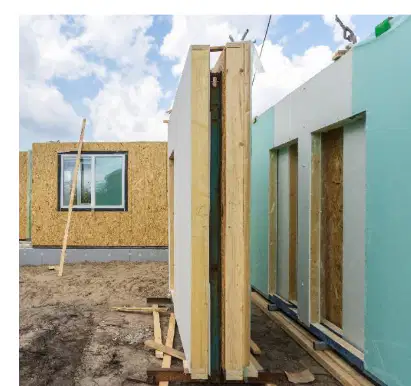
Which image shows factory-made wall panels being installed on a building site?
Panelised systems with insulated wall sections
Small components lifted for sub-assemblies
Craned volumetric modules stacked for housing
Hybrid systems with cast-in-place floors
Volumetric systems are typically
Small brackets and fixings pre-assembled
Flat pack panels requiring site framing
Room-sized modules transported to site
On-site concrete pours with rebar cages
Which statement explains why off-site construction can reduce waste?
Panels are heavier so fewer are thrown away
Modules allow more demolition after installation
Factory processes standardise cutting and materials
Site teams make fewer design mistakes outdoors
Customer satisfaction in off-site construction is often improved because
Projects rely on unpredictable weather delays
Finishes are only checked after handover
Modules cannot be customised or adapted
Quality control in factories increases reliability
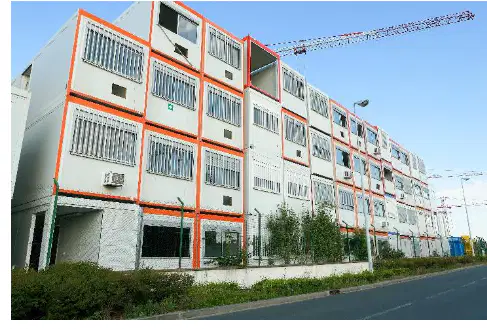
Identify the type of off-site construction depicted when stacked box-like units form a building.
Volumetric modular systems approach
Hybrid systems combining site cast
Panelised systems with 2D sections
Components or sub-assemblies method

