
 Worksheets
HVACR Service Knowledge Quiz
Total questions: 30
Worksheet time: 15mins
What are the three categories of HVACR service?
Installation, Maintenance, Repair
Heating, Cooling, Ventilation
Residential, Commercial, Industrial
Inspection, Cleaning, Replacement
How can a technician's appearance and conduct affect customer relations?
It has no effect on customer relations.
It can enhance trust and professionalism.
It only affects the speed of service.
It determines the cost of service.
What is the key to repeat customers in the HVACR industry?
Low prices
Customer satisfaction
Quick service
Free installation
What does servicing generally refer to in the HVACR industry?
Installing new systems
Repairing broken systems
Work performed on installed equipment or systems
Designing new HVACR systems
Which of the following is NOT a category of servicing in the HVACR industry?
Repair
Maintenance
Installation
Upgrades/system additions
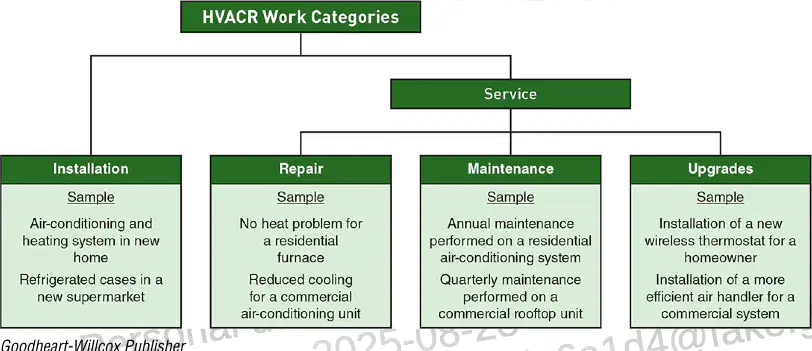
What is the purpose of maintenance in the HVACR industry?
To install new systems
To reduce the likelihood of future breakdowns
To increase energy consumption
To replace old systems
What is the first step in the systematic troubleshooting procedure?
Repair the system
Test system for proper operation
Customer interview
Initial inspection
Why is it important to test the system after a repair?
To ensure it is operating correctly
To identify new problems
To save time
To avoid customer complaints
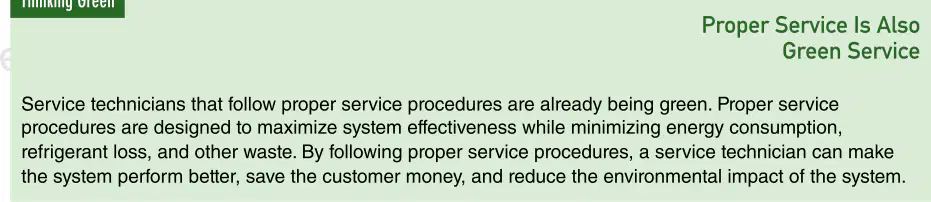
What is the purpose of proper service procedures according to the text?
To increase system complexity
To maximize system effectiveness while minimizing waste
To reduce the need for repairs
To increase energy consumption
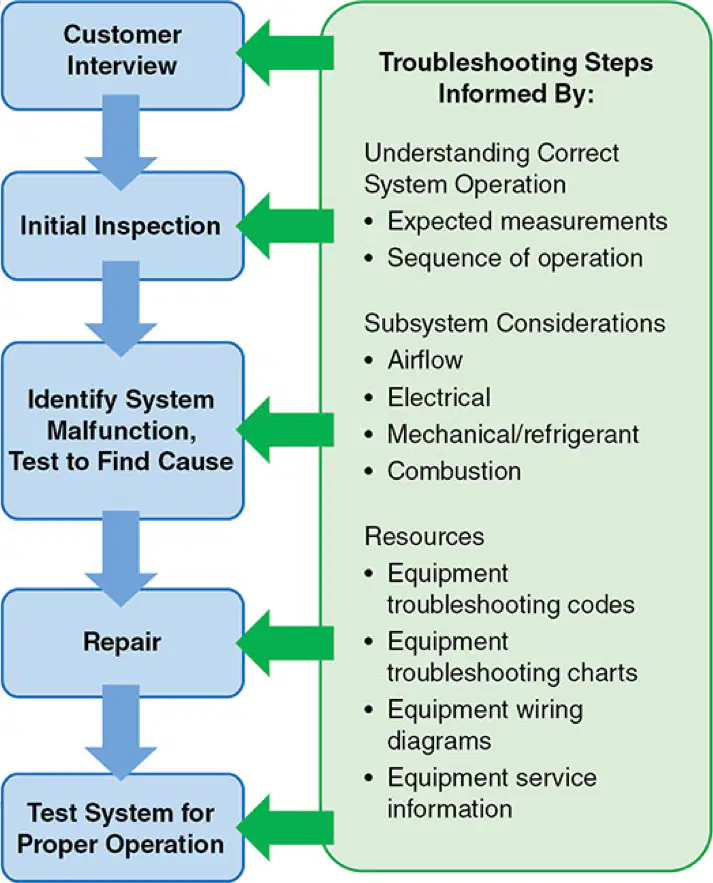
What is the first step in the General Systematic Troubleshooting Procedure?
Initial Inspection
Identify System Malfunction
Customer Interview
Repair
Which of the following is a subsystem consideration in troubleshooting?
Airflow
Temperature
Pressure
Humidity
What is one of the key requirements for a service technician according to the document?
Ability to create new procedures
Ability to follow a standard procedure
Ability to design equipment
Ability to write manuals
What are the three basic columns found in most troubleshooting charts?
Problem, Solution, Cost
Problem, Possible Cause, Remedy
Problem, Diagnosis, Repair
Problem, Analysis, Solution
What is the purpose of following a troubleshooting chart in a step-by-step fashion?
To quickly fix the problem temporarily
To identify and fix the root cause of the problem
To avoid callbacks by ignoring the problem
To replace all components without inspection
Why should callbacks be avoided according to the text?
They are cost-effective
They increase customer confidence
They can shake the customer's confidence in the company
They provide a permanent solution
What is the environmental impact of an improper fix?
It saves energy
It reduces material waste
It consumes extra energy and resources
It has no impact
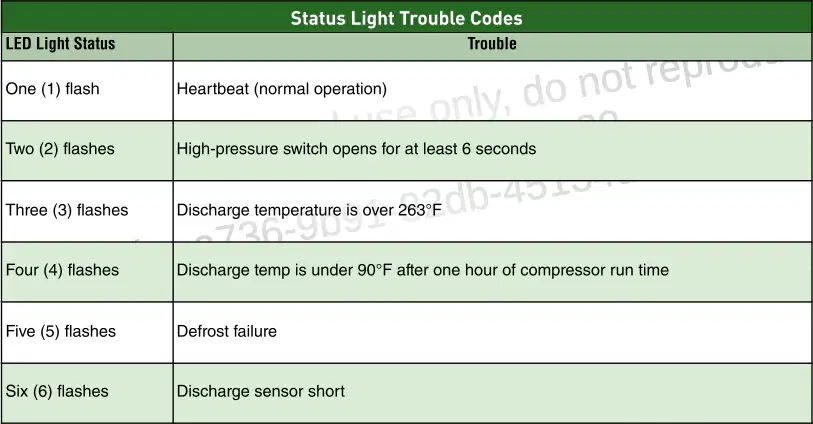
What does a trouble code with two flashes indicate?
Heartbeat (normal operation)
High-pressure switch opens for at least 6 seconds
Discharge temperature is over 263°F
Defrost failure
How should a technician begin troubleshooting according to the text?
By replacing all components
By listening carefully to the owner's complaint
By ignoring the owner's input
By immediately fixing the problem
What is the purpose of the "Possible Cause" column in a troubleshooting chart?
To list the remedies for a problem
To analyze the problem in terms of major components
To provide safety guidelines
To describe the tools needed for repair
According to the text, what should a technician do after identifying the general part of the system that is the possible cause of the problem?
Replace the entire system
Perform tests and inspections
Immediately call for external help
Ignore the problem
What is a possible cause for a unit operating for an excessively long period or continuously, according to the troubleshooting chart?
Excessive refrigerant
Control contacts stuck or frozen closed
Overheating of the unit
Lack of electrical supply
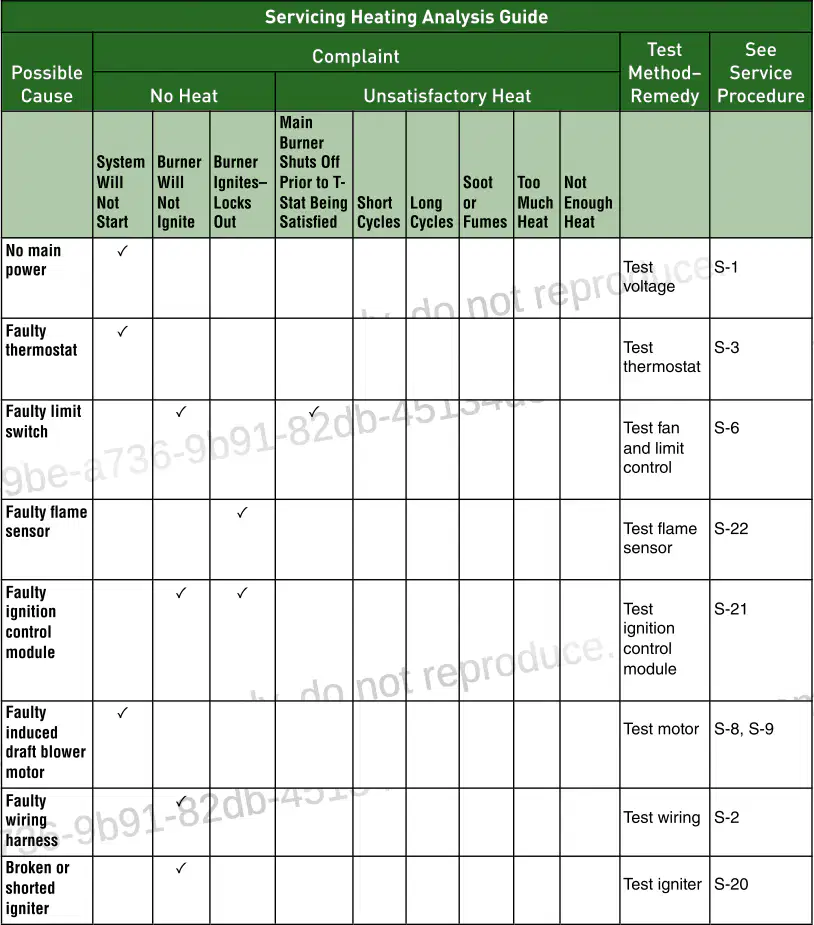
What is the first step in using a troubleshooting chart to identify possible causes of a problem?
Identify possible solutions
Check the service procedure
Locate the possible problems on the chart
Test the equipment
In the heating analysis guide, what should be done if the problem is believed to be caused by improper airflow?
Replace the thermostat
Check the service procedure
Test the igniter
Clean the condenser
Which component should be tested if there is a complaint of "No Heat" due to a faulty thermostat?
Test voltage
Test thermostat
Test motor
Test igniter
What is the purpose of the troubleshooting chart mentioned in the document?
To identify possible causes and remedies for a problem
To replace faulty components
To install new heating systems
To provide customer service training
What is the role of an HVACR technician beyond troubleshooting and repair skills?
Only to repair equipment
To meet customer needs and understand business operations
To sell new equipment
To work independently without customer interaction
Why is it important for a technician to be courteous when dealing with customers?
It helps in selling more products
It ensures customer satisfaction and trust
It reduces the workload
It speeds up the repair process
Based on the information provided, what are some possible causes of the problem?
Incorrect installation
Customer error
Weather conditions
Technician's mood
Select one of the possible causes you identified in Question 1 and describe the procedure for repairing the issue.
Replace faulty parts
Ignore the issue
Blame the customer
Wait for the problem to resolve itself
After completing the repair described in Question 2, how would the technician check to ensure that the repair was done correctly?
Ask the customer if they are happy
Perform a system test
Leave the site immediately
Call another technician

