
 Worksheets
Year 11 Physics Elec mag rev.
Total questions: 196
Worksheet time: 2hrs 20mins
What is the process called when a magnet moves into a coil of wire?
Electromagnetic deduction
Mr Davies effect
Electromagnetic induction
Magnetic friction

How would you increase the induced voltage in this circuit? (Could be more than one answer)
Move the magnet faster
Move the magnet slower through the coil
Turn the magnet to the opposite direction
More turns to the coil
Stronger Magnet

Choose what the forefinger represents in Flemings left hand law.
Field (South to North)
Force
Field (North to South)
What do field line patterns show?
The direction of the magnetic field
The direction and shape of the magnetic field
The shape of the magnetic field
None of the above
What advantage does an electromagnet have over a magnet?
Stronger
You can turn it off and on
It attracts chocolate
What causes the motor effect?
A current carrying wire exerting a force on an electromagnet
A current carrying wire exerting a force on a temporary magnet
A current carrying wire exerting a force on a permanent magnet
What do speakers contain?
Magnet
Magnet and electromagnet
Electromagnet
What is the process called when a magnet moves into a coil of wire?
Electromagnetic deduction
Mr Fleming's effect
Electromagnetic induction
Magnetic friction
How would you increase the induced voltage in this circuit? (Could be more than one answer)
Move the magnet faster
Move the magnet slower through the coil
Turn the magnet to the opposite direction
More turns to the coil
Stronger Magnet
Choose what the forefinger represents in Flemings left hand law.
Field (South to North)
Force
Field (North to South)
What do field line patterns show?
The direction of the magnetic field
The direction and shape of the magnetic field
The shape of the magnetic field
None of the above
What advantage does an electromagnet have over a magnet?
Stronger
You can turn it off and on
It attracts chocolate

What produces this shape field?
Bar magnet
Straight wire
Flat coil
Solenoid

This is the shape of the field around a..
bar magnet
straight wire
flat circular coil
solenoid
What is required to make an electromagnet
power supply
coil of insulated wire
magnetic core
switch
The field shape around an electromagnet is the same shape as around a..
bar magnet
horseshoe magnet
straight wire
How can you change the direction of the field in a solenoid?
Change the number of coils
Change the size of the current
Change the direction of the current
Use a soft iron core
The field lines inside an electromagnet
are weakest
go from south to north
are spread out
go from north to south
What does not affect the power of an electromagnet?
Number of coils
size of the current
having a soft iron core
how close together the coils are
When you bring iron near an electromagnet it
becomes magnetised
becomes a magnet
repels other iron
is still magnetised after the current is switched off
If place unmagnetised steel near an electromagnet with a soft iron core it will..
be repelled
not be attracted
remain attached after the current is switched off
fall off when the current is switched off
When you increase the current in a solenoid the field lines inside the solenoid...
change direction
are no longer uniform
get further apart
get closer together
Electrons have a ____________ charge.
negative
neutral
positive
A current is produced when _______________ flow in a circuit.
protons
neutrons
electrons
nucleons
What happens when an electric current flows through a wire?
The wire begins to spin.
Nothing happens.
A field of gravity is created around the wire.
A magnetic field is created around the wire.
Electric current is measured in ____________.
Newtons (N)
Amperes (A)
Hertz (Hz)
The south ends of two magnets will _________ each other.
repel
attract
________________ are the attractive and repulsive forces between two poles.
Magnetic forces
Electric forces
Magnetic charges
Electric charges

What does this image show?
Parallel circuit
Series circuit
Magnet
Electromagnet
The area of magnetic force around a magnet is known as its ____________.
magnetism
magnetic current
magnetic field
electric current
How do you increase the strength of an electromagnet?
Add a motor and/or light bulbs
Add more light bulbs and wire coils
Add more wire coils
Increase the voltage
A _______________ is a current-carrying coil of wire with many loops.
magnet
electromagnet
solenoid
compass
Increasing the number of coils in an electromagnet will _________ the power of the magnet.
decrease
increase
not affect

What would happen with the magnets in the picture above?
They would repel
Nothing
They would attract
They would repel and then attract

What is induced when a wire is carrying a current?
Electricity
Electrons
A Magnetic Field
A Voltage
Using the right-hand curl, how would you draw the magnetic field around this wire? The direction of current is drawn for you.


What can increase the strength of the magnetic field at a single point near a current carrying wire?
Increasing the length of the wire.
Increasing the width (diameter) of the wire.
Increasing the current (moving electrons) through the wire.
Changing the material of the wire.
V = I ×R [Voltage = Current X Resistance]
If the resistance of a wire is constant (it mostly is), what will happen to the current if the voltage increases?
Current increases.
Current decreases.
Current stays the same.
Current flows in the opposite direction.

What is this coil of current-carrying wire called?
Oculoid
Spiraloid
Colloid
Solenoid
How does a solenoid increase the magnetic field around the wire?
Allows a higher voltage.
Allows a higher current.
Brings field around the wire closer together.
Decreases resistance in the wire.

What do magnetic fields do to other magnetic fields?
Attract or Repel
Attract
Repel
Nothing
For magnetic fields to pull or push objects away, there must be...
friction.
resistance.
current.
a force.

What would happen to this current carrying wire in the middle of an external magnetic field?
It would experience a force.
It would heat up.
It would break.
Nothing.

A motor works by putting a coil of wire in a magnetic field. The loop of wire rotates inside the field when it is carrying a current. What might happen if the wires were held in place?
The wire will twist and get tangled.
Nothing.

What is the purpose of a split-ring commutator?
Decreases heat in the wire.
Increases the voltage into the wire.
Current flows through commutator without going through the wire.
Current flows through wire and rotates without getting tangled.
Which of the following is not a subatomic particle that makes up an atom?
neutron
proton
nucleon
electron
Protons have a ____________ charge.
negative
neutral
positive
Electrons have a ____________ charge.
negative
neutral
positive
A charged atom is called a(n) __________.
proton
neutron
electron
ion
A current is produced when _______________ flow in a circuit.
protons
neutrons
electrons
nucleons
What happens when an electric current flows through a wire?
The wire begins to spin.
Nothing happens.
A field of gravity is created around the wire.
A magnetic field is created around the wire.
Electric current is measured in ____________.
Newtons (N)
Amperes (A)
Hertz (Hz)
The south ends of two magnets will _________ each other.
repel
attract
________________ are the attractive and repulsive forces between two poles.
Magnetic forces
Electric forces
Magnetic charges
Electric charges
What does this image show?
Parallel circuit
Series circuit
Magnet
Electromagnet
Opposite charges do what?
Attract
Repel
The area of magnetic force around a magnet is known as its ____________.
magnetism
magnetic current
magnetic field
electric current
How do you increase the strength of an electromagnet?
Add a motor and/or light bulbs
Add more light bulbs and wire coils
Add more wire coils
Increase the voltage
What is/are the difference(s) between a magnet and an electromagnet?
An electromagnet can be turned on/off.
A magnet can be turned off.
An electromagnet is stronger.
A _______________ is a current-carrying coil of wire with many loops.
magnet
electromagnet
solenoid
compass
How can a magnet be used to produce an electric current?
Hold a magnet next to a piece of wire.
Wrap wire around a magnet.
Spin the magnet around inside a coil of wire.
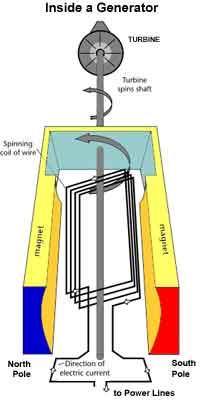
A _____________ transforms mechanical energy into electrical energy.
generator
electromagnet
circuit
magnetic field
Increasing the number of coils in an electromagnet will _________ the power of the magnet.
decrease
increase
not affect
What three minerals are attracted to a magnet?
Gold, copper, cobalt
Cobalt, aluminum, silver
Iron, copper, aluminum
Iron, nickel, cobalt

An atom becomes _______ when it gains electrons.
Positive
Neutral
Negative
Invisible
An electric current produces what?
magnetic field
magnet
solenoid
insulator


How do you change the strength of a magnetic field?
Add more current through the wire or add more loops
Add more loops or make the coils closer together
Add more current through the iron core or through the wire
Add more current or spin it very fast
Can you separate a magnet?
Yes, but are the same the two parts are going to have north and south
No

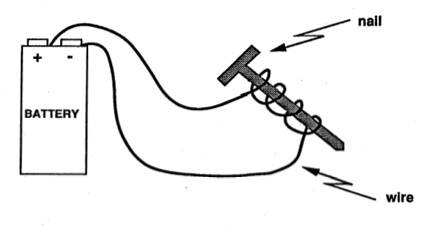
This picture best illustrates the construction of a(n)
magnet
electromagnet
series circuit
parallel circuit
What is magnetic force?
A force exerted by electrically charged particles
A force exerted by magnets that can be felt by objects near a magnet
A force exerted by magnets that makes an object become electrically charged
A force exerted by a magnet only when it physically touches an object

The picture above is an example of what?
Magnetic field
Electric field
Repulsion
Attraction
What would happen with the magnets in the picture above?
They would repel
Nothing
They would attract
They would repel and then attract

If the north pole of a magnet is brought close to the south pole of another magnet, what will happen?
They will atrract each other
They will repel each other
They will demagnitize
The south pole will turn around so the north pole is facing the other magnet.
What does this image show?
Parallel circuit
Series circuit
Magnet
Electromagnet
The area of magnetic force around a magnet is known as its ____________.
magnetism
magnetic current
magnetic field
electric current
A _______________ is a current-carrying coil of wire with many loops.
magnet
electromagnet
solenoid
compass
Increasing the number of coils in an electromagnet will _________ the power of the magnet.
decrease
increase
not affect
What happens to the strength of a magnetic field as you move away from the magnet?
The strength of the magnetic field increases.
The strength of the magnetic field doesn't change.
The strength of the magnetic field is doubled.
The strength of the magnetic field decreases.

What conclusion can you draw from this graph?
As current increases, magnetic strength decreases.
As current increases, magnetic strength increases.
As current decreases, magnetic strength increases.
There is no relationship between current and magnetic strength.
As the strength of a magnetic field increases, the ability to attract metal objects ____________.
increases
decreases
stays the same

The strongest parts of the magnet are ...
fronts
backs
poles
middle
A magnet will pick up an object that is made of...
plastic
iron or steel
glass
copper

The area around a magnet is called the .....
attraction zone
work area
magnetic field
hot zone

Why does the compass needle move at different locations?
Because the needle is attracted to the magnetic field produced by the magnet
Because north is up
Because it is being attracted to the Magnetic North Pole
Because north is down
Every magnet has a:
East and West pole
North and South pole
East and South pole
North and West pole
Chicago and Saint pole


When running a current through a wire, what do the blue lines represent?
The wire spinning
A magnetic field that was created
Electrons leaving
Electricity
Increasing the number of coils in an electromagnet will _________ the power of the magnet.
decrease
increase
not affect
What type of core is best for electromagnets?
Steel
Iron
Plastic
Copper
As the strength of a magnetic field increases, the ability to attract metal objects ____________.
increases
decreases
stays the same
Electrons have a ____________ charge.
negative
neutral
positive
Which of the following is NOT a (ferro)magnetic metal?
Copper
Nickel
Cobalt
Iron
What name is given to those parts of a magnet where the magnetic effect is most concentrated?
Terminals
Alloys
Poles
Attractors
Which of the following is NOT found in the Periodic Table of the Elements?
Selenium
Steel
Titanium
Tin
From the following list of forces, which is the odd-one-out?
Weight
Magnetism
Electrostatics
Friction
The south-pole of a powerful bar magnet is brought close to a brass ring. Which of the following best describes what will happen?
Nothing
Attraction
Levitation
Repulsion
The south-pole of a powerful bar magnet is brought to within 1 cm of a steel paperclip. Which of the following best describes what will happen?
Nothing
Attraction
Repulsion
Contraction
Which of the following correctly describes the direction of a magnetic field?
Strong to Weak
North to South
South to North
Weak to Strong
Which of the following could be repelled by the NORTH pole of a bar magnet.
A pencil
A steel paperclip
A gold coin
A magnet
Which of the following arrangement of poles will produce a force of REPULSION?
North - North
North - South
South - North
South - South
A steel paperclip (which is itself not a magnet) is attracted to the South pole of a bar magnet. This paperclip then exerts an attractive force on a second paperclip. What is this an example of?
Electromagnetism
Induced magnetism
Permanent magnetism
Ultra-magnetism
Which of the following terms is used to describe the type of magnetism that is not easily removed?
Induced magnetism
Fixed magnetism
Permanent magnetism
Electromagnetism
Which of the following best describes the magnetic field that surrounds a current-carrying wire?
A double-helix
Figure-of-eight
A solenoid
A circle with the wire at its centre
What name is given to a coil of copper wire?
Transformer
Electromagnet
Solenoid
Monopole
Which of the following has NO EFFECT on the strength of an electromagnet?
The number of turns (loops) on the solenoid.
The current that is flowing through the solenoid.
The type of metal core placed through the solenoid.
The government.
In Fleming's Left-Hand Rule, what does the index finger indicate?
The direction of the force on the wire.
The direction of the current that flows through the wire.
The direction of the magnetic field.
The direction of the voltage that makes the current flow.

What is the definition of electric charge?
A physical property causing objects or atoms to attract or repel each other without touching.
A physical property causing objects or atoms to be solid, liquid, or gas.
A physical property causing objects or atoms to multiply and divide.
A physical property causing objects or atoms to move magnetically.

Which of the following can move from one atom to another?
Protons.
Neutrons.
Electrons.
Nucleus.
Electricity is...
the movement of the sun.
the movement of electrons.
the movement of the moon.
the movement of air.
A type of static electricity that occurs in storms is...
clouds.
rain.
thunder.
lightning.
Electricity can be changed into other forms of energy, including...
light, heat, sound, and motion.
cooling, running, freezing, and motion.
heat, air, tires, and fans.
up, down, left, and right.
The flow of electricity is a/an...
battery.
resistor.
current.
insulator.
A complete pathway for the flow of electricity is called a...
circuit.
series.
parallel.
current.
When a circuit is ____________ it is incomplete, and charges cannot flow through.
open
closed
series
parallel

In a series circuit, if one bulb goes out...
the circuit will still work.
the circuit becomes parallel.
the circuit will not work.
the circuit will reverse the flow.

Materials that will not allow electric current to flow are called...
conductors.
insulators.
components.
electromagnets.
When running a current through a wire, what do the blue lines represent?
The wire spinning.
A magnetic field.
Electrons leaving.
Electricity.
The ability of some materials to attract certain metals is called...
Electricity.
Magnetism.
Electromagnetism.
Atoms.

How do you magnetize an iron nail?
Rub one end of a magnet, in the same direction, to align the domains.
Rub one end of a magnet, in the opposite directions, to unwind the domains.
Iron is always a permanent magnet.
Expose the iron to extreme temperatures.
What would happen with the magnets in the picture above?
They would repel.
They would attract and then repel.
They would attract.
They would repel and then attract.
Every magnet has a/an...
east and west pole.
north and south pole.
east and south pole.
west and north pole.
What is the difference between a permanent magnet and an electromagnet?
An electromagnet can't be turned on and off.
A permanent magnet can be turned on and off.
An electromagnet can be turned on and off.
A permanent magnet is stronger than an electromagnet.

Earth acts like a giant magnet because its center is made up mostly of...
granite.
gold.
iron.
limestone.

Along the outside lines.
Along the inside lines on either side.
Where the lines are close together at the poles.
In the space outside of the lines.

The needle is a magnet, and it aligns with the Earth's magnetic field.
Earth is a magnet, and it attracts all metal objects towards the north.
Earth's south pole does not have a magnetic pull.
All magnets have a north and south pole.

The interaction between electricity and magnetism is...
A. magnetic force.
B. electromagnetism.
C. electric force.
D. magnetic poles.
When drawing magnetic field lines, they should have…
arrows pointing south to north
arrows pointing in both directions
no arrows
arrows pointing north to south
An unmagnetised iron nail is passed through a coil of wire attached to a sensitive ammeter.
What happens?
The nail is attracted
The nail is repelled
A current is induced
No current is induced
A magnetic field is acting away from you and a conductor moves upwards through this field.
If you use Fleming's right hand rule, what can you conclude?
No current will be induced
A current will be induced upwards
A current will be induced to the left
A current will be induced away from you

A current passes through this solenoid from the left to right end. How should the magnetic field arrows be drawn?
The magnetic field arrows should be drawn inward at both ends
The magnetic field arrows should be drawn outward at both ends
The magnetic field arrows should be drawn into the left end and out of the right end
The magnetic field arrows should be drawn into the right end and out of the left end
The region around a magnet where the effect of the magnet can be felt is called the…
magnetic pole
magnetic field
magnetic force
magnetic line
An iron nail that isn't initially magnetic is brought close to a magnet and becomes magnetised.
What is the nail now called?
A constant magnet
A permanent magnet
A temporary magnet
An induced magnet
Which piece of equipment would you NOT need to use in order to show how a current is induced?
A magnet
A battery
A wire
An ammeter
Which of the following describes what a relay switch can be used for?
To attract a hammer to hit a bell
To attract the switch terminals of a circuit to turn on something needing a larger current
To attract an iron bolt to pull it back
To attract an iron bar to activate an electronic counter
When you move towards a magnet, the magnetic field becomes…
stronger
more spread out
weaker
parallel
A magnet is moved past a straight wire and a current is induced.
Which of the following would increase the induced current?
Turning the magnet round
Moving the magnet past in the opposite direction
Making the wire into a coil
Moving the magnet more slowly
Which of the following would NOT make an electromagnet stronger?
Having the wire coils turn in both directions
Wrapping more turns of wire round the core
Using a soft iron core instead of air
Increasing the current through the wire
A magnet is passed through a coil of wire at a steady speed.
It is then passed back through the same coil of wire at the same speed but in the opposite direction.
Which of the following is true?
The current is now stronger, but in the same direction
The current is the same strength and in the same direction
The current is the same strength but in the opposite direction
The current is now stronger and in the opposite direction
The magnetic field around a solenoid is the same shape as the magnetic field…
between two north poles
between two south poles
between two opposite poles
surrounding a bar magnet
A coil of wire is connected to a sensitive voltmeter.
A magnet is pushed into the coil then left there.
What does the voltmeter needle do?
The needle does not respond
The needle flicks to the right then stays in that position
The needle flicks right then left
The needle flicks right then returns to zero when the magnet stops moving

Look at this solenoid. How would a permanent magnet stood underneath the solenoid be affected?
A permanent magnet stood under this solenoid with the south pole upwards would be attracted
A permanent magnet stood under this solenoid with the south pole upwards would be repelled
A permanent magnet stood under this solenoid with the north pole upwards would be repelled
A permanent magnet stood under this solenoid with the north pole upwards would be unaffected
How could you investigate the strength of an electromagnet?
See how many plastic beads it can hold
See how many steel paper clips it can hold
See how many copper nails it can hold
See how many brass tacks it can hold

What does this image show?
This image shows two opposite poles repelling
This image shows two opposite poles attracting
This image shows two like poles repelling
This image shows two like poles attracting
How are the two poles on a bar magnet named?
North and north
South and south
North and south
East and west
When a current passes through a straight length of wire, the magnetic field created is…
alongside the wire in the direction of the current
alongside the wire but in the opposite direction to the current
circular, along the length of the wire
radiating outwards from the wire in all directions
A magnet is dropped through a coil of wire.
Which of these suggestions will NOT affect the strength of current that is induced?
Drop the magnet through with the other pole pointing downwards
Drop a stronger magnet through the coil
Use a coil with more turns of wire
Lower the magnet through on a string instead of dropping it
Which of these devices does NOT use a solenoid?
A door bell
A relay switch
An electric door lock
An electric fan
An iron bar is made to be magnetic all the time.
What is the iron bar called?
A constant magnet
A permanent magnet
A temporary magnet
An induced magnet
Which of the following is NOT an advantage of an electromagnet?
Can be turned on and off easily
Can be made stronger or weaker easily
Poles can be reversed easily
Doesn't need a power supply
Electromagnetic induction causes a current to flow when…
currents cut through a field
a field experiences a force
a conductor cuts through magnetic field lines
a conductor aligns with magnetic field lines
The function of a transformer is to ...
raise and lower the apparent power levels
transfer DC voltage from the primary winding to the secondary winding
increase or decrease A.C voltage or A.C current levels
transform mechanical energy into electrical energy
A step up transformer has its primary winding to secondary winding ratio
Greater than 1
Equal to 1
Less than 1
Unknown
Primary winding of a transformer is determined by ...
which winding is nearer to the load
which winding is connected to the source
which winding has more turns
which side has the highest voltage
Choose the correct statement:
The ratio of the secondary voltage to the primary voltage is equal to the ratio of the primary turn to the secondary turn
The ratio of the primary current to the secondary current is equal to the ratio of the primary voltage to the secondary voltage
The ratio of the primary apparent power to the secondary apparent power is equal to the ration of the primary voltage to the secondary voltage
The ratio of the secondary current to the primary current is equal to the ratio of the primary turn to the secondary turn
Mutual induction means: (Choose the correct statement)
A conductor (wire) placed in a varying magnetic field will have a current induced in it
A conductor produces varying magnetic field
Two conductors must be connected together to produce current
Two conductors cannot used magnetic field to produce current
choose all step down transformers
TV adapter
Mobile charger
Transformer outside the homes
Transformers outside power generating stations
Assume primary has 240 turns and secondary has 60 turns. Primary is connected with 120V AC power supply. What is the voltage on the secondary?
30 V
0.333 V
2 V
120V

A 12Ω resistor is connected across the secondary winding of an ideal transformer whose secondary voltage is 120V. Determine the primary voltage if the supply current is 4A.

