
Font size
 Worksheets
Topic 10: Struggle in Medieval Europe (962-1492) Introduction
Total questions: 115
Worksheet time: 58mins
Which development in the 900s helped revive a version of the Roman Empire in central Europe?
Otto the Great crowned emperor by the pope
Vikings establishing kingdoms in Britain
Byzantines conquering the Italian peninsula
Muslim caliphate expanding into France
What role did cooperation between rulers and the Church play in shaping power in medieval Europe?
It eliminated church influence over politics entirely
It strengthened states while creating authority rivalries
It made rulers powerless compared to local nobles
It ended conflicts and unified all European kingdoms
Which claim by Pope Gregory VII most directly challenged Emperor Henry IV’s power?
Only nobles could remove church officials from office
Only emperors could appoint rival popes
Only the pope had the right to choose bishops
Only bishops could tax nobles in their lands
What does excommunicate mean in the context of medieval Church authority?
To force nobles to swear loyalty to an emperor
To grant a bishop royal protection
To exclude a person from the Church community
To elevate a monk to papal office

Use the image of Henry IV waiting outside the castle in snow to infer his situation. Which conclusion is best supported?
He held military advantage over the pope
He commanded loyal subjects at the castle
He negotiated from a position of strength
He lacked support and sought forgiveness
Which statement best explains the idea of church and state authority during medieval Europe?
Nobles elected every local bishop
Popes held spiritual power over Christians
Monarchs controlled trade in all cities
Merchants financed royal armies alone
What was the goal behind reviving the Roman Empire in medieval Europe?
To legitimize rulers with ancient prestige
To expand farms in northern Europe
To end all conflicts with Vikings
To replace feudal courts with juries
Who was Otto the Great and what did he accomplish?
A French duke who lost lands to England
A German king who strengthened royal power
A Spanish bishop who wrote legal codes
An Italian merchant who funded crusades
The formation of the Holy Roman Empire mainly involved rulers from which region?
German lands and central Europe
Scandinavian islands and fjords
North African coastal cities
Byzantine Greek provinces
Why did medieval monarchs seek influence over the Church?
To end pilgrimages to holy sites
To replace priests with royal tax collectors
To control monastery farming techniques
To appoint bishops who supported royal policies
What conflict often arose when popes and monarchs both claimed authority?
Disputes over appointing bishops and abbots
Arguments about building new castles
Contests over market prices for wool
Disagreements about coin designs
Which outcome followed Otto the Great’s coronation by the pope in 962?
Immediate conquest of the entire Mediterranean
Creation of a unified European parliament
Recognition of a revived Roman imperial title
Abolition of feudal obligations for peasants
How did the relationship between popes and emperors affect political power in the Holy Roman Empire?
Royal councils ignored local customs entirely
Religious offices replaced all noble titles
Unified leadership consistently ended rebellions
Shared claims often weakened central control

What was one reason popes asserted they could depose rulers?
They collected more taxes than kings did
They controlled sea routes to trade ports
They commanded the largest land armies
They believed spiritual authority came from God

Which claim did Henry IV make in his reply to Gregory VII?
Popes must obey imperial tax laws
Emperors should avoid church rituals
Kings are anointed by God to rule
Bishops are elected by village guilds
Which action did Pope Gregory VII take against Henry IV during their conflict?
Formed a truce with Henry IV's nobles
Granted Henry IV lands in Italy
Crowned Henry IV Holy Roman Emperor
Issued an excommunication against Henry IV
Why did excommunication threaten a medieval ruler’s power?
It cut ties to Church sacraments
It dissolved military alliances
It seized royal treasuries
It banned trade with neighbors
What compromise did the Concordat of Worms establish?
Church appoints bishops, emperor grants fiefs
Emperor appoints bishops, pope crowns kings
Nobles elect bishops, Church taxes fiefs
Pope controls taxes, emperor runs courts
During Henry IV’s penance at Canossa, what did he seek from the pope?
Approval to wage crusade
Recognition of new borders
Alliances with French nobles
Lifting of excommunication
How did conflicts between popes and monarchs affect medieval governance?
They limited royal control over the Church
They ended feudal landholding entirely
They created elected parliaments everywhere
They abolished noble titles permanently
If a king could appoint bishops directly, what risk did the pope fear?
Political control over the Church
Loss of royal taxation power
Revolt of urban guilds
Closure of monasteries
Which statement explains why the Concordat of Worms is significant?
It abolished feudalism and serfdom
It created the first national parliament
It ended all wars in medieval Europe
It balanced power between Church and empire
Which outcome followed Henry IV’s challenge to Pope Gregory VII?
Nobles rebelled against the emperor
Cities surrendered without resistance
Trade collapsed across the Alps
The papacy moved to Paris
Which factor helped the French monarchy grow stronger after 987?
Control of Paris and royal courts
Discovery of New World gold
Union with the Byzantine Empire
Rule by elected town councils
Why would medieval nobles support a pope against an emperor at times?
To secure overseas colonies
To gain papal tax exemptions
To replace feudal oaths with wages
To weaken imperial authority locally
Pope Gregory VII’s Dictatus Papae most strongly argues for which claim?
Bishops are chosen by local nobles
Kings rule churches independently
Church and state are completely equal
The pope holds supreme authority
Henry IV’s letter challenging Gregory VII primarily reflects which point of view?
Military power is greater than law
Royal authority over church appointments
Noble control of all taxation
Complete obedience to papal orders
Which right promised in the Magna Carta limited royal power?
Unlimited taxation by the crown
Royal control of church elections
Mandatory crusade participation
Trial by jury under Common Law
Which group ruled England before William the Conqueror’s invasion in 1066?
Plantagenets from Anjou
Vikings from Scandinavia
Normans from northern France
Anglo-Saxons controlled the kingdom
What decisive event in 1066 led to William becoming king of England?
Battle of Hastings victory
Signing of the Magna Carta
Conquest of London walls
Coronation at Westminster
Which title did William hold before conquering England?
Duke of Normandy
Earl of Wessex
King of France
Lord of Canterbury
One major change after the Norman Conquest was a new system of landholding. What best describes this change?
Church controlled all estates
Royal lands shared equally
Communal farms for villagers
Feudal grants to Norman nobles
How did the Norman Conquest affect the English language?
Norman French influenced vocabulary
Latin fully replaced English speech
Celtic dialect became dominant
Greek terms became standard
Why was Harold Godwinson defeated at the Battle of Hastings?
Normans lacked battlefield discipline
Harold received papal support
English had superior longbows
Norman cavalry and archers tactics
Which feature of Norman rule helped centralize royal power in England?
Local folk assemblies
Rotating elective monarchy
Domesday Book surveys
Independent city-states
What was the immediate political outcome of William’s victory in 1066?
Anglo-Saxon nobles expanded power
England united with France
Parliament dissolved permanently
William crowned king of England
Which statement best explains why Anglo-Saxon elites lost land after 1066?
William redistributed estates to supporters
Peasants voted to seize noble lands
Vikings forced nobles to flee north
Church annulled earlier charters
How did castles contribute to Norman control across England?
Military strongpoints securing regions
Public schools teaching French
Markets encouraging trade fairs
Monasteries replacing parishes
Which consequence of the Norman Conquest transformed English society the most?
Return to Roman republican government
Abolition of all feudal obligations
Restoration of Celtic tribal customs
Fusion of Norman and Anglo-Saxon cultures
If you were an Anglo-Saxon landholder in 1066, which strategy might reduce the risk of losing your estate under William?
Emigrate and abandon the manor
Petition the pope for intervention
Refuse homage and resist taxation
Swear loyalty and provide military service
Which conflict best illustrates the clash between Church and state in medieval England?
Henry II versus Thomas Becket over church courts
King John versus barons over royal taxation
Edward I versus Parliament over common law
William the Conqueror versus nobles over feudal dues
What was Thomas Becket’s role before his conflict with Henry II?
Archbishop of Canterbury and church leader
Treasurer of the royal exchequer
Chief justice of royal common law
Speaker of the English Parliament
Why did Henry II’s legal reforms anger Thomas Becket?
They reduced church court authority over clergy
They created a new tax on monasteries
They required bishops to serve in Parliament
They abolished trial by jury for nobles
Which event most directly limited King John’s power?
Creating royal circuit courts
Facing excommunication by the Pope
Signing the Magna Carta at Runnymede
Losing land in Normandy to France
Which principle is established by habeas corpus?
Supremacy of church courts over royals
No imprisonment without being charged
No taxation without representation
Right of nobles to advise the king
What is English common law primarily based on?
Local customs from individual manors
Decrees issued by the Pope in Rome
Written codes from Roman law texts
Precedents from royal court decisions
Which statement best describes Parliament in medieval England?
A military group enforcing royal commands
A body of judges writing common law codes
A council of bishops controlling church courts
An assembly of lords and townsmen advising the king
How did Magna Carta affect taxation?
Set fixed rates for market tolls nationwide
Eliminated all taxes on church lands
Required consent from barons for new taxes
Gave sheriffs power to collect parish tithes
What was a major goal of Henry II’s reforms to the judiciary?
Increase revenue from church tithes
Replace juries with ordeal and combat
Create uniform royal justice across England
Weaken the influence of feudal lords
Which outcome followed Thomas Becket’s murder?
Public outrage strengthened Church influence
Barons forced the king to abdicate
Parliament dissolved for several years
Common law courts were suspended
Which right did Magna Carta promise to free men?
Access to royal offices without fees
Freedom to trade across all of Europe
Protection from arbitrary arrest and seizure
Right to elect bishops and abbots
In the medieval English legal system, what did juries begin to do?
Present local knowledge to royal judges
Select new members of Parliament
Approve royal taxes on merchants
Choose bishops for cathedral chapters
Which feature distinguishes common law from earlier local customs?
It focused solely on property disputes
It was enforced only by church courts
It applied consistently across the realm
It relied on Roman imperial codes
How did Parliament evolve under later kings like Edward I?
It replaced the judiciary with councils
It included knights and burgesses for consent
It became a purely hereditary assembly
It expelled all clergy from its sessions
Which statement connects Magna Carta to modern legal ideas?
It established papal supremacy in England
It mandated crusades to the Holy Land
It created a nationwide sales tax system
It inspired due process and limited government
Which document limited the English king’s power by guaranteeing certain rights to nobles in 1215?
Common law traditions established over time
An early meeting of the English Parliament
Habeas corpus protections for prisoners
The Magna Carta signed at Runnymede
What is the best description of common law in medieval England?
Rules made by each local lord
Written codes from one royal decree
Church canons enforced by bishops
Legal principles based on court decisions
Habeas corpus protects people by requiring which action before imprisonment?
Formal charge shown to a court
Royal pardon from the monarch
Confession witnessed by clergy
Approval from local Parliament
How did Parliament develop as a check on royal authority in England?
It collected church tithes alone
It approved taxes and advised kings
It replaced courts with juries only
It commanded armies without the king
Which outcome from the Norman Conquest most changed England’s society and governance?
Spread of Roman republican ideals
Fusion of Anglo-Saxon and Norman law
Immediate abolition of feudal landholding
End of all hereditary noble titles
A baron argues the king raised taxes without consent. Which English institution or principle would most support the baron’s complaint?
Common law precedent on property
Royal prerogative over warfare
Habeas corpus for accused persons
Parliament’s right to approve taxation
Which core idea of the Magna Carta most directly limited the king’s authority?
Kings appointed all local officials
Royal decrees enforced harsh punishments
Taxation required consent of nobles
Monarchs could ignore written laws
What principle about justice is reflected in the Magna Carta’s requirement for lawful judgment?
Fines set by the monarch alone
Immediate imprisonment without trial
Punishment decided by royal whim
Trial by peers and lawful process
How did county courts help carry out justice under Magna Carta principles?
They judged only royal family disputes
They traveled only with the king
They collected taxes without trials
They held regular local hearings
Which statement best describes the shift in power caused by the Magna Carta?
From unchecked monarchy to rule of law
From written charters to oral orders
From local courts to royal prisons
From nobles’ rights to peasant taxes
A sheriff fines a townsman heavily without a hearing. Which Magna Carta rule is most likely violated?
Judgment by lawful court procedures
King’s right to raise armies quickly
Nobles’ duty to advise the monarch
Customs of markets and trade routes
Why did establishing county courts strengthen fairness in medieval England?
Royal punishments became harsher
Justice became accessible and routine
Nobles avoided all legal duties
Trials moved only to the capital
Which example shows limits on royal power through taxation?
King seizes goods without payment
King seeks consent before new taxes
King exempts nobles from all taxes
King orders immediate tax doubling
Which goal best describes Pope Urban II’s message when he called for the First Crusade in 1095?
Recover the Holy Land from Muslim control
Protect trade routes to Northern Europe
Punish heretics within Christian kingdoms
Unite Europe under a single monarch
What was the main religious motivation behind the First Crusade?
Replace local rulers with crusader nobles
Defend Christian pilgrims in Jerusalem
End disputes among Italian city-states
Convert Byzantine Christians to Catholicism
Which term refers to regions in the Middle East ruled by Europeans after early Crusader victories?
Border marches
Crusader states
Royal fiefs
Merchant colonies
Which cause contributed to European support for launching the Crusades?
Desire to learn Arabic medicine
Appeal from the Byzantine emperor
Need to expand into North America
Plan to end the feudal system
What immediate outcome followed the First Crusade’s capture of Jerusalem in 1099?
Recognition by all Christian churches
Rapid return of all armies to Europe
Establishment of several crusader states
Peace treaty with Muslim leaders
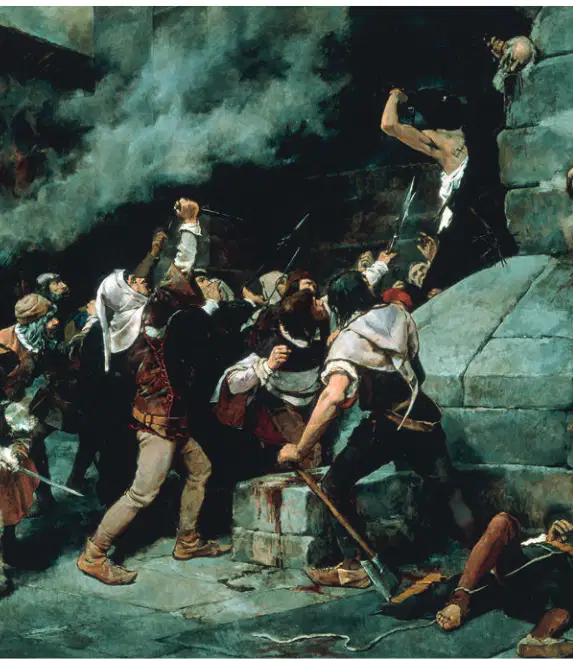
Which statement compares European and Muslim cavalry during the Crusades as noted by historians?
Muslim cavalry was slow; knights moved quickly
Knights used short swords; Muslims relied on axes
Muslim riders charged on foot; knights avoided horses
Knights wore heavy armor; Muslims favored lighter gear
Why did many Italian cities, such as Venice and Genoa, support crusading efforts?
They hoped to settle in northern forests
They aimed to expand Mediterranean trade
They sought new university partners
They wanted to abolish noble titles
Which effect of the Crusades involved cultural exchange between Europeans and Muslim societies?
Adoption of hygiene practices like washing with soap
Loss of sailing skills among merchants
Decline in interest in ancient learning
End of trade with Asia and North Africa
Which reasoning best explains how Crusades encouraged European exploration centuries later?
They forced all nobles to become sailors
They created maps of the Arctic Ocean
They proved oceans could not be crossed safely
They fostered curiosity about distant lands and routes
Which statement identifies a negative consequence linked to crusading zeal within Europe?
Trade networks with the East collapsed
Jewish communities suffered violent persecution
Tolerance for all religious groups increased
Knights Templar founded more universities
What do historians call a belief rejected by official Church teaching and punished during the Crusades era?
Simony
Heresy
Scholasticism
Doctrine
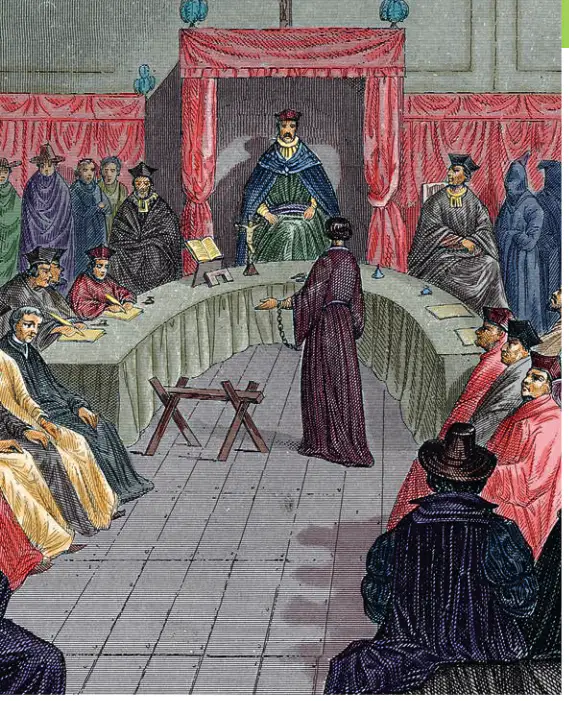
Use the scene of a medieval tribunal to infer: What institution began in the 1200s to investigate and judge heresy?
The Diet
The Inquisition
The Curia
The Estates-General
Which leader recaptured Jerusalem from the Crusaders in 1187?
Frederick Barbarossa
Richard I of England
Philip II of France
Saladin of Egypt
What was a primary goal of the Third Crusade?
Convert the Moors
Defend Rome
Retake Jerusalem
Conquer Constantinople
Which monarch earned the nickname “Lionheart” during the Crusades?
Henry II of England
Louis IX of France
Richard I of England
Philip II of France
The Fourth Crusade is best known for which major event in 1204?
Battle of Hattin
Treaty of Jaffa
Sack of Constantinople
Fall of Acre
During the Second Crusade, European forces attempted to secure which general region again?
Balkans
North Africa
Holy Land
Iberian Peninsula
Why did the Third Crusade fail to fully achieve its aims despite military successes?
Internal rivalries
Limited naval power
Leaders died early
No papal support
After the Fourth Crusade, how did relations between Western Europe and Byzantium change?
They strengthened alliances
They remained friendly
They worsened sharply
They became neutral
Which agreement allowed Christian pilgrims limited access to Jerusalem after the Third Crusade?
Treaty of Verdun
Treaty of Jaffa
Council of Clermont
Peace of Augsburg
Which term describes organized Church efforts to investigate and punish heresy in medieval Europe?
Reconquista campaigns
Feudal obligations
Guild regulations
Spanish Inquisition
During the Crusades, which group in Europe faced massacres and forced conversions in the late 1300s and 1400s?
Iberian Jews
Catalan monks
Venetian traders
Nobles of Aragon
What was a major lasting effect of the Crusades on Europe’s economy?
Collapse of farming
Expansion of trade
Loss of sea routes
End of coin money
Which action by Ferdinand and Isabella in 1492 targeted non-converts in Spain?
Founded new monasteries
Issued the expulsion decree
Abolished royal taxes
Ended the Reconquista
Heresy in medieval Europe was best defined as
Support for royal marriages
Migration to coastal cities
Beliefs opposing Church teachings
Trade with distant ports
Which Mediterranean island became a major trading and shipping center connecting Europeans, Muslims, and Jews?
Cyprus
Crete
Majorca
Sicily
Why did popes encourage the Reconquista and Crusades regarding Muslims?
To collect salt taxes
To promote silk weaving
To stop navigation maps
To reclaim Christian lands
Which statement explains a social impact of the Crusades on cultural exchange?
Latin vanished from schools
Isolation increased sharply
Ideas and goods spread widely
Maps were banned in ports
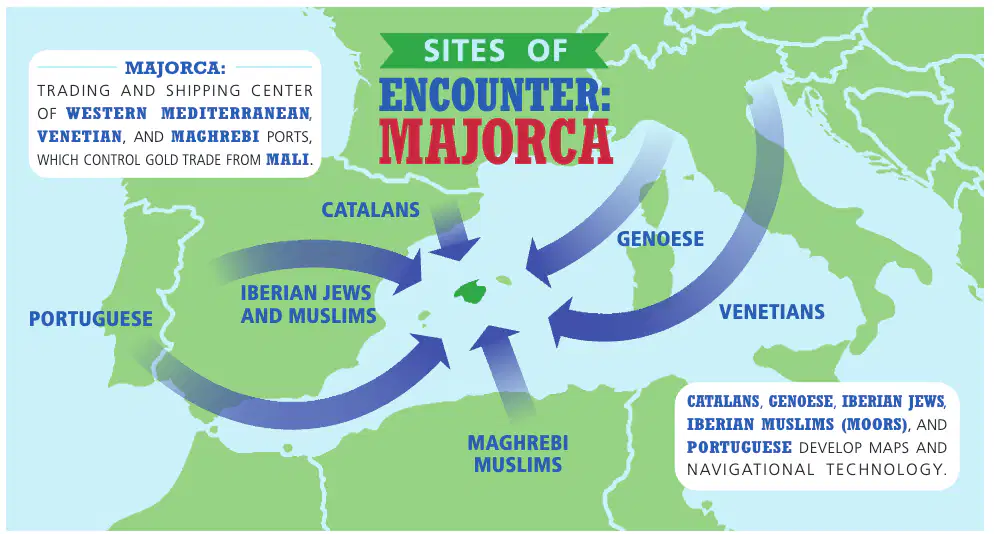
What role did Majorca play in medieval navigation and trade?
Center for farming tools
Hub for mapmaking networks
Base for crusader armies
Monastic pilgrimage site
Which institution in Spain used torture against suspected Christian heretics and converts?
Royal treasury office
Naval chart school
Spanish Inquisition
Town merchant guild
Trade with the East after the Crusades most directly led to
Less shipbuilding
Fewer city markets
New goods in Europe
Cheaper land rents
What immediate consequence did the 1492 edict have for Jews who refused conversion?
Ordered to depart Spain
Invited to trade fairs
Awarded royal titles
Given naval posts
Which misconception would a student correct about the Inquisition?
It was temporary and minor
It became permanent in Spain
It promoted free worship
It only targeted nobles
In late medieval Spain, what made life more dangerous for converted Jews?
Loss of farming land
Suspicion by the Inquisition
Ban on sea travel
End of market fairs
How did the Reconquista contribute to political change in Iberia by the late 1400s?
Eliminated all trade routes
Created independent city-states
Restored Moorish dynasties
Unified Spain under Catholic rule
Which term refers to Muslim inhabitants of Spain during the Middle Ages?
Castilians of northern Christian realms
Moorish rulers across Iberian lands
Visigoth nobles in early kingdoms
Frankish knights from Gaul
What was Córdoba best known for under Moorish rule?
A secluded monastery for pilgrims
A rural farming village with markets
A major cultural center of learning
A remote military outpost fortress
Which geographic area includes modern Spain and Portugal?
Balkan Peninsula in southeast
Iberian Peninsula near Atlantic
Scandinavian Peninsula north
Italian Peninsula by the Alps
What does the term Reconquista describe?
A Moorish expansion into France
Christian campaigns to reclaim Iberia
A treaty forming new Spanish states
Viking raids along Iberian coasts
Which feature characterized society in Muslim Spain?
Feudal villages with serfs only
Nomadic tribes without towns
Multicultural cities with scholars
Strictly single-language communities
Which group led efforts to retake territories from Muslim rule?
Italian merchant republics
Mongol khans from the steppes
Christian kingdoms of the north
Byzantine emperors in the east
How did expelling Jews and Muslims affect Spain’s economy?
It created more farmland quickly
It ended all taxation on nobles
It lost skilled people and wealth
It boosted trade through new ports
Which statement best explains a consequence for converts who stayed in Spain?
They were exempt from military service
They became rulers of united kingdoms
They faced later persecution for ancestry
They received equal rights immediately
Why did culture in the Iberian Peninsula become diverse during Muslim rule?
Mixing of Christian, Jewish, Muslim groups
Isolation from Mediterranean trade
Mandatory use of a single language
Prohibition of foreign travelers entering
Which city is most associated with advanced learning in Muslim Spain?
Toledo with steel sword workshops
Lisbon on the Atlantic coastline
Córdoba with libraries and scholars
Seville along the Guadalquivir River
Which idea connects the Crusades and the Reconquista?
Both were maritime exploration voyages
Both sought control of sacred territories
Both focused on Asian trade monopolies
Both replaced monarchs with republics
Which reason best explains why minorities were targeted as Christian kingdoms united?
Leaders feared divided religious loyalties
Farmers needed new land for crops
Merchants demanded lower taxes immediately
Knights lacked training for warfare

