
Font size
 Worksheets
Distribution
Total questions: 90
Worksheet time: 45mins
Which of the following is a function performed by middlemen?
Facilitating the distribution of goods
Manufacturing products
Setting government policies
Providing legal advice
Name the alternative channels of distribution for consumer goods, industrial goods and services.
Direct selling, retailers, wholesalers, agents
Only direct selling
Only wholesalers and agents
Only retailers and agents
Differentiate among intensive, selective, and exclusive market coverage strategies.
Intensive covers all outlets, selective covers some outlets, exclusive covers one outlet.
Intensive covers one outlet, selective covers all outlets, exclusive covers some outlets.
Intensive covers some outlets, selective covers one outlet, exclusive covers all outlets.
Intensive covers exclusive outlets, selective covers intensive outlets, exclusive covers selective outlets.
Three types of wholesale are:
Merchant wholesalers, Brokers, and Agents
Retailers, Consumers, and Producers
Manufacturers, Distributors, and Customers
Importers, Exporters, and Retailers
Select the option that correctly lists ten types of retailers.
Department stores, supermarkets, convenience stores, specialty stores, discount stores, online retailers, warehouse clubs, drugstores, superstores, and boutiques
Department stores, gas stations, banks, schools, online retailers, restaurants, hotels, offices, parks, and gyms
Supermarkets, airlines, hospitals, schools, online retailers, banks, restaurants, offices, parks, and gyms
Convenience stores, airlines, hospitals, schools, online retailers, banks, restaurants, offices, parks, and gyms
Fill in the blank: Channel of distribution refers to ______ that products follow their own way from the producer to end user.
routes
rules
prices
brands
Fill in the blank: Middleman are businesspeople who channel ______ and ______ from producers to customers.
goods and services
money and stocks
ideas and opinions
taxes and fees
Fill in the blank: Distribution mix is a combination of ______ and channels that producers use to get a product to end users.
middleman
advertising
packaging
transportation
Fill in the blank: One function of a middleman is to provide a ______ force to go to customers’ houses to sell products.
sales
security
transport
cleaning
Fill in the blank: Middlemen provide ______ information to producers about market trends.
market
financial
technical
personal
Fill in the blank: Middlemen help producers to boost their sales by providing ______ support.
promotional
technical
financial
legal
Fill in the blank: Middlemen help with ______, standardizing, and dividing products.
sorting
selling
packaging
advertising
Fill in the blank: Middlemen are responsible for carrying ______.
stock
money
documents
goods
Middlemen are responsible for ______ products to customers.
delivering
manufacturing
designing
consuming
Fill in the blank: Middlemen assume ______ by selling products and reducing debt and risk of theft.
risks
profits
debts
ownership
Fill in the blank: Middlemen provide ______ by giving loans to producers.
financing
transportation
advertising
storage
Fill in the blank: End users benefit from middlemen by ______ products.
buying
selling
making
designing
According to the table on channel alternatives, which channel is especially for small producers who cannot afford their own sales force?
Producer (to) Customer
Producer (to) Retailer (to) Customer
Producer (to) Wholesaler (to) Retailer (to) Customer
Producer (to) Agent/Broker (to) Wholesaler (to) Retailer (to) Customer
Fill in the blank: In the distribution of industrial goods, the channel 'Producer (to) Wholesaler (to) Industrial user' is used for ______ industry.
scattered
concentrated
seasonal
large-scale
Which of the following is an example of a service industry channel according to the table?
Producer (to) Customer
Producer (to) Agent/Broker (to) Wholesaler (to) Retailer (to) Customer
Producer (to) Agent/Broker (to) Consumer or industrial user
Producer (to) Wholesaler (to) Industrial user
What is intensive distribution?
A) A type of distribution where products are available in a few selected outlets
B) A type of distribution where products are available in as many outlets as possible
C) A type of distribution for expensive products only
D) A type of distribution for industrial goods only
Fill in the blank: Intensive distribution is commonly used with inexpensive convenience products such as ______ or toothpaste.
bread
shampoo
perfume
cheese
The cost is a big problem in intensive distribution.
True
False
What is selective distribution?
Distribution to a limited number of outlets, usually used for apparel (clothes) or appliances.
Distribution to all possible outlets, regardless of product type.
Distribution only through exclusive flagship stores.
Distribution only via online channels.
What is exclusive distribution?
Middleman are given the exclusive right to sell a product within a given geographic area.
Middleman are allowed to sell any product in any area without restrictions.
Products are distributed to all possible retailers in every area.
Only manufacturers can sell products directly to consumers.
What should be taken into consideration for the selection of channels?
The location of customers or their lifestyles.
The color of the channel logo.
The age of the channel manager.
The number of advertisements aired.
What does the use of middleman help with?
The shortage of inventories or warehouses of small companies, and also the lack of sales force.
Increasing the production capacity of large companies.
Reducing the need for advertising in the market.
Improving the quality control of products.
Which type of middleman sells products to other firms that buy them for resale or industrial use?
Wholesaler
Retailer
Agent
Broker
Which type of wholesaler takes title of merchandise from producer and then sells it?
Merchant wholesaler
Agent wholesaler
Drop shipper
Broker
Agents do not take title to merchandise they sell but receive ______ for selling merchandise.
commission
salary
bonus
rent
Brokers are special types of agents who specialize in a special commodity.
True
False
Which type of producer-owned wholesaler carries stock and sells products?
Branch office
Sales office
Which type of producer-owned wholesaler does not carry stock but takes order for selling activities?
Branch office
Sales office
What is a Department store?
Large stores with a variety of high-quality merchandise (and services to lure customers).
Small shops specializing in a single product category.
Online platforms selling only digital goods.
Street vendors selling handmade crafts.
What does Scrambled merchandising mean?
The action of selling products which only sell at different types of outlets to sell at department stores.
The process of arranging products in alphabetical order.
The practice of selling only one type of product in a store.
The method of displaying products based on their color.
What are Discount stores?
Retailers that sell a variety of goods (inexpensive products and nationally advertised products) below the market price by keeping their overhead low.
Retailers that specialize in selling luxury goods at premium prices.
Stores that only sell products online and do not have physical locations.
Retailers that focus exclusively on selling fresh produce and groceries.
What is the Wheel of retailing?
An evolution process of discount stores to become department stores and then are replaced by competitors.
A pricing strategy used by online retailers.
A method of inventory management in supermarkets.
A customer loyalty program in retail stores.
What are Off-price stores?
Stores that sell products at a price below wholesale price by collecting overstocked merchandise, irregulars, end-of-season items, etc. or agree to not receive privilege from producers to receive a lower price.
Stores that only sell products at the manufacturer's suggested retail price.
Stores that exclusively sell luxury goods at premium prices.
Stores that operate only online and do not have physical locations.
What are Gray market outlets?
Retail establishments that collect products at an unauthorized discount and then resell them at a bargain price. They often follow trans-shipping process in which they buy in excess a products to receive volume discounts and then resell it.
Retail stores that only sell products directly from manufacturers at full price.
Authorized dealers who provide warranty and after-sales service for branded products.
Online platforms that exclusively sell digital goods and services.
What is a Warehouse club?
Membership-must, low-priced stores [warehouse].
A club for warehouse workers only.
A place to store goods for free.
A retail store with no membership required.
What is a Catalog showroom?
Retail stores in which customers browse through catalogs and then receive the items they select from an on premises warehouse.
Stores that only sell products online without any physical location.
Warehouses where only employees can access products for shipping.
Retail stores that display only sample products and do not sell anything directly.
What are Variety stores?
Old-fashioned, often sell products at 5-10 cents per.
Large supermarkets selling groceries and household items.
Stores specializing in electronics and gadgets.
Luxury boutiques selling designer clothing.
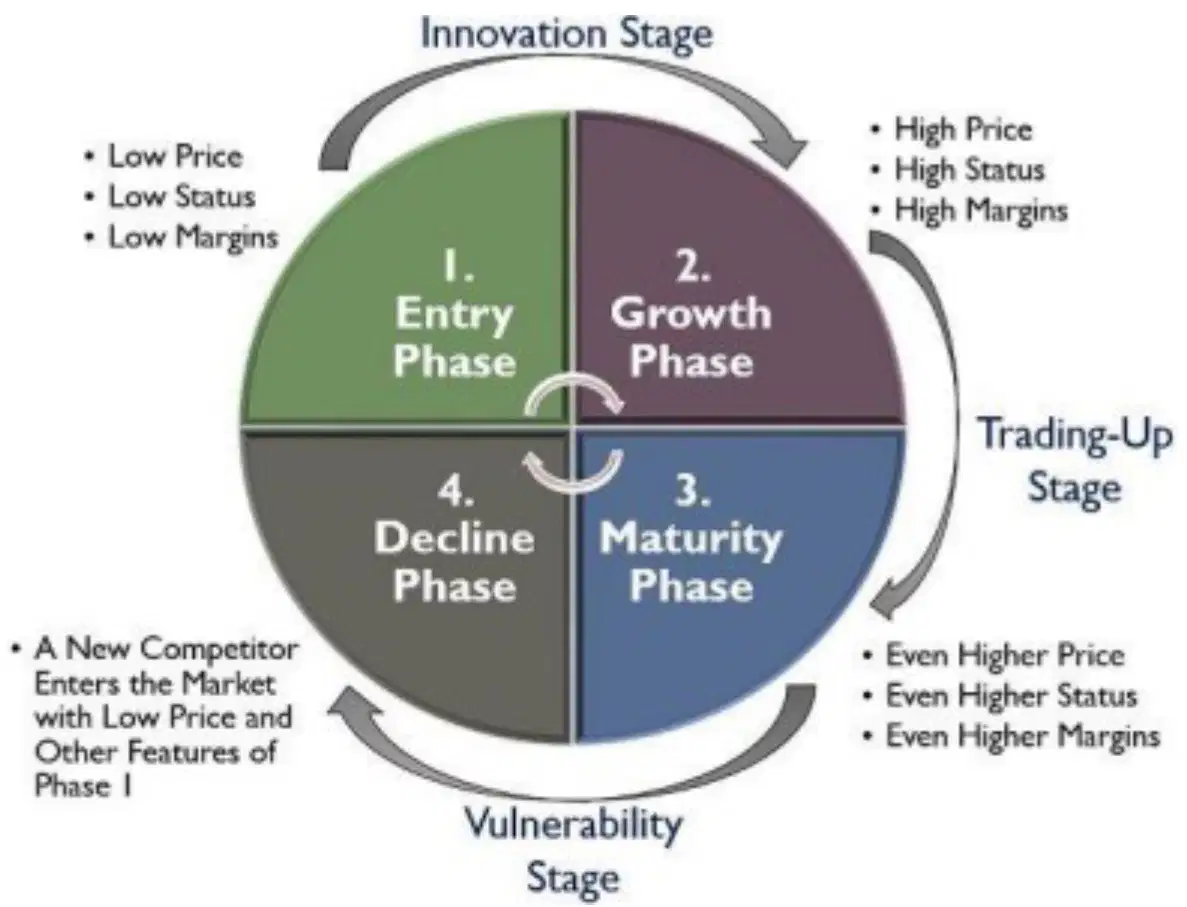
Which stage in the Wheel of Retailing is associated with low price, low status, and low margins?
Entry Phase (Stage 1)
Trading-Up Phase (Stage 2)
Maturity Phase (Stage 3)
Decline Phase (Stage 4)
What is a specialty store? Fill in the blank: A specialty store offers ________ products line, wide ranges of brands and selection for customers.
limited
extensive
expensive
seasonal
What is a supermarket? Fill in the blank: A supermarket is a large ________ food store.
departmentalized
seasonal
outdoor
mobile
What is a hypermarket? Fill in the blank: A hypermarket is a combination of ________ and typical discount stores.
supermarket
department store
pharmacy
convenience store
What is a convenience store? Fill in the blank: A convenience store offers ________ and time utility.
place
price
product
promotion
Which of the following is NOT a nonstore retailer?
Mail order firms
Vending machines
Door-to-door retailers
Supermarket
Vending machines offer convenience, time utility, and non-bargain price, but are at risk of vandalism.
True
False
Fill in the blank: Physical distribution refers to all the ________ required to move finished products from the producer to the consumer.
activities
expenses
documents
permissions
Which type of store offers a variety of products and services?
Department stores
Bargain stores
Specialty stores
Nonstores
Which type of store offers limited numbers of product?
Department stores
Bargain stores
Specialty stores
Nonstores
Which of the following is a nonstore retailer?
Mail order firms
Vending machines
Door-to-door retailers
All of the above
Fill in the blank: Door-to-door retailers have large sales forces to call directly on customers in their ________ to offer and sell products.
homes
offices
schools
shops
What is the main function of order processing in inhouse operations?
Receiving and handling orders
Managing employee payroll
Supervising inventory audits
Conducting market research
Which facility is used for storing backup stocks of supplies or finished products?
Warehouse
Distribution center
Truck
Pipeline
What are the two main activities involved in warehousing?
Packaging and shipping
Material handling and inventory control
Insurance and delivery
Storage and reduction
Fill in the blank: ________ is the movement of goods within physical distribution facility and is mainly concerned with storage method.
Material handling
Inventory control
Order processing
Packaging
Which type of transport is most popular for door delivery but cannot deliver heavy materials?
Railroad
Truck
Air transport
Water shipment
Railroad can deliver heavy materials but needs the cooperation of other types of transport.
True
False
Which type of transportation is the most inexpensive means of transport?
Air transport
Truck
Water shipment
Pipelines
Fill in the blank: Pipelines are used to transport _______.
liquid
electricity
sound
data
Which type of transport is fast but depends on weather and has limitations on size and weight?
Truck
Railroad
Air transport
Water shipment
What is a supply chain?
The system of people and things involved in getting a product from the place where it is made to the person who buys it
The process of selling products online
The distribution of products within a company
The marketing of products
Fill in the blank: Supply-chain management is the process of planning, implementing and controlling to satisfy customers as _______ as possible.
efficiently
slowly
randomly
rarely
expensively
What does logistics refer to in supply chain management?
A) Distribution within a company
B) Marketing of products
C) Receiving customer requests
D) New product development
Who are the people involved in the supply chain? List any three.
Manufacturers, distributors, retailers
Doctors, patients, nurses
Teachers, students, principals
Artists, critics, curators
Fill in the blank: A _______ is a shop who sells directly to end users or customers.
Distributor
Manufacturer
Wholesaler
Supplier
Which of the following is NOT typically involved in the supply chain?
Supplier
Manufacturer
Wholesaler
Teacher
Fill in the blank: The end user or _______ is the final person in the supply chain.
consumer
supplier
manufacturer
retailer
Which of the following is a function of a supply chain?
A) Receiving and filling customer requests
B) Teaching students
C) Writing books
D) Building houses
Fill in the blank: _______ is a function of a supply chain that involves creating new products.
New product development
Inventory management
Order fulfillment
Transportation
Fill in the blank: _______ is a function of a supply chain that involves promoting products.
Marketing
Warehousing
Procurement
Distribution
Fill in the blank: _______ operation is a function of a supply chain that involves making products.
Production
Distribution
Procurement
Transportation
Fill in the blank: _______ is a function of a supply chain that involves moving products to different locations.
Distribution
Procurement
Manufacturing
Inventory
Fill in the blank: _______ is a function of a supply chain that involves managing money.
Finance
Logistics
Procurement
Warehousing
Fill in the blank: _______ service is a function of a supply chain that involves helping customers after they buy products.
Customer
Inventory
Production
Logistics
Identify the three decision-making phases in supply chain management (SPO).
Strategy, Planning, Operation
Design, Execution, Review
Procurement, Distribution, Sales
Forecasting, Scheduling, Delivery
Which decision-making phase in SCM is described as 'long-term, expensive'?
Supply-chain strategy/design
Supply-chain planning
Supply-chain operation
Supply-chain marketing
Fill in the blank: Supply-chain planning typically lasts from _______ to a year and involves 'operating policies'.
3 months
1 month
6 months
2 weeks
Supply-chain operation is one of the decision-making phases in supply chain management.
True
False
Fill in the blank: The Primary sector deals with _________?
raw materials
manufactured goods
services
technology
Fill in the blank: The Secondary sector is related to _________
manufacturing (policies)
agriculture (farming)
services (banking)
education (teaching)
Fill in the blank: The Tertiary sector involves _________.
distribution and retailing (retailing outlets, transportation, carrier bags, etc)
manufacturing of goods in factories
extraction of raw materials from nature
research and development in laboratories
Fill in the blank: The first step in negotiation is _________?
What do you want to achieve
Making a final offer
Signing the contract
Ignoring the other party
Fill in the blank: The second step in negotiation is _________?
How much can you compromise
Who is the opponent
What is the time limit
Where is the location
Fill in the blank: The third step in negotiation is _________.
Establish a relationship
Make a demand
Close the deal
Evaluate alternatives
Settle the dispute
Fill in the blank: The fourth step in negotiation is _________.
Exchange information
Make concessions
Set objectives
Close the deal
Fill in the blank: The fifth step in negotiation is _________.
Make a proposal and bargain
Identify the problem
Evaluate alternatives
Close the deal
Fill in the blank: The sixth step in negotiation is _________.
Come to an agreement
Start the negotiation
Ignore the other party
End the discussion

