
Font size
 Worksheets
INNOVATION MANAGEMENT - CH 6-8
Total questions: 95
Worksheet time: 49mins
Reflected in market share and the price customers are willing to pay.
Product Quality
Product Cost
Development Time
Development Cost
Development Capability
How good should the product be?
Product Quality
Product Cost
Development Time
Development Cost
Development Capability
Satisfy customer needs?
Product Quality
Product Cost
Development Time
Development Cost
Development Capability
Reliable?
Product Quality
Product Cost
Development Time
Development Cost
Development Capability
Includes spending on equipment and the incremental cost of producing each product unit.
Product Quality
Product Cost
Development Time
Development Cost
Development Capability
Determines how much profit accrues to the firm for a particular sales volume and sales price.
Product Quality
Product Cost
Development Time
Development Cost
Development Capability
Determines how responsive the firm can be to competitive forces and to technological development.
Product Quality
Product Cost
Development Time
Development Cost
Development Capability
How quickly the firm receives economic returns from the team’s efforts.
Product Quality
Product Cost
Development Time
Development Cost
Development Capability
How much did the firm have to spend to develop the product (fraction of investment)?
Product Quality
Product Cost
Development Time
Development Cost
Development Capability
Are the team and the firm better able to develop future products as a result of their experience?
Product Quality
Product Cost
Development Time
Development Cost
Development Capability
Some organizations are not very good at producing items at a very low cost, so that they could have higher profit if they do sell them.
TRUE
FALSE
3 Functions Central to Product Development
Marketing
Design
Pricing
Manufacturing
Identifies product opportunities, defines market segments, and identifies customer needs.
Marketing
Design
Manufacturing
Plays a lead role in redefining the form of the product to meet customer needs.
Marketing
Design
Manufacturing
Includes engineering design (mechanical, electrical software, etc.) and industrial design(aesthetics, ergonomics, user interfaces).
Marketing
Design
Manufacturing
Produce the product.
Marketing
Design
Manufacturing
Embraces all activities which start with the idea generation and ends with its full-scale commercialization in the market, or modification of existing products to add stability.
New Product Planning and Development
Research and Product Development
Customer-Based Innovation
Reverse Innovation
Concerned with getting ideas for new products, screening them, and translating them to tangible shapes through systematic research and development and then producing the products on a mass scale for marketing at a profit.
New Product Planning and Development
Research and Product Development
Customer-Based Innovation
Reverse Innovation
The whole process of product development requires close coordination with other planning areas within a company.
TRUE
FALSE
Modify or improve the existing products to add stability to them.
TRUE
FALSE
Circumstances leading to Product Planning and Development (PPD)
Stay ahead of changing customer requirements and preferences.
Keep pace with fast-moving technology.
Match the new product entries of competitors.
Replace short-lived products.
Customer preferences can change.
Stay ahead of changing customer requirements and preferences.
Keep pace with fast-moving technology.
Match the new product entries of competitors.
Replace short-lived products.
What is innovative now can no longer be viable in the upcoming years.
Stay ahead of changing customer requirements and preferences.
Keep pace with fast-moving technology.
Match the new product entries of competitors.
Replace short-lived products.
Replace __________ products.
short-lived
cheap
old
defective
Utilize ______ funds or ______ capacity.
surplus
shortage
company
product
Market research, product research, and analysis of alternative designs and characteristics are conducted to finalize the one that meets customer requirements and can capture the mass market.
Research and Design
Production Technique
Modification and Improvement
Product Elimination
Product Pricing
It requires an examination of the alternative production techniques.
Research and Design
Production Technique
Modification and Improvement
Product Elimination
Product Pricing
Choosing the right one would necessarily add such attributes to a product that matches the customers’ needs.
Research and Design
Production Technique
Modification and Improvement
Product Elimination
Product Pricing
Answers the question: Are there different ways to create the product?
Research and Design
Production Technique
Modification and Improvement
Product Elimination
Product Pricing
Includes in-depth analysis and final decision-making for modifying and improving the existing products in terms of specification, quality, novelty, packaging, etc.
Research and Design
Coordination
Modification and Improvement
Product Elimination
Product Pricing
Requires a decision to drop the unprofitable products from the firm’s range of products so as to divert the resources to profitable products.
Research and Design
Coordination
Modification and Improvement
Product Elimination
Product Pricing
Involves a decision on a price to be fixed based on either the competitor’s price or the cost of production, or the market forces of supply and demand.
Research and Design
Coordination
Modification and Improvement
Product Elimination
Product Pricing
Requires constant monitoring and information feedback on the aspects of finance, accounting, engineering, manufacturing, marketing research, and technology.
Research and Design
Coordination
Modification and Improvement
Product Elimination
Product Pricing
Seeing an item no longer selling, we would want to create a new and better product, preventing the wastage of efforts in selling obsolete products.
TRUE
FALSE
Even if the production is low, a product can sell at a high price if the demand is way above what the supply can provide.
TRUE
FALSE
When a new product is created, the creator must be in touch with the different departments included in the organization.
TRUE
FALSE
The process of PPD starts with the entrepreneur and research.
Organization for the administration of PPD
Analysis of key factors affecting the new PPD and establishment of objective, policies, and strategies thereto
Planning the new product search and preliminary screening
Detailed analysis and evaluation of the market potential, and estimated profitability of new products
Product development and testing
What exactly is it that you would want to create a product in the first place?
Organization for the administration of PPD
Analysis of key factors affecting the new PPD and establishment of objective, policies, and strategies thereto
Planning the new product search and preliminary screening
Detailed analysis and evaluation of the market potential, and estimated profitability of new products
Product development and testing
Is it part of the overall business plan? To market?
Organization for the administration of PPD
Analysis of key factors affecting the new PPD and establishment of objective, policies, and strategies thereto
Planning the new product search and preliminary screening
Detailed analysis and evaluation of the market potential, and estimated profitability of new products
Product development and testing
Must look at different alternative product ideas out there that can also come from different people in the department, interviews, or customers.
Organization for the administration of PPD
Analysis of key factors affecting the new PPD and establishment of objective, policies, and strategies thereto
Planning the new product search and preliminary screening
Detailed analysis and evaluation of the market potential, and estimated profitability of new products
Product development and testing
Create innovation and products that have mass market appeal and viable.
Organization for the administration of PPD
Analysis of key factors affecting the new PPD and establishment of objective, policies, and strategies thereto
Planning the new product search and preliminary screening
Detailed analysis and evaluation of the market potential, and estimated profitability of new products
Product development and testing
Make sure the quality of the product sets a specific standard.
Organization for the administration of PPD
Analysis of key factors affecting the new PPD and establishment of objective, policies, and strategies thereto
Planning the new product search and preliminary screening
Detailed analysis and evaluation of the market potential, and estimated profitability of new products
Product development and testing
What are the key factors analysis of PPD
What areas of business does the company want to be in?
What major product lines it will exploit?
Limitations of company resources.
Design parameters of the product.
What are the objectives of PPD
New product areas to be investigated.
The intensity with which each area should be investigated.
Return-On-Investment level.
Current and future capacity of the market to absorb the product.
Other criteria to be used for judging the value of potential new products.
It may range from continuing R&D program to design radically new techniques and products relatively periodic efforts to uncover useful modifications of present products.
Search Activity
Choice of Activity
It depends on a company’s scale of operations and resources.
Search Activity
Choice of Activity
Can be shown by looking at the extended product life cycle.
Research and Product Development
Extended Product Life Cycle
Doing Research Projects
Reliability on Types of Investigation
Well-known conceptual framework that purports to capture some of the stages in product’s life.
Research and Product Development
Extended Product Life Cycle
Doing Research Projects
Reliability on Types of Investigation
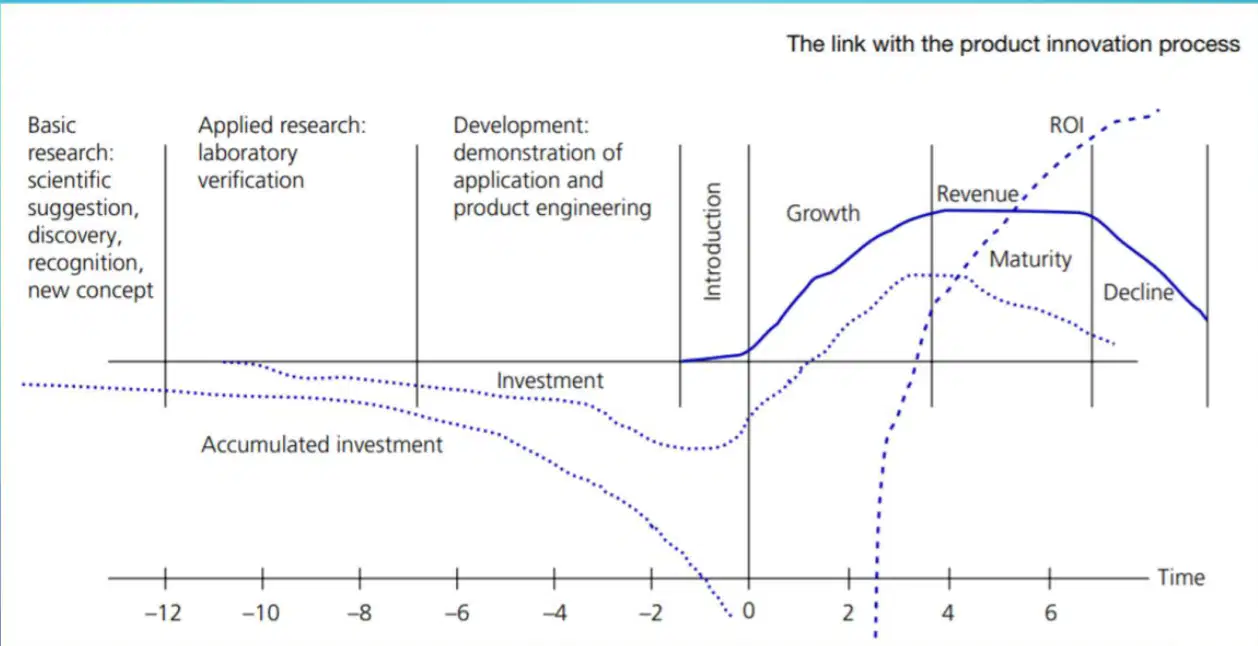
Different Research Projects
Extended Product Life Cycle
Drop Out Rates of Research and Development Projects
Reliability on Types of Investigation
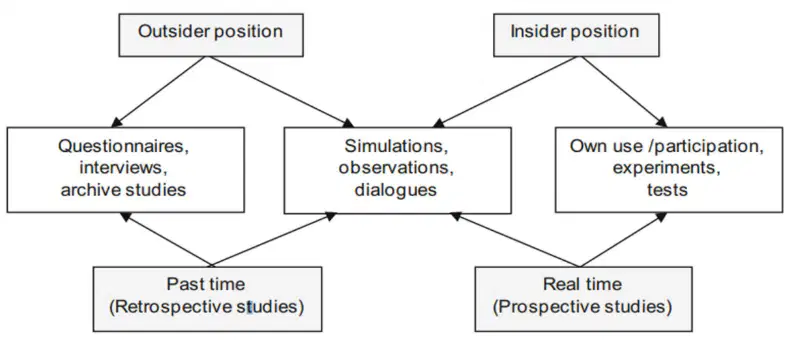
Different Research Projects
Extended Product Life Cycle
Drop Out Rates of Research and Development Projects
Reliability on Types of Investigation

Different Research Projects
Extended Product Life Cycle
Drop Out Rates of Research and Development Projects
Reliability on Types of Investigation
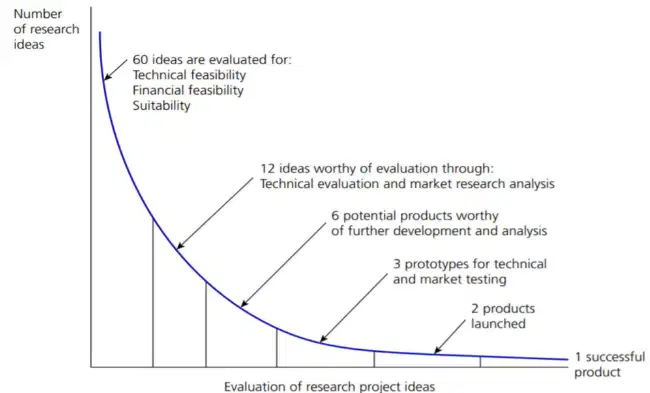
Different Research Projects
Extended Product Life Cycle
Drop Out Rates of Research and Development Projects
Reliability on Types of Investigation
Analyzes the range of effects that R&D investment can have on a product’s profitability.
Product Profitability
Overall Profit and Growth of the Company
Development of Existing Products
Price and Product Improvements: Market Share
Extension of Product Life
Analysis of the products that a company manages will reveal that these contribute in different ways to the overall profit and growth of the company.
Product Profitability
Overall Profit and Growth of the Company
Development of Existing Products
Price and Product Improvements: Market Share
Extension of Product Life
Life cycle of most products that lasts for several years.
Product Profitability
Overall Profit and Growth of the Company
Development of Existing Products
Price and Product Improvements: Market Share
Extension of Product Life
R&D’s role to extend the life of the product by continually searching for product improvements.
Product Profitability
Overall Profit and Growth of the Company
Development of Existing Products
Price and Product Improvements: Market Share
Extension of Product Life
TWO MOST COMMON APPROACHES TO EXTEND THE LIFE OF A PRODUCT
Capturing larger market share.
Early Introduction of a New Product
Improving profit margins through lowering production costs.
Late Introduction of a New Product
Aim is to introduce innovative products into the market before the competition to gain a competitive advantage.
Capturing larger market share.
Early Introduction of a New Product
Improving profit margins through lowering production costs.
Late Introduction of a New Product
This approach is very successful to pharmaceuticals.
Capturing larger market share.
Early Introduction of a New Product
Improving profit margins through lowering production costs.
Late Introduction of a New Product
Deliberately postponing entry into a market until it has been shown by competitors to be valid reduces the risk and costs.
Capturing larger market share.
Early Introduction of a New Product
Improving profit margins through lowering production costs.
Late Introduction of a New Product
Deliberately slowing down product launches into the market to possibly maximize profits.
Capturing larger market share.
Early Introduction of a New Product
Improving profit margins through lowering production costs.
Late Introduction of a New Product
Done to extend knowledge.
Research on Development
Studies of Ongoing Processes
Own Use and Own Participation
Presence in Development Processes
Give input for new theories, and/or find out how well theories function in real processes.
Research on Development
Studies of Ongoing Processes
Own Use and Own Participation
Presence in Development Processes
Can be pursued in the form of prospective studies in real time, or as retrospective studies in past time, as two opposing possibilities.
Research on Development
Studies of Ongoing Processes
Own Use and Own Participation
Presence in Development Processes
Product Development and Innovation Processes
Research on Development
Studies of Ongoing Processes
Own Use and Own Participation
Presence in Development Processes
It is recommended that the lion’s share of the research would be prospective studies (Ottoson, 2003)
Research on Development
Studies of Ongoing Processes
Own Use and Own Participation
Presence in Development Processes
A procedure designed to obtain information from a person through oral responses to oral inquiries.
Interview
Questionnaire
Dialogue
Simulation
Archival Studies
A research instrument consisting of a series of questions for the purpose of gathering information from respondents.
Interview
Questionnaire
Dialogue
Simulation
Archival Studies
A mode of communication characterized by an open exchange of ideas and meanings.
Interview
Questionnaire
Dialogue
Simulation
Archival Studies
A research or teaching technique that reproduces actual events and processes under test conditions.
Observation
Questionnaire
Dialogue
Simulation
Archival Studies
Focus on building and curating archives that may house historical documents, photographs, diaries, rare manuscripts, analog film, sound, and video.
Observation
Questionnaire
Dialogue
Simulation
Archival Studies
Action or process of carefully watching someone or something.
Recordings, among other media.
Observation
Questionnaire
Experiment
Simulation
Archival Studies
A test, trial, or tentative procedure.
Observation
Questionnaire
Experiment
Simulation
Archival Studies
An act or operation for the purpose of discovering something unknown or of testing a principle, supposition, etc.
Observation
Questionnaire
Experiment
Simulation
Archival Studies
The effectiveness, efficiency, and satisfaction with which specific users can achieve specified/particular goals in particular environments.
Usability
Effectiveness
Efficiency
Satisfaction
Is the product proposed effective for reaching the goal?
Usability
Effectiveness
Efficiency
Satisfaction
Is it possible to implement the findings in real-user environments?
Usability
Effectiveness
Efficiency
Satisfaction
What is required to make that happen (e.g. education needs, training needs, expert needs, tools acquisition, or organizational change)?
Usability
Effectiveness
Efficiency
Satisfaction
Is the product proposed efficient to use?
Usability
Effectiveness
Efficiency
Satisfaction
Is it tricky to use?
Usability
Effectiveness
Efficiency
Satisfaction
Is it time/resource/intensive?
Usability
Effectiveness
Efficiency
Satisfaction
Will the users find the use of the product more pleasant to use than what they experienced before the implementation?
Usability
Effectiveness
Efficiency
Satisfaction
Will the users feel that the outcome it more efficient?
Usability
Effectiveness
Efficiency
Satisfaction
Will the use of the new product contribute to a better economical result for the individual or will it reduce failure risks in any aspect?
Usability
Effectiveness
Efficiency
Satisfaction
Finding new and more profound ways to engage with customers and develop deeper relationship with them.
Customer-Based Innovation
Proactive Business Model Innovation
Frugal Innovation
High-Speed/Low Risk Innovation
Integrated Innovation
Adapt business models to new markets.
Customer-Based Innovation
Proactive Business Model Innovation
Frugal Innovation
High-Speed/Low Risk Innovation
Integrated Innovation
Dealing with globalization requires a more significant effort than just “copy-pasting” the existing business model in a new market.
Customer-Based Innovation
Proactive Business Model Innovation
Frugal Innovation
High-Speed/Low Risk Innovation
Integrated Innovation
Exporting an existing business model to a new market may not be successful.
Customer-Based Innovation
Proactive Business Model Innovation
Frugal Innovation
High-Speed/Low Risk Innovation
Integrated Innovation
All about originating and developing innovations in lower-income, emerging markets.
Customer-Based Innovation
Proactive Business Model Innovation
Frugal Innovation
High-Speed/Low Risk Innovation
Integrated Innovation
Taking the needs of consumers as starting point, then transferring, adapting, applying, and distributing them in developed markets.
Customer-Based Innovation
Proactive Business Model Innovation
Frugal Innovation
High-Speed/Low Risk Innovation
Integrated Innovation
Using clever technology to create masterpieces of simplification in mobile phones, computers, cars, and financial services.
Customer-Based Innovation
Proactive Business Model Innovation
Frugal Innovation
High-Speed/Low Risk Innovation
Integrated Innovation
One aspect is set to become increasingly critical.
Customer-Based Innovation
Proactive Business Model Innovation
Frugal Innovation
High-Speed/Low Risk Innovation
Integrated Innovation
Importance of getting to market not just fast, but also accurately and with no flaws
Customer-Based Innovation
Proactive Business Model Innovation
Frugal Innovation
High-Speed/Low Risk Innovation
Integrated Innovation
Taking innovation approaches that were one the domain of New Product Development (NPD) only.
Customer-Based Innovation
Proactive Business Model Innovation
Frugal Innovation
High-Speed/Low Risk Innovation
Integrated Innovation
Applying them consistently as an integral part of business strategy to achieve not only growth but also competitiveness.
Customer-Based Innovation
Proactive Business Model Innovation
Frugal Innovation
High-Speed/Low Risk Innovation
Integrated Innovation

