
 Worksheets
Chapter 1: Managers and Management
Total questions: 30
Worksheet time: 15mins
What is the definition of management?
The process of organizing and coordinating resources to achieve goals.
The act of supervising employees only.
A system of rules and regulations for businesses.
The study of financial accounting.
Why is it important to study management?
To understand how to manage personal finances.
To learn how to effectively lead and organize teams.
To memorize business laws.
To focus solely on marketing strategies.
What do managers typically do in their roles?
They only hire employees.
They plan, organize, lead, and control resources to achieve goals.
They focus solely on customer service.
They create advertisements for the company.
Which factors are reshaping and redefining management?
Technological advancements, globalization, and changing workforce dynamics.
The creation of new laws only.
The increase in marketing budgets.
The focus on traditional business practices.
Where do managers typically work?
Only in government offices.
In various organizations, including businesses, non-profits, and government agencies.
Exclusively in educational institutions.
Only in retail stores.
What is the history of management roots focused on?
The evolution of leadership and organizational practices over time.
The study of marketing strategies.
The development of financial accounting systems.
The creation of modern advertising techniques.

What has been practiced for thousands of years according to the learning material?
Management
Agriculture
Architecture
Medicine

Which activities were people responsible for in organized projects during early management practices?
Planning, organizing, leading, and controlling
Designing, constructing, and maintaining
Teaching, learning, and researching
Innovating, marketing, and selling
Who is credited with describing scientific management as a method of scientifically finding the one best way to do a job?
Frederick W. Taylor
Henry Ford
Max Weber
Elton Mayo
Who identified five management functions and 14 principles of management?
Max Weber
Henri Fayol
Frederick Taylor
Elton Mayo
What is Max Weber's contribution to the General Administrative Theory?
Identified five management functions
Developed the concept of bureaucracy as an ideal rational form of organization
Introduced the 14 principles of management
Focused on scientific management principles
What does the General Administrative Theory focus on?
The scientific study of work methods
The psychological aspects of workers
What constitutes good management
The economic impact of management decisions
What principle of Fayol's Fourteen Principles of Management focuses on ensuring that employees follow rules and maintain proper conduct?
Authority
Discipline
Equity
Initiative
Which principle of Fayol's Fourteen Principles of Management refers to the fair treatment of employees within the organization?
Equity
Order
Initiative
Remuneration

Which early management writer was concerned about deplorable working conditions?
Robert Owen
Hugo Munsterberg
Mary Parker Follett
Frederick Taylor

Who is considered a pioneer in the field of industrial psychology?
Robert Owen
Hugo Munsterberg
Mary Parker Follett
Elton Mayo

Which early management writer recognized that organizations could be viewed from both individual and group behavior perspectives?
Robert Owen
Hugo Munsterberg
Mary Parker Follett
Max Weber

What was the primary focus of the studies conducted at the Hawthorne Works of the Western Electric Company?
To analyze the impact of lighting conditions on productivity.
To provide new insights into individual and group behavior at work.
To study the effects of machinery on worker efficiency.
To examine the role of wages in employee satisfaction.

What conclusion was drawn from the Hawthorne Studies regarding group pressures?
Group pressures have no impact on individual productivity.
Group pressures can significantly impact individual productivity.
Group pressures only affect team-based tasks.
Group pressures improve individual creativity but reduce productivity.
What type of insights did the Hawthorne Studies provide?
Insights into technological advancements in factories.
Insights into individual and group behavior at work.
Insights into economic trends affecting productivity.
Insights into the role of leadership in organizations.
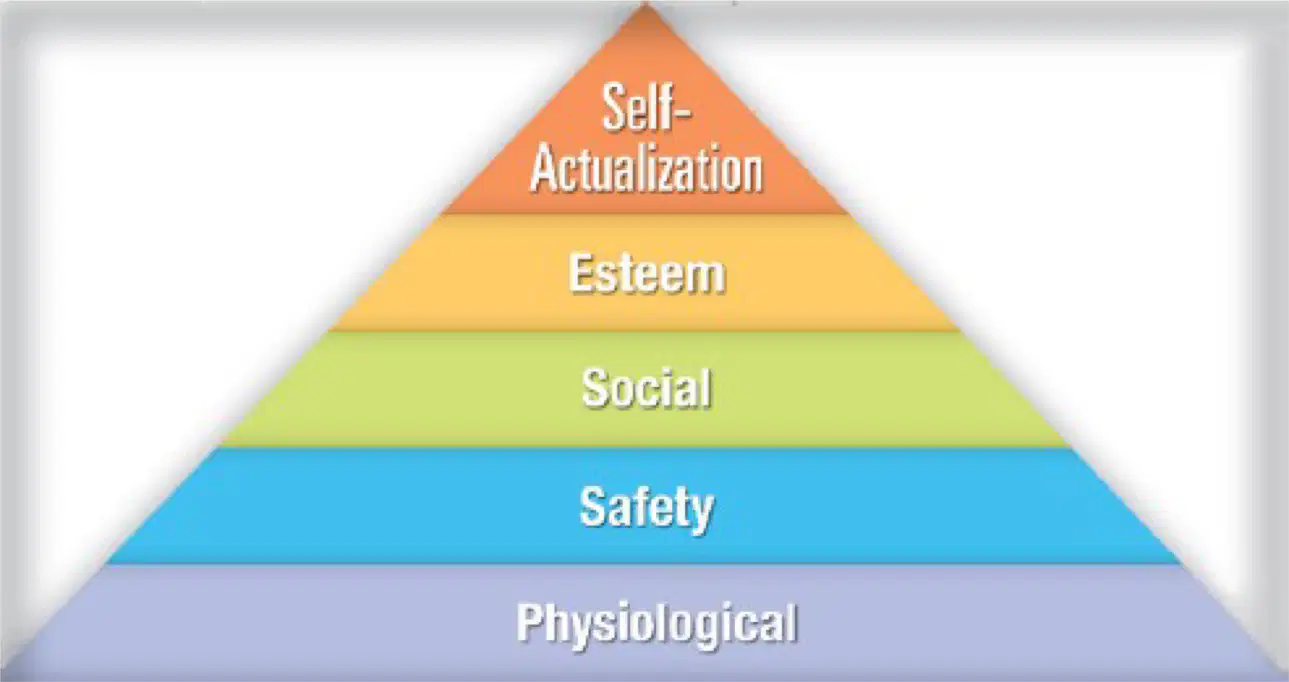
What is the topmost level in Maslow's hierarchy of needs as shown in the diagram?
Physiological
Safety
Self-Actualization
Social
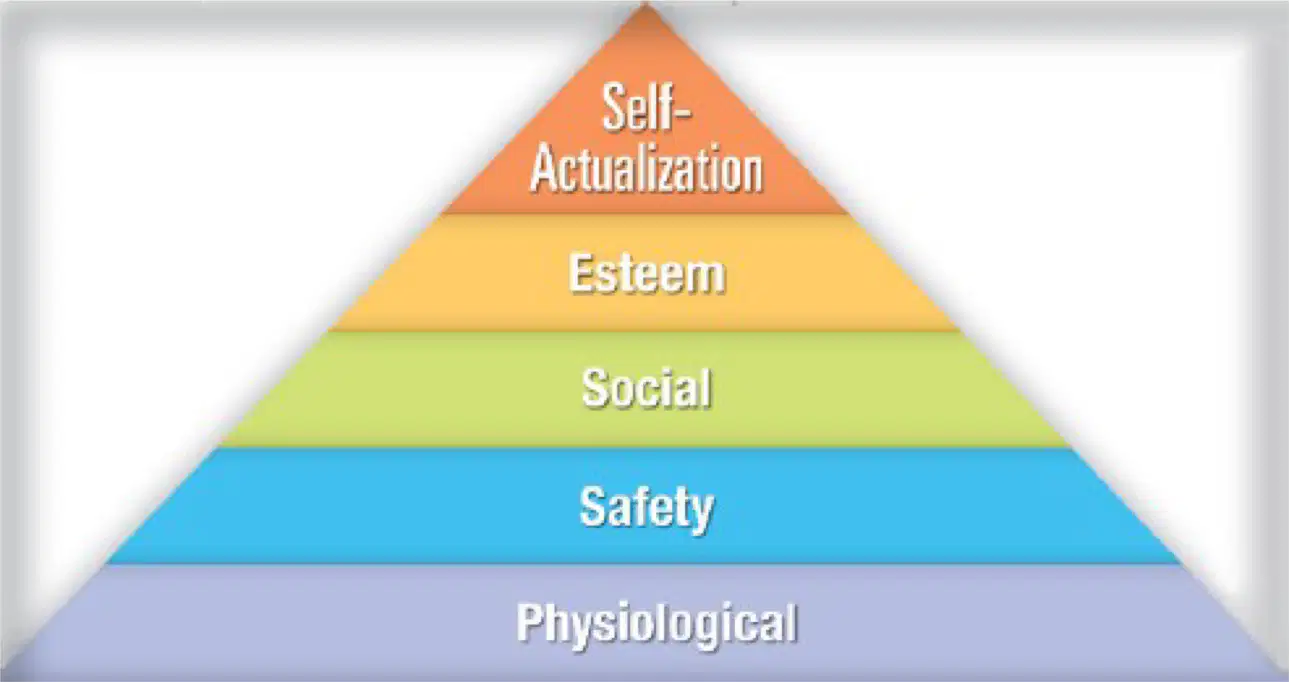
Which level in Maslow's hierarchy of needs focuses on basic survival needs such as food and water?
Physiological
Safety
Esteem
Social

What does the acronym "OB" stand for in the context of behavioral approaches?
Organizational Behavior
Operational Basis
Objective Behavior
Organizational Basis

During which time period did behavioral approaches, such as Organizational Behavior (OB), become prominent?
1950s
1960s
1970s
1980s
Who are the two individuals associated with the concept of total quality management (TQM)?
Peter Drucker and Henry Mintzberg
W. Edwards Deming and Joseph M. Juran
Frederick Taylor and Elton Mayo
Abraham Maslow and Douglas McGregor
What does TQM stand for?
Total Quality Measurement
Total Quality Management
Technical Quality Management
Timely Quality Maintenance
Which types of organizations does the concept of "organization" apply to?
Only for-profit organizations
Only non-profit organizations
Both for-profit and non-profit organizations
Only government organizations

Why is teamwork considered a key characteristic of organizations?
It promotes individual success over group success
It ensures shared goals are achieved efficiently
It eliminates the need for structure
It focuses on random processes

What is the term used to describe people who work directly on a job or task and have no responsibility for overseeing the work of others?
Managers
Supervisors
Operatives
Executives

What is the primary role of managers in an organization?
To perform technical tasks
To direct the activities of others
To create products
To work independently without a team

