
 Worksheets
Chapter 9 Summary Questions
Total questions: 11
Worksheet time: 6mins
Biomechanics helps manage elite performance by optimising movement to reduce risk and maximise output. Which combination best describes the targeted outcomes of applying biomechanical principles?
Movements that are both efficient and effective
Movements that are only faster
Movements that prioritise aesthetics over function
Movements that eliminate all risk without considering performance
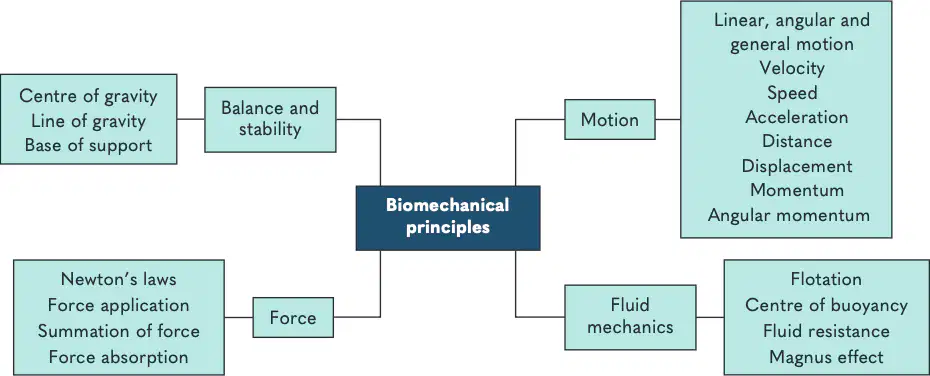
Figure 9.2 groups key concepts under Balance and stability. Which set of concepts is shown as underpinning Balance and stability?
Centre of gravity, Line of gravity, Base of support
Velocity, Speed, Acceleration
Newton’s laws, Summation of force
Flotation, Magnus effect
In relation to injury and load management, which change in running technique is identified as reducing strain by redistributing forces more evenly?
Decreasing stride length and frequency to alter foot and heel strike patterns
Increasing stride length to cover more ground
Switching to a forefoot-only strike at all speeds
Maintaining a constant cadence regardless of terrain
Dynamic team sports often require unpredictable and varied movements. What is stated as the outcome of practice and training for these sports?
Increased biomechanical efficiency and effectiveness
Guaranteed elimination of contact injuries
Permanent removal of deceleration phases
Reduced need for coaching feedback
Comparatively, long-distance running is analysed to increase running efficiency by finding the optimal stride frequency, length and movement patterns. Which benefit is identified for this optimisation?
Reducing cumulative forces over thousands of steps
Improving vertical jump height
Increasing lateral movement speed
Enhancing upper-body strength
Coaches and athletes use video technology to analyse and provide feedback about optimal physical activity. Which phase of running is specifically noted as benefiting from using the right muscle actions at the right time?
Sprinting in the optimal direction to increase maximal output
Standing still to reduce load on joints
Cool-down stretching to prevent injury
Jogging at a constant tempo to maintain speed
Which elements must be addressed when identifying how biomechanical principles develop sustained and improved performance?
Physical activities, sports-specific movements, functional movements, and technological/equipment advances
Only competition rules and officiating protocols
Psychological profiling of spectators
Weather forecasts for upcoming events
Explain what the process of recovery from physical activity involves. Choose the best description of this process.
A planned reduction in training volume with no changes to physiology
A rapid movement through catabolic to anabolic states to restore body systems to full function, re‑establish homeostasis and enable supercompensation
Immediate sleep only, allowing the body to rest without any physiological changes
Only structural repair of muscles and bones without addressing metabolic or neuromuscular factors
Explain how physiological strategies promote recovery. Select the option that best summarises their main actions following exercise.
They focus on mental relaxation only, such as meditation and socialising
They restore energy and fuel stores, clear metabolic waste, rebalance hydration and electrolytes, reduce neuromuscular tension and begin structural repair
They increase competition intensity to maintain fitness baseline
They delay refuelling and hydration to extend catabolic effects
Explain how psychological strategies promote recovery. Choose the most accurate summary.
They aim to heighten stress responses and adrenaline to keep athletes alert
They use relaxation techniques, sleep, deep breathing, yoga, massage and social activities to increase parasympathetic activity, lower stress hormones and support mental calm
They rely on cold water immersion to reduce neuromuscular tension only
They eliminate all physical activity for several weeks to prevent adaptation
Being able to change direction safely and effectively is described as a learned skill enabling athletes to apply powerful lateral forces. What is the primary application stated for this skill?
To step past or away from an opponent
To maintain constant straight-line speed
To increase maximal oxygen uptake
To prevent any joint rotation

