
 Worksheets
Eating Disorders
Total questions: 46
Worksheet time: 23mins
Which choice best explains a key benefit of eating nourishing foods for teenagers?
Guarantees perfect grades at school
Prevents all illnesses forever
Helps you feel your very best daily
Eliminates the need for any exercise
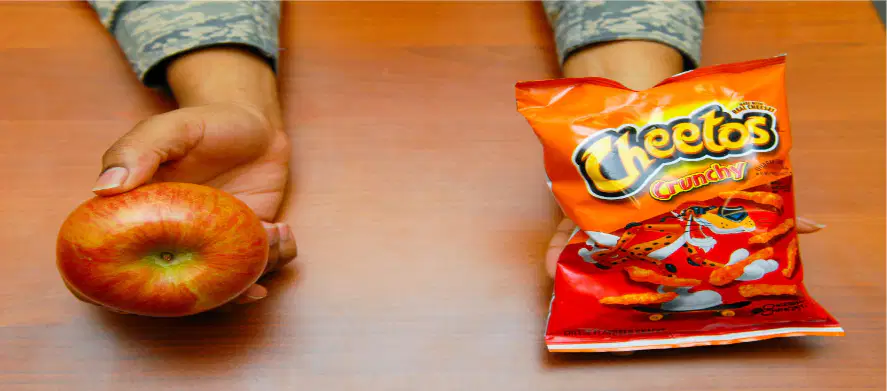
Look at the image showing an apple and a snack bag. Which action most supports feeling and looking good?
Avoid all fats and only drink water
Skip sleep and eat whenever you want
Choose balanced meals and regular exercise
Rely on vitamins instead of real food
Multiple factors contribute to well-being. Which are appropriate components of a healthy lifestyle?
Good personal hygiene
Adequate nightly sleep
Daily extreme dieting
Regular exercise habits
Match each sign with the description of a healthy person.
Normal growth pattern
Not too fast or slow development
Good posture alignment
Upright sitting and standing
Teeth are clean
Free of cavities and plaque
Which feature is NOT typically listed as a quality of a healthy person?
Clean and shiny hair appearance
Sparkling eyes and clear look
Normal body, not too fat or too thin
Constant tiredness and low energy
Which statements describe common qualities of healthy people? Select all that apply.
Normal growth over time
Good posture when standing
Teeth free of cavities
Extremely thin body shape
A friend says acne can be prevented by avoiding chocolate, sweets, and fried foods. What is the best response?
Only fried foods lead directly to skin blemishes
Avoiding chocolate cures all skin conditions
Skin blemishes are normal and cannot be avoided this way
Those foods always cause acne in every teenager
Which statement best explains how food can influence your attitude during the day?
Food impacts attitude only when exercising
Food influences feelings only during illness
Food only changes physical strength levels
Food affects energy and mood regulation
You skipped breakfast and feel cranky and tired in class. What is the most likely reason?
Low energy from inadequate fuel intake
Too much hydration before school
Excess rest causing sluggishness
Overstimulation from balanced eating
Select all outcomes commonly linked to eating the proper amount of food.
Greater mental alertness in lessons
Feeling energetic for longer periods
Higher stress and irritability spikes
Reduced chances of feeling sick or upset
Match each eating pattern to the most likely feeling.
Balanced meals through the day
Calm and steady mood
Overeating heavy foods at lunch
Sleepy and low motivation
Long gaps without any meals
Cranky and unfocused
Which choice best describes the role of rest and exercise alongside food?
They work with food to shape feelings
They are unrelated to mood changes
They replace the need for proper food
They only matter for athletic people
A classmate wants to feel calmer during tests. Which habit would help most?
Rely on sugary snacks for focus
Drink only water all morning
Skip lunch to avoid sleepiness
Eat balanced portions regularly
Which statement about balanced eating and the brain is most accurate?
It causes constant anxiety and stress
It only improves strength, not focus
It slows thinking and reaction time
It supports mental alertness and focus
Which statement best describes hunger?
Choice to eat based on schedule
Craving triggered by tasty smells
Mental desire to eat specific foods
Physical need to eat for energy
Which situation shows appetite rather than hunger?
Feeling weak from not eating
Wanting cake after smelling it
Stomach growling before lunch
Lightheaded after skipping breakfast
Match each term with its correct description.
Hunger
Physical need for food
Appetite
Psychological desire to eat
Appetite triggers
Smell, sight, thought, mentioning
Which are common triggers for appetite? Select all that apply.
Smelling fresh popcorn
Seeing a dessert display
Stomach emptiness signals
Hearing someone mention pizza
How do hunger and appetite differ?
Hunger is psychological, appetite is physical
Hunger is physical, appetite is psychological
Both are physical body needs only
Both are mental desires only
Which outcome is most likely for students who skip breakfast regularly?
Improved focus and higher grades
Harder time concentrating and lower grades
Faster metabolism and better sleep
Better mood and increased endurance
Which behaviors describe common poor eating habits in young adults?
Getting little to no exercise
Choosing mostly unhealthy foods
Snacking heavily between meals
Skipping all snacks entirely
Why is adequate calcium intake especially important for teen girls?
Guarantees perfect muscle tone at rest
Eliminates the need for vitamin D supplements
Prevents dehydration after intense workouts
Supports strong bones during rapid growth
Match each habit with its health impact.
Eating a balanced diet
Reduced risk of heart disease
Skipping breakfast
Trouble concentrating and lower grades
Little to no exercise
Lower fitness and weight gain risk
Low calcium intake
Weaker bones over time
Which statement best defines an eating disorder for a teen audience?
Occasional fasting for cultural or religious observances
Strict diet for sports performance under medical advice
Temporary dislike of vegetables during a growth spurt
Unhealthy perception about food, body image, and weight control
Which signs align with an unhealthy perception involved in eating disorders?
Seeing food only as numbers to control daily
Fearing weight gain despite healthy body size
Tracking balanced meals with a dietitian
Enjoying varied foods without guilt
Believing normal weight looks overweight in mirrors
Match each domain to how it can become distorted in an eating disorder.
Food
Viewed as enemy instead of nourishment
Body image
Seeing a healthy body as unacceptable
Weight control
Using extreme measures to change size
Which feature best distinguishes anorexia nervosa from the other listed disorders?
Repeated binges without regular compensatory behaviors
Frequent binge episodes followed by purging behaviors
Persistent self-starvation with excessive exercising
Occasional overeating during celebrations only
Bulimia nervosa is best described as
Irregular snacking without noticeable weight changes
Rapid consumption of large amounts followed by purging
Daily heavy meals without body image concerns
Chronic food restriction with fear of gaining weight
Which statement accurately describes binge/compulsive eating disorder?
Fasting alternates with intense exercise every day
Food intake is consistently below basic energy needs
Binges are followed by vomiting or laxative use
Binges occur repeatedly without extreme weight-loss methods
Match each disorder to its hallmark behavior.
Anorexia nervosa
Self-starvation and excessive exercise
Bulimia nervosa
Binge then purge to avoid weight gain
Binge eating disorder
Repeated binges without purging
A teen rapidly eats a large amount of food, then uses laxatives to prevent weight gain. Which disorder fits best?
Anorexia nervosa
Binge eating disorder
Bulimia nervosa
Orthorexia nervosa
Which are common characteristics of anorexia nervosa? Select all that apply.
Obsessive fear of becoming overweight
Self-starvation and compulsive rituals
Excessive preoccupation with food
Regular bingeing followed by purging
People with binge eating disorder typically have which outcome over time?
They typically stay exactly the same weight
They typically become underweight
They typically become overweight
They typically gain muscle mass only
Which scenario does NOT match its disorder?
Binge followed by vomiting — bulimia nervosa
Repeated binges without purging — bulimia nervosa
Self-starvation to lose weight — anorexia nervosa
Excessive workouts to lose weight — anorexia nervosa
Which group is most commonly affected by eating disorders, while recognizing it can occur in others too?
Adults from rural communities
Children from wealthy families
Males from athletic teams
Females with varying backgrounds
At what life stage do eating disorders most often begin?
Late adulthood typically
Adolescence for many people
Infancy in most cases
Early childhood usually
Which statement best describes who can develop eating disorders?
Only those without family support systems
Primarily one specific ethnic population
Only individuals from affluent backgrounds
People from all social classes and ethnic groups
Low self-esteem is linked to eating disorders. Which option shows this connection best?
Self-esteem has no relation to these disorders
Only peer pressure determines who is affected
High self-esteem directly causes these disorders
People with low self-esteem are at higher risk
Which behavior reflects an intense fear of weight gain?
Skipping snacks at celebrations
Preferring home-cooked meals
Counting every calorie consumed daily
Occasionally trying new recipes
How does fear typically change as weight decreases for someone with an eating disorder?
Fear decreases at a steady rate
Fear stays exactly the same
Fear usually disappears
Fear often increases further
Distorted body image can involve which perception?
Seeing the entire body inaccurately
Only noticing accurate weight changes
Seeing only improved muscle tone
Focusing only on healthy eating
Match each medical problem to the affected system or description.
Tooth enamel dissolves
Dental surfaces erode
Osteoporosis develops
Bones become brittle
No menstrual cycle
Reproductive hormones change
Lanugo appears
Fine downy hair grows
Which complications are possible with eating disorders? Select all that apply.
Improved dental strength over time
Damage to muscles, bones, and organs
Hair loss and brittle nails
Damage to immune, nervous, and digestive systems
What approximate proportion of people with eating disorders may die due to suicide or medical problems related to the disorder?
About sixty to seventy percent
About five to eighteen percent
About one to two percent
About thirty to forty percent
Which visible skin and hair changes can occur with eating disorders?
Nails grow faster and stronger
Hair becomes thicker and shinier
Skin may look yellowish or pale
Skin becomes unusually dark tan
Which statement best summarizes the range of medical effects from eating disorders?
Problems remain cosmetic without risk
Effects are limited to temporary fatigue
Only the digestive system is affected
Multiple body systems can be harmed

