
 Worksheets
Final Exam Art Fall 2025
Total questions: 52
Worksheet time: 1hrs 2mins
What is Value?
The shape of a thing or person
A mark or stroke in proportion to its width
The lightness or darkness of a color.
The quality of an object or substance with respect to light reflected by the object, usually determined visually by measurement of hue, saturation, and brightness
What is Color?
The shape of a thing or person
A mark or stroke in proportion to its width
A degree of lightness or darkness of a color
The quality of an object or substance with respect to light reflected by the object, usually determined visually by measurement of hue, saturation, and brightness
What is Line?
The shape of a thing or person
A mark or stroke that is longer than it is wide.
A degree of lightness or darkness of a color
The quality of an object or substance with respect to light reflected by the object, usually determined visually by measurement of hue, saturation, and brightness
What is Texture?
The distance or areas around, between and within the components of a piece
A mark or stroke in proportion to its width
The visual and especially tactile quality of a surface
The quality of a distinct object or person in having an external surface or outline
What is Space?
The distance or areas around, between and within the components of a piece
A mark or stroke in proportion to its width
The visual and especially tactile quality of a surface
The quality of a distinct object or person in having an external surface or outline
How many elements of art are there?
5
7
3
Form is
2- Dimensional
3- Dimensional
Non-existent
It has length, width and also depth
value
texture
form
An artist must use all every element of art to create a work of art.
True
False
These colors make up all the other colors on the color wheel.
Red, Yellow, Blue
Orange, Green, Violet
Secondary Colors
Tertiary Colors

This is an illustration of ........Choose all that apply
Space
Perspective
Shape
warm colors
What is a composition?
Select all that apply.
The colors and shapes in a work of art.
The arrangement of the elements of art using the principles of design.
The subject matter of an image.
The placement of objects in a work of art.
A strong composition should always use an even number of items.
True
False
The focal point of your image should always be at the center of the image.
True
False
Where should the focal point of an image be?
Left
Right
Center
Rule of thirds
Symmetrical balance is also called ________ balance.
Formal
Informal
Variety
Unity
The distribution of the visual weight of the elements of art in a composition is called:
Proportion
Emphasis
Variety
Balance
Formal
Rhythm
Informal
Emphasis
Explain the concept of foreground and background relationships in art.
Foreground and background relationships in art refer to the colors used, not the placement of elements.
Foreground and background relationships in art only apply to music, not visual arts.
Foreground and background relationships in art are irrelevant and do not impact the overall composition.
Foreground and background relationships in art refer to the visual hierarchy created by placing certain elements in the foreground (closer to the viewer) and others in the background (farther away). This helps create depth and perspective in the artwork.
How does the rule of thirds apply to creating compositions in art?
By placing all elements in the center of the canvas.
By dividing the composition into nine equal parts and placing key elements at the intersections or along the lines.
By using only black and white colors in the composition.
By creating a mirror image of the composition.
How can overlapping objects enhance a composition in art?
By creating depth, adding visual interest, and connecting different elements.
By reducing visual interest, creating flatness, and disconnecting elements.
What does it mean for an element to 'run off the page' in art composition?
The element extends beyond the boundaries of the canvas or paper.
The element is digitally enhanced.
The element is perfectly aligned with the page edges.
The element is too small to be noticed.
How can you create a sense of depth in a composition?
By making all objects the same size.
By placing objects of interest in the foreground, middle ground, and background, utilizing contrast in size and placement.
By using only objects in the foreground.
By removing all objects from the background.
What does the principle of "Balance" in art refer to?
The harmony of colors only.
The distribution of visual weight in an artwork.
The alignment of the artwork's edges.
The brightness of the artwork.
What is the role of "Emphasis" in designing an artwork?
To maintain a consistent pattern
To ensure all elements are similar
To create a focal point that attracts the viewer's eye first
To keep the artwork's elements dispersed
What does "Movement" mean in the context of art?
The literal motion of the artwork
The way the viewer's eye travels through the artwork
The transport of the artwork from one place to another
The change in artwork styles over time
The visual components of color, form, line, shape, space, texture, and value are known as:
positive and negative space
elements of art
components of a picture
ideas for creating

This grid is called:
(a)

The blue dots are called:
(a)
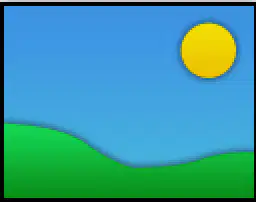
This image is in (a) orientation.

This image is in the (a) orientation.
Which of the following can be used to make the focal point stand out and create emphasis in a composition?
Contrast in color
Variation in size
Unique shape
All of the above

A series of spaces filled with the tints and shades of one color, starting with white or the lightest tint on one end, and gradually changing into the darkest shade or black on the other.
Major scale
Fish scale
Pentatonic scale
Value scale
Any device/sun serving as a source of illumination.
Sun
Light source
Lamp
Cast shadow
A technique of shading so that there is a gentle and gradual transition from one to the other.
Value
Blending
Stippling
Hatching
Artists use (a) to show value, form, and depth of an object.
It is using the value scale on a form or object.

The shading technique that gradually adds values by applying pressure to the side of the pencil. The more pressure added, the darker the values appear. It is generally an artist's preferred choice of shading.
Blending
Hatching
Cross-Hatching
Stippling
Scribbling/
Scumbling
To achieve the darkest value which pencil should you use?
6B
B
H
4H
Artist's use (a) to change shapes into forms.
To achieve the lightest value which pencil should you use?
6B
B
H
2H

Name the area labeled 1.
(a)

Name the area labeled 2.
(a)

Name the area labeled 3.
(a)

Name the area labeled 4.
(a)

Name the area labeled 5.
(a)
Which pencil would you use to achieve a medium value?
6B
B
H
2H
HB

What is this technique called?
Stippling/
Pointillism
Scribbling
Scumbling
Shading

What is this technique called?
Stippling/
Pointillism
Scrabbling
Scumbling
Shading

What is this technique called?
Hatching
Lines
Hash Marks
Cross-Hatching
How do you make a lighter value with cross-hatching?
Apply more pressure.
Use the lines.
Draw the lines farther apart.
Apply less pressure.

What kind of shading technique is used here?
Cross Hatching
Hatching
Contour Hatching
Tick Hatching


