
 Worksheets
2025 Algebra 2 Midterm Exam Practice
Total questions: 110
Worksheet time: 1hrs 13mins
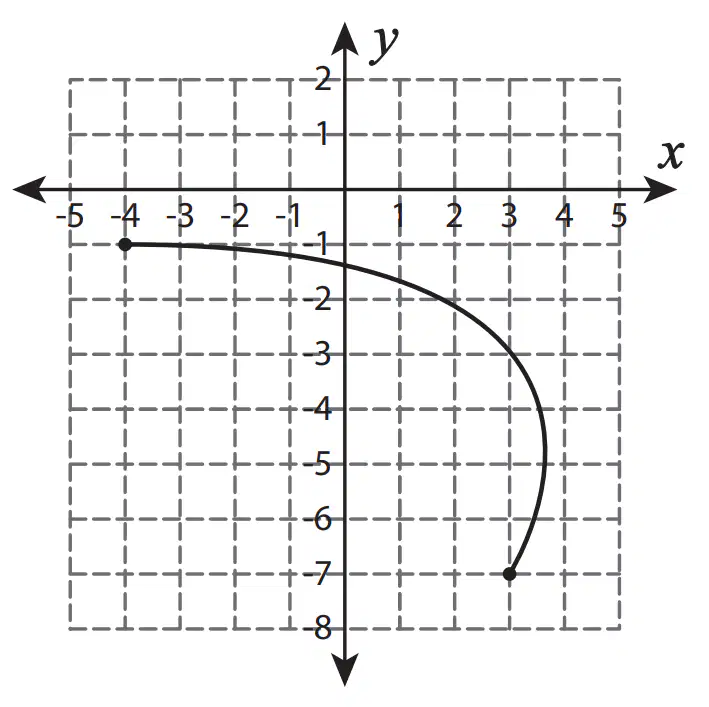
Is the following graph a function? If it is not explain why!
Yes!
No! It doesn't pass the horizontal line test.
No! It doesn't pass the vertical line test.
No! It doesn't pass the domain range test.
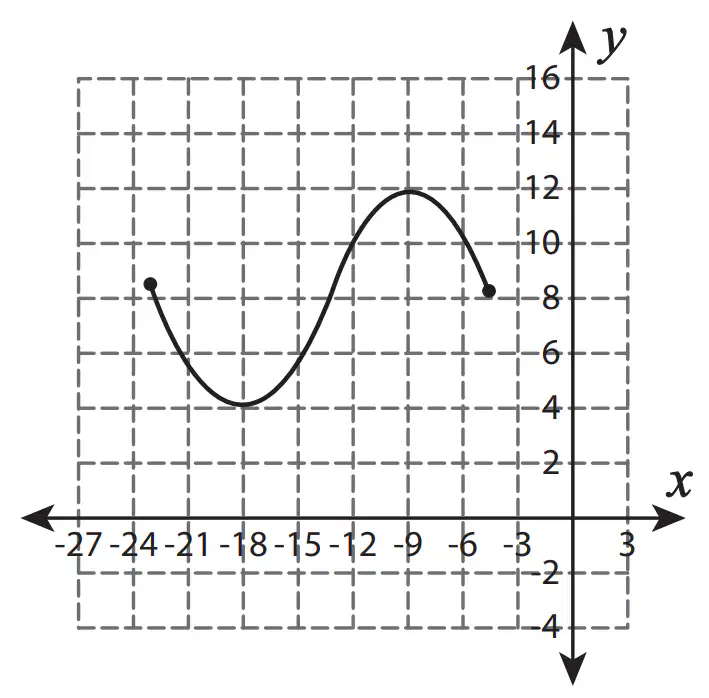
Is the following graph a function? If it is not explain why!
Yes!
No! It doesn't pass the horizontal line test.
No! It doesn't pass the vertical line test.
No! It doesn't pass the domain range test.
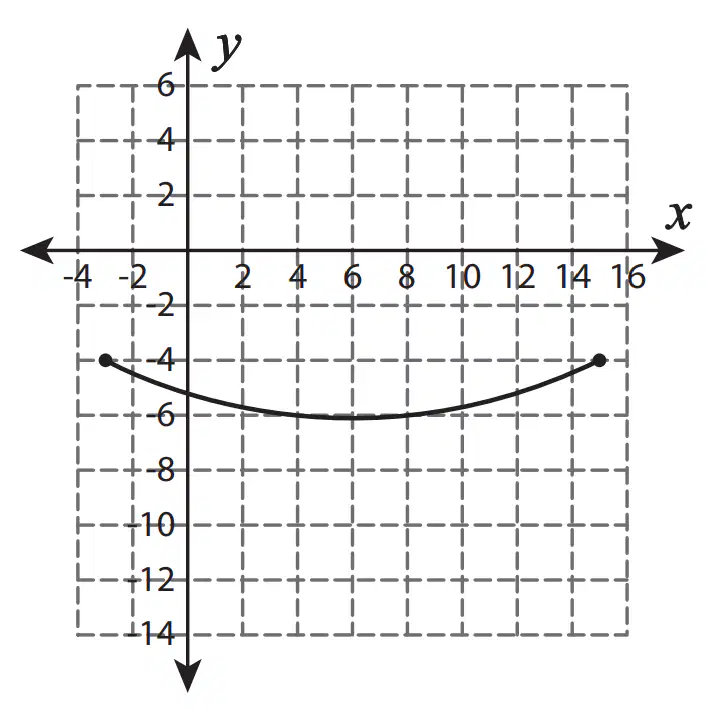
Is the following graph a function? If it is not explain why!
Yes!
No! It doesn't pass the horizontal line test.
No! It doesn't pass the vertical line test.
No! It doesn't pass the domain range test.
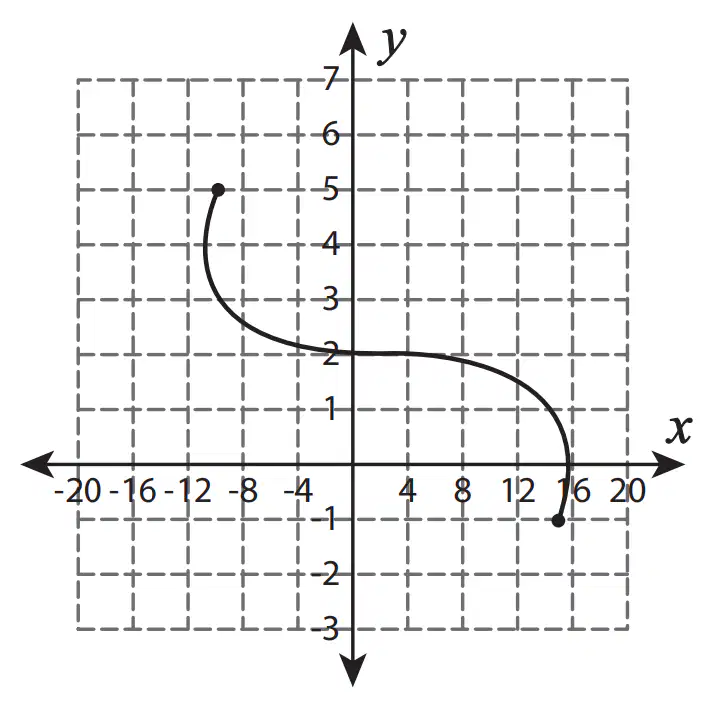
Is the following graph a function? If it is not explain why!
Yes!
No! It doesn't pass the horizontal line test.
No! It doesn't pass the vertical line test.
No! It doesn't pass the domain range test.
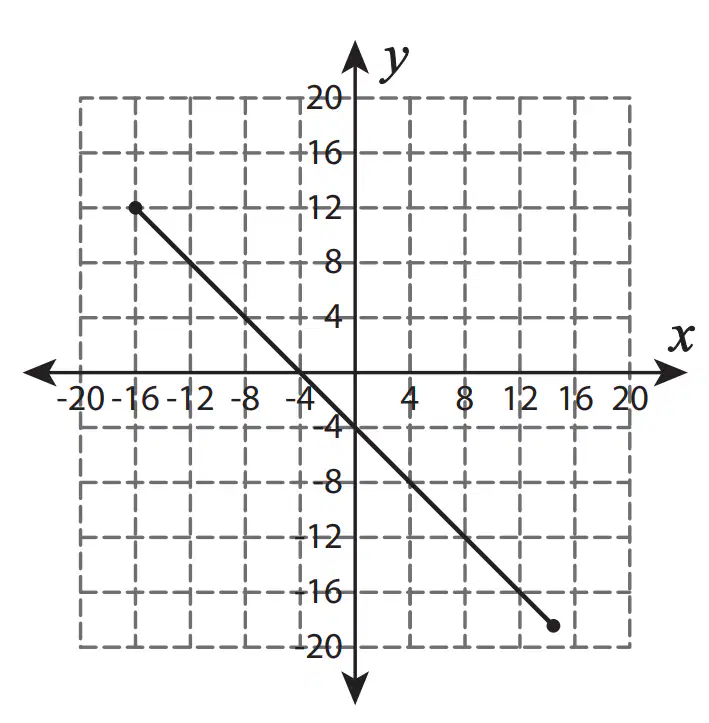
Is the following graph a function? If it is not explain why!
Yes!
No! It doesn't pass the horizontal line test.
No! It doesn't pass the vertical line test.
No! It doesn't pass the domain range test.
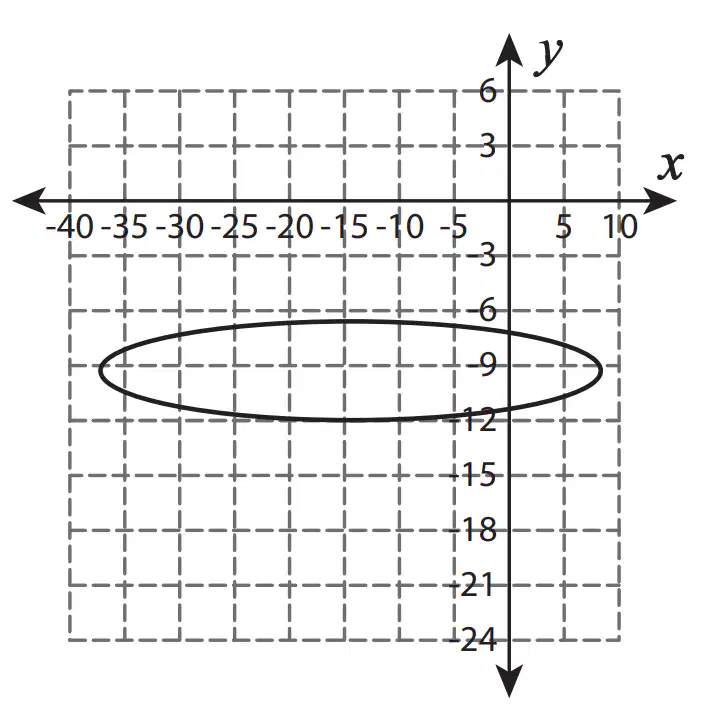
Is the following graph a function? If it is not explain why!
Yes!
No! It doesn't pass the horizontal line test.
No! It doesn't pass the vertical line test.
No! It doesn't pass the domain range test.
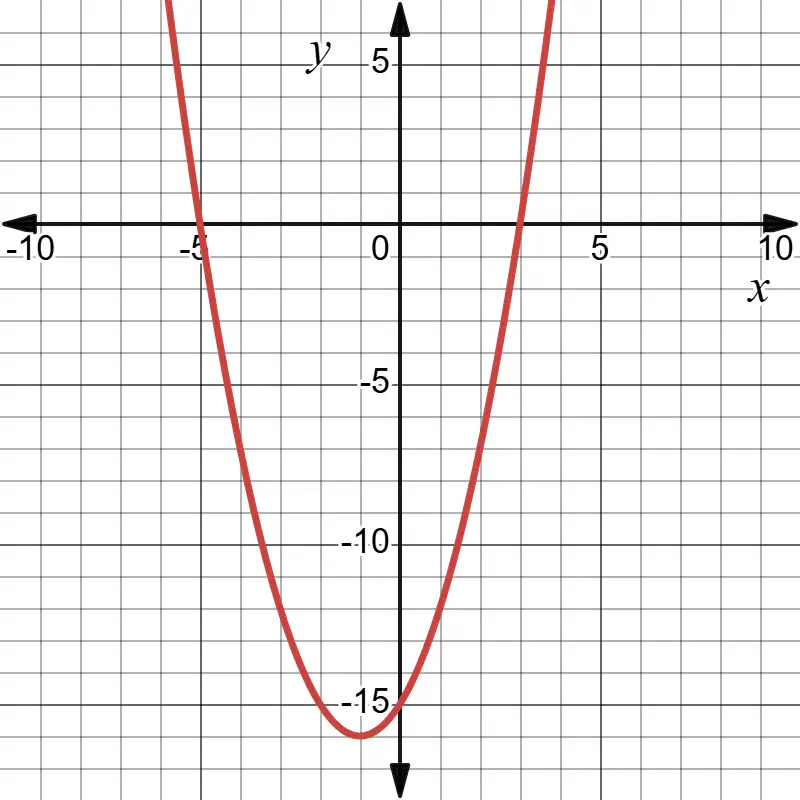
State the domain and range of the graph.
D: (−∞,∞)
R: (−∞,∞)
D: (−∞,∞)
R: (−∞,16]
D: (−16,∞)
R: (−∞,∞)
D: (−∞,∞)
R: [−16,∞)
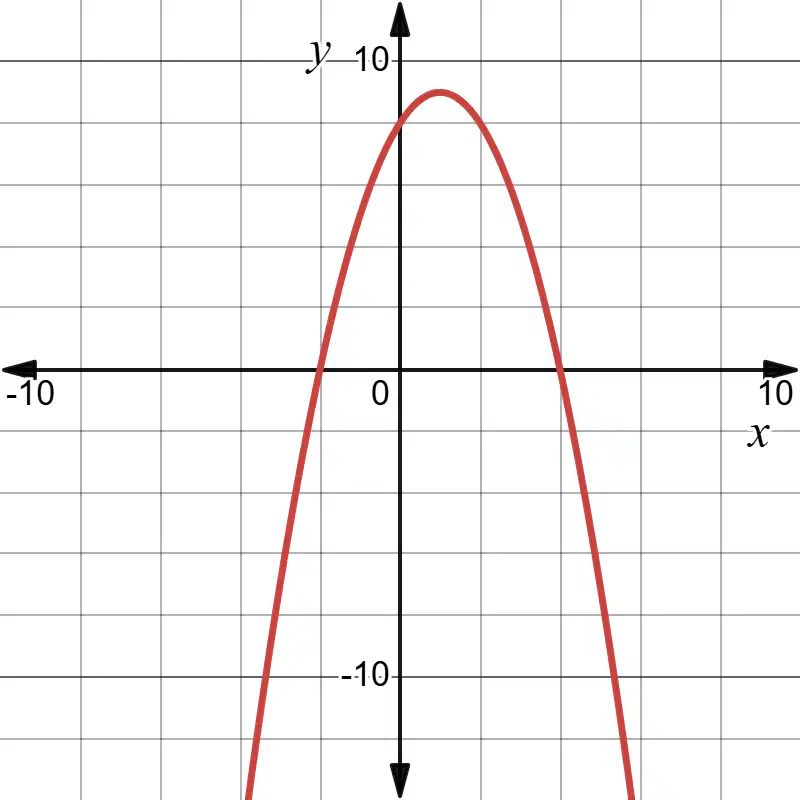
State the domain and range of the graph.
D: (−∞,∞)
R: (−∞,∞)
D: (−∞,∞)
R: (−∞,9]
D: (−9,∞)
R: (−∞,∞)
D: (−∞,∞)
R: [−9,∞)
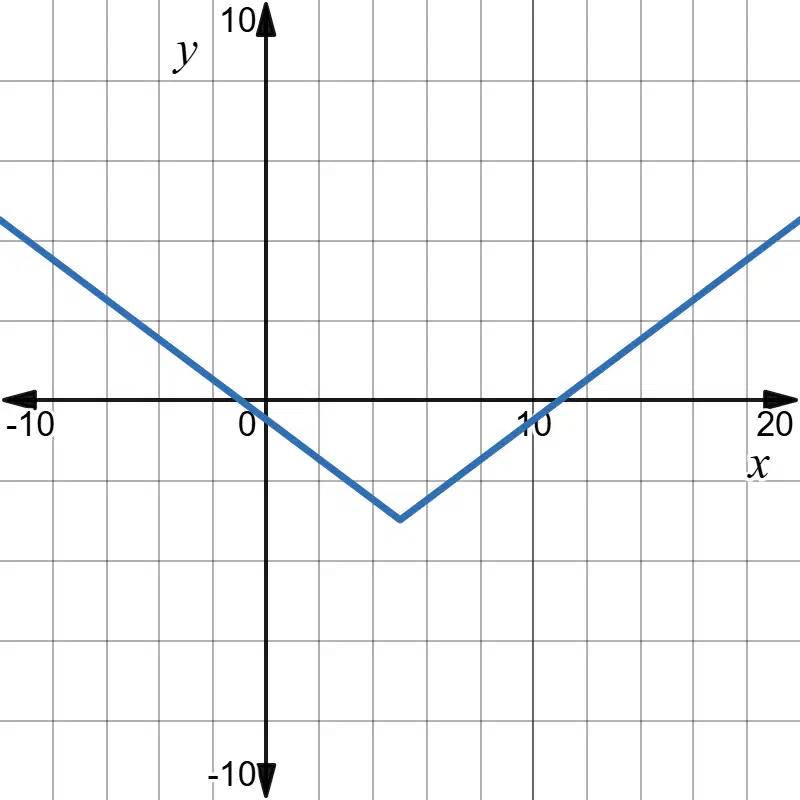
State the domain and range of the graph.
D: (−∞,∞)
R: (−∞,∞)
D: (−∞,∞)
R: (−∞,−3]
D: (−3,∞)
R: (−∞,∞)
D: (−∞,∞)
R: [−3,∞)
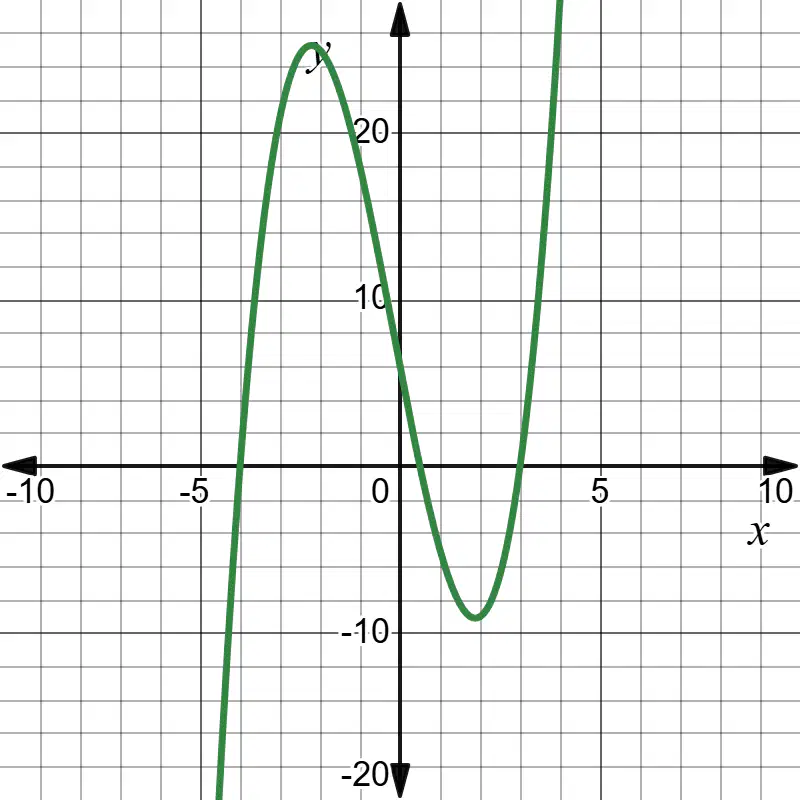
State the domain and range of the graph.
D: (−∞,∞)
R: (−∞,∞)
D: (−∞,∞)
R: (−∞,−9]
D: (25,∞)
R: (−∞,∞)
D: (−∞,∞)
R: [25,∞)
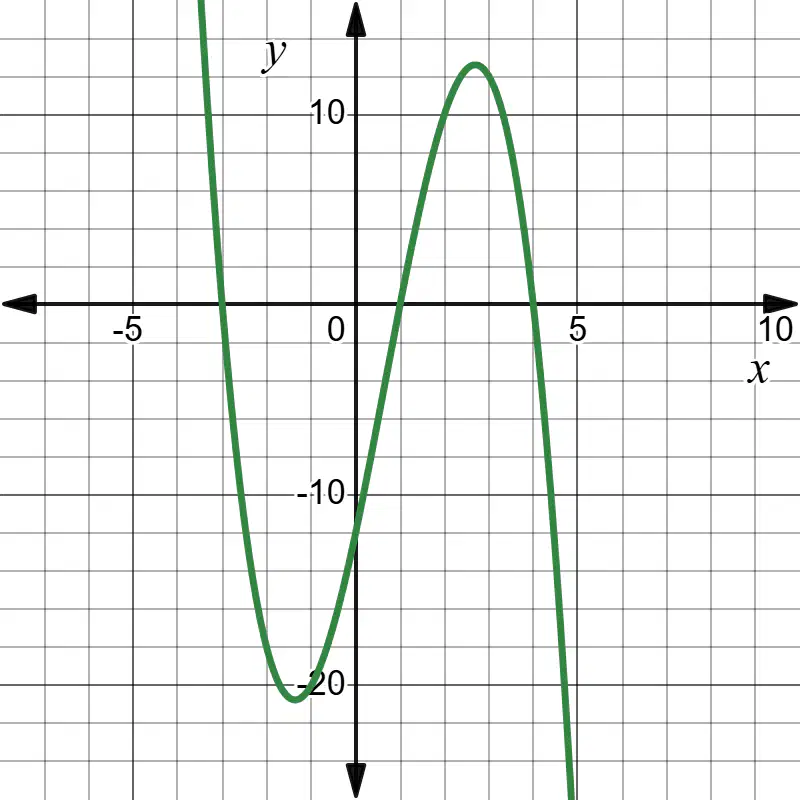
State the domain and range of the graph.
D: (−∞,∞)
R: (−∞,∞)
D: (−∞,∞)
R: (−∞,−21]
D: (13,∞)
R: (−∞,∞)
D: (−∞,∞)
R: [−21,∞)

State the intercepts of the graph.
x: (3,0)
y: (0,5)
x: (−5,0),(3,0)
y: (0,−15)
x: (5,0)
y: (0,−3)
x: (−3,0),(5,0)
y: (0,15)
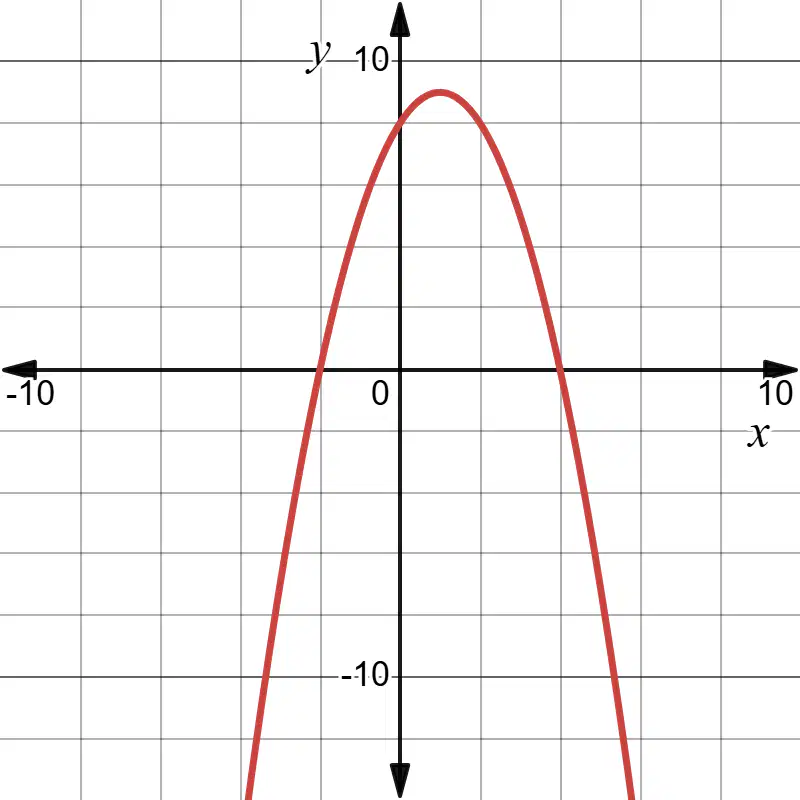
State the intercepts of the graph.
x: (2,0)
y: (0,4)
x: (−4,0),(8,0)
y: (0,−2)
x: (−2,0)
y: (0,−8)
x: (−2,0),(4,0)
y: (0,8)
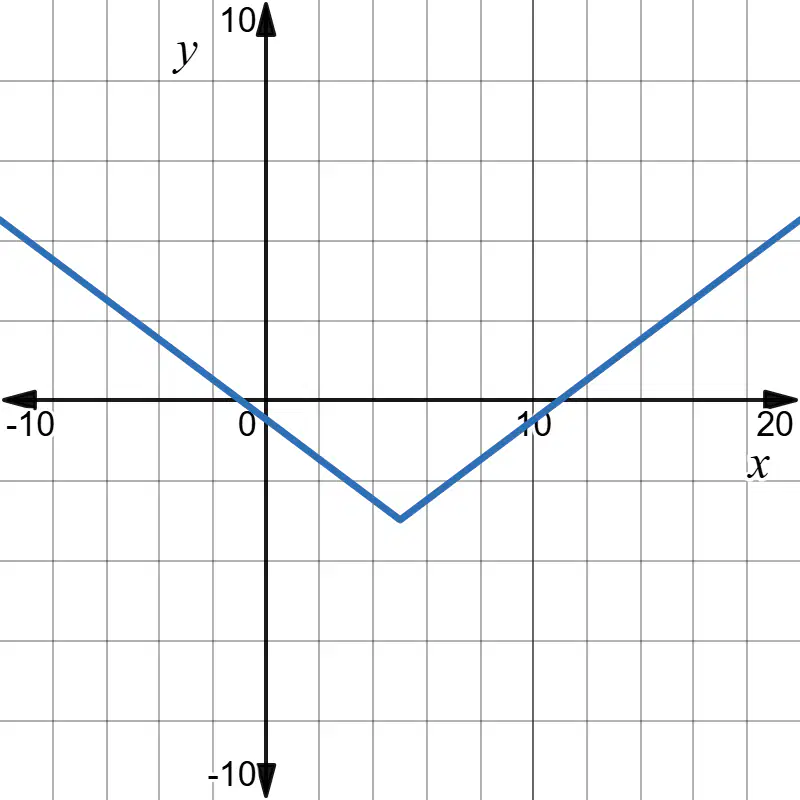
State the intercepts of the graph.
x: (−1,0),(11,0)
y: (0,−1)
x: (−1,0),(5,0)
y: (0,−2)
x: (−2,0),(12,0)
y: (0,2)
x: (−1,0),(15,0)
y: (0,−1)
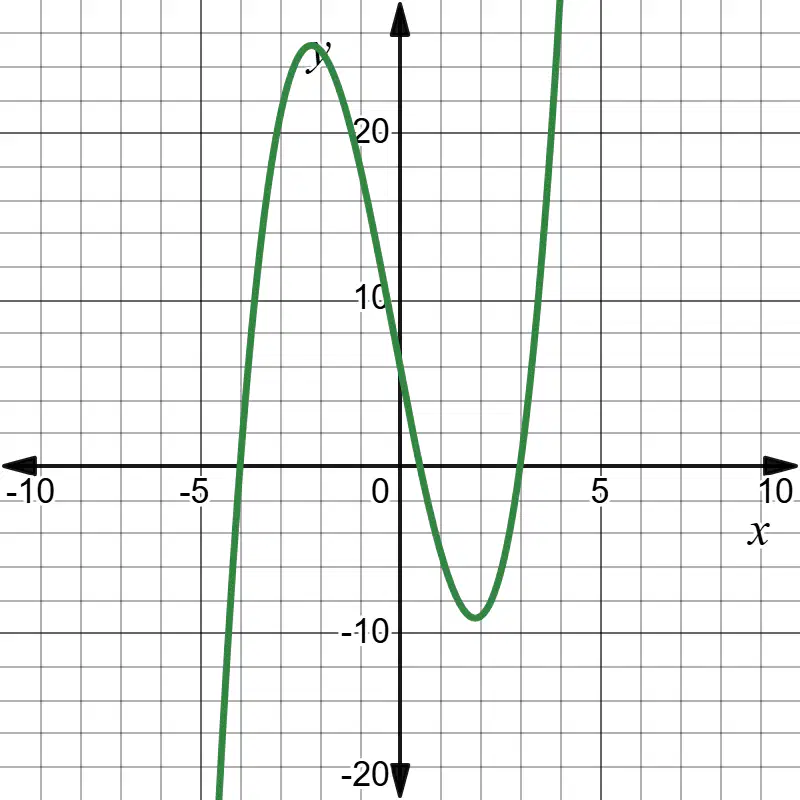
State the intercepts of the graph.
x: (−4,0),(1,0),(5,0)
y: (0,6)
x: (−1,0),(4,0),(8,0)
y: (0,6)
x: (−4,0),(1,0),(3,0)
y: (0,6)
x: (−4,0),(0.5,0),(3,0)
y: (0,6)
State the function transformations that are taking place.
f(x)=21x−3+4
up 3
up 4
right 3
down 4
compression of 1/2
State the function transformations that are taking place.
f(x)=3∣x+2∣−5
up 5
down 5
left 2
stretch 3
right 2
State the function transformations that are taking place.
f(x)=43(x+8)2−1
compression of 3/4
down 1
right 8
stretch of 3/4
left 8
The following function is being transformed right how many units?
f(x)=3(x−1)2+4
(a)
The following function is being transformed up how many units?
f(x)=3(x−1)2+4
(a)
Is the following function being stretched or compressed vertically? Type "stretched" or "compressed".
f(x)=3(x−1)2+4
(a)
Is the following function being stretched or compressed vertically? Type "stretched" or "compressed".
f(x)=0.5(x+2)2−1
(a)

What transformations has the function undergone?
Is the function below being reflected over the x-axis or the y-axis. Type "x" or "y".
f(x)=−3∣x−5∣+1
(a)
Is the function below being reflected over the x-axis or the y-axis. Type "x" or "y".
f(x)=41∣−x+3∣−7
(a)
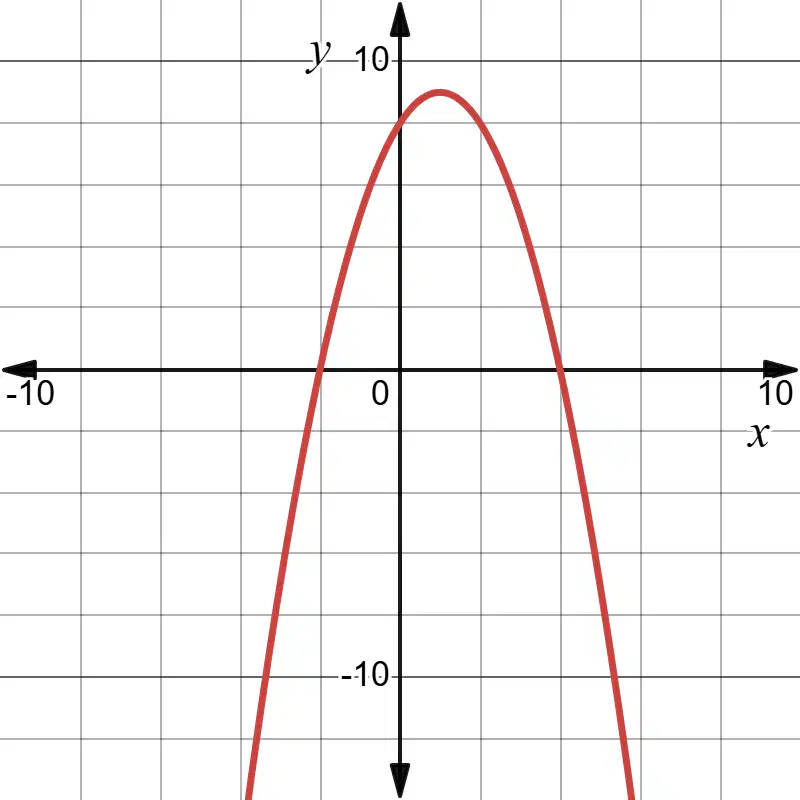
Select all transformations that have taken place.
up
down
left
right
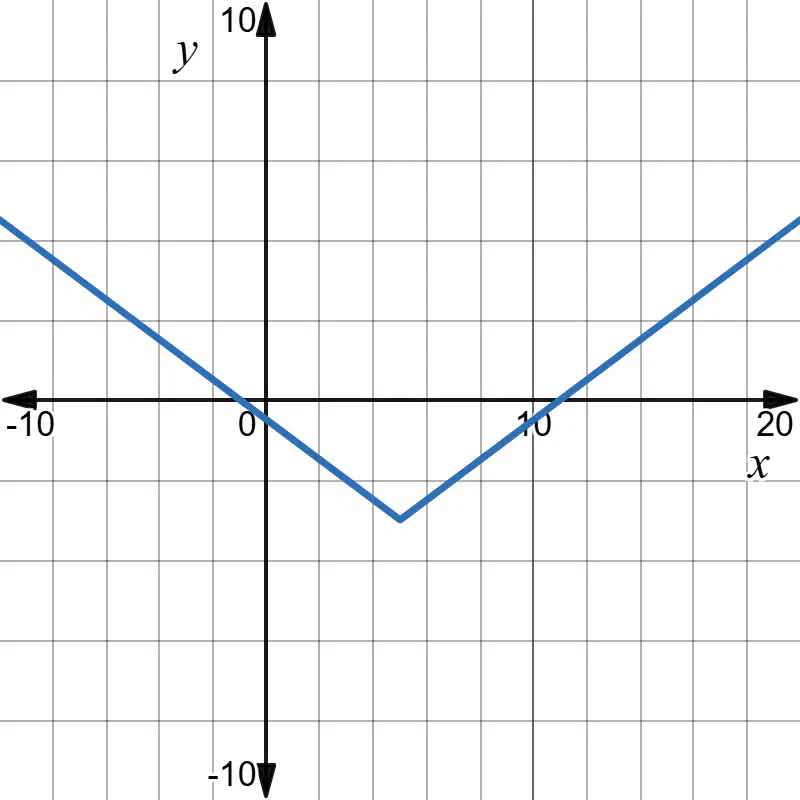
Select all transformations that have taken place.
vertical compression
vertical stretch
reflection over the x-axis
down
Is the following sequence arithmetic? If so, what is the common difference and next term?
−5, −7, −9, −11, ...
Yes!
Common difference: -3, Next term: -12
Yes!
Common difference: -1, Next term: -10
No!
Yes!
Common difference: -2, Next term: -13
Is the following sequence arithmetic? If so, what is the common difference and next term?
3, 0, −3, −6, ...
Yes!
Common difference: -2, Next term: -8
Yes!
Common difference: -3, Next term: -9
No!
Yes!
Common difference: -1, Next term: -7
Is the following sequence arithmetic? If so, what is the common difference and next term?
5, 2, −1, −4, ...
Yes!
Common difference: -2, Next term: -6
Yes!
Common difference: -3, Next term: -7
No!
Yes!
Common difference: -1, Next term: -5
Is the following sequence arithmetic? If so, what is the common difference and next term?
10, 7, 5, 1, ...
Yes!
Common difference: -2, Next term: -1
Yes!
Common difference: -3, Next term: -2
No!
Yes!
Common difference: -1, Next term: 0
Is the following sequence arithmetic? If so, what is the common difference and next term?
8, 16, 24, 35, ...

Convert the following recusive definition of the given sequence into the explicit definition.
an=−3+5(n−1)
an=5−3(n−1)
an=3−5(n−1)
an=−5+3(n−1)
Convert the following recursive definition of the given sequence into the explicit definition.
an={7,n=1 an−1−4,n>1
an=7−4(n−1)
an=4−7(n−1)
an=−4+7(n−1)
an=7+4(n−1)
Steph is saving oney every week for college. He decides to start with $75 the first week. By week 21, Steph has $575.
Find the common difference, d, of the sequence.
Write the explicit definition of the sequence using that common difference.
How much money will she have saved after 56 weeks?
d=35
an=75+35(n−1) $2000
d=20
an=75+20(n−1) $1175
d=25
an=75+25(n−1) $1450
d=30
an=75+30(n−1) $1725
Maria is saving money every month for a new laptop. She starts with $60 in the first month. By month 19, Maria has saved $510.
Find the common difference, d, of the sequence.
Write the explicit definition of the sequence using that common difference.
How much money will she have saved after 40 months?
d=25
an=60+25(n−1) $1035
d=20
an=60+20(n−1)
$820
d=30
an=60+30(n−1) $1240
d=15
an=60+15(n−1)
$640
James is saving money every month for a new bicycle. He starts with $80 in the first month. By month 15, James has saved $500.
Find the common difference, d, of the sequence.
Write the explicit definition of the sequence using that common difference.
How much money will he have saved after 30 months?
d=28
an=80+28(n−1)
$892
d=30
an=80+30(n−1)
$950
d=25
an=80+25(n−1)
$805
d=18
an=80+18(n−1)
$602
Sophia is saving money every month for a new laptop. She starts with $100 in the first month. By month 13, Sophia has saved $340.
Find the common difference, d, of the sequence.
Write the explicit definition of the sequence using that common difference.
How much money will she have saved after 24 months?
d=20
an=100+20(n−1) $560
d=18
an=100+18(n−1) $528
d=15
an=100+15(n−1) $445
d=10
an=100+10(n−1) $320
Graph the following and state the solution.
21x−5=3x+5
Graph the following and state the solution.
3x−7=2x+4
x = 11
x = -11
x = 7
x = -7
Graph the following and state the solution.
∣x−3∣=x−1
Graph the following and state the solution.
∣x−4∣=51x+4
Solve the following system of linear equations using elimination.
3x+2y=−18
13x−2y=−14
Solve the following system of linear equations using elimination.
4x−3y=7
8x+3y=5
x = 1, y = -1
x = 2, y = -1
x = -1, y = 3
x = 0, y = 2
Solve the following system of linear equations using elimination.
3x+4y=52
5x+y=30
Solve the following system of linear equations using elimination.
2x+3y=6
4x+y=22
(5, 7)
(6,-2)
(4, 9)
(3, 8)
Solve the system of linear equations using substitution.
y=6x−11
−2x−3y=−7
Solve the system of linear equations using substitution.
y=4x+3
x+2y=24
(2, 11)
(3, 15)
(1, 7)
(0, 3)
Solve the system of linear equations using substitution.
−5x+y=−3
3x−8y=24
For the following quadratic equation in vertex form, state the vertex, axis of symmetry, domain, range, maximum or minimum value, and whether it opens up or down.
f(x)=3(x−4)2−9
For the following quadratic equation in vertex form, state the vertex, axis of symmetry, domain, range, maximum or minimum value, and whether it opens up or down.
f(x)=−2(x+5)2+7
The vertex is (-5, 7), the axis of symmetry is x = -5, the domain is (-∞, ∞), the range is (-∞, 7], it has a maximum value, and it opens downwards.
The vertex is (5, -7), the axis of symmetry is x = 5, the domain is (-∞, ∞), the range is [-7, ∞), it has a minimum value, and it opens upwards.
The vertex is (-5, -7), the axis of symmetry is x = -5, the domain is (-∞, ∞), the range is [-7, ∞), it has a minimum value, and it opens upwards.
The vertex is (0, 7), the axis of symmetry is x = 0, the domain is (-∞, ∞), the range is (-∞, 7], it has a maximum value, and it opens downwards.
For the following quadratic equation in vertex form, state the vertex, axis of symmetry, domain, range, maximum or minimum value, and whether it opens up or down.
f(x)=3(x−2)2−4
The vertex is (2, -4), the axis of symmetry is x = 2, the domain is (-∞, ∞), the range is [-4, ∞), it has a minimum value, and it opens upwards.
The vertex is (-2, 4), the axis of symmetry is x = -2, the domain is (-∞, ∞), the range is (-∞, 4], it has a maximum value, and it opens downwards.
The vertex is (2, 4), the axis of symmetry is x = 2, the domain is (-∞, ∞), the range is (-∞, 4], it has a maximum value, and it opens downwards.
The vertex is (-2, -4), the axis of symmetry is x = -2, the domain is (-∞, ∞), the range is [-4, ∞), it has a minimum value, and it opens upwards.
Find the vertex form of quadratic function that passes through the given vertex and point.
Vertex: (1,−4) Point: (2,−1)
Find the vertex form of quadratic function that passes through the given vertex and point.
Vertex: (−2,3) Point: (0,11)
f(x) = 2(x + 2)² + 3
f(x) = 1(x + 2)² + 3
f(x) = 4(x + 2)² + 3
f(x) = 8(x + 2)² + 3
Determine the vertex form of the quadratic function that passes through the specified vertex and point.
Vertex: (3,−2) Point: (5,6)
f(x) = 2(x - 3)² - 2
f(x) = 1(x - 3)² - 2
f(x) = 4(x - 3)² - 2
f(x) = 8(x - 3)² - 2
Find the vertex form of the quadratic function that passes through the given vertex and point.
Vertex: (−1,4) Point: (1,0)
f(x) = -1(x + 1)² + 4
f(x) = 2(x + 1)² + 4
f(x) = -2(x + 1)² + 4
f(x) = 1(x + 1)² + 4
Find the vertex and axis of symmetry of the following function in standard form.
f(x)=2x2−16x+31
Find the vertex and axis of symmetry of the following function in standard form.
f(x)=3x2−18x+29
Vertex: (3, 2), Axis of symmetry: x = 3
Vertex: (4, -5), Axis of symmetry: x = 4
Vertex: (6, 1), Axis of symmetry: x = 6
Vertex: (5, 4), Axis of symmetry: x = 5
Find the vertex and axis of symmetry of the following function in standard form.
f(x)=x2−6x+10
Vertex: (3, 1), Axis of symmetry: x = 3
Vertex: (2, 4), Axis of symmetry: x = 2
Vertex: (6, 10), Axis of symmetry: x = 6
Vertex: (1, 3), Axis of symmetry: x = 1
Solve the following quadratic by factoring.
x2+7x+10=0
Solve the following quadratic by factoring.
x2+9x+20=0
x = -4, x = -5
x = 4, x = 5
x = 0, x = -9
x = -1, x = -20
Solve the following quadratic by factoring.
x2−11x+24=0
Solve the following quadratic by factoring.
x2+2x−35=0
Solve the following quadratic by factoring.
4x2+9x+5=0
Solve the following quadratic by factoring.
3x2+10x+7=0
x = -7/3, x = -1
x = 0, x = -7
x = -1, x = -7/2
x = -7/3, x = -1/3
Solve the following quadratic by factoring.
3x2−16x−12=0
Solve the following quadratic by factoring.
2x2−7x+3=0
x = 3, x = 1/2
x = 1, x = 3/2
x = -3, x = 1/2
x = 2, x = 3
Simplify the square root.
−20
2i 5
4i 2
5i 2
4i 5
Simplify the square root.
−45
3i 5
5i 3
9i 5
3i 15
Simplify the square root.
−80
4i 5
8i 5
2i 20
5i 4
Simplify the square root.
−125
5i 5
25i 5
10i 5
5i 25
(4+3i−1)+(6−2i−4i)
(5+2i+3)+(7−4i−2i)
8 + 4i
15 - 4i
10 - 6i
12 + 2i
(6−12i)+(3−4i)
(3−4i)−(−1+7i)
(2−4i−8)−(10−11i+4i)
4i(−2−8i)
(−2−i)(4+i)
(4−5i)(4+i)
(−3+2i)(−6−8i)
Solve the following quadratic equation using the quadratic formula.
x2−2x−18=0
Solve the following quadratic equation using the quadratic formula.
5x2−17x+14=0
x = 4, x = 5/2
x = 3, x = 1/2
x = 2, x = 7/5
Solve the following quadratic equation using the quadratic formula.
7x2−8x+10=0
x=73±2i 5
x=71±4i 3
x=74±3i 6
x=72±5i 2
Write the following polynomial in standard form and state the degree, number of terms, and leading coefficient.
3x2−5x4
Write the following polynomial in standard form and state the degree, number of terms, and leading coefficient.
5x2−10x4+6x2+2x3
Write the following polynomial in standard form and state the degree, number of terms, and leading coefficient.
3x2−8x4+9−x5+2x10
The x-intercepts of a function are also known as the function's (a) ?
The average rate of change of a function is also known as the (a) ?
A(n) (a) is a kind of transformation that occurs when a function is shifted up, down, left, or right.
A(n) (a) is a sequence of numbers in which each term is obtained by adding a constant value.
The value that separates each number in an arithmetic sequence is known as the (a) .
The (a) of an arithmetic sequence is written as an=a1+d(n−1) .
A(n) (a) is where the graph crosses either the x- or y-axis.
One x value to another x value on a graph is called a(n) (a) .
The graph of a quadratic function is called a(n) (a) .
The (a) of a quadratic function is written as f(x)=a(x−h)2+k .
The (a) of a quadratic function is written as f(x)=ax2+bx+c .
The invisible line that separates the graph of a quadratic function in half is called the (a) .
The (a) is either the highest or lowest point of a quadratic function.
The (a) states that if a product of real-number factors is 0, then at least one of the factors must be 0. It is what you do to solve a quadratic equation after you factor it.
A(n) (a) is any number bi, where b is a non-zero real number and i is −1 .
Any number that is the combination of a real number and an imaginary number is called a(n) (a) .
The (a) can be used to find the solution to any quadratic equation, even if the solution is complex. It is written as x=2a−b±b2−4ac
Putting a polynomial in order by decreasing degree is considered to be putting it in (a) .
The (a) refers to the number in front of a variable.
The (a) of a polynomial is the greatest degree/exponent of any of the terms.
There is a (a) in the graph wherever the graph goes form increasing to decreasing or vice versa.
If a turning point exists where the graph goes from increasing to decreasing, the graph has a (a) at that point.
If a turning point exists where the graph goes from decreasing to increasing, the graph has a (a) at that point.
The (a) of a function depends on the degree of the polynomial and the sign of its leading term.

