
 Worksheets
Exploring Southwest and SE Asia
Total questions: 70
Worksheet time: 50mins
What is the main religion practiced in Saudi Arabia?
Christianity
Islam
Hinduism
Buddhism
Which river is considered sacred in Hinduism and flows through India?
Yangtze River
Ganges River
Tigris River
Euphrates River
Which physical feature separates the Indian subcontinent from the rest of Asia?
Sahara Desert
Himalayan Mountains
Andes Mountains
Arabian Peninsula
Which Southwest Asian country is a major exporter of oil and a member of OPEC?
Israel
Saudi Arabia
Afghanistan
Turkey
Which of the following is a major environmental issue in China?
Deforestation
Air pollution
Desertification
Overfishing
Why is water scarcity a major issue in Southwest Asia?
The region receives high rainfall.
The region is mostly desert with limited freshwater sources.
There are many large lakes.
The region is surrounded by oceans.
How does literacy rate affect the standard of living in Southern & Eastern Asia?
Higher literacy rates generally lead to a higher standard of living.
Lower literacy rates have no impact on standard of living.
Literacy rate only affects the economy.
Literacy rate is unrelated to standard of living.
Which physical feature is most responsible for the development of ancient civilizations in Southwest Asia?
Mountains
Rivers
Deserts
Plateaus
What is the impact of monsoons on agriculture in India?
They cause droughts every year.
They provide essential rainfall for crops.
They have no effect on agriculture.
They only affect urban areas.
Explain how the distribution of oil affects the economies of Southwest Asian countries.
Countries with more oil resources tend to have stronger economies due to oil exports.
Oil distribution has no effect on economies.
All countries in the region have equal economic strength.
Oil-rich countries are always poor.
Which country in Southwest Asia is known for its parliamentary democracy and high-tech industries?
Iran
Israel
Saudi Arabia
Iraq
Which Asian country is famous for its ancient civilization along the Yellow River?
India
China
Japan
Vietnam
Which body of water borders Saudi Arabia to the east?
Red Sea
Persian Gulf
Mediterranean Sea
Arabian Sea
Which river flows through Iraq and is vital for its agriculture?
Nile River
Tigris River
Mekong River
Indus River
Which country is home to the city of Mecca, the holiest city in Islam?
Iran
Saudi Arabia
Turkey
Egypt
Which Asian country is an island nation located east of China?
India
Japan
Indonesia
Thailand
Which Asian country is famous for its rice terraces and is located in Southeast Asia?
Philippines
Vietnam
India
Pakistan
Which Asian country is known for its high population density and advanced technology?
Japan
India
China
Indonesia
Which country is known for the ancient city of Jerusalem?
Israel
Iran
Iraq
Turkey
Which country is the largest in area in Southwest Asia?
Saudi Arabia
Iran
Iraq
Turkey
Which country is known for the city of Dubai?
Saudi Arabia
United Arab Emirates
Iran
Turkey
Which Asian country is known for the city of Seoul?
North Korea
South Korea
Japan
China
How does the presence of the Himalayas affect the climate of the Indian subcontinent?
It causes frequent hurricanes.
It blocks cold winds from Central Asia, making the climate warmer.
It increases rainfall in the desert regions.
It has no effect on the climate.
Why is the Suez Canal important for global trade?
It connects the Red Sea to the Mediterranean Sea, allowing ships to avoid traveling around Africa.
It is a source of fresh water.
It is used for fishing.
It is a tourist attraction only.
Why is the Ganges River important to the people of India?
It is a source of oil.
It is considered sacred and provides water for agriculture and daily life.
It is used only for transportation.
It is a border river.
How does the location of Southwest Asia contribute to its role in world trade?
It is isolated from other continents.
It is located at the intersection of Europe, Asia, and Africa, making it a key trade route.
It has no major ports.
It is mostly covered by forests.
How does the presence of oil reserves affect the political relationships in Southwest Asia?
It leads to cooperation among all countries.
It can cause competition and conflict over resources.
It has no effect on politics.
It only affects local governments.
Assess how Japan’s geography has influenced its economic development and trade.
Japan’s mountainous terrain and limited natural resources have encouraged technological innovation and reliance on trade.
Japan’s geography has made it self-sufficient in all resources.
Japan’s geography has prevented any economic development.
Japan’s geography has no impact on trade.
What type of government does Israel have?
Parliamentary Democracy
Monarchy
Dictatorship
Theocracy
Who is the head of government in Israel?
Knesset
President
The king
Prime Minister
Who is the head of Saudi Arabia's government
The King
President
The Queen
Government
What type of government does Saudi Arabia have?
Republic
Dictatorship
Theocracy
Absolute Monarchy
What type of government does turkey currently have?
Democratic
Monarchy
Theocracy
Presidential Democracy
Israel is led by a prime minister. The prime minister is the leader of whichever party holds a majority of seats in the Knesset. SS7CG3a (2) Israel is a
Democracy
Aristocracy
Autocracy
Parliamentary
Israel and Saudi Arabia both use ______ to remove salt from sea water to provide people with drinkable water SS7G6a (2)
Extraction
Evaporation
Precipitation
Desalination
Jill lives in Israel where they do not vote for the leader of their government but they do get to vote for their legislature and the legislature elects a prime minister.
Parliamentary
Autocratic
Oligarchic
Israel's head of government is their...
king
president
prime minister
Saudi Arabia's majority religion.
Sunni
Shia
Orthodox
The country's leader has the supreme power of the government or unlimited power which is usually inherited.
President
Prime Minister
Absolute Monarchy

Focusing on a narrow range of products/services that can be produced most efficiently and cost-effectively.
subsistence
specialization
scarcity
bartering
Why is a system of currency exchange needed for international trade?
all nations use the same currency
currency exchange makes if more difficult to trade with other nations
not all nations use the same currency
all currency has the same value
What is a key characteristic of a market economy?
Government sets all prices
Equal distribution of wealth
Private ownership of resources
Central planning of production
Which of the following is a characteristic of a command economy?
Free market competition
Government makes all economic decisions
Private ownership of businesses
Minimal government intervention
Which of the following best describes a mixed economy?
Economy based solely on barter and trade
A combination of private enterprise and government regulation
Private businesses operate without any government intervention
Complete government control over all economic activities
What type of economy is controlled only by the government?
Capitalist
Command
Free-market
India's government has invested heavily in factories, modern machinery, and technology. This investment in is called _____________________.
Human Capital
Capital Goods
Monetary Capital
Currency Exchange
What is/are the economic question(s) that every country must answer?
What to produce?
How to produce?
For Whom to produce?
All of the above
What kind of economic system do most democratic countries have?
Pure Market
Mixed Market
Mixed Command
Traditional
What has been a challenge to Israel's economy?
National security and immigration
immigration and working within a command economy
High unemployment
High employment
On an economic continuum, most countries are located near
the market side
the command side
in the middle between command and market
none of the above
OPEC sets the price of the oil and also
determines the amount that should be produced
purchases the oil from the oil producing countries
determines who can purchase the oil
sets strong regulations on the oil producing countries
A high literacy rate indicates a high standard of living
True
False
Mr. Caldwell is a US citizen and he plans to travel to the United Emirate Estates. He wants to shop and stay there for about a month. In order to ensure that he can pay for things, what does he need to do before leaving the USA?
Go to a bank and exchange his US money for UAE's money.
Go to a bank and invest his money in the UAE's stock market.
Go to a doctor and get vaccinations so that he will not get sick.
Go to a religious leader for advice on spiritual matters.
Mr. Waltz decides he wants to take a risk and open up a Jello Shop. He invests his own capital, human capital, capital goods, and natural resources to start a business. What is this an example of?
a natural resource
human capital
a capital good
entrepreneurship
If Mrs. Sherman's family find oil in her back yard, how can she invest in capital goods to help her make money off of her newfound oil?
She can pay for her kids to be trained in the oil refinery industry.
She can sell it to the highest investor at a bank.
She can buy machines that will allow her to take the oil out of the ground and refine it.
She can pay to have it inspected by an agency.
What is the relationship between education and training in a country and the country’s gross domestic product (GDP)?
Countries with a high level of education and training have a higher GDP.
Gross domestic product only deals with the amount of investment in factories and machinery.
The role of entrepreneurs is the only factor affecting gross domestic product.
There is no relationship between education and training and gross domestic product.

The parliament selects the prime minister in this type of democracy?
parliamentary democracy
presidential democracy
presidential democracy and parliamentary democracy
autocratic monarchy
What are some causes of pollution in the Ganges River?
Select ALL that apply.
industrial runoff
human waste
human pollution and bodies
sewage
What are some causes of air pollution in India?
Select ALL that apply.
transportation and coal power stations
industry and household pollution
large population
runoff


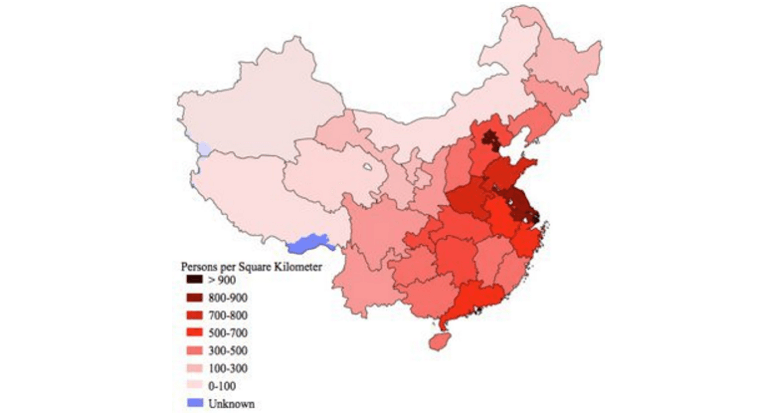
The population density near the SE Asian coastline is...
LOW, because of the growing use of technology.
HIGH, because of the developed cities and jobs available.


The fishing industry provides thousands of jobs for people in Southeast Asia. What physical feature makes this possible?
vast deserts
increasingly popular cities
large amounts of coastlines
mountain ranges in the region

