
Font size
 Worksheets
Forensic Impression Review
Total questions: 50
Worksheet time: 1hrs 5mins
Chips and dents on a hammerhead can produce unique tool marks
True
False
There is little forensic value in examining cut marks in wood because all cut wood looks similar
True
False
The measure of distance from the center of the front axle to the center of the rear axle is referred to as.......
Track Width
Turning Diameter
Wheelbase
Tire Groove
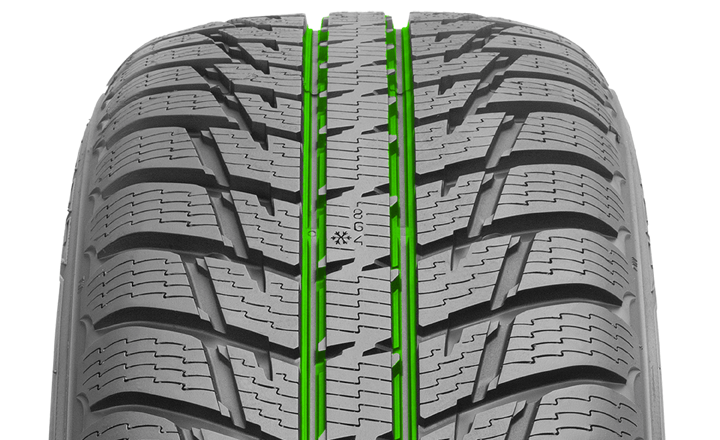
What part of the tire is highlighted green in the picture? How many ribs are shown?
Tire Rib; 3
Tire Ridge; 4
Tire Rib; 4
Tire Groove; 3
Someone's ______, a group of footsteps, helps the investigator determine whether if someone was walking with a limp.
Height
Weight
Gait
Race

What tool would most likely have been used?
Pry bar
Pliers
Needle nose pliers
What is the significance of documenting the orientation of tool marks during analysis?
It helps in understanding the type of tool used
It is important for reconstructing the actions that created the marks
It is only necessary for digital imaging
It has no significance in the analysis
What is the primary goal of tool mark identification techniques in forensic science?
To determine the type of material used in the tool
To link a tool to a specific action or crime scene
To estimate the age of a tool
To identify the owner of the tool
Which of the following cases involved chisel evidence?
The Great Train Robbery (1963)
The Boston Tea Party (1773)
The Watergate Scandal (1972)
The Apollo 11 Moon Landing (1969)
In forensic science, pliers can be significant evidence in which of the following types of crimes?
Forcing open doors and windows
Cooking food
Planting trees
Reading books
Explain why pliers might be important evidence in a robbery investigation. Use reasoning and examples from forensic science.
Pliers can leave unique impressions that help link suspects to forced entry or tampering, such as in wire theft or breaking into safes.
Pliers are used for cooking, which is unrelated to robberies.
Pliers are only used for gardening, not for crimes.
Pliers cannot be traced in any investigation.
Forensic Examiners look for ______ and ______ when analyzing fingerprints.
(a)
Which is a type of minutiae found on fingerprints?
arch
core
bifurcation
How many matching characteristic does the court require to match fingerprints?
8 - 16
15 - 20
5 - 10
Which type of fingerprints aren't visible without the use of powders or chemicals?
patent
plastic
latent
What is the name of the FBI's fingerprint database?
NFL or NBA
AFIS or IAFIS
FBIFP or CIAFP
Which type of fingerprint cannot be seen the naked eye?
molded fingerprint
latent fingerprint
visible fingerprint
plastic fingerprint

The image was taken from the right hand. What type of loop is it?
Radial
Ulnar
Humerus
Metacarpal
Within a fingerprint pattern there are ridges and patterns that are studied to match fingerprints, these are called...
valleys
lines
minutiae
streams
Identify the key pattern of the print:
ridges will enter and exit on the same side
typically 1 delta
typically 2 deltas
typically 0 deltas
ridges will enter on one end and exit on the other
ridges form a series of concentric circles
Label the timeline with the correct person or event:
Henry
Galton
Vucetich
Will West Case
NYC Civil Service
published "Finger Prints" educating public on fingerprint characteristics "Father of Fingerprints"
first to use fingerprints in an investigation
exposed the need for fingerprints in cataloging inmates due to identical names and body measurements of two different inmates
Match the following ridge characteristic with the correct name

Bridge

Ending Ridge

Bifurcation

Spur/Hook

Delta
Label the ridge characteristics on the print pictured
Eye
Hook/Spur
Crossover
Bridge
Core
Delta
Bifurcation
Ending Ridge
Considering that people walk differently in their shoes, would shoe impressions be individual or class evidence?
Individual
Class
Mrs. Viel is 5'1. Her husband, Mr. Viel, is 6'3. Who will have shoe impressions more spread out?
Mrs. Viel
Mr. Viel
They will be the same
Class characteristics of shoe prints include:
manufacturer, type, model, and size
color, material, and scratches on the bottom
depth of tread, position, quantity
make a cast using plaster or dental stone
cut out the area with the impression
photograph it with a ruler
place the item that made the impression over it to see if it's a match
Patent
Latent
Plastic
Lasting

What type of impression is shown in the picture?
Plastic
Latent
Patent
Shoe
What can we learn about a person from shoe impressions?
How tall they are
Which direction they were moving
How fast they were moving
All of the above

Which shoeprint matches the unknown?
A
B
C
Age
Body weight
Surface the person walks on
Activities of the wearer
Why was Richard Ramirez’s case historically important in the development of AFIS?
It was the first case where fingerprints disproved a confession setting free an innocent man
AFIS matched a latent print to Ramirez, demonstrating the power of computerized fingerprint databases
AFIS eliminated him as a suspect before re-including him
AFIS was used to reconstruct his fingerprint from partial smudges

