
 Worksheets
Oil and Gas Industry Hazards and Safety Quiz
Total questions: 15
Worksheet time: 8mins
Which guideline should be followed when providing emergency care?
Ignore the safety of the environment
Follow proper emergency care procedures
Avoid using protective equipment
Wait for professional help without taking any action
What is ingestion in the context of chemical hazard exposure?
When a hazardous chemical is inhaled into the lungs.
When a hazardous chemical is absorbed through the skin.
When a hazardous chemical is taken into the mouth and swallowed.
When a hazardous chemical is injected into the bloodstream.
Which of the following describes 'Other Routes' of chemical exposure?
Inhalation of hazardous chemicals.
Direct injection of hazardous chemicals into the bloodstream or through high-pressure fluids into the skin.
Swallowing hazardous chemicals.
Absorption of hazardous chemicals through the skin.

Which of the following is included in Personal Protective Equipment (PPE)?
Company policies and signage
Protective clothing and respiratory protective equipment
Work rotation schedules
Training programs
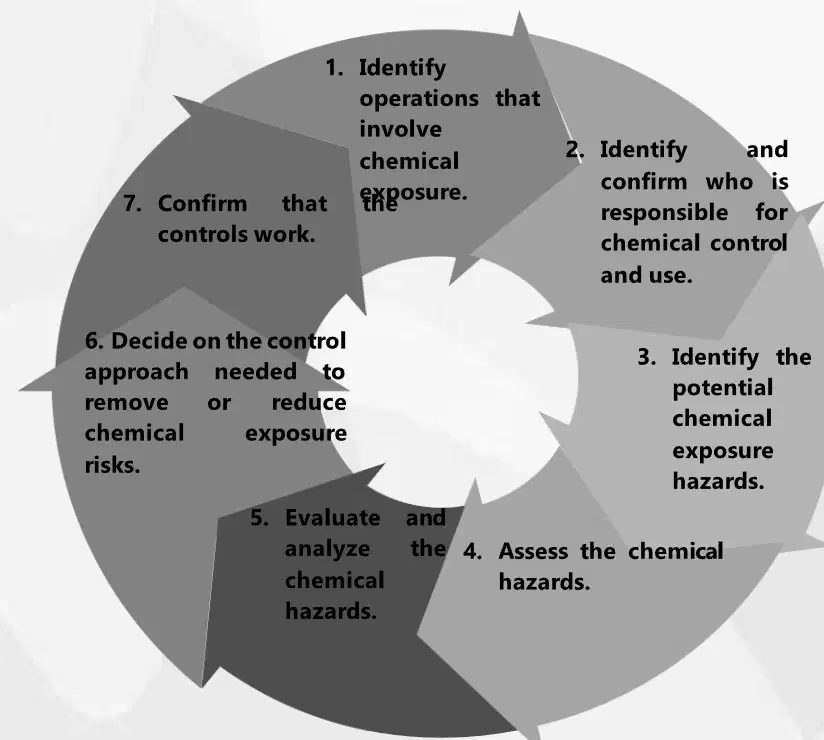
What is the main focus of assessing chemical hazards in the planner's chemical hazard assessment methodology?
To identify potential chemical exposure hazards.
To confirm that controls work.
To evaluate and analyze the chemical hazards.
To identify operations that involve chemical exposure.

How can the risk of heat stress in a confined space be exacerbated?
By the presence of flammable gases
By wearing personal protective equipment or lack of ventilation
By flowing liquids
By suspension of combustible dust in air
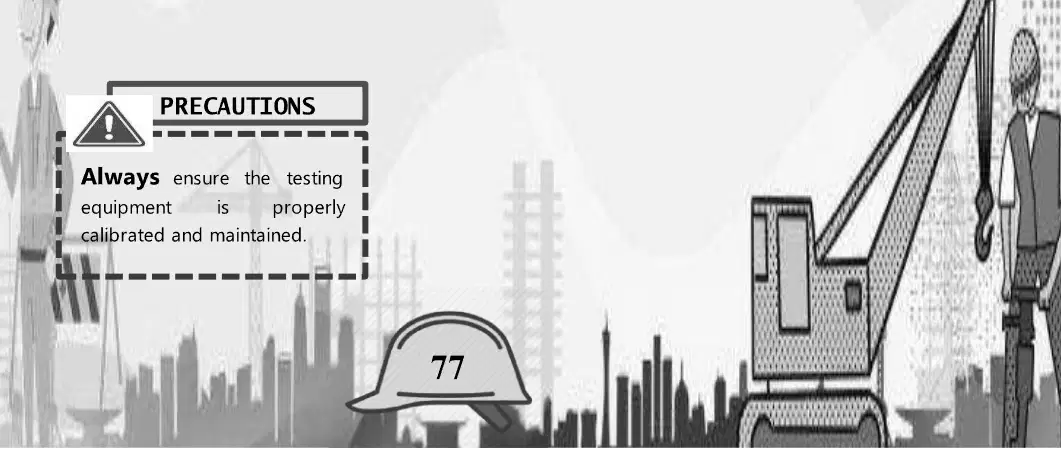
What precaution should be taken regarding testing equipment for air quality?
Ensure the equipment is properly calibrated and maintained.
Use the equipment only once.
Avoid using testing equipment in confined spaces.
Use uncalibrated equipment for faster results.
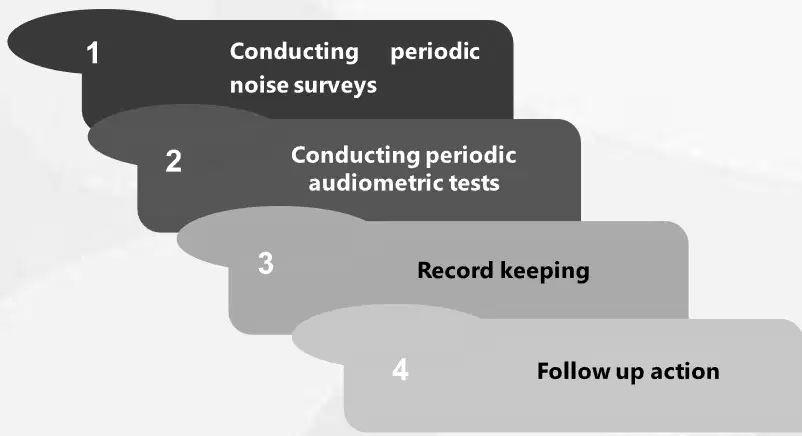
Which of the following is NOT a step in identifying and assessing hazardous noise conditions?
Conducting periodic noise surveys
Conducting periodic audiometric tests
Implementing noise reduction equipment
Follow up action
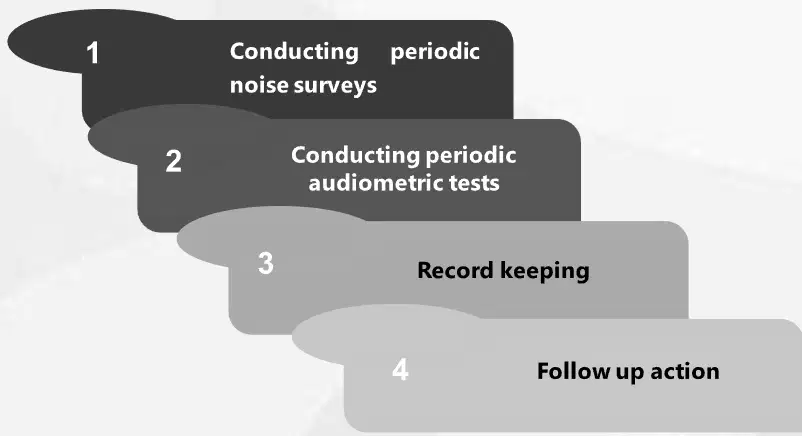
What is the purpose of conducting periodic audiometric tests in the workplace?
To measure noise levels in the environment
To assess the hearing ability of employees
To record noise data for future reference
To implement noise reduction strategies
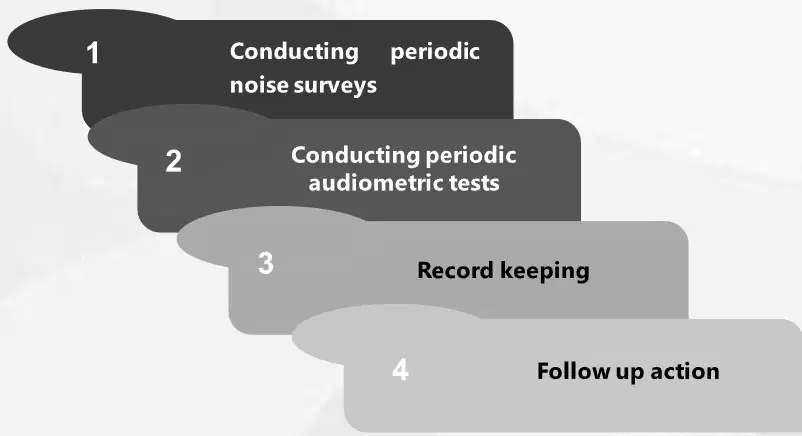
Why is record keeping important in the process of assessing hazardous noise conditions?
To ensure compliance with workplace safety regulations
To reduce noise levels in the workplace
To train employees on noise safety
To conduct periodic noise surveys
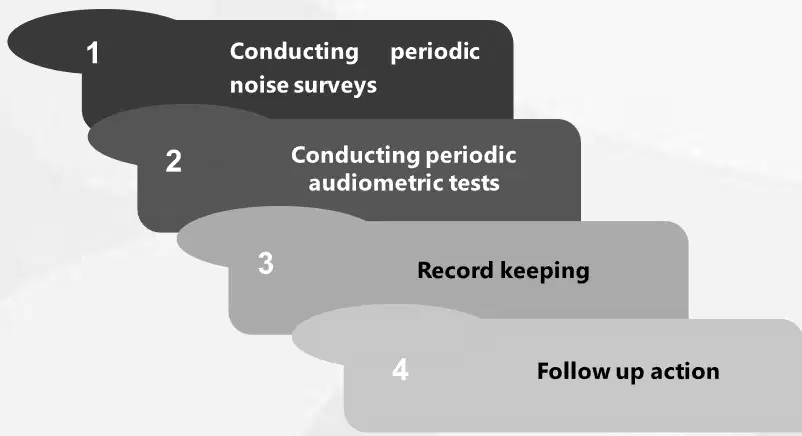
What is the final step in identifying and assessing hazardous noise conditions?
Conducting periodic noise surveys
Conducting periodic audiometric tests
Record keeping
Follow up action
What is the purpose of an audiometric form in record keeping?
To record test results for individual employees and allow sequential comparisons.
To measure the noise levels in the workplace.
To track employee attendance.
To document workplace accidents.

What is one method to reduce the driving force of vibrating surfaces?
Using sound barriers
Compression riveting
Minimizing rotational speed
Welding for riveting
What is a common cause of electrostatic discharge?
Briskly rubbing a nonconductive material over a stationary surface
Using conductive materials in electrical circuits
Applying insulation to electrical wires
Grounding electrical equipment
What can happen if equipment is not properly grounded or insulated?
An unshielded worker may receive a substantial electrical shock
The equipment will automatically shut down
The equipment will overheat and stop functioning
The equipment will emit sparks continuously

