
Font size
 Worksheets
Vocabulary and Civics Quiz
Total questions: 82
Worksheet time: 41mins
What is the meaning of "popular history"?
A telling of history focused on gaining readership and interesting narratives
A type of history based only on primary source research
A history book written by famous people
A history that is only about wars
What does the word "absconded" mean?
To leave quickly and secretly to avoid detection or arrest
To stay and face the consequences
To celebrate after a victory
To help someone in need
Which word means an action or speech that makes someone annoyed or angry?
Provocation
Conjecture
Cabinet
Attorney General
What is a "conjecture"?
An opinion or conclusion formed with incomplete information; a guess
A proven fact
A law passed by the government
A type of cabinet
Who are the advisors to the president called?
Cabinet
Conjecture
Provocation
Attorney General
What is the role of the Attorney General?
The chief law officer of a nation or state and a member of the President’s cabinet
The president’s personal assistant
The leader of the military
The head of the treasury department
Why might someone abscond after committing a crime?
To avoid being caught or arrested
To celebrate with friends
To return the stolen items
To ask for forgiveness
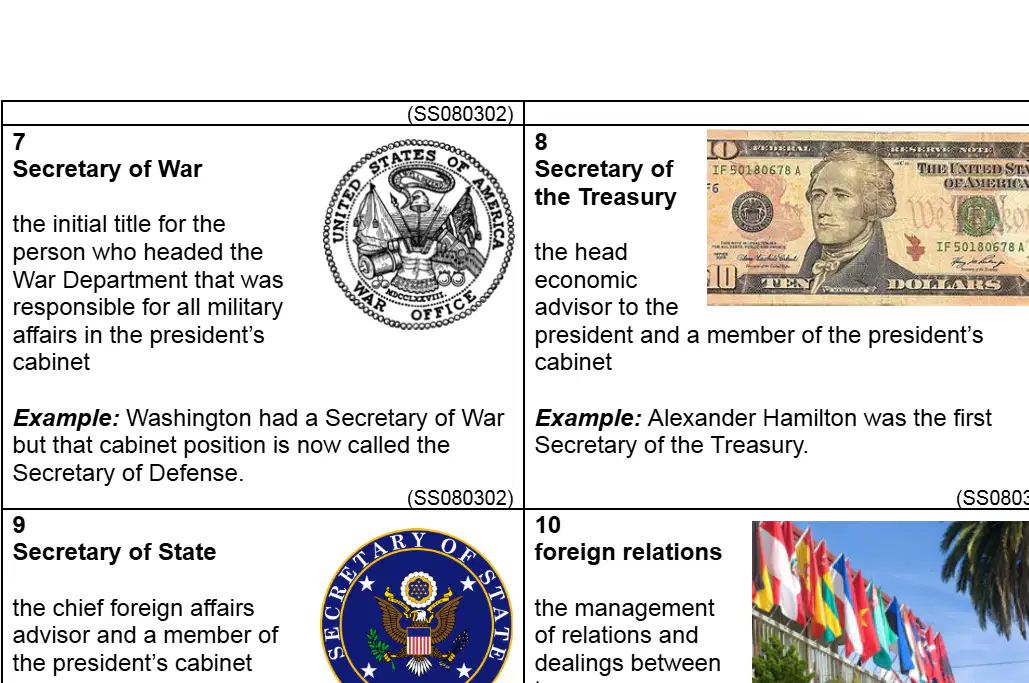
What was the initial title for the person who headed the War Department and was responsible for all military affairs in the president’s cabinet?
Secretary of War
Secretary of State
Secretary of the Treasury
Secretary of Defense

Who was the first Secretary of the Treasury?
Alexander Hamilton
Thomas Jefferson
George Washington
John Adams
What is the main responsibility of the Secretary of State?
Chief foreign affairs advisor
Head of military affairs
Head economic advisor
Chief justice
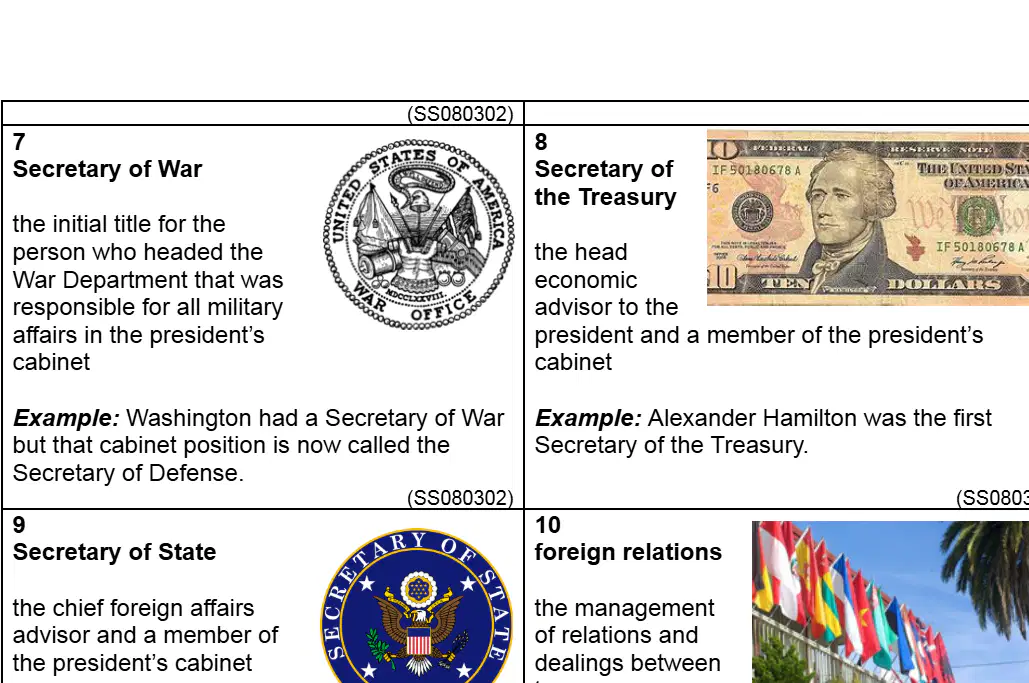
What does the term "foreign relations" refer to?
Management of relations and dealings between two or more countries
Production and distribution of goods
Military strategies
Judicial decisions
Which of the following best describes an "economic" decision?
A decision about the use of resources, production, distribution, and consumption of goods and services
A decision about foreign relations
A decision about military strategies
A decision about legal precedents
What is a "precedent"?
An earlier action that serves as an example or guide for later similar circumstances
A type of economic decision
A military strategy
A foreign policy agreement
Imagine you are the president and you need advice on how to manage relationships with other countries. Which cabinet member would you ask for help?
Secretary of State
Secretary of War
Secretary of the Treasury
Secretary of Defense
If a new president makes a decision that future presidents follow, what is this decision called?
Precedent
Economic policy
Foreign relation
Cabinet order
Why might a country focus its foreign relations on a specific region, like Europe?
To strengthen ties and manage important dealings with countries in that region
To increase military spending
To set economic precedents
To appoint new cabinet members
Which cabinet position is now called the Secretary of Defense?
Secretary of War
Secretary of State
Secretary of the Treasury
Secretary of Commerce
What is an economic policy?
The decisions a government makes to influence or control the behavior of the economy.
The decisions a government makes about foreign countries.
The beliefs about power between citizens.
The customs and traditions of a country.
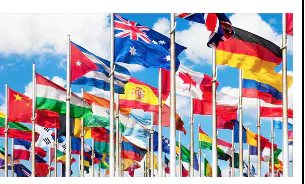
Which of the following is an example of a foreign policy?
Making trade and peace agreements with other nations.
Deciding what food is eaten in a country.
Choosing the language spoken in schools.
Setting up local community events.
What does the term "cultural" refer to?
Customs, language, religion, political institutions, and other lifeways.
The way money is spent by the government.
The rules for voting in elections.
The laws about driving cars.
Why might travelers find it easier to navigate in nations with cultural similarities?
Because they are familiar with the customs and traditions.
Because the government spends more money.
Because there are more political parties.
Because the laws are always the same.
What are political ideas?
Beliefs about the distribution of power and authority between a government and its citizens.
The way food is prepared in a country.
The decisions about foreign trade.
The customs followed during festivals.
How did Hamilton and Jefferson differ according to the example?
They had different political ideas.
They wore different clothes.
They spoke different languages.
They lived in different countries.
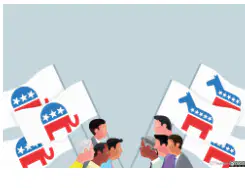
Who is a political supporter?
A person who approves of and encourages the vision of a political figure or party.
A person who makes laws for the country.
A person who travels to other countries.
A person who studies history.
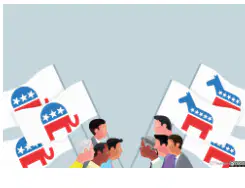
What is a political party?
A group of voters organized to support certain public policies.
A celebration held by politicians.
A law passed by the government.
A type of cultural tradition.
How do political parties differ from each other?
In their approach to many national issues.
In the food they eat.
In the clothes they wear.
In the languages they speak.
Imagine you are a candidate in an election. Why would you want political supporters?
Because they can help you win by voting for you and encouraging others.
Because they can cook food for you.
Because they can teach you a new language.
Because they can travel with you.
What is domestic policy mainly concerned with?
Managing affairs within a nation's borders
Managing affairs between different countries
Creating international trade agreements
Organizing global sports events
Which term means being free from dangers or threats?
Sedition
Security
Alien
Diplomat
Who is a diplomat?
A person who writes laws for a country
An official representing a country or nation
A citizen of a foreign nation
A person who enforces security at borders
What is sedition?
Any speech, act, or writing that may be harmful or rebellious to a government
A law that protects citizens from danger
A person who represents a country
A policy about healthcare
During wartime, which type of laws are more likely to be passed?
Security laws
Sedition laws
Alien laws
Diplomat laws
What is an alien in the context of government and citizenship?
A person who is a citizen of the country
A person who is a subject or citizen of a foreign nation
An official who represents a country
A person who creates government policies
Why might concern over alien influence increase during times of national emergency?
Because aliens help in emergencies
Because people worry about foreign influence
Because diplomats make agreements
Because sedition laws are passed
Which of the following is an example of a domestic policy concern?
International trade
Poverty and healthcare
Foreign relations
Border security in other countries
If a country is worried about protecting its citizens on the borders, which term best describes this concern?
Sedition
Security
Alien
Diplomat
A diplomat is unable to reach an agreement with a foreign minister. What skill or concept does this situation best illustrate?
The importance of international negotiation
The need for domestic policy
The passing of sedition laws
The definition of an alien
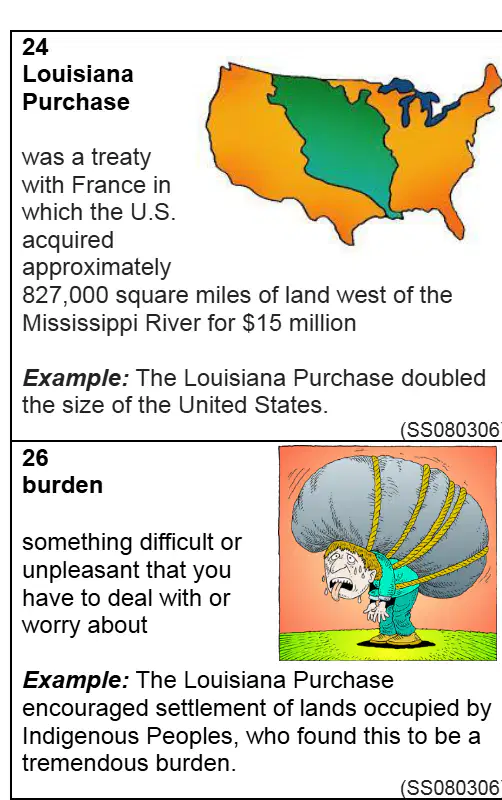
What was the Louisiana Purchase?
A treaty with France in which the U.S. acquired land west of the Mississippi River for $15 million
A treaty with Spain in which the U.S. acquired land east of the Mississippi River for $10 million
A purchase of land from Great Britain for $20 million
A trade agreement with Mexico for land in California

What does the word "bargain" mean?
Something whose value considerably exceeds its cost
Something that is very expensive
Something that is difficult to obtain
Something that is not worth its price
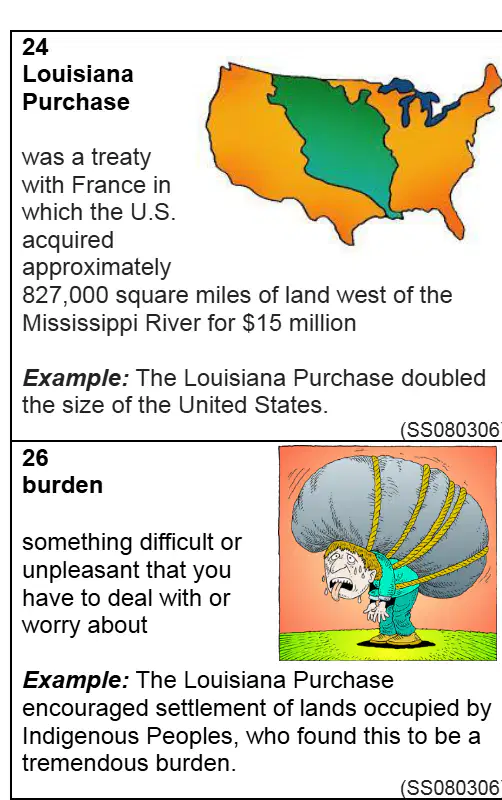
Why did some Indigenous Peoples find the Louisiana Purchase to be a burden?
It encouraged settlement of lands they occupied
It made trade with France easier
It lowered the cost of land
It improved their living conditions
What is non-importation?
An economic policy that prohibited trade with Great Britain to stop impressment of American sailors
A law that allowed free trade with all countries
A policy that encouraged buying only British goods
A treaty that ended the War of 1812
What is impressment?
The practice of taking men into naval service by force
The act of trading goods with other countries
The process of making peace treaties
The act of buying land from another country
Why did the United States use non-importation as a tactic in the early 1800s?
To force Great Britain to stop impressment of American sailors
To increase trade with France
To expand the size of the United States
To encourage settlement of new lands
How did the Louisiana Purchase affect the size of the United States?
It doubled the size of the United States
It reduced the size of the United States
It had no effect on the size of the United States
It tripled the size of the United States
Explain how the British impressment of American sailors contributed to the War of 1812.
It angered Americans and was one of the causes of the war
It helped improve relations between Britain and the U.S.
It led to the Louisiana Purchase
It ended the practice of non-importation
What does the word "fervor" mean?
Intensity of feeling or expression
A type of government
A peaceful negotiation
The production of goods
What is an embargo?
An official ban on trade or other commercial activity with a particular country
A celebration of trade between countries
A type of economic growth
A diplomatic agreement
How did the United States’ attempts to stay out of war impact its own economy?
Adversely
Positively
Neutrally
Slowly
What does "diplomatic" mean?
Official negotiations by a national government to maintain political, economic, and social relations
The production of goods and services
The quality of being important
Intensity of feeling or expression
Which word describes something related to the production, distribution, and consumption of goods and services?
Economic
Diplomatic
Fervor
Significance
Why do historians consider the War of 1812 to have significance?
Because it was a turning point, affected many people, and changed the way Americans lived
Because it was a peaceful event
Because it was an economic agreement
Because it was a small battle

If a country places an embargo on another country, what is most likely to happen to trade between them?
Trade will stop or be banned
Trade will increase
Trade will stay the same
Trade will become more diplomatic
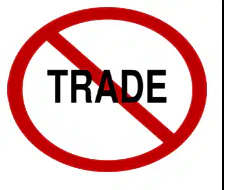
Which of the following is an example of something that could adversely affect a country’s economy?
A ban on trade with other countries
An increase in production
A diplomatic agreement
A celebration of economic growth
How might a government use diplomatic measures to avoid war?
By negotiating with other countries to maintain peaceful relations
By increasing the production of goods
By showing fervor for war
By placing an embargo on all goods
Why is it important to understand the significance of historical events?
Because it helps us learn how events changed people’s lives and shaped history
Because it tells us how to produce goods
Because it shows us how to negotiate
Because it helps us ban trade
What does the term "jurisdiction" refer to?
The territory or sphere over which the legal authority of a court extends
The process of reviewing executive actions
The authority to make laws in a country
The power to elect government officials
Which of the following best describes "judicial power"?
The authority vested in courts and judges to hear and decide cases and to make binding judgments
The ability to create new laws
The power to enforce laws
The right to vote in elections
What is a "writ"?
A form of written command in the name of a court or other legal authority to act, or abstain from acting, in some way
A type of government system
A geographical term for half of the Earth
A ceremonial duty performed by a monarch
What is "judicial review"?
A process under which executive or legislative actions are subject to review by the judiciary
The authority to create new laws
The power to enforce laws
The ability to elect government officials
Which statement best describes a "monarchy"?
A form of government in which a single person holds supreme authority in ruling a country
A government ruled by elected officials
A system where laws are made by judges
A geographical term for half of the Earth
What does the term "Western Hemisphere" mean?
The half of Earth which lies west of the prime meridian and east of the antimeridian
The half of Earth which lies east of the prime meridian
The area north of the equator
The region south of the equator
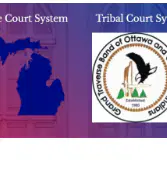
If a kidnapping case crosses state borders, which court system has jurisdiction?
Federal court system
State court system
Tribal court system
Local court system
How does judicial review help maintain the balance of power in government?
By allowing the judicial branch to check the power of the other two branches
By giving judges the power to create laws
By letting courts enforce laws directly
By allowing citizens to vote on laws
Why did American colonists revolt against the British monarchy?
Because the monarchy held supreme authority over the country
Because the monarchy allowed everyone to vote
Because the monarchy was a form of democracy
Because the monarchy was located in the Western Hemisphere
If the United States is located west of the prime meridian and east of the antimeridian, in which hemisphere is it found?
Western Hemisphere
Eastern Hemisphere
Northern Hemisphere
Southern Hemisphere
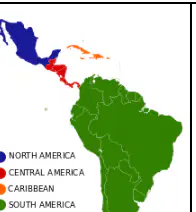
Which of the following best describes Latin America?
A group of countries in the Western Hemisphere where Romance languages are predominantly spoken.
A continent in Europe where English is the main language.
A country in Africa with many deserts.
A city in Asia famous for technology.
What does the term "continuity" mean?
An unbroken and consistent existence of something over a period of time.
A sudden change in events.
A type of government.
A way to measure distance.
What is the meaning of "change" in history?
To make or become different.
To stay the same forever.
To travel to new places.
To write a book.

Why do historians examine the context of events?
To fully understand and assess the circumstances in which events occurred.
To ignore the details of the event.
To make up stories about the past.
To only focus on the people involved.
Which statement best describes a doctrine?
A belief or set of beliefs or a policy held by a group of people.
A type of food eaten in Latin America.
A famous landmark in Europe.
A new invention in science.
What is an alliance?
A relationship among people, groups, or states that have joined together for mutual benefit or a common purpose.
A type of animal found in South America.
A new language spoken in Latin America.
A kind of weather pattern.
Which of the following is an example of continuity in history?
A tradition that has been practiced for hundreds of years.
A sudden change in government.
A new invention that changes daily life.
A war that lasts only a few days.
How might historians use context to better understand an event?
By examining the circumstances and background in which the event occurred.
By ignoring all details except the date.
By only reading about the people involved.
By guessing what happened without evidence.
If two countries form an alliance, what are they most likely trying to do?
Work together for mutual benefit or a common purpose.
Compete against each other in sports.
Ignore each other's problems.
Fight a war against each other.
Imagine you are a historian studying a major change in a country’s government. What steps might you take to understand why this change happened?
Look for patterns and examine the context in which the change occurred.
Only read about the new government.
Ignore the reasons for the change.
Focus only on the leaders involved.
What does the term "unilateral" mean?
an action or decision made by one political party, country, or person
an agreement between two countries
a group decision made by several people
a law passed by a court
Which of the following is an example of a unilateral decision?
A country makes a decision without involving its allies
Two countries sign a peace treaty together
A group of friends vote on where to eat
A city holds a public election
What is a "sphere of influence"?
A territorial area where one nation exercises greater control and the ability to dominate others
A place where people go to relax
A type of government building
A law that protects animals
Which of the following best describes the United States' sphere of influence, according to the example?
It includes Latin America
It includes only the United States
It includes Europe
It includes Africa
Why might a country want to have a sphere of influence over another area? (Use reasoning)
To have greater control and the ability to dominate others
To make friends with everyone
To avoid making any decisions
To ignore other countries completely
If a country makes a decision without asking its allies, what kind of decision is it?
Unilateral
Democratic
Collaborative
Bilateral

What does the diagram most likely represent?
A sphere of influence
A weather map
A transportation map
A map of natural resources

