
 Worksheets
6.2 - Thermal Energy Lesson 1-6 Review
Total questions: 36
Worksheet time: 19mins
Which of the following statements is true about the cup system?
It only includes the different parts of the cup that work together.
It includes the different parts of the cup and the water and air inside the cup.
It includes the different parts of the cup and the water inside the cup.
It includes the different parts of the cup and the air inside the cup.
Which of the following is not a part of the cup system?
Straw
Lid
Desk
Air inside between the water and lid
Why do some cups include features such as double walls, lids or straws?
To increase or decrease the temperature of liquids in the system
To help maintain the temperature of liquids inside the system
To improve the flavor of the liquids inside the system
The features do not have any specific purpose
How does our ability to see an object depend on the interaction of light?
Light must reflect off the object and enter our eyes.
Light must be absorbed by the object to be visible.
Light must refract through the object to be visible.
Light must scatter in all directions from the object.
How do particles in a gas differ from those in a liquid?
Gas particles are closer together than liquid particles.
Liquid particles have more space between them than gas particles.
Gas particles have a lot of space between them, while liquid particles do not.
There is no difference; they are the same
What happens to water over time in an open cup?
It freezes.
It evaporates.
It turns into ice.
Why is measuring mass important in experiments involving matter loss?
It confirms the experiment is successful.
It helps to show how much matter left the system.
It is not important; only temperature matters.
It adds complexity to the experiment.
What is one reason a cup with a lid cools down slower than a cup without a lid?
The lid blocks all heat.
The lid allows more air in.
The lid slows down the loss of heat and matter.
The lid makes the cup heavier.
What is evaporation?
When a solid turns into a gas
When a liquid turns into a gas
When a gas turns into a solid
When a gas becomes a liquid
What is matter?
Something that has no mass.
Anything that takes up space and has mass.
Only solids that can be seen.
Particles that only exist in the air.
If the mass of a system decreases, what might have happened?
Matter was added to the system.
Matter left the system.
The system became larger.
The temperature increased.
Where do the water droplets on the outside of a cold cup come from?
From inside the cup
From the air outside the cup
From the ice inside the cup
From the table underneath the cup
Why doesn't the mass of a closed system change?
Matter does not enter or leave a closed system.
Matter can leave the system.
Matter can enter the system.
Mass only changes with temperature.
What causes water droplets to form on a cold surface?
Cold air moving around the surface.
Humid air coming into contact with the cold surface.
The heat from the liquid inside the cup.
The pressure of the air outside.
Which of the following is an example of condensation?
Ice melting in the sun.
Steam rising from a hot soup.
Water droplets on a cold soda can.
Rain falling from clouds.
Why do we see water droplets on car windows during cold weather?
The windows are dirty.
The warm air inside the car touches the cold glass.
The cold glass cools down humid air outside.
The glass absorbs water from the air.
Which of the following surfaces would most likely have water droplets form on them?
A hot metal surface.
A warm wooden table.
A cold mirror.
A dry pavement.
What happens when humid air touches a cold surface?
It creates a vacuum
It makes the surface warmer
It condenses into water droplets
It evaporates immediately
What is the role of humidity in the formation of water droplets?
Humidity lowers the temperature.
Humidity increases evaporation.
Humidity allows air to become heavier.
Humidity provides moisture for condensation.
Where can you commonly see condensation occurring?
On a sunny day.
On a cold glass of water.
On a hot surface.
Inside a sealed jar.
Why do water droplets form on eyeglasses?
The glasses are made of water.
They are exposed to hot air.
Humid air touches the cold surface of the glasses.
The glasses absorb moisture from the air.
Which statement is true about liquids and solids?
Liquids can easily pass through solids.
Liquids do not move through solids.
Solids can absorb liquids completely.
Liquids and solids can combine freely.
What happens to humid air when it touches a cold solid?
The air warms up.
The air becomes lighter.
The air can condense into water droplets.
The air disappears.
What is a common effect of cold surfaces in humid air?
They absorb all humidity.
They create heat.
They cause water to evaporate.
They cause water droplets to form.
Which state of matter has particles that are tightly packed together?
Gas
Liquid
Solid
In which state of matter can particles move around freely?
Solid
Liquid
Gas
How do particles in a solid behave compared to particles in a liquid?
Solid particles can move freely, while liquid particles cannot
Solid particles vibrate but stay in place, while liquid particles can slide past each other
Solid particles have more energy than liquid particles
Solid particles are larger than liquid particles
Which statement is true about gas particles?
They are all touching each other
They are always in a fixed shape
They cannot move
They have a lot of space between them
What happens to the particles in a liquid when it is heated?
They freeze
They stay the same
They move faster and spread apart
They become solid
What is the main difference between solids and liquids?
Solids have no volume
Liquids can change shape, solids cannot
Solids can flow, liquids cannot
Solids are always cold, liquids are always hot
Which of the following is an example of a gas?
Ice
Water
Oxygen
Sand
Why can liquids flow while solids cannot?
Liquids have more mass
Solid particles are fixed in place, while liquid particles can slide past each other
Liquids are always warmer
Solids are always heavier
Which state of matter takes the shape of its container?
Solid
Liquid
Gas
Plasma
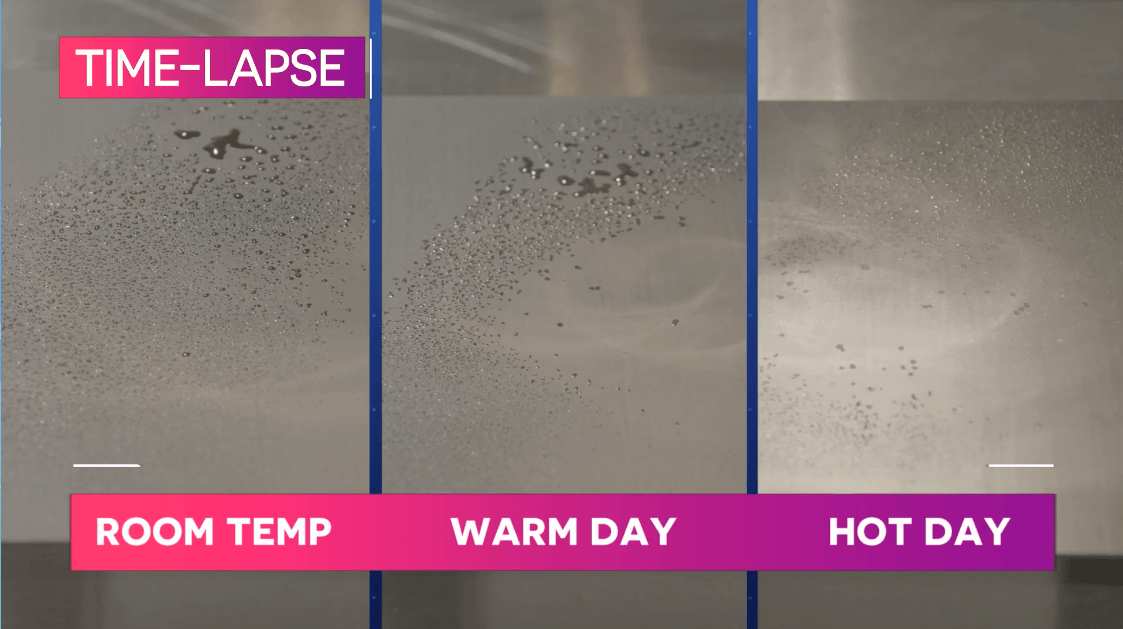
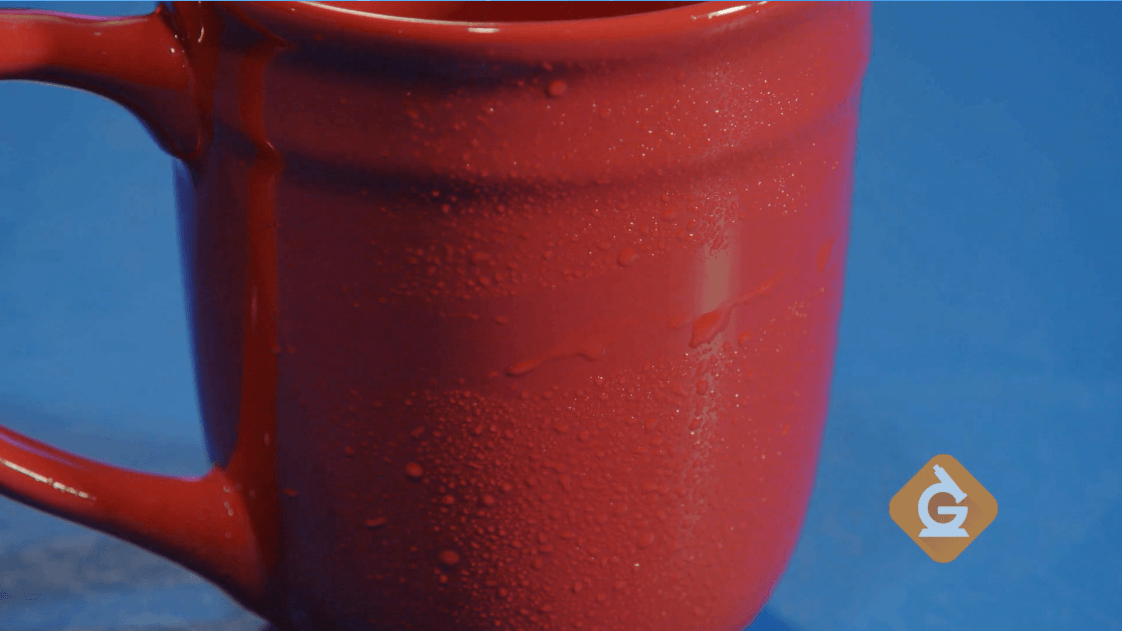

Water forms on the outside of iced tea on a hot day. What process causes the water to form?
Condensation
Evaporation
Precipitation
Transpiration

