Worksheets
Human Body and Scientific Concepts Quiz
Total questions: 244
Worksheet time: 2hrs 9mins
What is the study of structure in the human body called?
Physiology
Anatomy
Metabolism
Homeostasis
Which term refers to all the chemical reactions in the body?
Homeostasis
Metabolism
Physiology
Anatomy
What is the tendency of the body to maintain a stable internal environment called?
Negative Feedback
Positive Feedback
Homeostasis
Metabolism
Which type of feedback triggers changes that take the body further from homeostasis?
Negative Feedback
Positive Feedback
Homeostasis
Metabolism
What is the first step in the scientific process?
Formulate hypothesis to explain the pattern
Observe a pattern
Run experiments
Evaluate results
What is a tentative explanation for a pattern called?
Theory
Hypothesis
Experiment
Observation
Which of the following is an example of an acid?
NaOH
H2SO4
Buffer
OH-
What is the pH range for bases?
0-6.9
7.1-14
6-7
1-7
What is the function of a buffer in the body?
To donate hydrogen ions
To donate hydroxyl ions
To help maintain the body's pH balance
To increase acidity
What is the role of a buffer in maintaining the body's pH level?
Buffers donate OH- ions to increase acidity.
Buffers donate H+ ions to increase acidity.
Buffers donate OH- ions to neutralize excess H+ ions.
Buffers donate H+ ions to neutralize excess OH- ions.
What is the difference between an ion and an isotope?
An ion has lost or gained neutrons, while an isotope has lost or gained electrons.
An ion has lost or gained electrons, while an isotope has lost or gained neutrons.
Both ions and isotopes involve changes in the number of protons.
An isotope has lost or gained electrons, while an ion has lost or gained neutrons.
Which of the following best describes covalent bonding?
A pair of electrons is shared by two atoms to fill their outer shells evenly.
An atom takes one or more electrons from another atom to fill its outer shell.
A weak bond formed between polar molecules.
A bond formed due to the attraction between positive and negative ions.
What is the molecular ratio of carbohydrates?
C:H:O = 1:2:1
C:H:O = 1:1:2
C:H:O = 2:1:1
C:H:O = 1:2:2
Which of the following is a characteristic of lipids?
Lipids are water-soluble.
Lipids contain a high concentration of energy.
Lipids have little or no oxygen.
Lipids are commonly stored in glycogen form.
What is the primary function of phospholipids in the body?
They store fats in the body.
They form the membrane around cells.
They provide the highest concentration of energy.
They are water-soluble molecules.
What elements are found in proteins?
Carbon, Hydrogen, and Oxygen only.
Carbon, Hydrogen, Oxygen, and Nitrogen.
Carbon, Hydrogen, and Nitrogen only.
Carbon, Hydrogen, Oxygen, and Phosphorus.
What type of bond connects the carboxyl group of one amino acid to the amine group of another amino acid?
Ionic bond
Hydrogen bond
Peptide bond
Covalent bond
Which of the following is a characteristic of saturated lipids?
At least one carbon is double bonded
No double bonds for carbons, full of hydrogen
Missing hydrogen atoms
Contains peptide bonds
What is the primary structure of a protein?
The sequence of amino acids in the protein connected via peptide bonds
Hydrogen bonds causing a coil effect
Disulfide bonds causing folding
Two or more amino acid chains bonded together
What is the significance of enzyme shape to its function?
Enzymes can function regardless of their shape
Enzymes must match the shape of their substrate to function
Enzymes are unaffected by substrate shape
Enzymes only work in acidic environments
Which factor can cause enzymes to change shape?
Temperature
pH
Ion concentration
All of the above
Which organelle is responsible for holding DNA in a cell?
Nucleus
Golgi apparatus
Mitochondria
Lysosome
What is the function of the rough endoplasmic reticulum?
Makes carbohydrates and lipids
Modifies and repackages proteins
Makes proteins
Holds DNA
Which organelle modifies and repackages carbohydrates, lipids, and proteins for export?
Nucleus
Golgi apparatus
Lysosome
Mitochondria
What is the powerhouse of the cell that produces ATP?
Mitochondria
Lysosomes
Vacuoles
Flagella
What is the high energy form of the energy currency of the cell?
ATP (Adenosine Triphosphate)
ADP
NADH
FADH2
Which organelle stores water, salts, sugars, or waste products in the cell?
Vacuoles
Lysosomes
Mitochondria
Flagella
What is diffusion?
A movement of molecules from an area of high concentration to low concentration due to the random movement of molecules.
Diffusion does not require energy.
All molecules in liquids and gases have rotational spin.
Diffusion is the movement of molecules against the concentration gradient.
Which factor increases the rate of diffusion?
Higher temperature
Larger molecular size
Lower concentration gradient
Decreased temperature
What type of cell transport involves protein carriers that change shape when binding to molecules?
Facilitated diffusion
Solubility diffusion
Pore diffusion
Active transport
Which type of diffusion allows ions to cross the membrane through protein pores?
Pore diffusion
Solubility diffusion
Facilitated diffusion
Active transport
What is the difference in concentration between the inside and outside of the cell called?
Concentration gradient
Molecular size
Temperature gradient
Diffusion rate
Which type of cell transport requires energy?
Active transport
Solubility diffusion
Pore diffusion
Facilitated diffusion
What is the process called where energy is used to move chemicals across the membrane against the concentration gradient?
Passive Transport
Osmosis
Active Transport
Diffusion
Which term describes a solution with equal salt/sugar concentration on each side of the membrane?
Hypertonic
Hypotonic
Isotonic
Osmotic
What happens to a cell in a hypertonic solution?
Water moves into the cell, causing it to swell.
Water moves out of the cell, causing it to shrink.
Water concentration remains unchanged.
The cell bursts due to excess water.
What is the movement of water across a semi-permeable membrane from an area of high water concentration to an area of low water concentration called?
Diffusion
Osmosis
Active Transport
Endocytosis
What is the process called where materials are moved into the cell by wrapping the membrane around them and budding it off into the cell?
Exocytosis
Endocytosis
Osmosis
Passive Transport
Which process involves the movement of materials out of the cell by fusing membrane-bound units in the cell membrane and dumping the contents outside the cell?
Endocytosis
Exocytosis
Osmosis
Active Transport
If a cell is placed in a hypotonic solution, what will happen to the cell?
The cell will shrink as water moves out.
The cell will swell as water moves in.
The cell will remain unchanged.
The cell will burst immediately.
What is the structure of DNA primarily composed of?
Proteins and lipids
Nucleotides
Sugars and salts
Amino acids
What is the process called where DNA representing one gene is replicated into m-RNA?
Translation
Transcription
Replication
Mutation
Where does transcription occur in the cell?
Cytoplasm
Ribosome
Nucleus
Mitochondria
What is the role of the ribosome during translation?
It separates the DNA strands.
It locks onto the m-RNA molecule and reads three base sequences at a time.
It creates the double helix structure of DNA.
It transports amino acids to the nucleus.
What is the number of homologous sets of chromosomes in a haploid cell?
One set
Two sets
Three sets
Four sets
How many cells does mitosis produce and what is their ploidy?
Two diploid cells
Four haploid cells
Two haploid cells
Four diploid cells
How many cells does meiosis produce and what is their ploidy?
Two diploid cells
Four haploid cells
Two haploid cells
Four diploid cells
What term is used to describe cells with two sets of chromosomes that are homologous?
Haploid
Diploid
Anaplasia
Hyperplasia
Which term refers to the spread of malignant cells to other parts of the body?
Hyperplasia
Metastasis
Benign
Anaplasia
What is hyperplasia?
Uncontrolled cell division
Cells that do not specialize the way they should
A tumor that is not metastatic
A tumor that is metastatic
What is the term for cells that do not specialize the way they should and resemble undifferentiated cells?
Hyperplasia
Anaplasia
Benign
Malignant
Which type of tumor is not metastatic?
Benign
Malignant
Metastatic
Hyperplasia
What is oxygen debt?
The accumulation of oxygen in the bloodstream
The buildup of lactic acid due to anaerobic respiration
The process of breaking down compounds in the body
The process of building up compounds in the body
Which type of tissue lines the outside of the body and organs that receive input from outside the body?
Connective tissue
Epithelial tissue
Muscle tissue
Nervous tissue
Which type of tissue holds the body together?
Epithelial tissue
Connective tissue
Muscle tissue
Nervous tissue
Which type of tissue is responsible for carrying nerve signals?
Epithelial tissue
Connective tissue
Muscle tissue
Nervous tissue
What is a characteristic of the epidermis?
Contains blood vessels
Dense, irregular connective tissue
Prevents water loss
Mostly fat under the dermis
What do melanocytes produce, and what is their function?
Collagen; provides structural support to the skin
Melanin; responsible for pigmentation and UV protection
Keratin; prevents water loss
Fat; provides insulation and energy storage
Which type of gland secretes substances inside the body and does not have ducts?
Exocrine glands
Endocrine glands
Sebaceous glands
Apocrine glands
What is the primary function of eccrine glands?
Producing oily secretion for skin protection
Cooling the body by producing sweat
Producing pheromones for sex attraction
Producing sebum for waterproofing the skin
Which type of secretion involves whole cells breaking off and dumping their contents?
Merocrine
Apocrine
Holocrine
Eccrine
Which type of sweat gland is located in the groin and arm pits and is associated with stress, salts, and pheromones?
Eccrine glands
Sebaceous glands
Apocrine sweat glands
Endocrine glands
What are three responses of the body when it is too cold?
Sweating increases, blood vessels move away from skin, shivering
No sweating, blood vessels move away from skin, shivering
Sweating increases, increased blood flow to extremities, reduce metabolism
No sweating, increased blood flow to extremities, reduce metabolism
Which type of gland produces sebum to keep the skin soft, pliable, and waterproof?
Eccrine glands
Apocrine glands
Sebaceous glands
Endocrine glands
What type of secretion involves moving material out of the cells by osmosis or exocytosis?
Holocrine
Merocrine
Apocrine
Sebaceous
Which type of gland is active from puberty onward and is associated with hair follicles?
Eccrine glands
Apocrine glands
Sebaceous glands
Endocrine glands
What happens to blood vessels when the body is too cold?
They move closer to the skin to increase heat loss
They move away from the skin to conserve heat
They dilate to increase blood flow to extremities
They constrict to increase sweating
Which type of gland is not associated with hair follicles and is found all over the body?
Apocrine glands
Sebaceous glands
Eccrine glands
Endocrine glands
What is the function of the epiphyseal plate in long bones?
It provides a site for muscle attachment.
It allows for interstitial growth in length and appositional growth in width.
It stores calcium and phosphate.
It protects the bone from external damage.
What is ossification?
The process of bone resorption by osteoclasts.
The precipitation of calcium phosphate within the cartilage matrix, making bones hard and stone-like.
The process of blood cell production in the bone marrow.
The formation of cartilage in the joints.
Where is spongy bone found in long bones?
In the shaft of the bone.
At the ends of the bones beyond the epiphyseal plates.
Surrounding the central canal of the haversian system.
In the periosteum.
What is the function of the haversian system in compact bone?
It provides a site for muscle attachment.
It stores fat and energy.
It provides the structure for osteocytes and contains blood vessels, lymph vessels, and nerves.
It allows for the growth of the bone in length.
What are lamellae in the haversian system?
Canals in the center of the haversian system that contain blood vessels, lymph vessels, and nerves.
Concentric layers of bone that surround the central canal.
The outermost layer of the bone.
The cartilage found at the ends of long bones.
What is the function of osteocytes?
They reabsorb bone using lysosomes.
They lay down and maintain bone.
They connect the lacunae to allow plasma circulation.
They increase blood calcium levels.
What is the role of canaliculi in bone structure?
They connect the lacunae and allow plasma circulation around osteocytes.
They produce lysosomes for bone remodeling.
They increase osteoclast activity.
They form compact bone during ossification.
Which type of growth occurs longitudinally in bones?
Appositional growth.
Interstitial growth.
Secondary ossification.
Medullary cavity expansion.
What is the primary difference between interstitial growth and appositional growth?
Interstitial growth increases bone diameter, while appositional growth increases bone length.
Interstitial growth occurs at the epiphyseal plate, while appositional growth occurs on the bone's outer surface.
Interstitial growth involves osteoclast activity, while appositional growth involves osteocyte activity.
Interstitial growth occurs after birth, while appositional growth occurs before birth.
Which hormone is responsible for increasing blood calcium levels?
Calcitonin.
Parathyroid hormone.
Thyroid hormone.
Vitamin D.
What is the function of calcitonin?
It increases blood calcium levels.
It decreases osteocyte activity.
It builds bones and decreases blood calcium levels.
It increases osteoclast activity.
Which movement involves decreasing the angle between two bones?
Extension.
Flexion.
Circumduction.
Rotation.
What type of movement involves moving a limb away from the midline of the body?
Abduction.
Adduction.
Rotation.
Circumduction.
Which movement involves a circular motion combining flexion, extension, abduction, and adduction?
Rotation.
Circumduction.
Extension.
Flexion.
What does flexion refer to in terms of movement?
Movement of a bone away from the body midline
Decreases the angle between two articulating bones in anterior/posterior plane
Increases the angle between two articulating bones in anterior/posterior plane
Movement of the distal end of a body part in a circle
Which type of muscle is striated, myogenic, and has intercalated disks?
Skeletal muscle
Smooth muscle
Cardiac muscle
None of the above
What is the primary function of ligaments?
Connect muscle to bones
Hold bone to bone and provide some stretch
Surround joints and alleviate friction
Store calcium ions
What is the sarcoplasmic reticulum and what does it store?
A type of tissue that connects muscle to bones and stores calcium ions
A special type of endoplasmic reticulum that stores calcium ions
A structure near the joint that alleviates friction and stores calcium ions
A repair tissue that forms scars and stores calcium ions
What is the difference between regeneration and replacement in tissue repair?
Regeneration involves repair with a different type of tissue, while replacement uses the same type of tissue
Regeneration involves repair with the same type of tissue, while replacement uses a different type of tissue
Regeneration produces scars, while replacement does not
Regeneration is slower than replacement
What is the term for where a muscle attaches to a bone that does not move when the muscle contracts?
Insertion
Origin
Action
Flexion
Which movement involves the distal end of a body part moving in a circle?
Flexion
Circumduction
Abduction
Rotation
What is the function of bursae?
Hold bone to bone and provide stretch
Connect muscle to bones
Alleviate friction near joints and are filled with synovial fluid
Store calcium ions
What is the sarcolemma, and what is its function in a muscle cell?
The sarcolemma is the plasma membrane that surrounds a nerve cell and carries neurotransmitters.
The sarcolemma is the plasma membrane that surrounds a muscle cell and carries contraction signals to the sarcoplasmic reticulum.
The sarcolemma is the cytoplasm of a muscle cell and stores calcium ions.
The sarcolemma is the nucleus of a muscle cell and controls cell division.
What happens when a nerve signal reaches a muscle cell?
The sarcolemma releases calcium ions into the cytoplasm.
Acetylcholine opens Na+ gates on the muscle cell, allowing Na+ to diffuse into the cell.
K+ gates open, allowing potassium ions to diffuse into the cell.
The muscle cell immediately returns to resting potential (-90mv).
What occurs during the action potential phase (+40mv) in a muscle cell?
Na+ gates close, and K+ gates open, allowing K+ to diffuse out of the cell.
Ca++ gates on the sarcoplasmic reticulum close, stopping calcium diffusion.
The cell returns to resting potential (-90mv).
Na+ gates open, allowing sodium ions to diffuse into the cell.
What happens during the repolarization phase of a muscle cell?
K+ gates close, and Na+/K+ pump starts active transport of ions, returning the cell to resting potential (-90mv).
Ca++ gates open, allowing calcium ions to diffuse into the cytoplasm.
Na+ gates open, allowing sodium ions to diffuse into the cell.
The cell reaches action potential (+40mv).
What is the role of Ca++ ions during muscle contraction?
Ca++ ions diffuse into the sarcoplasmic reticulum, causing muscle relaxation.
Ca++ ions diffuse out of the sarcoplasmic reticulum into the cytoplasm, causing muscle contraction.
Ca++ ions are actively transported into the sarcolemma, stopping muscle contraction.
Ca++ ions open Na+ gates, allowing sodium ions to diffuse into the cell.
Which muscle proteins are involved in skeletal muscle contraction?
Myosin, actin, troponin, and tropomyosin
Myosin, actin, calmodulin, and tropomyosin
Myosin, actin, ATP, and calcium ions
Myosin, actin, sarcoplasmic reticulum, and troponin
Where does most of the calcium that causes muscle contraction in smooth muscle come from?
Sarcoplasmic reticulum
Outside the cell
Mitochondria
Nucleus
What is the role of Ca++ ions in smooth muscle contraction?
They bind with troponin to expose myosin binding sites
They bind with calmodulin to activate light chain kinase
They directly catalyze the addition of ATP to myosin heads
They block the actin-myosin interaction
How is smooth muscle contraction different from skeletal muscle contraction?
Smooth muscle uses troponin and tropomyosin to block myosin binding sites
Smooth muscle relies on calcium from the sarcoplasmic reticulum only
Smooth muscle does not use troponin/tropomyosin to block myosin binding sites
Smooth muscle contraction is initiated by ATP only
What terms are used to describe the parts of a neuron involved in transmitting a nerve signal?
Axonal tree, dendritic axon, and synapse
Dendritic tree, axonal tree, and axon
Dendritic tree, axonal tree, and nucleus
Axonal tree, dendritic axon, and mitochondria

All muscles work by
Relaxing
Contracting
Twisting
Getting longer
___are regulatory proteins that cover the myosin binding site on the actin.
troponin-tropomyosin
sarcomere
sarcolemma
sarcoplasmic reticulum
When a muscle contracts, it ____________
gets longer
gets shorter
gets thinner
grows hair
During a muscle contraction, cross-bridges from between what two structures?
Actin and myosin fibers
neuron and muscle
mitochondria and actin
Place the following events in sequence:
A) Your arm moves
B) An impulse travels along a nerve
C) You decide you want to move your arm.
A B C
C B A
C A B
A C B
explanation for how muscles contract to produce force
expansion contraction theory
sliding filament theory
muscular contraction theory
evolution
ability of muscle to shorten and produce tensions at its ends
contractibility
excitability
elasticity
extensibility
When you bend your arm which muscle is contracting, or shortening?
Bicep
Tricep
Which muscle contraction results from a high amount of Ca still remaining in the muscle
Treppe
Tetanus
Muscle Energy
Metabolism
Which muscle contraction results from a high amount of Ca still remaining in the muscle
Treppe
Tetanus
Muscle Energy
Metabolism
Which muscle contraction results from a high amount of Ca still remaining in the muscle
Treppe
Tetanus
Muscle Energy
Metabolism
What happens when a muscle CONTRACTS?
The muscle pushes on another bone.
The muscle shortens.
The muscle pushes on another muscle.
The muscle gets longer.
The enzyme cholinesterase causes acetylcholine to
be secreted from the motor end plate.
form cross bridges.
bind to actin.
decompose.
When recruitment occurs, the number of motor units being activated
increases
decreases
When Dr. Jeff bends his arms to lift the weight, what is happening to his bicep muscle?
it is twisting up
it is getting longer
it is contracting
it is relaxing
What do all muscle types require for contraction?
Na+
Ca2+
K+
Mg2+
What happens to the H zone when the sarcomere contracts?
it gets smaller
it gets wider
it stays the same
A person who has a disease that inhibits the production of cholinesterase would have what kind of symptoms?
prolonged muscle contraction
flacid muscles
inability to speak
paralyzed
The all-or-none principle of muscle contraction states what?
What do all muscle types require for contraction?
Na+
Ca2+
K+
Mg2+
When Dr. Jeff bends his arms to lift the weight, what is happening to his bicep muscle?
it is twisting up
it is getting longer
it is contracting
it is relaxing
What happens to the A band when the sarcomere contracts?
it gets smaller
it gets wider
it stays the same
Functional contractile unit of muscle fiber
Z disc
Sarcolemma
Sarcomere
Actin
What is the role of ATP in muscle contraction?
It binds to actin
It provides energy for the power stroke
It transports calcium ions
It breaks down lactic acid

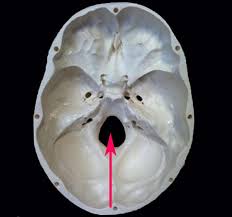
Which bone is highlighted here?
(a)

Which bone is highlighted here?
(a)

What is the name of this bone?
(a)

What is the highlighted bone?
(a)

What is the collective name for these bones?
(a)

Name these highlighted bones.
(a)

These bones are collectively called
(a)

Name this bone.
(a)

Name this bone.
(a)

Name this bone here.
(a)

The blue bone(s) on the posterior end of the skull are called
maxillary bones
parietal bones
nasal bones
temporal bones

The green bone(s) inferior to the parietal bones are called
temporal bones
frontal bones
ethmoid bones
sphenoid bones

The large pink bone anterior to the parietal bones is called
the nasal bone
the temporal bone
the vomer
the frontal bone

The parietal and frontal bones are separated by the
squamous suture
lambdoid suture
coronal suture
maxillary bones

Which bone contains the mental foramen?
the maxillary bone
the parietal bone
the occipital bone
the mandible

The yellow bone which spans the entire bottom, interior region of the skull is called the
sphenoid bone
the vomer
the nasal bone
the mandilbe

The empty box on the bottom right of the screen is pointing to which small bone?
the nasal bone
the vomer
the ethmoid bone
the lacrimal bone

The orange bone on the anterior side of the skull is termed the
vomer
maxilla
mandible
sphenoid

The paired blue bones are called
the zygomatic bones
the temporal bones
the occipital bones
the parietal bones

What bones surround the orbital cavity (eye)?
the vomer, the occipital & the nasal bones
the vomer, the ethmoid & the lacrimal bones
the vomer, the mandible & the nasal bones
none of the above are correct

Which bone is posterior and inferior on the skull? (hint: it is not pictured in this diagram)
the ethmoid
the sphenoid
the lacrimal
the occipital

Which suture borders the occipital and the parietal bones?
the lamboid suture
the squamous suture
the coronal suture

The mastoid process belongs to which bone?
the parietal
the temporal
the nasal
the mandible

What is the bone labeled 1?
ischium
pubis
ilium
acetabulum

What bone is labeled 2 and is shaded green?
ischium
pubis
ilium
acetabulum

What feature is labeled 6?
obturator foramen
acetabulum
greater sciatic notch
pubis symphysis

The iliac crest is at which number?
7
9
4
5

What feature is pointed out by arrow 8?
acetabulum
pubis symphysis
iliac spine
obturator foramen
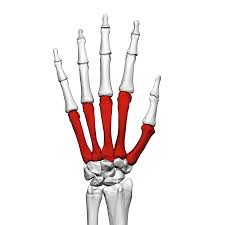
Which bones are highlighted
metacarpals
metatarsals
carpals
tarsals
Which bones are highlighted
metacarpals
metatarsals
carpals
tarsals
What bone articulates with the coxal bone at the acetabulum?
Tibia
Fibula
Femur
Humerus
The head of the humerus articulates with the
Tarsals
Acetabulum
Glenoid cavity
Trochlear notch
What bone articulates with the coxal bone at the acetabulum?
Tibia
Fibula
Femur
Humerus

Which bones are highlighted
carpals
tarsals
metacarpals
metatarsals
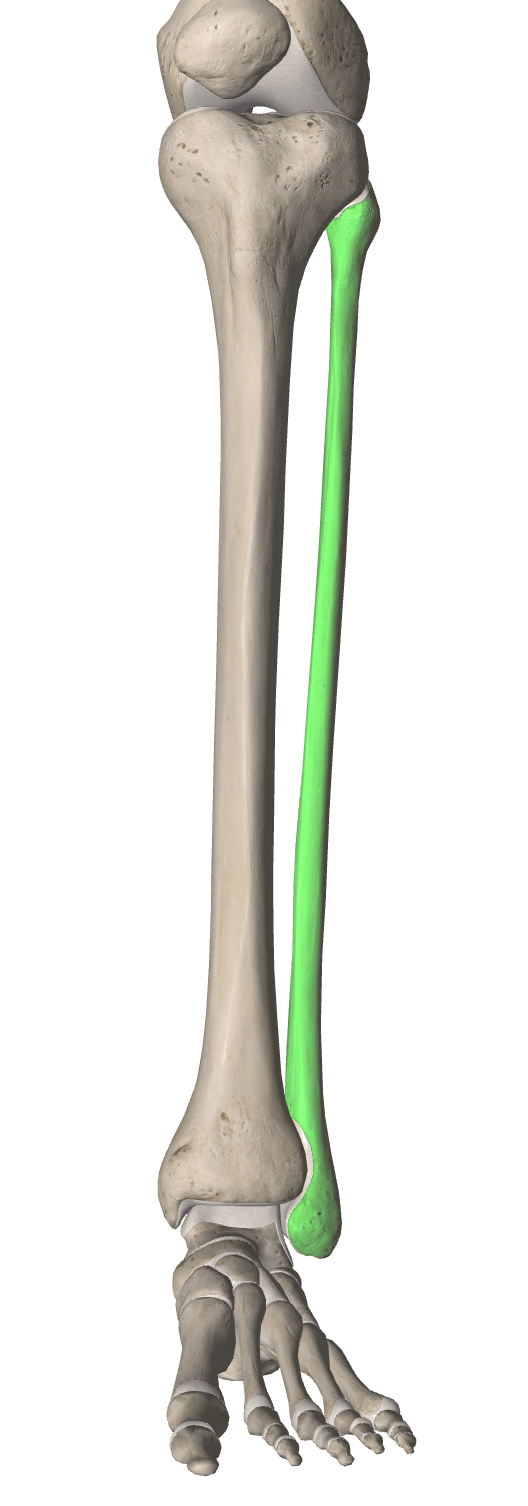

clavicle
scapula
humerus
radius
ulna

clavicle
scapula
humerus
radius
ulna

clavicle
scapula
humerus
radius
ulna

clavicle
scapula
humerus
radius
ulna

clavicle
scapula
humerus
radius
ulna

carpals
metacarpals
phalanges
ilium
ischium

carpals
metacarpals
phalanges
ilium
ischium

carpals
metacarpals
phalanges
ilium
ischium

carpals
metacarpals
phalanges
ilium
ischium

coxal
femur
patella
fibula
tibia

coxal
femur
patella
fibula
tibia

coxal
femur
patella
fibula
tibia

coxal
femur
patella
fibula
tibia

coxal
femur
patella
fibula
tibia

Tarsals
Metatarsals
phalanges of feet
iliac crest
calcaneus

Tarsals
Metatarsals
phalanges of feet
iliac crest
calcaneus

Tarsals
Metatarsals
phalanges of feet
iliac crest
calcaneus

Tarsals
Metatarsals
phalanges of feet
iliac crest
calcaneus

Tarsals
Metatarsals
phalanges of feet
iliac crest
calcaneus


SPINE
ACROMION
CORACOID PROCESS
SUPRAGLENOID TUBERCLE


lesser tubercle
greater tubercle

1
(a)
4
(a)
5
(a)


greater tubercle
lesser tubercle
deltoid tuberosity
coronoid fossa

Intertubercular groove
coronoid process
trochlea
condyle

What is number 1?
humerus
ulna
radius
femur

What is number 3?
humerus
radius
ulna
femur

What is number 4?
Humerus
Radius
Ulna
Femur

What is number 5?
head of the radius
head of the ulna
ulnar styloid process
radial styloid process

Number 4
Posterior Superior Iliac Spine
Greater Sciatic Notch
Lesser Sciatic Notch
Obturator Foramen
Iliac Crest
Number 2
Posterior Superior Iliac Spine
Greater Sciatic Notch
Lesser Sciatic Notch
Obturator Foramen
Iliac Crest
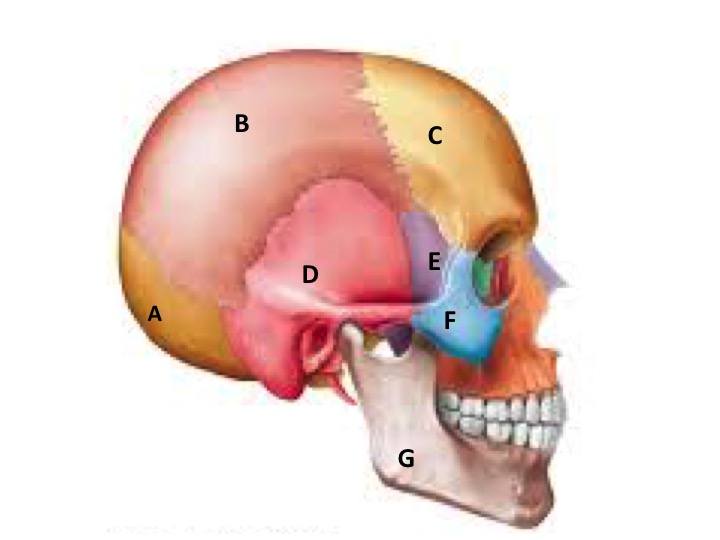
Which bone is labeled A
frontal
parietal
occipital
temporal
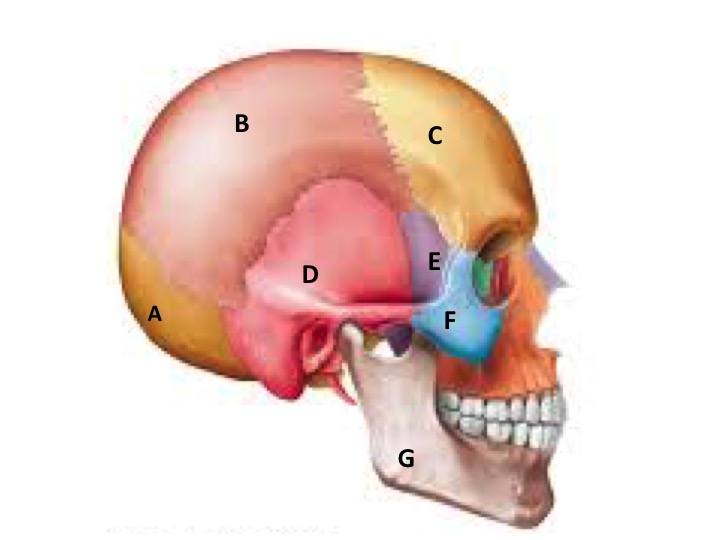
Which bone is labeled B
occipital
parietal
frontal
temporal
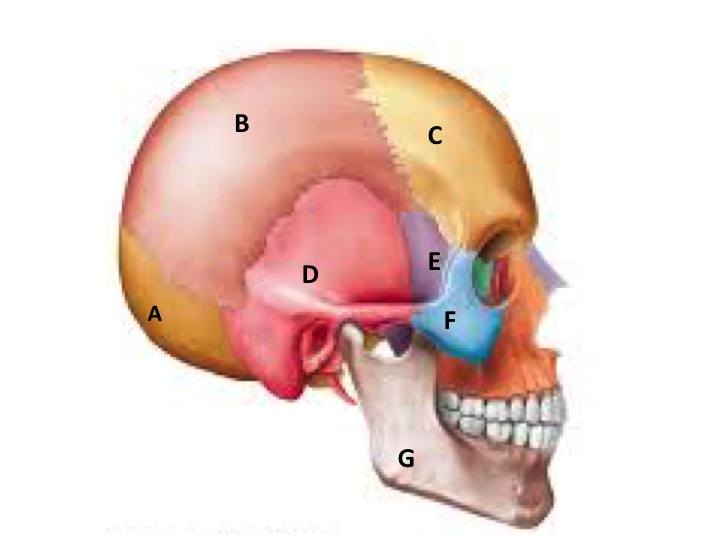
Which bone is labeled C
occipital
sphenoid
frontal
parietal
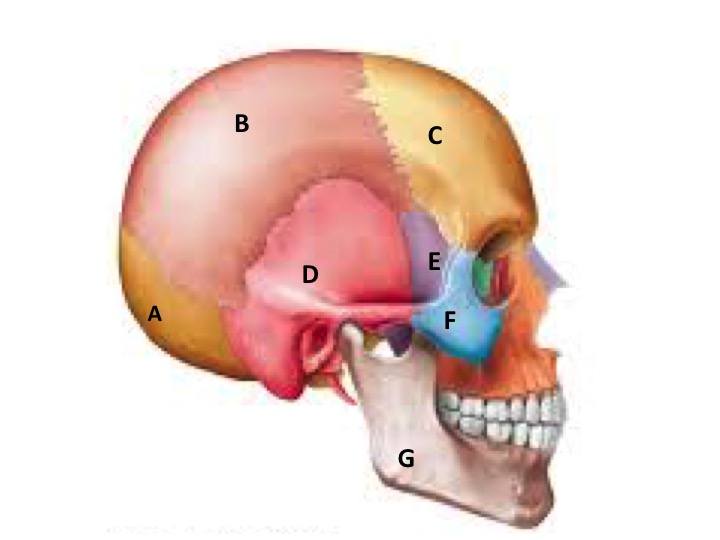
Which bone is labeled D
sphenoid
temporal
parietal
occipital
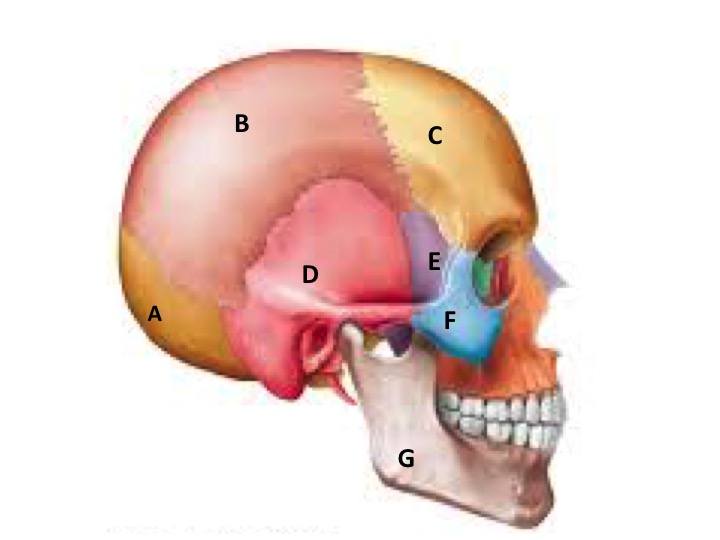
Which bone is labeled E
temporal
sphenoid
frontal
zygomatic
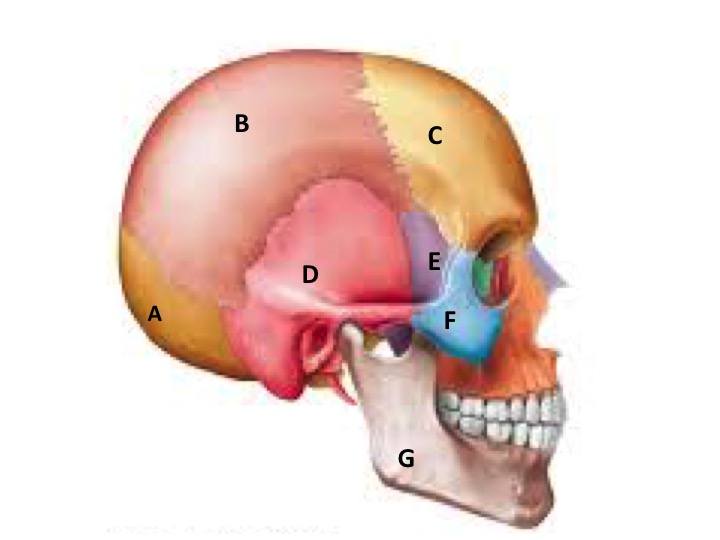
Which bone is labeled F
zygomatic
temporal
sphenoid
occipital
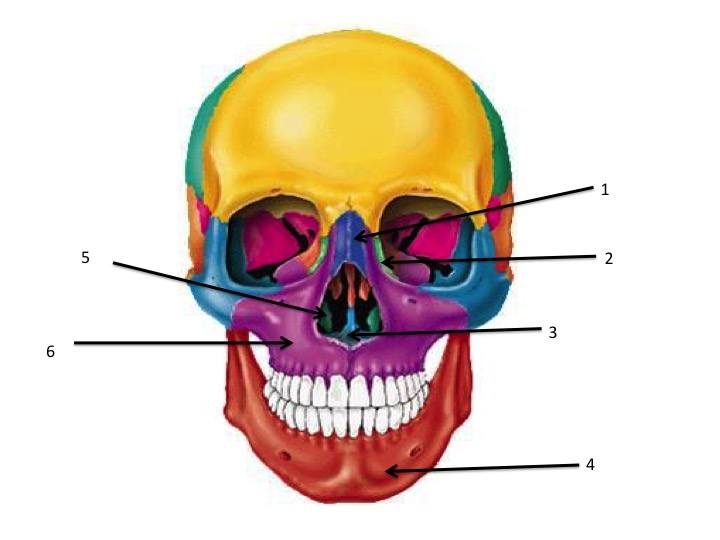
Which bone is bone 1
zygomatic
nasal
vomer
inferior nasal conche
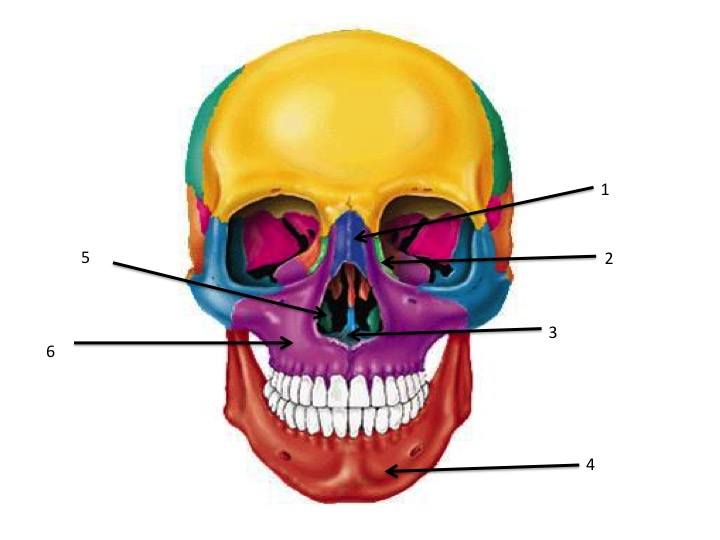
Which is bone 4
maxilla
mandible
zygomatic
nasal
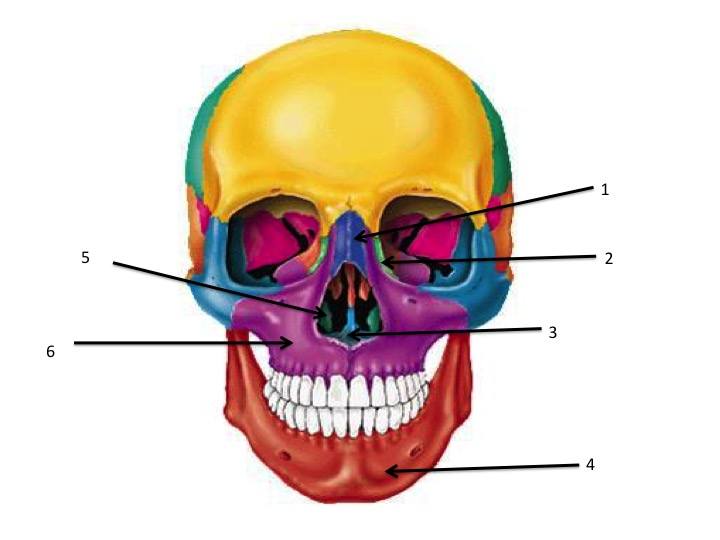
Which is bone 6
mandible
maxilla
sphenoid
nasal
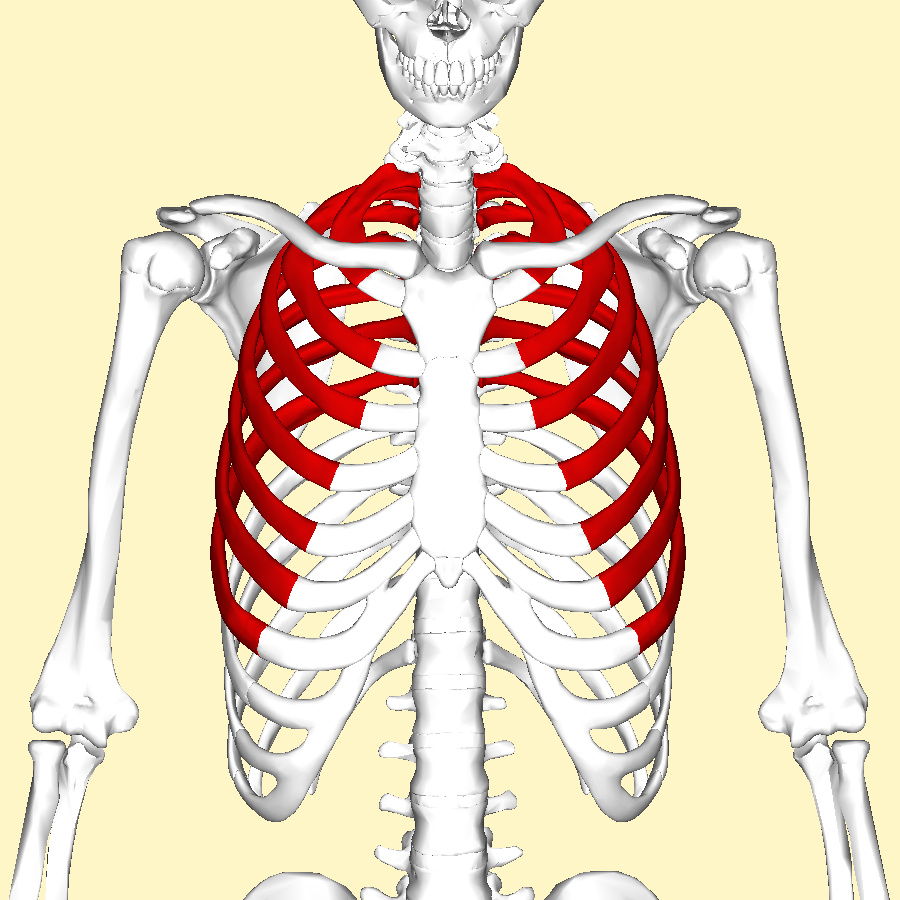
Which ribs are highlighted
true ribs
false ribs
floating ribs
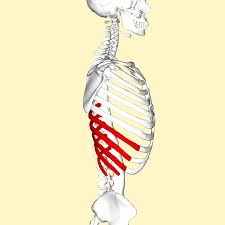
Which ribs are highlighted
true ribs
false ribs
floating ribs
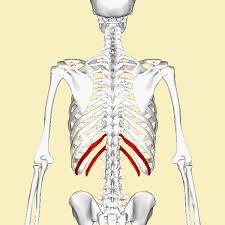
Which section of the rib cage is highlighted
true ribs
false ribs
floating ribs
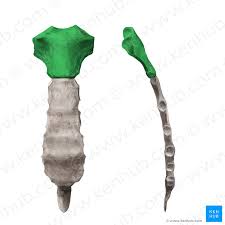
Which part of the sternum is highlighted
xiphoid procces
body
manubrium
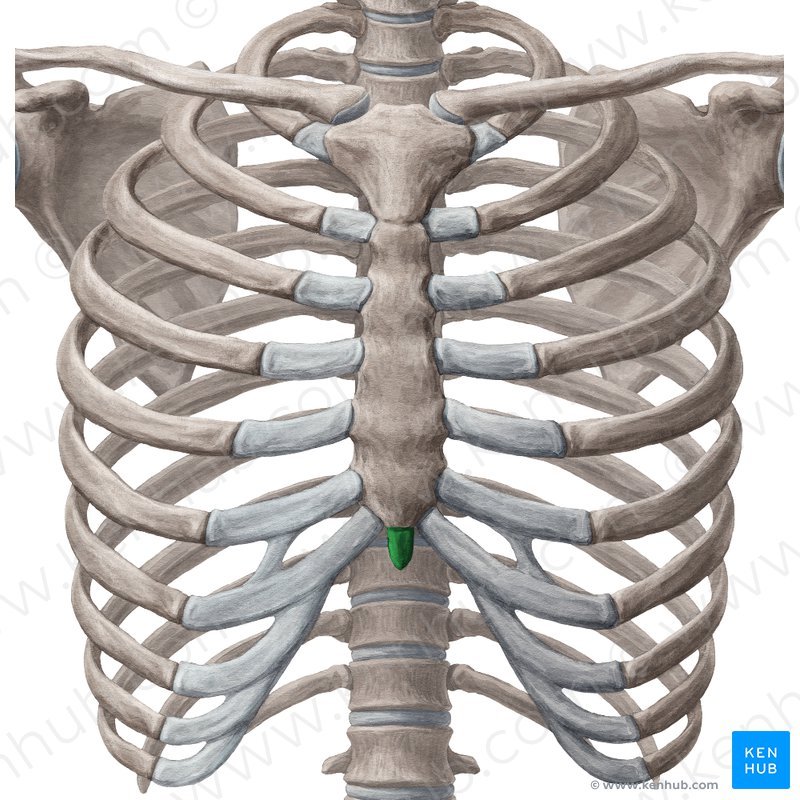
Which section of the sternum is highlighted in green
manubrium
body
xiphoid process
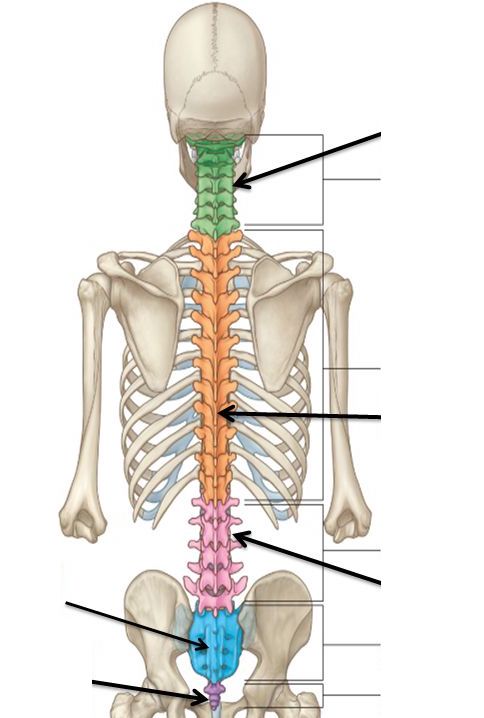
Identify vertebrae in green
Cervical Vertebrae
Thoracic Vertebrae
Lumbar Vertebrae
Sacrum
Coccyx
Identify vertebrae in orange
Cervical Vertebrae
Thoracic Vertebrae
Lumbar Vertebrae
Sacrum
Coccyx
Identify vertebrae in pink
Cervical Vertebrae
Thoracic Vertebrae
Lumbar Vertebrae
Sacrum
Coccyx
Identify vertebrae in blue
Cervical Vertebrae
Thoracic Vertebrae
Lumbar Vertebrae
Sacrum
Coccyx
Identify vertebrae in purple
Cervical Vertebrae
Thoracic Vertebrae
Lumbar Vertebrae
Sacrum
Coccyx
How do true ribs differ from false ribs?
True ribs are attached directly to the sternum but the false ribs are not directly attached.
True ribs are not directly attached to the sternum but the false ribs are attached directly to the sternum
True ribs are not directly attached to the sternum but the false ribs are completely detached.
How many true ribs, false ribs, and floating ribs do humans have?
7, 5, 2
5, 7, 2
2, 5, 7
10, 2
How many ribs do humans have total?
14
10
24
20
How many cervical, thoracic, and lumbar vertebrae do humans have?
7, 12, 5
12, 7, 5
5, 12, 7
5, 5, 12
The axial skeleton is made up of.... (Select all that apply)
Bony Thorax
Limbs
Vertebral Column
Skull
Hip Girdle
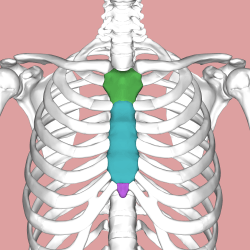
Identify blue part of the bone
Xiphoid Process
Manubrium
Body
Sternum

What bone is this?
thoracic vertebra
atlas
axis
lumbar vertebra

What bone is this?
axis
sacrum
atlas
lumbar


Which type of vertebrae is circled here?
Thoracic
Cervical
Lumbar

Why would the lumbar vertebrae have the biggest body?
It supports the weight of the torso, head, and arms
The spinal cord is thicker here
This section requires more blood flow
There are more muscles and ligaments that attach here
what are the true ribs?
binds directly to sternum (1st-7th)
binds indirectly to sternum(1st-7th)
does not bind to sternum (11th-12th)
binds indirectly to sternum(8th-10th)
what are the false ribs?
binds directly to sternum (1st-7th)
binds indirectly to sternum(1st-7th)
does not bind to sternum (11th-12th)
binds indirectly to sternum(8th-10th)
what are the floating ribs?
binds directly to sternum (1st-7th)
binds indirectly to sternum(1st-7th)
does not bind to sternum (11th-12th)
binds indirectly to sternum(8th-10th)