
 Worksheets
World History I - Review
Total questions: 55
Worksheet time: 55mins

When studying prehistoric people, cave drawings like this one allow archaeologists to —
speculate about daily lives
understand spoken languages
interpret written records
study farming techniques
The ancient Hebrews were among the first to develop a religious tradition that included —
sacrifices
ancestor worship
holy pilgrimages
monotheism
What was the major change caused by the agricultural revolution?
Increase of spoken languages
End of hunting
Development of permanent settlements
Elimination of trade
Which type of government was used in the Persian Empire?
Religious oligarchy
Republic
Imperial bureaucracy
Democracy
Which text is a central document of Judaism?
Analects
Koran (Qur'an)
Torah
Upanishads
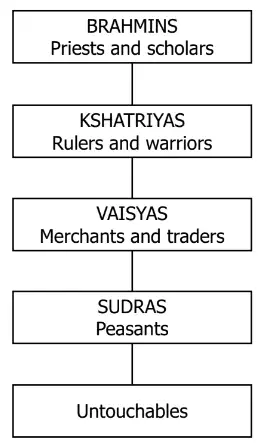
What does this diagram represent?
Class system of China
Political system of Greece
Feudal system of Japan
Caste system of India
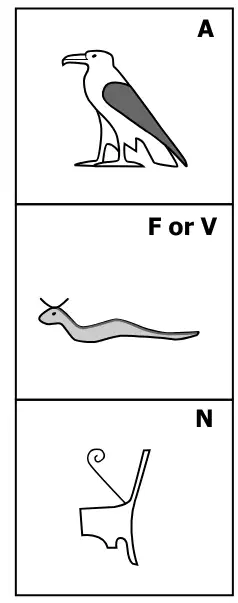
Which ancient writing system is illustrated in this picture?
Chinese characters
Phoenician alphabet
Egyptian hieroglyphics
Sumerian cuneiform
Buddhists achieve enlightenment by following the —
laws of the Old Testament
decrees of the Upanishads
Five Pillars
Eightfold Path
The Gupta Empire made a major contribution to world civilizations by developing —
the concept of zero
long-lasting roads
the production of porcelain
wind-powered boats

Religious Beliefs of Ancient ______?
Which region best replaces the question mark?
China
Greece
Egypt
Mesopotamia
The ruling authority of China’s ancient dynasties was based on the —
Code of Hammurabi
Mandate of Heaven
Twelve Tables
Ten Commandments
• Warfare between alliances led by Athens and Sparta
• Lasted nearly 30 years
• Ended the Golden Age of Pericles
Which event is described in this list?
The Gallic Wars
The Peloponnesian War
The Trojan War
The Punic Wars
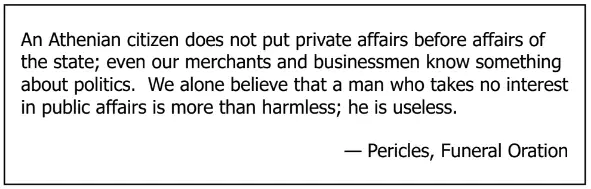
In this quotation, Pericles describes Athenian society as valuing —
military discipline
civic responsibility
religious freedom
economic opportunity
Hippocrates made important contributions in the area of —
poetry
sculpture
philosophy
medicine
Which characteristic is associated with both the Roman and the Greek cultures?
The rule of emperors
An army of legionnaires
Polytheistic religion
Bicameral legislature
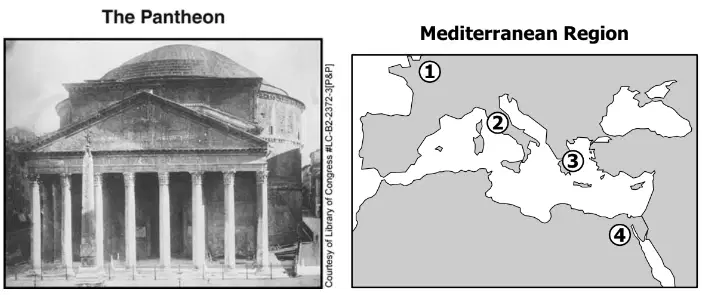
Which number on the map marks the location of this building?
1
2
3
4

Which number marks a province of the Roman Empire?
1
2
3
4
Constantine brought a significant change to the Roman Empire by —
banning monotheism
writing a constitution
moving the capital
abolishing slavery
Which accomplishment is associated with Alexander the Great?
The spread of Greek culture throughout the empire
The introduction of Christianity to the Near East
The defeat of the Chinese army in Asia
The destruction of the Athenian navy in battle
Use the event list:
1. Assassination of Julius Caesar
2. Defeat of Marc Anthony
3. Formation of first triumvirate
4. Augustus becomes emperor.
Which list places these events in the correct chronological order?
1, 2, 4, 3
2, 4, 3, 1
3, 1, 2, 4
4, 3, 1, 2
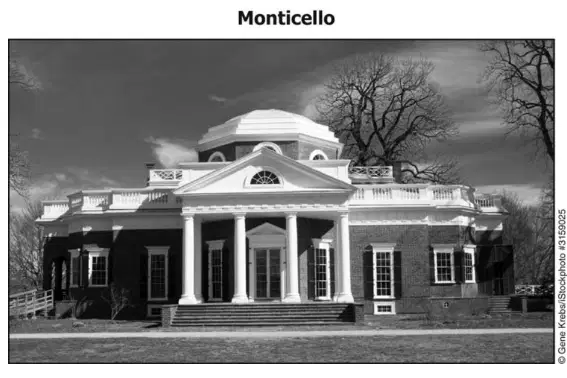
Which civilization influenced the architecture in this picture?
Greek
Russian
Byzantine
Islamic
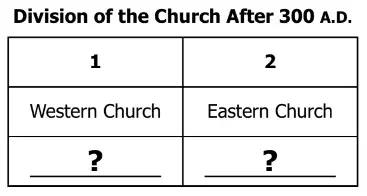
Which information correctly completes this table?
Column 1 — Centered in Constantinople
Column 2 — Centered in Rome
Column 1 — Accepted the authority of the Patriarch
Column 2 — Used Greek language in liturgy
Which empire was best known for libraries that preserved ancient Greek and Roman knowledge?
Mongol
Gupta
Chinese
Byzantine
The Battle of Tours was significant because it marked the —
end of Muslim expansion into Western Europe
end of the Crusades in the Middle East
beginning of British dominance in Northern Europe
beginning of Turkish rule in the Balkans
The Dome of the Rock is an example of which civilization’s achievements in art and architecture?
Chinese
Greek
Islamic
Roman
The practice of Orthodox Christianity in Russia was primarily the result of contact with the —
Islamic Empire
Persian Empire
Mongol Empire
Byzantine Empire
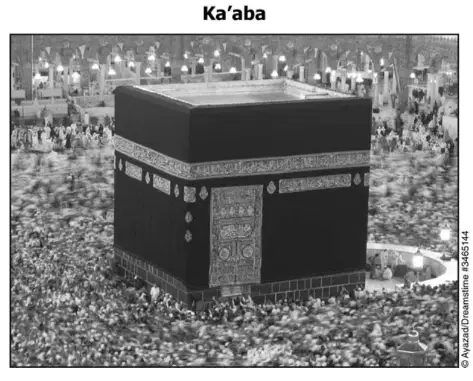
Which religion encourages its followers to make a pilgrimage to this site?
Islam
Hinduism
Buddhism
Christianity
Which factor strengthened both the Byzantine Empire and the empire of Charlemagne?
Unity between politics and religion
Respect for elders and ancestors
Studies of geography and medicine
Patrons of painters and sculptors
Ali, the fourth caliph, or successor of Muhammad, dies. What was one impact of this event?
Muslim pilgrims no longer traveled to Medina.
A permanent split occurred within the religion.
Muslim teachers no longer made the Hajj.
The desert tribes declared a lasting truce.
One of the main accomplishments of Justinian was —
making Christianity the official religion of the Roman Empire
stopping the Islamic conquest of Western European territories
reconquering territory that had once belonged to the Roman Empire
defeating an invading army of Ottoman Turks
The Limpopo and Zambezi Rivers were boundaries for the empire of —
Kush
Nubia
Ghana
Zimbabwe
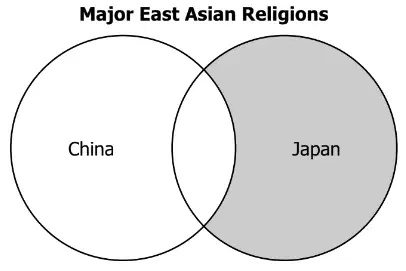
Which religion belongs in the shaded part of this diagram?
Buddhism
Hinduism
Confucianism
Shintoism
Which map shows the Japanese archipelago?
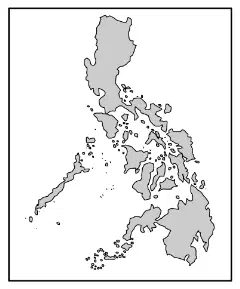
A
A
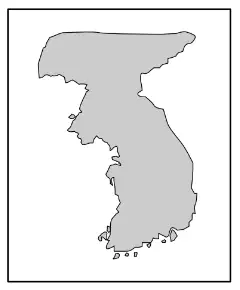
B
B
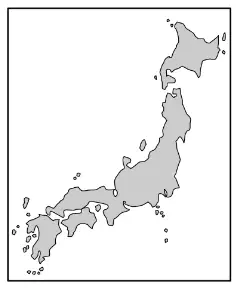
C
C
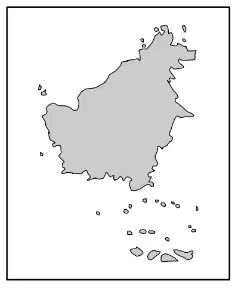
D
D

Which number marks the location of an African kingdom that adopted Christianity?
1
2
3
4
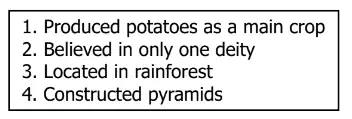
Which characteristic was shared by the Aztec and Mayan civilizations?
1. Produced potatoes as a main crop
2. Believed in only one deity
3. Located in rainforest
4. Constructed pyramids
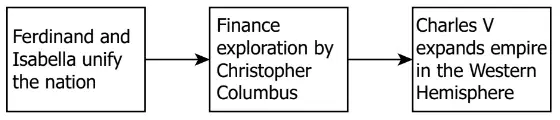
These events occurred in the nation-state of —
France
Russia
England
Spain
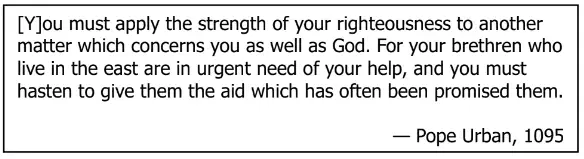
This speech helped to start the — "[Y]ou must apply the strength of your righteousness to another matter which concerns you as well as God. For your brethren who live in the east are in urgent need of your help, and you must hasten to give them the aid which has often been promised them." — Pope Urban, 1095
Hundred Years’ War
First Crusade
Norman Conquest
Holy Roman Empire
The first European universities were based on the scholarly contributions of —
courts
guilds
manors
monasteries
The Magna Carta was important because it —
established the right of assembly
limited the power of the king
ended the system of feudalism
increased the influence of the church
Which diagram indicates the spread of the Black Death?
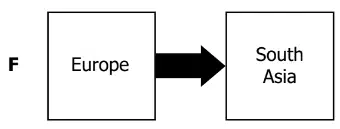
Europe → South Asia
Europe → South Asia
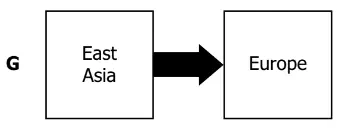
East Asia → Europe
East Asia → Europe
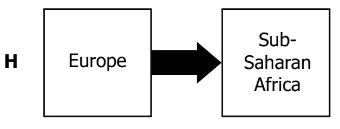
Europe → Sub-Saharan Africa
Europe → Sub-Saharan Africa
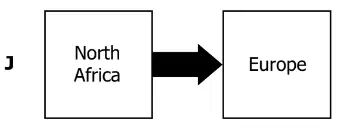
North Africa → Europe
North Africa → Europe
Which movement had the greatest influence on the Renaissance?
Utopianism
Feudalism
Humanism
Romanticism
Began as a band of nomadic warriors
travelled great distances on horseback
conquered China
conquered Russia
Which empire is described by these characteristics?
Persian Empire
Ottoman Empire
Byzantine Empire
Mongol Empire
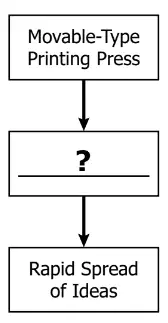
Which phrase completes this diagram?
Construction of Monasteries
Development of Guilds
Growth of Universities
Production of Books
During the Paleolithic Era, how did most early humans acquire food?
By planting crops
From domesticated animals
By following animal migrations
From nearby settlements

Which number on this map represents the region where archaeologists believe the first humans appeared?
1
2
3
4
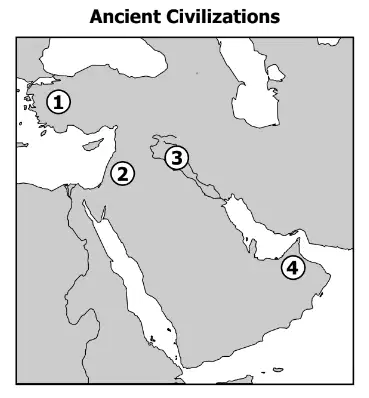
The ancient Hebrews established a civilization near which location?
1
2
3
4
Early Hellenic culture spread from Greece to Asia Minor as a result of —
dynastic decline
climate changes
sea trade
democratic elections
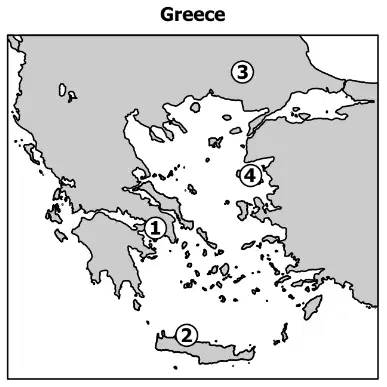
Which number represents the location of ancient Athens?
1
2
3
4
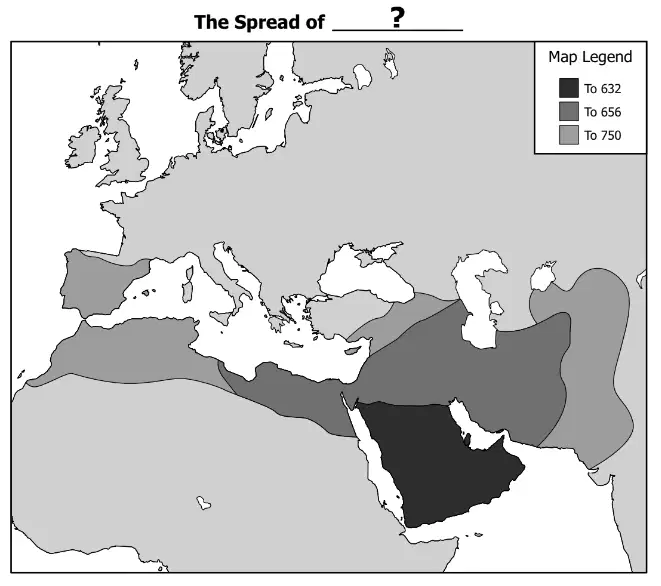
What best completes the title of this map?
the Plague
Islam
Judaism
the Crusades
The Vikings who invaded Europe in the Middle Ages were from —
Poland
Russia
Turkey
Scandinavia
In the 14th and 15th centuries, most goods arrived in northern Europe from Constantinople after crossing the —
Black Sea
Indian Ocean
Red Sea
Pacific Ocean
Which characteristic was most common in ancient river valley civilizations?
Hereditary rule
Limited population growth
Social equality
Limited economic growth

This sequence describes the development of government in ancient —
Byzantium
Sparta
Rome
Athens
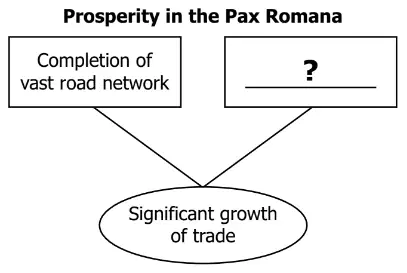
Which action best completes this diagram?
Control of price levels
Adoption of uniform currency
Prohibition of money lending
Limitation of economic regulations
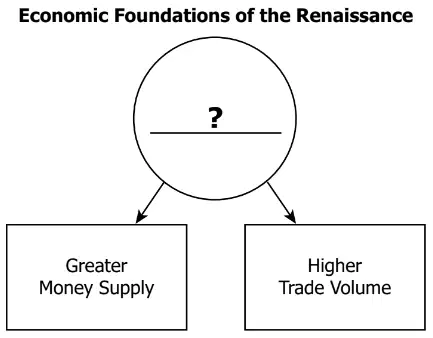
Which phrase best completes this diagram?
Closure of Banks
Use of Arabic Numbers
Letters of Credit
Church Rules on Usury

