
Font size
 Worksheets
Activity: Semester Exam Practice - Social Studies II
Total questions: 52
Worksheet time: 31mins
The territory of the Song Dynasty (960–1279 CE) in China was smaller than the previous Tang Dynasty (618–907 CE). What is the primary reason the borders shrank at the beginning of the Song Dynasty?
competing states at the end of the Tang Dynasty
internal conflicts within the government during the Song Dynasty
invasion of the neighboring Jurchens during the Song Dynasty
invasion and conquest of the Mongols at the end of the Tang Dynasty
Buddhism was adopted throughout Asia as it spread from India in the centuries before 1200 CE. Why were so many diverse cultures able to adopt this religion?
Buddhist rulers adopted the religion and forced their people to change their way of life.
Missionaries converted many to this new Buddhist way of life throughout Asia.
Trade networks connected limited groups in cities and limited cultural diffusion.
Buddhism incorporated many elements of the local culture where it spread.
Between 1200 and 1450 CE, the feudal system meant that there was no central government in Europe. How did rulers gain and maintain power in this fractured system?
by requiring tribute
by cooperating with peasants
through kinship ties
through the threat of violence
Which of the following best describes the European and Mediterranean political structure between 1200 and 1450 CE?
fragmented but secured through confederacies of nations
fragmented and determined by a decentralized authority
centralized and built on strong national monarchies
centralized but run by local officials in a bureaucracy
Confucianism taught that five key relationships dictated how people should behave toward each other. How did these inherently unequal relationships lead to social harmony and social order?
A superior should act in self-interest, while an inferior should submit.
A superior should act with concern and care, while an inferior should obey the other.
An inferior should act with concern and care, while the superior should obey the other.
An inferior must earn respect, while the superior was respected for their position.
Which of the following achievements in engineering allowed the Incan government to administer its large empire?
a great wall
temples
system of roads
control over the flow of water
What developments could a historian use to support the claim that China had an industrial revolution during the Song Dynasty?
production of silk in urban workshops and its trade throughout the Indian Ocean and Silk Road networks
expansion of the Grand Canal and the invention of the lateen sail
use of coal as the main energy source, the production of iron, and technological innovations
invention of gunpowder, movable-type printing, and the compass
Which of the following is the best example of the cultural effect of Dar al-Islam on the people in many regions of Afro-Eurasia?
Islam continued to spread even as caliphates fractured politically.
The Turkic Seljuks continued many of the cultural traditions of the Abbasid caliphate.
Islam continued to spread until the Mongol invasions in 1258 CE.
Islamic practice was mandated throughout the caliphates.
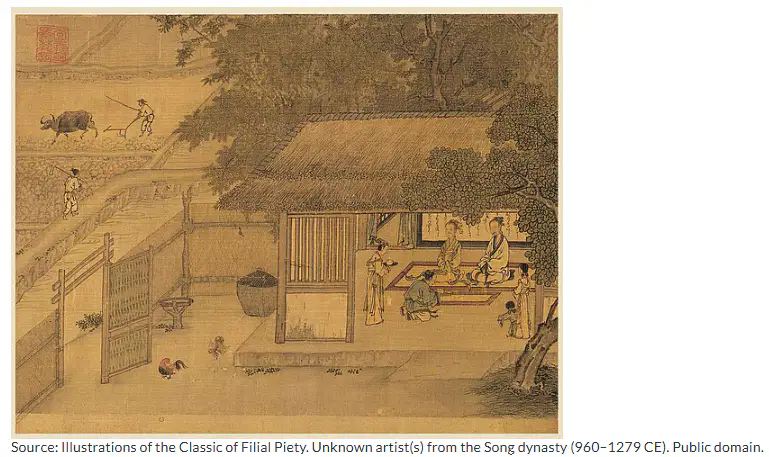
Which of the following best explains how social relationships were influenced by Confucianism, as shown in the image?
Villagers were limited to producing cash crops like sugar, tea, and cotton.
Men primarily participated in the education system.
Subjects were meant to submit to the authority of rulers.
Women were largely confined to the household.
The state of Great Zimbabwe dominated a large territory in southern Africa that was rich in minerals and gold by around 1200 CE. Which of the following is the best example of a continued practice that helped rulers maintain regional power?
maintaining aspects of matrilineal cultural practices
gaining legitimacy by adopting Islamic religious practices
trading gold with Swahili merchants
securing the loyalty of provincial chiefs by loaning cattle and bulls
Interactions between merchants encouraged significant cultural and technological transfers between distant regions across networks of exchange between 1200 and 1450 CE. Which of the following is the best example of an effect of these transfers?
the spread of Buddhism in Southeast Asia
the spread of smallpox throughout the Americas
the period of relative peace in Eurasia during the Mongol Empire
the printing of paper currency in Yuan China
What development could a historian use to support the idea that under the Mongol Empire trade routes fostered cultural and intellectual exchange?
Multiple religions were practiced in Samarkand.
Scholars in Baghdad were encouraged to continue intellectual work.
The Korean script adopted Chinese pictographs.
Italian city-states adopted the Arabic number system.
Which of the following best explains the relationship between trans-Saharan trade and the growth of the Empire of Mali?
The Empire of Mali constructed trade routes across the Sahara Desert in order to gain access to more raw materials.
The Empire of Mali exempted themselves from trans-Saharan trade, instead staying isolated and maintaining their wealth independently.
The Empire of Mali utilized new technologies to successfully navigate trade throughout the Sahara Desert, while other empires failed to do so.
The Empire of Mali exercised strict control over the movement of merchants and their trade routes, enriching their empire.
The Mongol Empire is the largest contiguous land empire in history, stretching across much of Eurasia. What is the best description of their system of governance over this enormous territory?
centralized around a leader with much authority resting on elected local officials
decentralized with much authority resting in appointed local governors and officials
centralized around the Great Khan, who ruled from the Khanate in China
decentralized with power going to ruling families in city-states across the empire
Mongol society and culture were remarkably open, accommodating diversity as a way to build strength. Which of the following is the best example of an effect of this process?
Merchants attained a higher social class under the Mongols.
Chinese bureaucrats were replaced because they resisted Mongol leadership.
The Arabic number system was adopted throughout many European cities.
Foreign scholars and physicians attained positions of power in the Mongol court.
Which of the following provides the context for how the Mongol Empire rose to power between 1200 and 1450 CE?
networks of exchange, technological innovations, and religious unity
the collapse of neighboring empires, farming technology, and religious pluralism
centralized bureaucracy, an all-powerful emperor, and financial innovation
changes in the climate, mastery of horse warfare, and charismatic leadership

Which of the following best describes the broad historical context for the development described above?
The relatively harmonious nature of trade in the Indian Ocean allowed for robust transfers of culture and technology.
The growth of trade in the Indian Ocean led to the death of large portions of indigenous peoples due to the spread of disease.
The growth of trade in the Indian Ocean was largely due to the Ming Dynasty’s conquests along coastal trade routes and their exercise of military force to regulate them.
The relatively harmonious nature of trade in the Indian Ocean led to an industrial boom in China, fueled by resources acquired along trade routes.
Which of the following best describes the relationship between trade in the Indian Ocean and technology?
New agricultural techniques were introduced but hindered technological innovation due to the spread of invasive diseases.
Technological innovations allowed for an increase in trade, which fueled knowledge of new technologies through conquest.
New agricultural techniques drove the need for technological innovation due to shortages in food along the Indian coastline.
Technological innovations expanded trade, while the exchange of ideas increased technological innovation.
What role did the Berbers play in facilitating trade in the Saharan Desert?
They created the astrolabe, which allowed for more precise direction and locating capabilities.
They developed the camel saddle, enabling camels to carry more goods for longer distances.
They were known pastoralists who engaged in trade in order to fund their transition to a more sedentary lifestyle.
They established an empire that encompassed most of the Saharan Desert and allowed for goods to be traded at port cities.
During the century-long period of peace under the Mongols, there was an unprecedented connection across Afro-Eurasia. What was an unintended consequence of this development between 1200 and 1450 CE?
More people in Afro-Eurasia had resistance to disease.
Smallpox decimated nearly half of the population in some areas.
Bubonic plague was able to spread quickly and efficiently.
Mongol invasions wiped out millions of people.
Which of the following developments in the Orthodox Church led to the expansion of the Russian Empire under the Romanovs?
The Church aided the Romanovs financially by providing indulgences.
The Church supported the Romanovs both politically and militarily.
The Church aided in the military conquest of Novgorod by lending crusaders to the Romanovs.
The Church supported the Romanovs both politically and financially.
In which of the following ways did the Protestant Reformation mark a break with existing Roman Catholic tradition?
Protestants believed individuals could have their own relationship with God separate from the Church’s hierarchy.
Protestants believed that in order to be absolved of one’s sins, one has to pay “indulgences” to the Church.
Protestants believed that violence in the name of God should be ended, and those who were Protestant became pacifists.
Protestants believed that in order to have a relationship with God, believers had to go through an elaborate ecclesiastical process to be accepted.

Source: First page of the Basel (Switzerland) pamphlet edition of the Ninety-Five Theses (1517 CE) written by Martin Luther in Wittenberg, Germany. Public domain.
Which of the following developments provides context for the pamphlet above?
the Peasant War of 1524
the formation of the Church of England
the printing of the first Bible in German
the invention of the printing press
Which of the following accurately depicts a difference in the expansion of the Ottoman and Safavid Empires?
While the Ottoman Empire built an army of enslaved people, the Safavid Empire only utilized individuals who volunteered to take up arms in the name of defending their religion.
While the Ottoman Empire found strength in its diversity, the Safavid Empire forced conversion and met resistance with force.
While the Safavid Empire developed bureaucratic offices controlled largely by religious leaders, the Ottoman Empire consolidated power by promoting a single, secular sultan.
While the Safavid Empire controlled a relatively homogeneous land area, the Ottoman Empire’s land was overwhelmingly diverse.
Which of the following is the best example of how the devshirme system in the Ottoman Empire helped maintain the power of the sultan?
By instituting a system whereby land was not given to nobles, it meant aristocrats never gained much power to overthrow the sultan.
By training boys from the best Muslim families to be elite soldiers and diplomats, it produced a meritocratic system that promoted social equality.
By developing a system whereby Christians and Jews from surrounding regions found safety in the empire, the sultan gained the fierce loyalty of diverse groups.
By training Christian boys from a very young age to be soldiers and officials, it developed an elite corps with fierce loyalty to the sultan.
What is the best comparison of Protestant beliefs in Europe and Sikh beliefs in South Asia in the early 1500s CE?
Protestants emphasized grace, while Sikhs emphasized the caste system.
Both sought political power by breaking away from traditional religions.
Protestants sought God in everyday life, while Sikhs sought nirvana through scripture.
Both believed that the divine was accessible to all people regardless of social status.
Which of the following best provides an example of how the Manchus in China retained power?
They were religiously tolerant, ruling over a multi-ethnic state by promoting prosperity while still demanding their subjects remain obedient to them.
They were economically imperial, building an empire of overseas colonies to guarantee a stable food source and access to markets.
They were militarily aggressive, meeting any resistance to their rule with violence and demands for unquestioning obedience.
They blended spirituality with politics, creating a bureaucratic system that placed religious leaders in control of various plots of land, ensuring local loyalty to the emperor.
Which of the following accurately describes a similarity in how the Ottoman and the Safavid Empires expanded?
Both widely used forced conversions to create a loyal, religiously similar populace.
Both practiced Sunni Islam, which expedited power consolidation by capitalizing on religious authority.
Both created bureaucratic governmental systems that effectively ruled over ethnically and religiously diverse populations.
Both consolidated power by conquering land filled with relatively homogeneous populations.
Early modern rulers all faced the challenge of legitimizing the right to rule over their empire. The Russian Romanov Tsars justified their rule by connecting their empire to which of the following authorities?
Ottoman Empire
Mongol Empire
Roman Catholic Church
Byzantine Empire
Which of the following historical examples most accurately depicts the role of religious disputes in conflict between states?
The schism between Sunni and Shi’ite Islamic Empires eventually led to the defeat of the Mughal Empire.
The schism between the Roman Catholic Church and the Orthodox Church led to the decline of the Russian Empire.
The schism between Sunni and Shi’ite Islamic Empires eventually led to the defeat of the Safavid Empire.
The schism between the Roman Catholic Church and the Orthodox Church led to the decline of the Ottoman Empire.
Why were Indigenous Americans especially vulnerable to diseases brought by Europeans?
They had advanced medicine
They had no prior exposure or immunity to Afro-Eurasian diseases
They lived in isolated villages
They had many domesticated animals
What is the Columbian Exchange?
A trade agreement between Columbus and Indigenous Americans
The transfer of goods, people, microbes, and ideas between the Americas and Afro-Eurasia
The exchange of gold for spices
The migration of Europeans to Asia
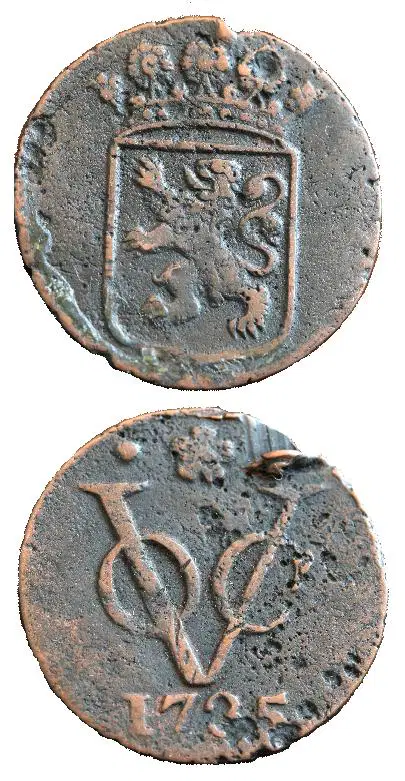
Source: Both sides of a duit, a coin minted in 1735 CE by the VOC. CC BY-SA 2.5.
A historian would use the artifact above to support which of the following claims about the Dutch East India Company (VOC) in the Indian Ocean?
The company worked much like an independent state.
The company developed large-scale agricultural projects.
The company gained legitimacy by aligning closely with local officials.
The company began mining for silver and minting coins at the mines.
What was a major consequence of the new global networks created by maritime empires?
Isolation of societies
Increased warfare and epidemics
Decline in trade
End of slavery
Which of the following best describes a religious impact of trade to the Americas from 1450–1750 CE?
the rise of syncretic belief systems
the decline of Catholicism in Latin America
the acceptance of indigenous American pagan religions in Europe
the rejection of monotheism
Which of the following developments could a historian use to provide a broad historical context for European maritime exploration between 1450 and 1750 CE?
The Americas had profitable cash crops like sugar and cotton.
The Ottoman Empire controlled taxes on luxury goods from Asia.
The Black Death meant economic trade should shift toward sea trade.
Asian merchants stopped trading with Islamic merchants.

The Lady of Guadalupe is an example of syncretism because:
She replaced all indigenous goddesses
Her image and story blended Catholic and indigenous traditions
She was only worshipped by Spaniards
She was a symbol of Spanish military power
The Columbian Exchange had several unintended consequences as the world economy connected people in new ways. Which of the following represents the most impactful unintended demographic effect?
the growth of the Transatlantic Slave Trade from West Africa
the enslavement of indigenous people on sugar plantations
the increase in the population of Europe
the decline in the population of the Americas
What was the primary cause of the “Great Dying” in the Americas after 1492?
Warfare between indigenous groups
European diseases like smallpox and measles
Famine due to crop failure
Climate change
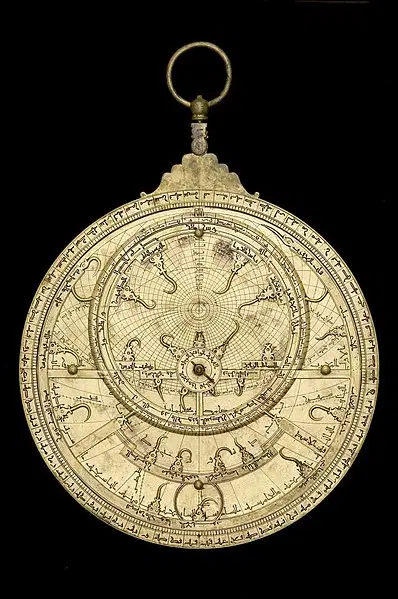
Source: Astrolabe created by Muhammad ibn Ahmad al-Battuti, c. 1733 CE. CC BY-SA 4.0.
The image above represents the spread of ideas. Which of the following developments could a historian use to provide the broad historical context for this spread of ideas between 1450 and 1750?
Chinese scholars developed intricate maritime technology that spread throughout Eurasia via the Indian Ocean network of exchange.
European scholars translated works of Greek and Latin, uncovering previously lost technological achievements.
Polynesian mariners developed advanced methods of sailing long distances, eventually sharing these methods throughout Eurasia.
Islamic scholars translated and preserved Greek and Roman texts and artifacts, eventually spreading navigation technologies throughout Eurasia.

Sentiments such as those expressed in the excerpt above contributed to which of the following types of rebellions from 1750 to 1900 CE?
protests opposing industrialization
revolutions against absolutist governments
rebellions to reform the Catholic Church
movements to reform economic systems
Which of the following impacts of the Enlightenment helped to fuel many rebellions against colonial governments from 1750 to 1900 CE?
the rise of nationalism
the concept of property rights
free market taxation policies
the rise of power of the Church

Which of the following best exemplifies the broad historical context in which the above excerpt was written?
Enlightenment thought inspired the women’s suffrage movement.
The American Revolution advocated for an increase in women’s rights.
The Industrial Revolution led to an increase in economic opportunities for women.
Reformation ideals led to many women advocating for increased standing in the church.

During the Enlightenment, attitudes such as the one expressed in the excerpt contributed most directly to which of the following?
the emphasis on individual reason and the social contract over religious ideals in government
the emphasis on total equality in the public sphere and the social contract
the emphasis on political power being derived from divine power
the emphasis on the natural order of man and the reinforcement of social hierarchies like serfdom
Which of the following best describes a way in which industrialization has shaped the environment?
The adoption of technology hindered the production of food.
The use of fossil fuels created a decline in the human population.
The rise in machinery led to riskier, more dangerous jobs.
The use of fossil fuels exceeds the time it takes for them to replenish.
Which of the following environmental factors most contributed to the rise of industrialization in Britain from 1750 to 1900 CE?
The British Isles are spacious, which led to a large density of cotton plantations.
The British Isles are made up of islands, which had sedentary deposits of silt to fuel factories.
The British Isles are mountainous, allowing for a high number of coal mines.
The British Isles are relatively flat, allowing for roads and canals to be built.
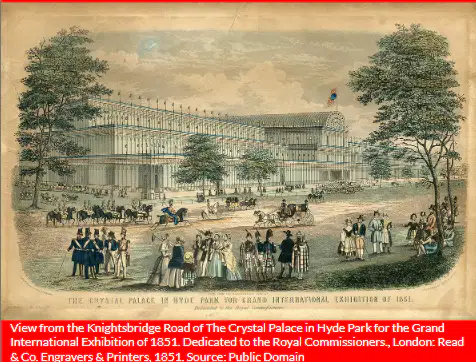
The events shown in the image above are best understood in the context of which of the following broader processes in the period 1750 to 1900 CE?
the emergence of Great Britain as the global leader in manufacturing
the establishment of the world’s first colonies overseas
the development of new techniques in agriculture such as crop rotation
the end of the Protestant Reformation which brought on years of peace in Great Britain
Which of the following best summarizes the relationship between colonization and industrialization during the industrial era from 1750 to 1900 CE?
Foreign ports allowed for the trade of manufactured goods from Asia.
Raw materials brought in from colonies supplied industry and fed people.
Militaries honed in battle abroad provided protection for young industries.
Colonies provided captive markets for goods manufactured in each colony.

Which of the following conditions from 1750 to 1900 CE gave rise to the developments described in the above excerpt?
Many women were empowered by new jobs in factories.
Peasants organized themselves in order to revolt against the feudal system.
Business owners created agricultural jobs in rural areas.
Capitalists made profits off of labor, but wages stayed low.

The excerpt above reflects what shift in British society during the Industrial Revolution?
The working class saw themselves and their lives as different from the wealthy.
Philanthropists created charities that were dedicated to improving working conditions in factories.
Industrial capitalists created initiatives to decrease the gap between employers and employees.
The government decided to enact broad legislation that protected workers in factories.
Answer all parts of the following question:
(a) Identify ONE similar way Chinese dynasties developed and maintained their power up to c. 1200 CE.
(b) Explain ONE effect of Chinese cultural traditions on East Asia up to c. 1200 CE.
(c) Explain ONE effect of an innovation on the Chinese economy up to c. 1200 CE.

In your response, be sure to address all parts of the question. Use complete sentences; an outline or bulleted list alone is not acceptable.
Use the passages to answer all parts of the question that follows.
(a) Explain ONE difference in the arguments expressed in the two sources regarding the effect of revolutions on the global political order.
(b) Explain ONE development from the period of the Atlantic Revolutions that grounded “social relations for the first time on the principle of formal equality” as claimed in the second paragraph of Source 1.
(c) Identify ONE way in which empires in the nineteenth century (other than those mentioned in the passage) successfully resisted revolutionary change, as suggested in Source 2.

