
 Worksheets
Fall Semester Review
Total questions: 63
Worksheet time: 59mins

Which statement best explains why the Northeast states on the map show higher population density than many Western states?
Smaller land areas with many urban centers
Large deserts with few major cities
Colder winters that limit outdoor activities
Fewer roads connecting rural communities
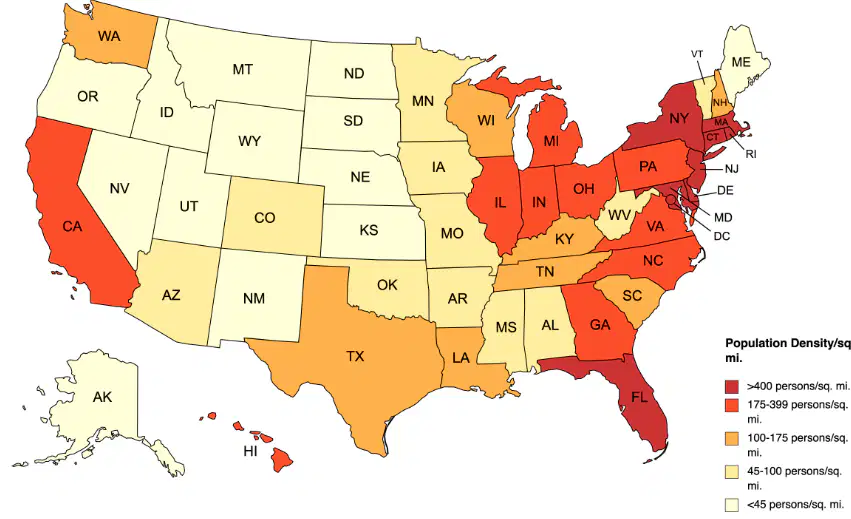
New Jersey has a density over 1,200 people per square mile while Wyoming has under 6. Which factor most likely contributes to Wyoming’s lower density?
Proximity to multiple large megacities
Long history of industrial urbanization
Coastal ports supporting dense settlements
Extensive mountainous terrain and dry climate
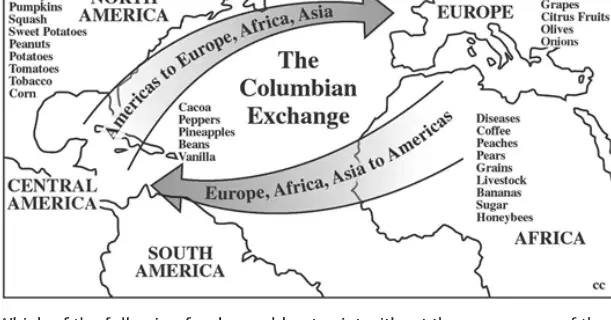
This is a map of the Columbian Exchange. Which foods would not exist in their modern locations without the Columbian Exchange?
American turkey and European olive oil
Colombian coffee and Mexican carnitas
American peanut butter and American turkey
Colombian coffee and American peanut butter
Mexican carnitas and European olive oil
Which statement best describes dominant cultural characteristics in South America today?
Hinduism and a monarchy are dominant
Catholicism and democracy are dominant
Judaism and totalitarian rule are dominant
Hinduism and democracy are dominant
Judaism and a monarchy are dominant
Which factor supports viewing the United States and Canada as a single geographic region?
Joint cooperation on military interventions
Peaceful relations with native groups
Similar democratic institutions
Disconnected coastal borders
Identical climate patterns throughout
During the seventeenth century, which geographic factor most increased migration to the United States and Canada?
Abundant gold discoveries
Improved educational systems
Available land for farming
European wars and famine
Favorable climate conditions
Which technological innovation most affected settlement in the United States and Canada from the 1850s to 1890s?
Discovery of oil reserves
Invention of the automobile
Construction of railroads
Development of air travel
Creation of the Internet
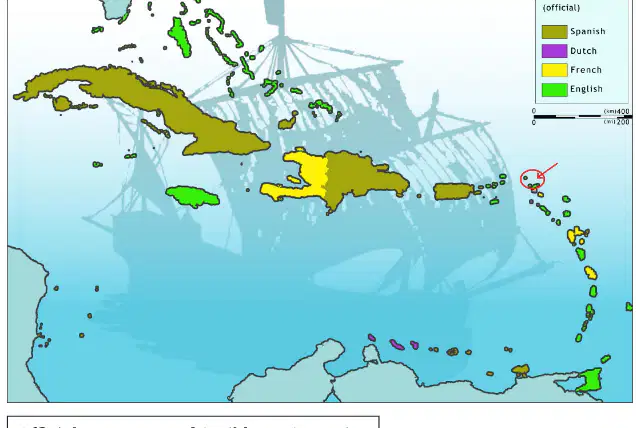
Use the map and table showing official languages in the Caribbean to answer: Which factor most strongly explains why Spanish, English, French, and Dutch appear in different islands across the region?
Major trading partners in recent decades
Cooperation with nearby developed countries
Type of government chosen by each island
Influence of colonial settlements and rule
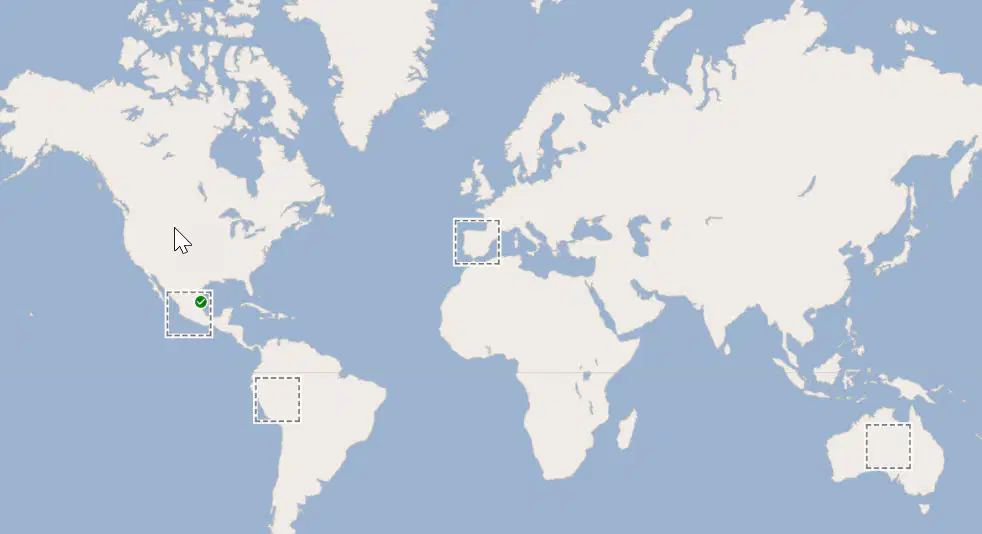
A world map shows four dotted squares: southern Mexico, northern South America, southern Europe, and Australia. Which square marks the region where the Aztecs built Tenochtitlan and the country later won independence from Spain in 1821, with Texas formerly part of it?
Eastern Australia near the Coral Sea
Southern Europe around the Mediterranean
Northern South America near the Amazon
Southern Mexico near the Gulf coast
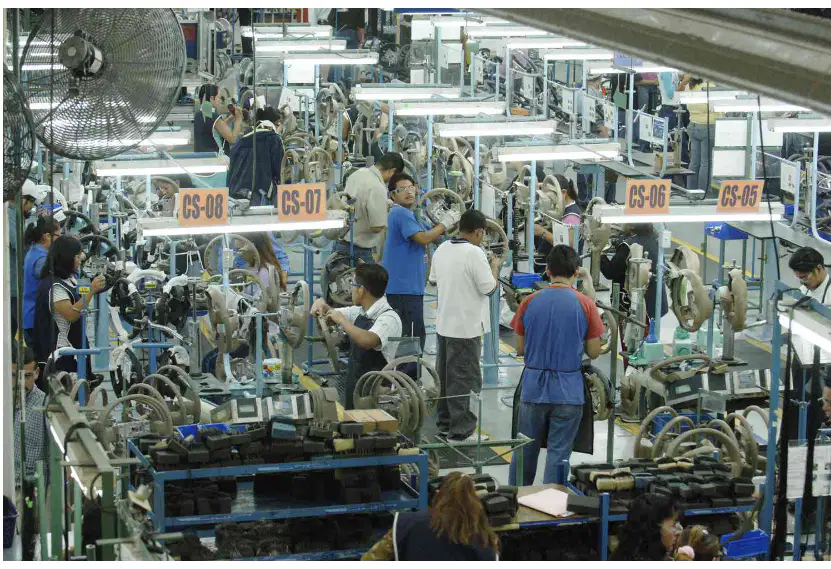
The creation of maquiladoras along the U.S.–Mexico border was initially promoted to address which issue in local communities?
Environmental concerns in border regions.
Employment opportunities for residents.
Political instability in the country.
Educational development for young people.
Which landform most contributed to the development of distinct ethnic cultures across Europe?
Plateaus with limited settlement space
Seas isolating coastal communities
Mountains separating groups over time
Plains enabling easy movement and mixing
Which statement best explains how European landforms influenced culture?
Plateaus forced all peoples to share one identity
Coastal seas made every culture exactly the same
Mountain barriers helped create separate cultural traditions
Wide plains prevented regional languages from forming
Match each organization to its primary purpose.
EU: control languages; UN: set continental borders
EU: global peace and security; UN: unite European countries
EU: unite European countries; UN: global peace and security
EU: manage world trade; UN: form a single European army
Religion, art, food, and language are all examples of how modern Mexico is a blend of ________.
Native American and African American influences
Native American and Spanish influences
African and Spanish influences
Mayan and Inca influences
How did the Industrial Revolution spread from Great Britain to other regions?
Through military conquest
By sharing technological innovations and ideas
Via international trade agreements
Through government mandates
Which factor best represents human geography rather than physical geography?
Island formed by rising sea level
Religion practiced by a community
River flowing through a valley
Peninsula extending into the ocean
Which process most directly causes erosion of Earth’s surface over time?
Wind carrying sand across rocks
Earthquakes shifting tectonic plates
Volcanoes building new landforms
Tornadoes rotating columns of air
A glacier slowly moves downhill. What physical effect is it most likely to have on the landscape?
Scrape rock to carve U-shaped valleys
Create islands by splitting peninsulas
Increase rainfall to form wetlands
Deposit sediment to grow mountains
Which pair correctly matches the factor with its geography type?
Religion — Physical geography
River — Physical geography
Environment — Human geography
Economics — Physical geography
Which term measures how far a location is north or south of the Equator?
Latitude in degrees
Elevation from sea level
Longitude in degrees
Map projection type
Classify the example: Business is booming in the downtown area. Which element of place does this represent?
Political factor
Cultural factor
Social factor
Economic factor
A city decides that City Hall will have five board members. Which element of place best fits this decision?
Political factor
Social factor
Economic factor
Cultural factor
Which statement best describes a push factor in migration?
A law that controls who can cross borders
A reason that attracts people to a new place
A custom that encourages people to stay put
A reason that forces people to leave their home
Which of the following is most likely a pull factor?
Natural disasters damaging homes
Good climate and safer neighborhoods
Ongoing persecution in a community
Severe drought reducing local crops
A family moves to another country to find better job opportunities. How should this reason be classified?
Push factor due to disaster
Push factor caused by danger
Pull factor caused by persecution
Pull factor offering benefits
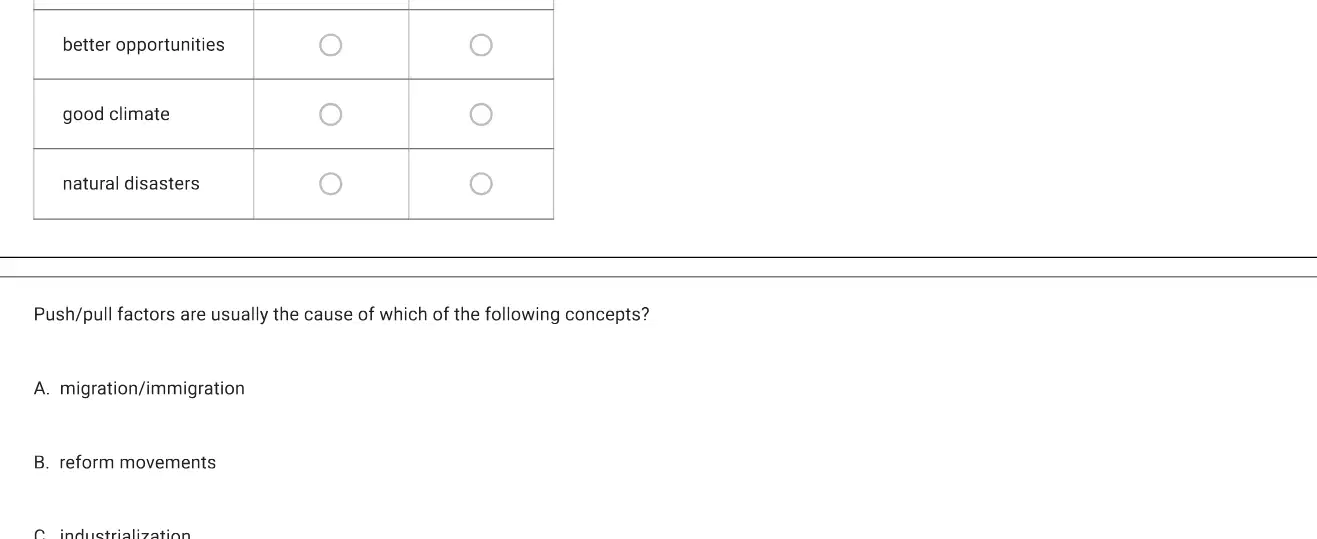
Push and pull factors are usually the cause of which broader concept?
Industrialization of factories
Reform movements in politics
Conflicts and social change
Migration and immigration flows
Which statement best describes a formal region?
Created by travel routes such as highways
Defined by official boundaries like states
Organized around a central place or service
Based on people’s feelings and perceptions
Which example fits a formal region?
Delivery area for one radio station
Routes of farm to market roads
Neighborhood hangout spots
State lines and city borders
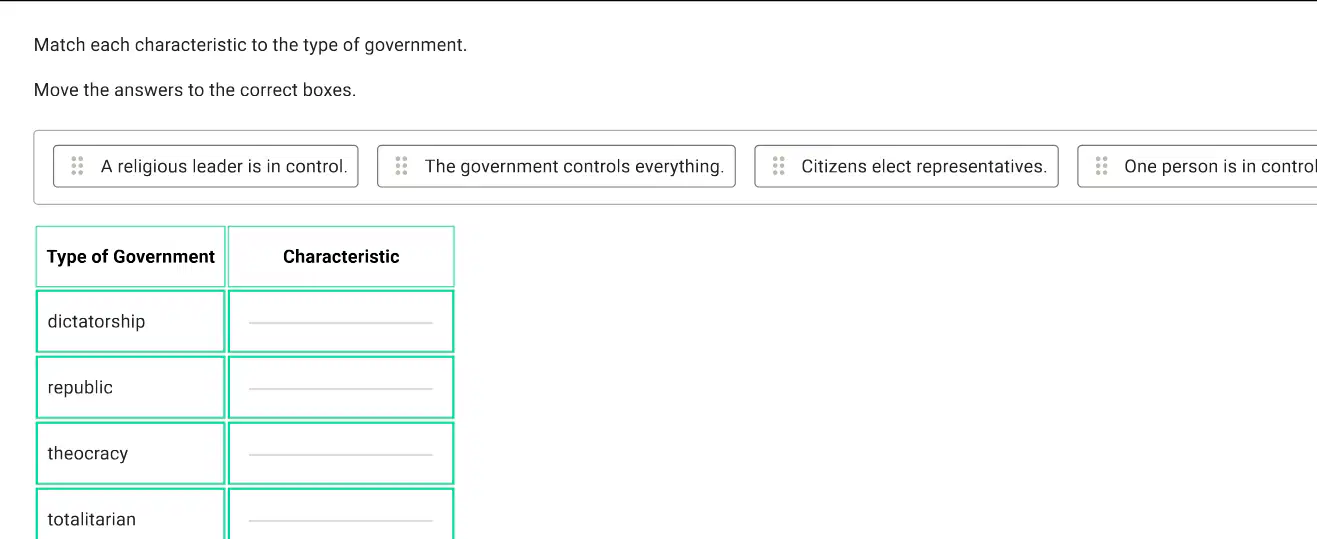
Match each government type to its key characteristic.
Republic: one person is in control
Totalitarianism: government has limited power
Dictatorship: citizens elect representatives
Theocracy: a religious leader is in control
Which statement compares subsistence and commercial agriculture correctly?
Subsistence grows for family needs; commercial sells surplus
Both mainly produce for profit margins
Subsistence sells surplus; commercial feeds one household
Both mainly rely on cottage industry methods

The measure of how crowded a place is is known as __________.
economic recovery
population density
demographics
worldwide census


Is religion an example of human geography or physical geography?
Human Geography
Physical Geography


All of the following describe the Amazon Rainforest EXCEPT
Rains almost daily
Diverse animal species
Variety of plants and vegetation
Cool, dry winters

El Nino causes which of the following weather patterns
Rain on the western coast of South America
Droughts in Asia
Cold weather in the United States
Less hurricanes in the Gulf of Mexico

What two countries in South America would be most impacted by earthquakes caused by the Ring of Fire?
Argentina and Bolivia
Peru and Chile
Colombia and Brazil
Brazil and Chile

Choose THREE impacts of the Columbian Exchange
Spanish language spoken in much of Latin America
Christianity spread through most of Latin America
Indigenous populations decreased due to European diseases
Indigenous populations increased due to new food and animals from Europe
All of the following are indicators of a low standard of living EXCEPT
low life expectancy
low literacy rates
low birth rates
low GDP
Which major mountain chain is found in the west?
a. Appalachian Mountains
b. Himalaya Mountains
c. Rocky Mountains
d. Andes Mountains
The Northeast is often referred to as?
a. A major waterway
b. The heartland
c. The Bayou
d. Most productive manufacturing region
The area from Boston to Washington D.C. is referred to as?
a. City
b. Megalopolis
c. Mangrove
d. Bayou

This map shows the United States. What type of map is it?
political map
physical map
population density map
climate map

Using the map and map key, which two physical features have the highest elevation? Select the TWO correct answers.
Rocky Mountains
Great Plains
Coastal Plains
Appalachian Mountains
Great Basin

Which direction is found at number 6 on the compass?
Southeast
Southwest
North
Weast

Which direction is found at number 3 on the compass?
East
Northwest
Southeast
West
Things that are found in nature are called ____________.
physical features
man-made features
economy
capital resources

This map shows the United States. What type of map is it?
Physical map
Political map
Climate map
Annual rainfall map
What type of map shows the borders of states and countries?
Political map
Physical map
Population density map
Treasure map
This part of a map shows what the symbols on a map mean.
Map key (legend)
Map title
Map scale
Mappy map
What is a Democracy?
a government ruled by a religious leader of the dominant religion in the country
government by the people
a government ruled by a king or queen
A government where one person makes all the rules and decisions
What is a Monarchy?
A government where one person makes all the rules and decisions
a government by the people
a government with a king or a queen
A government that is ruled by the leader of the single dominant religion of the country
What is a Theocracy?
A government by the people
A government that is ruled by the leader of the single dominant religion of the country
A government ruled by a king or a queen
A government where one person makes all the rules and decisions
What is a Dictatorship?
A government that is ruled by the leader of the single dominant religion of the country
A government with a king and a queen
A government by the people
A government where one person makes all the rules and decisions
What is a constitution?
A place where people go to court
A set of rules that tells how a country or a state works
a list of important people in government
jail
A person who has absolute power has
very little power
the power to give speeding tickets, but nothing else
complete authority to do whatever they want without anyone checking on them or questioning them
What type of Monarchy has a king or a queen, but their powers are restricted?
Absolute Monarchy
Constitutional Monarchy
How does a Dictator usually get power
the people vote
leaders of the dominate religion appoint
they take over by force or fraud
leadership is passed down in families
In which types of governments doe the people have few to no rights?
Absolute Monarchy
Constitutional Moanrchy
Theocracy
Democracy
Dictatorship

