
 Worksheets
US Government Final Exam Review
Total questions: 78
Worksheet time: 39mins

Who appoints all federal judges in the United States?
The Supreme Court
The President of the United States
Congress
The Judicial Branch

What is the highest federal court in the United States?
Federal District Courts
Federal Court of Appeals
Supreme Court
Judicial Branch
Which power does the Supreme Court exercise through judicial review?
Veto congressional bills
Declare executive actions unconstitutional
Nominate cabinet members
Approve treaties
Which branch of government interprets the laws?
Executive Branch
Judicial Branch
Legislative Branch
Federal District Courts
What is the lowest level of the federal judiciary?
Federal Court of Appeals
Supreme Court
Federal District Courts
Judicial Review
What does Article III (3) of the Constitution establish?
The Federal District Courts
The Supreme Court and allows Congress to establish lower courts
Judicial Review
The President's power to appoint judges
Michael files a lawsuit in a federal district court, but he disagrees with the court's decision and wants to appeal. Which is the middle level of the federal judiciary that will review Michael's appeal?
Federal District Courts
Federal Court of Appeals
Supreme Court
Judicial Branch
How long do Supreme Court justices serve?
10 years
For life
4 years
20 years
Which Supreme Court case overturned the precedent set by Roe v. Wade regarding abortion rights?
Dobbs v. Jackson Women's Health Organization
Brown v. Board of Education
Miranda v. Arizona
Marbury v. Madison
What did the Supreme Court rule in Roe v. Wade?
Students have freedom of speech in schools
There is a fundamental right to privacy, including a woman's decision to have an abortion
Police must notify accused individuals of their rights
Congress can establish lower courts
What was the ruling in Miranda v. Arizona?
Students have freedom of speech in schools
Police must notify accused individuals of their rights before questioning
The Constitution does not confer a right to abortion
Congress can establish lower courts
What did the Supreme Court rule in Tinker vs. Des Moines Independent School District?
Students do not have freedom of speech in schools
Students retain constitutional rights to freedom of speech or expression at the schoolhouse gate
Police must notify accused individuals of their rights
Congress can establish lower courts
What was the significance of the Brown vs. Board of Education of Topeka case?
It established the Supreme Court's power of Judicial Review.
It declared state laws segregating schools to be unconstitutional.
It replaced the Articles of Confederation.
It enforced the 2nd Amendment right to firearms.

What did the Marbury v. Madison case establish?
The number of US Senators each state has.
The Supreme Court's power of Judicial Review.
The institutional structure of the U.S. government.
The power to declare war.
How many US Senators does each state have?
1
2
3
4
Which branch of government is responsible for creating laws?
Executive Branch
Judicial Branch
Legislative Branch
Federalist Branch
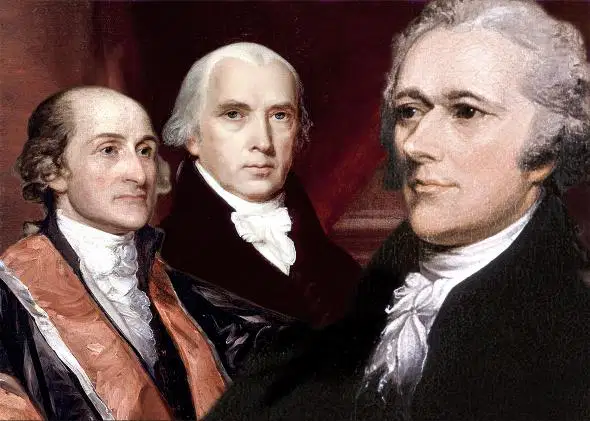
What were the Federalist Papers used for?
To enforce laws.
To convince readers to adopt the new constitution.
To declare war.
To establish the Supreme Court's power of Judicial Review.
What document replaced the Articles of Confederation?
Federalist Papers
U.S. Constitution
Marbury v. Madison
NY Times vs. Sullivan
What is the power of the chief executive to reject a bill passed by a legislature called?
Veto
Judicial Review
Executive Order
Legislative Override
Which branch of government enforces laws?
Legislative Branch
Judicial Branch
Executive Branch
Federalist Branch

Which branch of government has the power to declare war?
Executive Branch
Judicial Branch
Legislative Branch
Federalist Branch
What was the ruling in the Heller vs. DC case?
It declared state laws segregating schools to be unconstitutional.
It ruled that the 2nd Amendment confers an individual right to have firearms.
It established the Supreme Court's power of Judicial Review.
It replaced the Articles of Confederation.
What did the NY Times vs. Sullivan case establish?
The power to declare war.
That public figures are libelous only if malice and reckless disregard for the truth are proven.
The Supreme Court's power of Judicial Review.
The institutional structure of the U.S. government.
How many Supreme Court Justices are there?
7
8
9
10
Who is the head of the Executive Branch of the U.S. government?
The Chief Justice
The President
The Speaker of the House
The Vice President
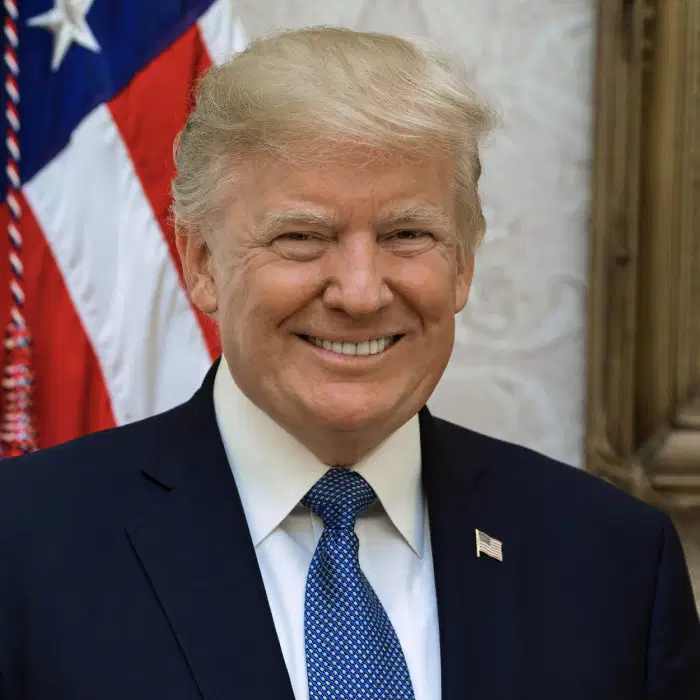
What is one of the qualifications for becoming the President of the United States?
Must be a natural-born citizen of the US, at least 35 years old, and a resident for 14 years
Must be a naturalized citizen of the US, at least 30 years old, and a resident for 10 years
Must be a natural-born citizen of the US, at least 40 years old, and a resident for 20 years
Must be a naturalized citizen of the US, at least 35 years old, and a resident for 14 years
What is the Electoral College?
A group of people chosen by the president to advise on policy decisions
A group of people named by each state legislature to select the president and vice president
A group of senators who vote on presidential decisions
A committee formed by Congress to oversee elections
What is the maximum number of terms a president can serve?
One term
Two terms
Three terms
Four terms
What is an executive order?
A law passed by Congress and signed by the president
A rule issued by the president that has the force of law
A suggestion made by the president to Congress
A decision made by the Supreme Court
Which of the following is an implied power of the president?
Declaring war without Congress
Wage war, domestic security, executive agreements, executive privilege
Passing laws without Congress
Appointing Supreme Court justices without approval
Which of the following best describes the constitutional powers of the president?
Powers specifically listed in Article II of the Constitution
Powers given to the president by Congress
Powers granted by international treaties
Powers assigned by the Vice President

What is the role of the president as Commander in Chief?
Head of the legislative branch
Civilian head of military forces
Chief justice of the Supreme Court
Leader of the Senate
What does the term "Chief Legislator" refer to?
The president's role in enforcing laws
The president's role as architect of public policy and setting the agenda for Congress
The president's role in commanding the military
The president's role in foreign diplomacy

What is the State of the Union?
A meeting between the president and foreign leaders
An annual speech in which the president addresses Congress to report on the condition of the country and recommend policies
A report issued by the Supreme Court on the state of the judiciary
A press conference held by the president to discuss current events
What is the role of the president as Chief Diplomat?
Recognizing foreign governments, making treaties, and effecting executive agreements
Commanding the military forces of the United States
Setting the legislative agenda for Congress
Issuing executive orders
What is the role of the president as head of state?
The role of the president as ceremonial head of the government
The role of the president in commanding the military
The role of the president in setting the legislative agenda
The role of the president in foreign diplomacy
What is the term for a formal document charging a public official with misconduct in office?
Impeachment
Indictment
Subpoena
Censure
What does the 25th Amendment address?
The right to vote for women
Succession of the Vice President if the President dies or becomes incapable of doing their job
The abolition of slavery
The right to bear arms
What is the federal bureaucracy?
A group of elected officials in Congress
Agencies and employees of the executive branch of government
The judicial branch of government
A system of checks and balances
What is the role of the Presidential Cabinet?
To manage the armed forces
To head government departments and advise the President
To enforce federal laws
To supervise trade and promote U.S. business

Which department is responsible for managing the armed forces?
Department of Justice
Department of Defense/War
Department of the Interior
Department of Agriculture

What is the primary function of the Department of Treasury?
To manage public lands and natural resources
To collect, borrow, spend, and print money
To enforce federal laws
To assist farmers and consumers of farm products
Which department is responsible for U.S. foreign policy?
Department of Justice
Department of State
Department of Commerce
Department of Agriculture

What is the role of the Department of the Interior?
To manage and protect the nation's public lands and natural resources
To enforce federal laws
To supervise trade and promote U.S. business
To assist farmers and consumers of farm products
Which department enforces federal laws and includes agencies like the FBI and Drug Enforcement Administration?
Department of Justice
Department of Defense
Department of Commerce
Department of Agriculture
What is the primary responsibility of the Department of Agriculture?
To manage public lands
To assist farmers and consumers of farm products
To enforce federal laws
To supervise trade and promote U.S. business
Which department supervises trade, promotes U.S. business, and tourism?
Department of Commerce
Department of State
Department of Agriculture
Department of Justice
Which department works for the well-being and health of all Americans?
Department of Health and Human Services
Department of Agriculture
Department of Commerce
Department of Defense
Which department helps workers get fair wages and working conditions?
Department of Transportation
Department of Labor
Department of Education
Department of Energy
Which department administers federal programs dealing with better housing and urban renewal?
Department of Housing and Urban Development
Department of Transportation
Department of Veterans Affairs
Department of Homeland Security
Which department manages the nation's highways, railroads, airlines, and sea traffic?
Department of Energy
Department of Transportation
Department of Labor
Independent Agencies
Which department promotes national education and works to ensure education is available to everyone?
Department of Education
Department of Homeland Security
Department of Veterans Affairs
Civil Service System
Which department is responsible for maintaining a national energy policy in the United States?
Department of Transportation
Department of Energy
Department of Labor
Department of Housing and Urban Development
Which department directs services for armed forces veterans?
Department of Veterans Affairs
Department of Homeland Security
Department of Education
Independent Agencies
Which federal agency was created in 2002 to coordinate national efforts against terrorism?
Department of Homeland Security
Department of Energy
Department of Labor
Civil Service System
What is the practice of hiring government workers on the basis of open, competitive examinations and merit called?
Department of Education
Civil Service System
Department of Transportation
Independent Agencies
What are agencies in the executive branch of the federal government formed by Congress to help enforce laws and regulations not covered by the executive departments called?
Department of Homeland Security
Independent Agencies
Department of Energy
Department of Labor
What does the term "Popular Sovereignty" mean?
A belief that ultimate power resides in the people.
A principle of constitutional government.
The division of power between states and the national government.
The ability of each branch to limit the power of the other branches.
What is the principle of "Limited Government"?
A government whose powers are defined and limited by a constitution.
The division of power between states and the national government.
The ability of each branch to limit the power of the other branches.
A belief that ultimate power resides in the people.
What does "Federalism" refer to?
The dividing of power between the states and the national government.
The division of government among legislative, executive, and judicial branches.
A government whose powers are defined and limited by a constitution.
The ability of each branch to limit the power of the other branches.
What is the purpose of "Checks and Balances" in the government?
To ensure each branch has the ability to limit the power of the other branches.
To divide power between the states and the national government.
To describe the process for amending the Constitution.
To allow Congress to make all laws that are "necessary and proper."

What does the "Elastic Clause" allow Congress to do?
Make all laws that are "necessary and proper" to carry out the powers of the Constitution.
Divide power between the states and the national government.
Limit the power of the other branches.
Amend the Constitution with approval of two-thirds of Congress.
What is required to amend the Constitution?
Approval of two-thirds of Congress and three-fourths of the states.
Approval of the Supreme Court.
Approval of the President and Vice President.
Approval of the legislative branch only.
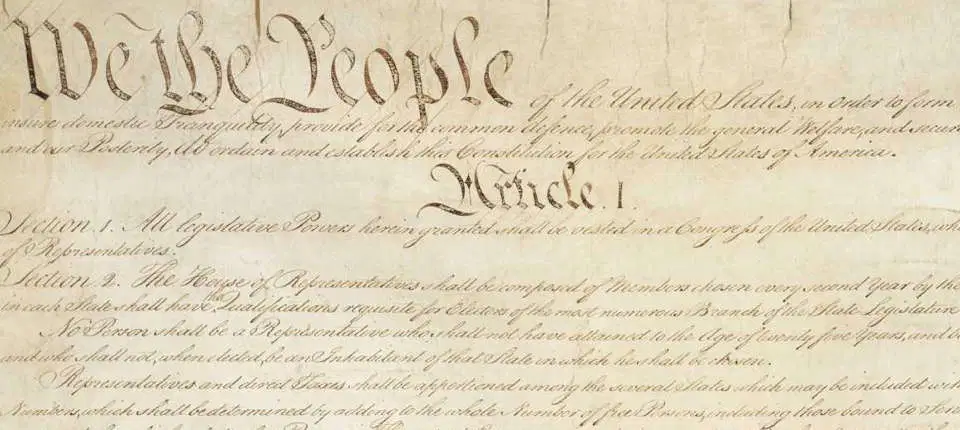
What does Article I of the Constitution describe?
The Legislative Branch.
The Executive Branch.
The Judicial Branch.
The process for amending the Constitution.
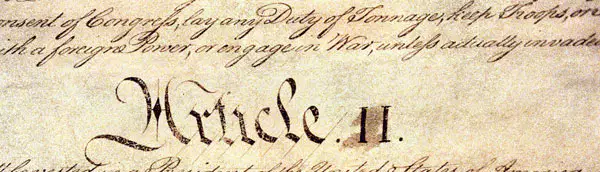
What is the focus of Article II of the Constitution?
The role and power of the Executive Branch, including the President and Vice President.
The creation of the Supreme Court.
The relationship between federal and state governments.
The process for amending the Constitution.
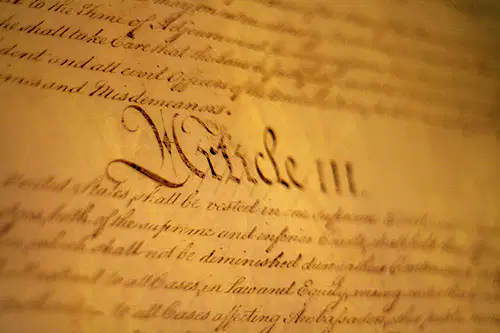
What does Article III of the Constitution establish?
The Supreme Court and allows Congress to establish lower courts.
The Legislative Branch.
The process for amending the Constitution.
The relationship between federal and state governments.
What is addressed in Article IV of the Constitution?
The relationship between the federal and state governments.
The process for amending the Constitution.
The role and power of the Executive Branch.
The creation of the Supreme Court.
What does Article V of the Constitution describe?
The process for amending the Constitution.
The role and power of the Executive Branch.
The relationship between federal and state governments.
The creation of the Supreme Court.
What does Article VI (6) of the Constitution state?
Ratification of the Constitution
Freedom of Religion, Speech, Press, Assembly, and Petition
The Constitution is the highest law of the land, and federal and state officers must uphold it
Abolished slavery

Which amendment guarantees the right to bear arms?
1st Amendment
2nd Amendment
4th Amendment
5th Amendment
What does the 5th Amendment protect?
Freedom of Religion, Speech, Press, Assembly, and Petition
The right to bear arms
The Right to Remain Silent/Double Jeopardy, right to due process
No cruel or unusual punishment
Which amendment abolished slavery?
13th Amendment
14th Amendment
19th Amendment
8th Amendment

What does the Articles of Confederation represent?
Ratification of the Constitution
1st Constitution of the U.S. 1781-1788 with weaknesses such as no executive, no judicial, no power to tax, and no power to regulate trade
Freedom from unreasonable searches and seizures
Gave women the right to vote

Which amendment gave women the right to vote?
14th Amendment
19th Amendment
13th Amendment
8th Amendment
What does the 8th Amendment prohibit?
No cruel or unusual punishment
Freedom of Religion, Speech, Press, Assembly, and Petition
The right to a Speedy Trial by jury
Abolished slavery
What does the 14th Amendment declare?
Freedom from unreasonable searches and seizures
Declares that all persons born in the U.S. are citizens and are guaranteed equal protection of the laws
Ratification of the Constitution
The right to bear arms

What does the 1st Amendment guarantee?
Freedom of Religion, Speech, Press, Assembly, and Petition
The right to bear arms
Freedom from unreasonable searches and seizures
Abolished slavery
What does Article VII (7) of the Constitution address?
Ratification of the Constitution
Freedom of Religion, Speech, Press, Assembly, and Petition
The Constitution is the highest law of the land
Abolished slavery

