
 Worksheets
Economics 2025 Final
Total questions: 50
Worksheet time: 28mins
The 'Law of Demand' states that:
As the price of a good increases, the quantity demanded decreases.
As the price of a good increases, the quantity demanded increases.
As the price of a good decreases, the quantity demanded decreases.
Price and quantity demanded are unrelated.
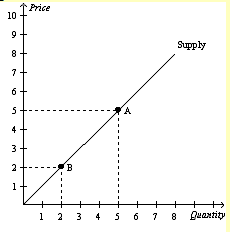
The Law of Supply states that, all else being equal, as the price of a good increases, the quantity supplied ________.
decreases
remains unchanged
increases
becomes zero
Identify the 5 Shifter Determinants of Supply.
Technology, Input Prices, Number of Sellers, Expectations, Government Policies
Demand, Price, Income, Preferences, Substitutes
Elasticity, Marginal Cost, Opportunity Cost, Utility, Scarcity
Market Equilibrium, Consumer Surplus, Producer Surplus, Deadweight Loss, Price Ceiling
Identify the 5 Shifter Determinants of Demand.
Income, Tastes and Preferences, Price of Related Goods, Expectations, Number of Buyers
Price, Quantity, Supply, Market Equilibrium, Elasticity
Government Policy, Technology, Cost of Production, Number of Sellers, Taxes
Advertising, Weather, Production Method, Import Tariffs, Distribution Channels
Inferior Good is defined as:
A good for which demand decreases as income increases.
A good for which demand increases as income increases.
A good that is always of low quality.
A good that is unaffected by changes in income.
Select two examples of Inferior Goods from the options below.
Instant noodles and public transportation
Luxury cars and designer clothes
Organic food and branded electronics
Smartphones and private schools
A Veblen Good is defined as:
A product for which demand increases as the price increases.
A product for which demand decreases as the price increases.
A product that is considered a necessity.
A product that is subsidized by the government.
A Normal Good is defined as:
A good for which demand increases as income increases.
A good for which demand decreases as income increases.
A good that is free of cost.
A good that is always in short supply.
A Giffen Good is defined as:
A good for which demand increases as its price increases, due to the income effect outweighing the substitution effect.
A good that is always inferior and never purchased by consumers.
A luxury item whose demand decreases as income rises.
A good whose demand remains constant regardless of price changes.
Select the correct examples of Giffen Goods from the options below.
Bread and rice
Luxury cars and diamonds
Smartphones and laptops
Coffee and tea
Shortage is defined as:
A situation where demand exceeds supply.
A situation where supply exceeds demand.
A situation where supply equals demand.
A situation where there is no demand.
A complementary good is a product that is used together with another product. Which of the following pairs are examples of complementary goods?
Bread and Butter, Car and Petrol
Pen and Pencil, Shoes and Socks
Milk and Juice, Table and Chair
Soap and Shampoo, Book and Pen
The two key aspects of the definition of demand are:
Willing and able to pay
Supply and production
Price and quantity supplied
Market and competition
Surplus is defined as:
The excess of supply over demand.
The shortage of supply compared to demand.
The balance between supply and demand.
The decrease in demand over supply.
Income is:
the money received, especially on a regular basis, for work or through investments
the total amount of expenses incurred in a month
the value of assets owned by an individual
the amount of money spent on goods and services
A subsidy is:
a financial assistance provided by the government to support businesses or individuals
a tax imposed on goods and services
a penalty charged for breaking laws
an insurance policy for companies
An example of the law of diminishing marginal utility is:
Eating more slices of pizza, each additional slice gives less satisfaction.
Buying more expensive clothes increases happiness each time.
Saving more money always increases satisfaction.
Watching the same movie repeatedly makes it more enjoyable each time.


If the store has 100 packs of toilet paper and 200 people want to buy it, is it a shortage or surplus?
shortage
surplus


A limited quantity of popular dolls are released right before Christmas. This will likely lead to a:
Shortage
Surplus


How much of a good or service is available
consumer
supply
money
Scarcity refers to:
the limited nature of resources available to meet unlimited wants
the abundance of resources available to everyone
the ability to produce everything needed without limits
the lack of demand for goods and services
Capital resources are assets used to produce goods and services. Which of the following are examples of capital resources?
Machines and tools
Water and sunlight
Employees and managers
Forests and rivers
What are the 3 basic economic questions?
1. What to produce? 2. How to produce? 3. For whom to produce?
1. What to sell? 2. Where to sell? 3. How much to sell?
1. Who to hire? 2. What to pay? 3. Where to work?
1. What to buy? 2. How to buy? 3. For whom to buy?
What are the 4 Factors of production?
1. Land 2. Labor 3. Capital 4. Entrepreneurship
1. Land 2. Labor 3. Technology 4. Management
1. Land 2. Labor 3. Money 4. Organization
1. Land 2. Labor 3. Resources 4. Innovation
13. Which of the following best defines a "service" and provides two examples?
A service is an activity offered by one party to another, such as banking and education.
A service is a physical product, such as a car and a computer.
A service is a type of food, such as pizza and pasta.
A service is a form of entertainment, such as movies and music.
An entrepreneur is defined as:
A) A person who starts and runs a business, taking on financial risks in the hope of profit.
B) A person who only works for a company without taking risks.
C) A person who manages government projects.
D) A person who invests in stocks without starting a business.
A person who starts and runs a business, taking on financial risks in the hope of profit.
A person who only works for a company without taking risks.
A person who manages government projects.
A person who invests in stocks without starting a business.
15. The study of how firms, nations and individuals best allocate their limited resources is called:
Economics
Sociology
Geography
Anthropology
21. Generations of farming in a village is defined as which type of economic system?
Capitalist economy
Traditional economy
Mixed economy
Command economy
The economy of the United States is often described as which type of economic system?
Market economy (or Mixed economy, but Market economy is most common in textbooks)
Command economy
Traditional economy
Barter economy
What part of the Factors of Production is Jeff Bezos?
Entrepreneur
Land
Labor
Capital
Which of the following is NOT a factor of production?
land
labor
capital
goods and services
What is the basic economic problem?
Scarcity
Inflation
Unemployment
Profit maximization
Define Trade-off.
A trade-off is the act of giving up one benefit in order to gain another.
A trade-off is a method of increasing profits without any loss.
A trade-off is a way to avoid making decisions.
A trade-off is the process of maximizing all benefits simultaneously.
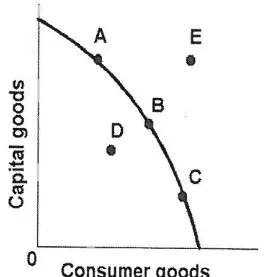
Which point indicates impossibility given current resources? (Refer to the graph with points A, B, C, D, E)
E
A
B
C
The 3 PPC shifters are:
Changes in resource quantity or quality, changes in technology, changes in trade
Changes in price, changes in demand, changes in supply
Changes in government policy, changes in consumer preferences, changes in market structure
Changes in inflation, changes in unemployment, changes in interest rates

You have a choice between a stuffed animal and a bike. You choose the bike. What is the stuffed animal considered?
trade
benefit
opportunity cost

What you give up when you make a choice
opportunity cost
benefit
good
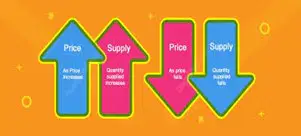
What is this law?
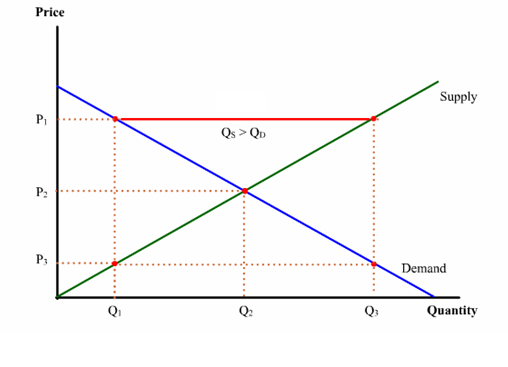

the price at which the quantity of a product demanded by consumers equals the quantity supplied by producers
Price floor
Market Equilibrium
Price ceiling
equilibrium price

An observer of the graph would call this a(n): Shortage, Surplus, Equilibrium price, Demand equals supply
Shortage
Surplus
Equilibrium price
Demand equals supply

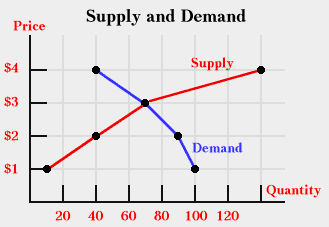
Examine the chart above. At what quantity supplied and demanded is equilibrium reached?
6
5
4
3
2
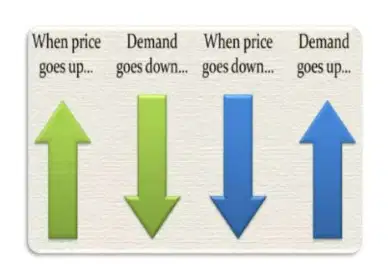
What is this law?
What happens to the supply of a good if the government imposes a tax on it?
The supply increases.
The supply decreases.
The supply remains unchanged.
The supply becomes perfectly elastic.

