
 Worksheets
Immunity Lymphatic Review
Total questions: 98
Worksheet time: 49mins
The two main components of blood are plasma and the formed elements: Red Blood Cell, White Blood Cells, and Platelets. Where do the formed elements come from?
They are produced in the bone marrow.
They are produced in the liver.
They are produced in the heart.
They are produced in the lungs.
What are the two main components of blood?
Plasma and formed elements
Water and salt
Oxygen and carbon dioxide
Sugar and protein
What does the lymphatic system return to the circulatory system?
Tissue fluid
Oxygen
Nutrients
Hormones
Why is it important that only the correct chiral form of biomolecules is created by your cells?
Because only the correct form will work in the body’s processes
Because both forms are equally effective
Because the incorrect form is always harmless
Because chiral molecules are not important
How do the lymph nodes and lymphatic vessels contribute to immunity?
They work together to protect the body against infection and disease
They help digest food
They produce energy
They regulate body temperature
Explain how the interactions between the skin, microbiome, and lymphatic system help keep you alive.
They form a complex system that protects against infection and disease
They help you move your muscles
They help you see and hear
They help you digest food
Which of the following statements is TRUE about proteins and carbohydrates in the human body?
Proteins are almost all right-handed, and carbohydrates are almost exclusively left-handed.
Proteins are almost all left-handed, and carbohydrates are almost exclusively right-handed.
Both proteins and carbohydrates are left-handed molecules.
Both proteins and carbohydrates are right-handed molecules.
Where does the immune system story begin, according to the text?
In the heart
In the red bone marrow
In the liver
In the white bone marrow
Why does the adult body need to produce so many new red blood cells and platelets every day?
To replace those that are old or damaged
To increase body temperature
To digest food
To produce energy
Which bones in adults are responsible for producing white blood cells?
Flat bones of the pelvis, skull, scapulae, sternum, and ribs
The long bones of the arms and legs
The bones of the lower extremities
Only the vertebrae
Which type of marrow produces blood cells?
Yellow marrow
Red marrow
White marrow
Black marrow
Explain why so many new red blood cells and platelets are needed to be produced every day.
Because they are used for digestion
Because they are lost during exercise
Because old or damaged cells need to be replaced to maintain the body's blood cell supply
Because they help in breathing
What is yellow marrow made of?
Fat
Bone tissue
Red blood cells
Cartilage
Children create blood cells from ____________ bones, but adults do not.
Long
Short
Flat
Irregular
Blood cell production is called _____________________________. This is carried out by ____________ cells in the red bone marrow.
Hematopoiesis, stem
Hemolysis, epithelial
Leukopoiesis, muscle
Thrombopoiesis, nerve
The hematopoietic stem cells create 2 general lineages of progenitor stem cells. The ____________ lineage and the ____________ lineage.
Myeloid, lymphoid
Erythroid, megakaryocyte
Granulocyte, monocyte
Plasma, erythrocyte
What is aplastic anemia?
A condition where the bone marrow fails to produce enough blood cells
A disease causing excessive red blood cell production
A disorder of bone density
A type of autoimmune arthritis
What is leukemia?
A cancer of the blood-forming tissues
A deficiency of platelets
A viral infection of the bone marrow
A genetic disorder affecting bones
The stem cells in the bone marrow can generate into the 3 “formed elements” of the blood: ________ blood cells, ________ blood cells and ____________.
Red, white, platelets
Red, blue, plasma
White, yellow, plasma
Red, white, plasma
The bone marrow puts ________________ of billions of new cells into your body.
Hundreds
Thousands
Millions
Tens
What is a primary cause of malignant blood cells in the body?
Viral infection
Bone marrow mutation
Lack of exercise
Poor diet
After injection of marrow cells in a bone marrow transplant, Chemokines are chemicals that direct the new stem cells into ____________________________.
The bone marrow
The bloodstream
The liver
The lungs
A major risk is “GRAFT vs HOST DISEASE.” Explain what this is:
The recipient’s immune system attacks the donor cells
The donor cells attack the recipient’s healthy cells
The donor cells fail to grow
The recipient’s cells attack the tumor
If you receive a marrow transplant from anyone other than an identical twin, the failure rate is ________ to ________ percent. This rate is improved if you take the donor bone marrow directly from ____________________________.
10 to 20 percent; a brother or sister
50 to 70 percent; a parent
30 to 50 percent; a sibling
5 to 10 percent; a parent
Genetic markers in the DNA area are analyzed to see if the potential donor is a good match for bone marrow transplant with the recipient. Because many recipients do not have a sibling with a good marrow match they rely on a ____________________.
Bone marrow registry
Blood bank
Organ donor list
Hospital database
Which two major lineages of white blood cells are mentioned in the material?
Myeloid Lineage and Lymphoid Lineage
Erythroid Lineage and Platelet Lineage
Monocyte Lineage and Granulocyte Lineage
T-cell Lineage and B-cell Lineage
What type of immune system is associated with the myeloid lineage of white blood cells?
Adaptive immune system
Innate immune system
Passive immune system
Acquired immune system
What is the main function of the lymphoid lineage of white blood cells?
To produce red blood cells
To build a response to pathogens the person has encountered
To transport oxygen
To form platelets
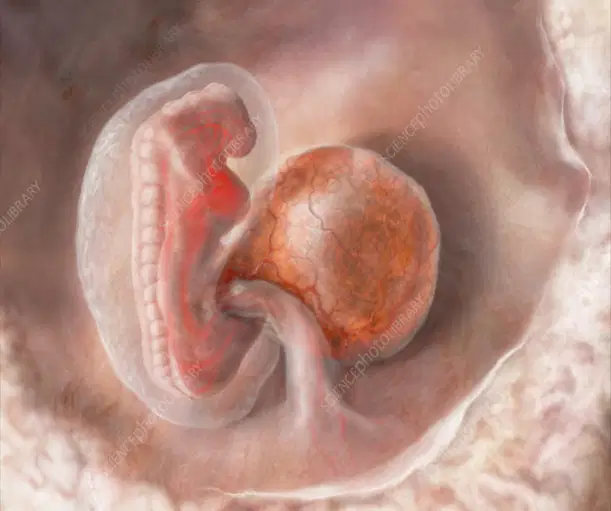
Where does early blood cell production occur in the first 10 weeks of gestation?
In the liver
In the embryonic yoke sac
In the bone marrow
In the spleen
Why does the fetus rely on the embryonic yoke sac for blood cell production in the first 10 weeks of life?
Because the fetus does not have a heart yet
Because the fetus does not have bones yet
Because the fetus cannot absorb nutrients
Because the fetus does not have a liver yet
What are “tissue resident” macrophages?
Cells that stay in tissues and do not circulate in the blood
Cells that only circulate in the blood
Cells that only exist in the bone marrow
Cells that are only found in the skin
Where do macrophages come from?
Myeloid Progenitor Cells
Lymphoid Progenitor Cells
Red Blood Cells
Platelets
Which of the following is a granulocyte?
Neutrophil
Monocyte
Macrophage
Mast Cell
What is released by mast cells during an immune response?
Histamine
Insulin
Adrenaline
Melatonin
Why do people take antihistamine medications?
To reduce unwanted side effects like runny nose and watery eyes during a cold or flu
To increase mucus secretion
To stimulate mast cells
To cause an asthmatic attack
What can happen if the body overreacts and releases too much histamine?
Asthmatic attack, which can be life-threatening
Improved immune response
Decreased mucus secretion
No effect on the load
Which cells are described as "tissue resident" and do not circulate like other myeloid white cells?
Mast Cells
Neutrophils
Eosinophils
Basophils
Why are some of those above called “granulocytes”?
Because they contain granules in their cytoplasm
Because they are the largest blood cells
Because they have a round shape
Because they are only found in the lymph nodes
What do the granules in granulocytes contain?
Enzymes and chemicals used to fight pathogens
Water and nutrients
Oxygen molecules
DNA fragments
Which of the circulating granulocytes are the most numerous?
Neutrophils
Basophils
Eosinophils
Mast cells
Since they don’t live very long, a lot of these build up in an infection. What do they form that we often see at an infection site?
Pus
Blood clots
Scabs
Bruises
Mast cells, eosinophils and basophils are important because they kill ________________ that are too large for phagocytosis by the macrophages.
Parasites
Bacteria
Viruses
Fungi
Natural Killer Cells (NKC) are innate lymphoid lineage cells that do what?
Destroy virus-infected and cancerous cells
Produce antibodies
Transport oxygen
Form blood clots
Where do B-lymphocytes mature?
Bone marrow
Thymus
Spleen
Lymph nodes
What is the main function of B-lymphocytes?
To produce antibodies
To destroy parasites
To transport oxygen
To form blood clots
What do antibodies do to help the immune system?
They destroy red blood cells.
They help the immune system by binding to pathogens and marking them for destruction.
They produce hormones.
They digest food particles.
To become activated, B-lymphocytes require help from _____-lymphocytes.
T-lymphocytes
Red blood cells
Platelets
Macrophages
What are T-memory cells? What is their importance?
T-memory cells are immune cells that remember past infections and help the body respond faster if the same pathogen invades again.
T-memory cells are responsible for producing insulin.
T-memory cells help digest food particles.
T-memory cells control blood pressure.
Where do T-lymphocytes mature?
Thymus
Bone marrow
Liver
Spleen
What is the main job of immune cells regarding pathogens?
To detect and destroy pathogens
To produce energy
To transport oxygen
To digest food
What is chemical signaling in the immune system?
The process by which immune cells "taste" other cells to determine if they are self or non-self
The process of producing hormones
The process of digesting food
The process of transporting oxygen
What happens when white cells DO NOT recognize a cell?
They attack and destroy the cell
They leave the cell alone
They produce antibodies
They transport the cell to the liver
Which of the following is an example of an autoimmune disorder?
Influenza
Crohn's disease
Covid 19
Chickenpox
What is a pathogen?
A cell that belongs to the body
A chemical used for signaling
An organism that causes disease
A type of autoimmune disorder
What are self-cells?
Cells that attack the body
Cells that belong to the body
Cells that cause disease
Cells that signal chemicals
What is chemical signaling in the context of the immune system?
The process of cells attacking each other
The use of chemicals to communicate between cells
The process of breathing in pathogens
The growth of bacteria on skin
Which statement best describes autoimmune disorders?
Disorders caused by bacteria attacking the body
Disorders where the immune system attacks self-cells
Disorders caused by viruses entering the skin
Disorders that only affect the skin
Why is skin considered the first line of defense in the immune system?
It produces antibodies
It prevents pathogens from entering the body
It attacks non-self cells directly
It signals other cells to respond
Many types of bacteria, viruses, mold, fungi, and parasites live on your skin. What is their role in relation to the immune system?
They always cause disease
They help train and protect the immune system
They only exist to signal chemical changes
They are never symbiotic with humans
Which of the following bacteria is especially common in drier areas of the skin?
Staphylococcus
Malassezia
Demodex
Micrococcus
Which of the following is the most common yeast (fungus) found on the skin?
Malassezia
Micrococcus
Staphylococcus
Demodex
Name a common insect (arthropod) that lives in your hair follicles.
Demodex
Malassezia
Staphylococcus
Corynebacterium
Name the common yeast (fungus) that lives on your skin.
Malassezia
Staphylococcus
Demodex
Corynebacterium
How do Mucous Membranes in your nose, throat, trachea and lungs help you?
They trap and remove pathogens and particles from the air you breathe.
They produce sweat to cool the body.
They help in digestion of food.
They provide structural support to the lungs.
How do the Cilia help you?
They move mucus and trapped particles out of the respiratory tract.
They produce antibodies to fight infections.
They absorb nutrients from food.
They help in blood circulation.
What does Stomach Acid have something to do with defending against pathogens?
It helps digest carbohydrates.
It neutralizes vitamins.
It destroys harmful pathogens.
It increases blood pressure.
When cilia are not enough to remove all of the foreign organisms, dirt and chemicals from your lungs you have a Cough Reflex. Explain how this reflex helps you.
It helps you breathe faster.
It expels foreign particles from the lungs.
It increases oxygen absorption.
It reduces body temperature.
What is Sebum?
A type of white blood cell.
An oily substance produced by sebaceous glands.
A protein found in blood plasma.
A hormone that regulates growth.
Tell what Sebaceous Glands are and what they do.
Glands that produce sweat to cool the body.
Glands that produce sebum to lubricate and protect the skin.
Glands that secrete hormones for growth.
Glands that filter toxins from the blood.
Define Symbiosis.
The process of cell division.
A relationship where two organisms live together and benefit from each other.
The breakdown of food in the stomach.
The movement of blood through vessels.
In the bone marrow white blood cells, also called ____________, are created by __________ cells. When stem cells divide, __________ cells are created. These progenitor cells are going to divide to make the different types of immune cells that will end up protecting us from pathogens.
Red blood cells, muscle, nerve
White blood cells, stem, progenitor
Platelets, fat, bone
Plasma cells, skin, epithelial
Some white cells stay in the bone and others go to the blood stream by squeezing through the cells in the wall of the blood vessels. This is called _______________.
Diffusion
Osmosis
Diapedesis
Filtration
We have the innate immune system and adaptive immune system. Which of these is fast reacting to pathogens and which of these are slow?
Innate is slow, adaptive is fast.
Both are fast.
Innate is fast, adaptive is slow.
Both are slow.
Cytokines are a broad category of signaling proteins, while chemokines are a specialized subgroup. What do chemokines do?
They help in blood clotting.
They attract immune cells to sites of infection.
They produce antibodies.
They digest pathogens.
The movement of cells, particularly immune cells, to sites of infection or inflammation is called ______________________.
Phagocytosis
Chemotaxis
Opsonization
Antigen presentation
Neutrophils and other white cells engulf and destroy pathogens. This is called ______________________.
Chemotaxis
Phagocytosis
Opsonization
Antigen presentation
In the process of phagocytosis, white cells produce chemical messengers that call other white cells to the location of the attack. These chemical messengers are called ______________________.
Cytokines
Antibodies
Platelets
Hormones
Macrophages (that come from monocytes) are at the site of infection and as they phagocytose bacteria, they release a chemical called ______________________.
TNF (Tumor Necrosis Factor)
Hemoglobin
Insulin
Dopamine
TNF suppresses hunger, produces fever and also does what?
Increases blood pressure
Promotes inflammation
Decreases heart rate
Stimulates digestion
Macrophages are “Professional Antigen-Presenting Cells”. Explain what that means.
They produce antibodies
They engulf pathogens and present their antigens to T-cells
They destroy red blood cells
They produce platelets
T-Cells that have been trained to recognize an antigen (protein) from a pathogen are produced in the ____________ and mature in the ____________ gland.
Bone marrow, thymus
Liver, spleen
Kidney, pancreas
Heart, lymph node
There are 2 primary organs of the immune system: The ____________ and the ____________.
Liver, kidney
Bone marrow, thymus
Heart, lung
Spleen, pancreas
The secondary organs of the immune system are the ____________ and the ______________________.
Spleen, lymph nodes
Heart, lungs
Liver, pancreas
Kidney, stomach
In lymph nodes, B-cells are activated by helper T-cells. The job of the B-cell, once activated by the helper T-cell, is to ________________________________.
Produce antibodies
Destroy red blood cells
Release insulin
Increase blood pressure
Another term for antibody is ____________________________.
Immunoglobulin
Cytokine
Platelet
Hormone
What is opsonization?
The process of engulfing pathogens
The process of marking pathogens for destruction
The movement of immune cells to infection sites
The production of antibodies
Match the following terms with their correct descriptions:
Antigen
A molecule recognized by the immune system as foreign or self.
Antibodies
Proteins produced by the immune system to neutralize pathogens.
Pathogen
An organism that causes disease.

The diagram shows a lymphocyte. What is the arrow pointing to on the surface of the lymphocyte?
molecules called antigens
molecules called antibodies
Which of the following corresponds to the role of B-lymphocytes?
Carrying oxygen
Forming a clot
Transporting dissolved substances
Making antibodies against pathogens
Explain the difference between innate and adaptive immunity.
Innate immunity is specific to certain pathogens, while adaptive immunity is non-specific.
Innate immunity involves memory cells, while adaptive immunity does not.
Innate immunity is non-specific and present at birth, while adaptive immunity is specific and develops after exposure to disease.
Innate immunity is acquired through exposure to pathogens, while adaptive immunity is present at birth.
What do pyrogens do?
Cause fever
Attack bacteria
Attach viruses
Create antibodies
The lymphatic system that drains lymph from the left side of the body returns that tissue fluid to the __________.
right lymphatic duct
thoracic duct
left vena cava
inferior vena cava
Where is the spleen located in the abdominal cavity?
Right lower quadrant
Left upper quadrant
Right upper quadrant
Left lower quadrant
What does the red pulp in the spleen contain?
Venous sinuses and splenic cords
Only immune cells
Only red blood cells
Only white blood cells
What is one of the major functions of the spleen?
Hormone production
Filtration
Digestion
Muscle contraction
The primary responsibility of the reticuloendothelial system is ___________ of damaged red blood cells
Secretion
Phagocytosis
Movement
Repair
Which of the following is not a function of the spleen?
Filtration
Blood reservoir
Hormone production
Red blood cell destruction
What does phagocytosis involve?
Cell division
Engulfing and destroying cells
Protein synthesis
DNA replication

