Wayground logo

Free Printable Worksheets

Font size

S
M
L
XL
Worksheets

Article III: The Judicial Branch

Total questions: 105

Worksheet time: 1hrs 1mins

Name
Class
Date
1.

Which term describes a court’s legal authority to hear a case?

a)

Probable cause

b)

Due process

c)

Precedent

d)

Jurisdiction

2.

A president appoints a justice who later authors an opinion limiting executive power. Which principle best explains how courts remain free from political pressure?

a)

Judicial independence ensures decision-making autonomy

b)

Judicial activism mandates policy-making by courts

c)

Majority opinion guarantees unanimous agreement

d)

Court-packing expands seats to control rulings

3.

Future Judicial Branch Unit Question - Who is the current Chief Justice of the U.S. Supreme Court?

a)
John Roberts
b)
Brett Kavanaugh
c)

Stanley Hudson

d)

Clarence Thomas

4.

In which court case was judicial review established?

a)

Marbury v. Madison

b)

Brown v. Board of Education

c)

Roe v. Wade

d)

Plessy v. Ferguson

5.

Which of the following statements most accurately describes judicial review?

a)

the power to nominate and appoint new judges

b)

the power to reverse the decisions of lower courts

c)

the power to review presidential actions

d)

the power to declare laws unconstitutional

6.

Which Article of the U.S. Constitution establishes the judicial branch of government?

a)
Article I
b)
Article III
c)
Article II
d)
Article IV
7.

What is the highest court in the United States judicial system?

a)
High Court
b)
Federal Court
c)
Supreme Court
d)
District Court
8.

How many justices currently serve on the U.S. Supreme Court?

a)
9
b)
13
c)
11
d)
7
9.

The "rule of law" principle means:

a)
All individuals and institutions are accountable to the law.
b)
The law applies differently based on social status.
c)
Laws can be ignored if they are inconvenient.
d)
Only government officials are subject to the law.
10.

A court that reviews a case from a lower court is exercising:

a)
exclusive jurisdiction
b)
original jurisdiction
c)
appellate jurisdiction
d)
concurrent jurisdiction
11.

Which of the following is an example of a check that Congress has on the judicial branch?

a)
Congress has the power to confirm or reject judicial appointments.
b)
Congress can issue executive orders directly.
c)
Congress can propose amendments to the Constitution.
d)
Congress can override Supreme Court decisions.
12.

In the U.S. legal system, the party who brings a lawsuit is called the:

a)
plaintiff
b)
appellant
c)
litigant
d)
defendant
13.

Which constitutional protection prevents a person from being tried twice for the same crime?

a)
Double indemnity
b)
Single jeopardy
c)
Trial by jury
d)
Double jeopardy
14.

What is required for law enforcement to obtain a warrant for search and seizure?

a)
Probable cause supported by an affidavit.
b)
A request from the victim's family.
c)
A public opinion poll showing demand for action.
d)
A signed confession from the suspect.
15.

Judges who believe courts should play an active role in shaping public policy are practicing:

a)
strict constructionism
b)
legal formalism
c)
judicial activism
d)
judicial restraint
16.

  The constitutional protection that prevents the government from depriving a person of life, liberty, or property without following fair procedures is known as:

a)
Due Process
b)
Civil Liberties
c)
Legal Immunity
d)
Judicial Review
17.

What type of law deals with disputes between individuals or organizations?

a)
Civil law
b)
Administrative law
c)
Criminal law
d)
International law
18.

What is the term length for Supreme Court Justices?

a)
Fixed term of 10 years
b)
Elected for a 5-year term
c)
Renewable 15-year appointments
d)
Life tenure
19.

Korematsu v. United States

a)
The Supreme Court mandated reparations for Japanese Americans.
b)
The Supreme Court ruled against the military's actions during World War II.
c)
The Supreme Court rejected the internment of Japanese Americans.
d)
The Supreme Court upheld the internment of Japanese Americans.
20.

What did the Supreme Court decide in the case Loving v. Virginia?

a)
The Supreme Court decided that interracial marriage bans were unconstitutional.
b)
The Supreme Court decided that states could regulate marriage types freely.
c)
The Supreme Court ruled that marriage is only for same-race couples.
d)
The Supreme Court upheld interracial marriage bans as legal.
21.

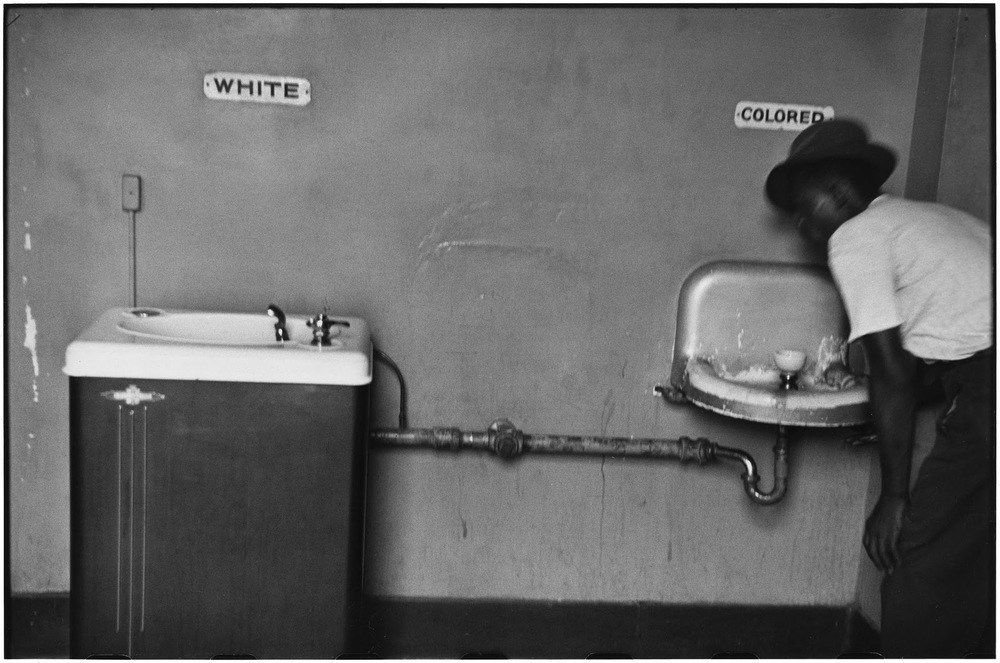
What did the Supreme Court decide in the case Plessy v. Ferguson?

a)
The Supreme Court upheld the constitutionality of racial segregation.
b)
The Supreme Court declared segregation unconstitutional.
c)
The Supreme Court banned all forms of segregation.
d)
The Supreme Court mandated integration in public schools.
22.

How are federal judges appointed to the bench?

a)
Federal judges are appointed by the President and confirmed by the Senate.
b)
Federal judges are elected by the public during elections.
c)
Federal judges are selected by a committee of legal experts.
d)
Federal judges are appointed by state governors.
23.

What is the difference between the Supreme Court majority opinion and dissenting opinion?

a)
The majority opinion is a summary of the case, while the dissenting opinion is a detailed analysis.
b)
The majority opinion establishes legal precedent, while the dissenting opinion expresses disagreement and alternative views.
c)
The majority opinion is always unanimous, while the dissenting opinion is never published.
d)
The majority opinion is written by the Chief Justice, while the dissenting opinion is written by junior justices.
24.

What are Civil Rights?

a)
Civil rights are the rights that protect individuals' freedom from infringement by governments, social organizations, and private individuals.
b)
Civil rights are laws that govern economic transactions.
c)
Civil rights refer to the privileges granted to corporations.
d)
Civil rights are the duties imposed on citizens by the state.
25.

What did the Supreme Court decide in Brown v Board of Education (1954)

a)
The Supreme Court upheld racial segregation in public schools.
b)
The Supreme Court found that segregation is beneficial for education.
c)
The Supreme Court decided that racial segregation in public schools is unconstitutional.
d)
The Supreme Court ruled that public schools must remain segregated.
e)
The Supreme Court decided that integration in schools is optional.
26.

What was the Supreme Court's decision in the case, Roe v. Wade?

a)
The Supreme Court declared that abortion is illegal in all states.
b)
The Supreme Court stated that states can ban abortion at any time.
c)
The Supreme Court ruled that abortion is a matter of personal choice only.
d)
The Supreme Court ruled that the right to have an abortion is protected by the Constitution.
27.

Which branch of government is responsible for interpreting the Constitution?

a)

Legislative Branch

b)

State Governments

c)

Executive Branch

d)

Judicial Branch

28.

What is the main function of the U.S. Supreme Court?

a)

To create new laws

b)

To resolve disputes and interpret laws

c)

To enforce federal regulations

d)

To appoint members of Congress

29.

Which term refers to the principle that courts should follow previous judicial decisions?

a)

Judicial activism

b)

Due process

c)

Precedent

d)

Jurisdiction

30.

What does Judicial independence mean?

a)
Judicial independence means judges are elected by the public.
b)
Judicial independence refers to the ability of judges to change laws.
c)
Judicial independence indicates that courts can be influenced by political parties.
d)
Judicial independence means the judiciary operates free from external control or influence.
31.

 According to Dr. King’s Letter From a Birmingham Jail, why does King say he cannot sit idly by in Atlanta and not be concerned about what happens in Birmingham?

a)
King cannot sit idly by in Atlanta because injustice in Birmingham impacts justice everywhere.
b)
King feels that he should focus solely on his own community.
c)
King thinks Birmingham's problems do not affect other cities.
d)
King believes that only local issues matter in Atlanta.
32.

The national government of the United States is divided into three branches. These branches are

a)

federal, state, and local

b)

international, federal, and local

c)

interstate, state, and intrastate

d)

executive, legislative, and judicial

33.
What is the main job of the Legislative Branch?
a)
Enforce Laws
b)
Declare if Laws are constitutional
c)
Decides if Laws are Fair
d)
Makes Laws
34.
The President is part of what branch?
a)
Judicial
b)
Executive
c)
Legislative
35.

Which branch of the U.S. government is responsible for interpreting the laws?

a)

Executive

b)

Judicial

c)

Legislative

d)

Federal

36.
Which branch of government makes sure people are FOLLOWING THE LAWS?
a)
Legislative
b)
Executive
c)
Judicial
37.
The Senate and the House of Representatives belong to which branch of government?
a)
Legislative
b)
Executive
c)
Judicial
38.

Which of the following branches MAKES the laws?

a)

Legislative Branch

b)

Executive Branch

c)

Judicial Branch

39.

Which branch of government can declare a law unconstitutional?

a)
Legislative branch
b)
Executive branch
c)

Birch branch

d)
Judicial branch
40.
Which branch of government makes sure the laws are FAIR?
a)
Legislative
b)
Executive
c)
Judicial
41.

The "separate but equal" doctrine as it applies to public education is unconstitutional; separate schools are inherently unequal. The court overturned Plessy v. Ferguson. The question before the court was if it was okay to have schools based on race, that were not equal. It integrated schools.

a)

Tinker v Des Moines

b)

Baker v Carr

c)

Brown v Board

d)

Engel v Vitale

42.

amendment that granted African American men the right to vote

a)

15th Amendment

b)

24th amendment

43.

According to the Supreme Court, a person has the right to a lawyer in all criminal proceedings based on its ruling in which of the following cases?

a)
Brown v. Board of Education
b)
Miranda v. Arizona
c)
Roe v. Wade
d)
Gideon v. Wainwright
44.

Civil Rights and Civil Liberties are rights that are extended to which of the following people:

a)
All individuals
b)
Members of a political party
c)
Residents of a country
d)
Only citizens
45.

The overall purpose of the Bill of Rights is to do what?

a)
Protect individual liberties and rights from government infringement.
b)
Limit government power over states and localities.
c)
Define the structure of the legislative branch.
d)
Establish a framework for federal taxation.
46.

Why is it important for trials to be public?

a)
Public trials can lead to media sensationalism and bias.
b)
They are important for protecting the privacy of the accused.
c)
Public trials often result in longer legal proceedings.
d)
It is important for trials to be public to ensure transparency, accountability, and public trust in the judicial system.
47.
Based on this passage, which constitutional principle does Madison describe? 
a)
Checks and Balances 
b)
 Popular Sovereignty
c)
Seperation of powers 
d)
 Judicial Review
48.
a)

Popular Sovereignty

b)

Separation of Powers

c)

Republicanism

d)

Federalism

49.

Who presides over the Supreme Court and serves as the head of the federal judiciary?

a)
Chief Justice of the United States
b)
Attorney General
c)
President of the United States
d)
Speaker of the House
50.

What is the primary purpose of the Fourteenth Amendment in relation to due process?

a)
To grant states the power to regulate commerce.
b)
To establish a national voting age for citizens.
c)
To protect individuals from state denial of life, liberty, or property without due process.
d)
To ensure equal representation in state legislatures.
51.

Who has the authority to appoint Supreme Court Justices?

a)

The Chief Justice

b)

The President

c)

The Senate

d)

The House of Representatives

52.

What was the Supreme Court’s decision in the Supreme Court case, Obergefell v. Hodges in 2015?

a)
The Supreme Court ruled against same-sex marriage rights.
b)
The decision allowed states to ban same-sex marriage.
c)
The Supreme Court's decision in Obergefell v. Hodges was that same-sex marriage is a constitutional right.
d)
The ruling stated that marriage is only for heterosexual couples.
53.

 Law dealing with offenses against the public or state is called:

a)
Criminal Law
b)
Civil Law
c)
Administrative Law
d)
International Law
54.
Which of these is NOT a freedom of the 1st Amendment:
a)
Religion
b)
Speech
c)
Life
d)
Petition
55.
What is the right of the 2nd Amendment?
a)
Right to bear arms
b)
Right of the Press
c)
Right to land ownership
d)
Right to buy weapons
56.
What right is granted by the 4th Amendment?
a)
No illegal searches and seizures
b)
No quartering of troops
c)
Right to a speedy trial
d)
Right to bear arms
57.
What is the purpose of the 10th Amendment?
a)
To protect the rights of the government
b)
To protect the powers of the President
c)
To protect the powers of Congress
d)
To protect the rights of the people/states
58.

 Which of the following statements is TRUE about the landmark Supreme Court Case, Dobbs v. Jackson Women’s Health Organization in 2022? 

a)
The case was decided in favor of Jackson Women’s Health Organization.
b)
The Supreme Court overturned Roe v. Wade.
c)
The ruling expanded abortion rights nationwide.
d)
The Supreme Court upheld Roe v. Wade.
59.

The constitutional guarantee that the government must respect all legal rights owed to a person is known as:

a)
Due Process
b)
Judicial Review
c)
Legal Rights
d)
Civil Liberties
60.
How many amendments does the Constitution have? 
a)
25
b)
26
c)
27
d)
28
61.

An expressed power is different from an implied power because

a)
Expressed powers are derived from state laws, while implied powers are not defined.
b)
Expressed powers are based on judicial decisions, while implied powers are clearly outlined in amendments.
c)
Expressed powers are explicitly stated in the Constitution, while implied powers are inferred.
d)
Expressed powers are assumed by the government, while implied powers are written in the Constitution.
62.

Which of the following Supreme Court cases, greatly expanded the powers of Congress?

a)
Gibbons v. Ogden
b)
Roe v. Wade
c)
Brown v. Board of Education
d)
McCulloch v. Maryland
63.

Which of the following is NOT an example of the checks and balances system?

a)
A president vetoing a bill passed by Congress.
b)
A court ruling on a law's constitutionality.
c)
A governor issuing an executive order without oversight.
d)

Senate confirmation of a Presidential nominee.

64.

Which of the following best describes checks and balances?

a)
A method to ensure all branches of government work independently.
b)
A strategy to increase the power of the executive branch.
c)
A principle that allows one branch to control the others completely.
d)
A system that prevents any one branch of government from becoming too powerful.
65.

Before the 17th Amendment was adopted, United States Senators were chosen by:

a)
Popular vote
b)
State legislatures
c)
Electoral college
d)
State governors
66.

Which term describes the division of power between national and state governments?

a)
Federalism
b)
Decentralization
c)
Unitary System
d)
Confederation
67.

Which of the following is the supreme law of the land?

a)
The Constitution of the United States
b)
The Articles of Confederation
c)
The Declaration of Independence
d)
The Bill of Rights
68.

What is meant by "freedom of religion"?

a)
The right to practice any religion with government support.
b)
The right to practice any religion or none at all without government interference.
c)
The freedom to impose one's religion on others.
d)
The ability to choose a government-approved religion only.
69.

what does the Judicial Branch do?

a)
The Judicial Branch enforces the law.
b)
The Judicial Branch interprets and applies the law.
c)
The Judicial Branch manages public policy.
d)
The Judicial Branch creates new laws.
70.

How many of the current Supreme Court judges are considered "conservative"

a)
5
b)
6
c)
7
d)
4
71.

How many Supreme Court justices have been appointed by President Donald J. Trump?

a)
5
b)
4
c)
3
d)
2
72.

President Joe Biden appointed (a)   Supreme Court Justices.

73.

What are the Bill of Rights?

a)
The Bill of Rights is a list of state laws.
b)
The Bill of Rights includes the Declaration of Independence.
c)
The Bill of Rights is a collection of international treaties.
d)
The Bill of Rights consists of the first ten amendments to the U.S. Constitution.
74.

Which amendment protects us from search and seizure?

a)

1st Amendment

b)

2nd Amendment

c)

3rd Amendment

d)

4th Amendment

75.

Which amendment protects us against cruel punishments?

a)

6th Amendment

b)

7th Amendment

c)

8th Amendment

d)

9th Amendment

76.

Which amendment gives us the right to a fair and speedy trial?

a)

6th Amendment

b)

7th Amendment

c)

8th Amendment

d)

9th Amendment

77.

Which amendments of the Bill of Rights are known as the Rights of the Accused

a)

1-3

b)

4-8

c)

7-10

d)

1-10

78.

no self incrimination or double jeopardy

a)

4th amendment

b)

5th amendment

c)

7th amendment

d)

10th amendment

79.

Why are the rights of the accused important?

a)

Preservation of freedom

b)

Protecting our right to bear arms

c)

Protecting our right to petition

d)

Prohibits us from having to house soliders

80.

Which of the following is NOT a part of the 5th Amendment?

a)
Protection against double jeopardy
b)
The right to bear arms
c)
The right to free speech
d)
The right to a speedy trial
81.

What is included in the 6th Amendment?

a)

right to a public trial and speedy trial

b)

right to a public trial

c)

right to a lawyer and the right to

  • to call witnesses in their favor

d)

right to a jury trial

e)
  • have the right to be informed of all accusations against you

82.

Which Amendment gave women the right to vote?

a)

23rd

b)

18th

c)

21st

d)

19th

83.
Which case determined that anti war/anti draft leaflets created a clear and present danger to national security?
a)
Engel v. Vitale
b)
McDonald v. Chicago
c)
Wisconsin v. Yoder
d)
Schenck v. U.S
84.

A civil liberty is

a)

Limitations on government power, intended to protect freedoms that governments may not legally intrude on.

(Bill of Rights)

b)

Are a guarantee by the government that it will treat people fairly

(Equal Protection

Due Process)

c)

Views the Constitution as a flexible document whose language must be interpreted in light of the context

(Stevenson and the 8th Amendment)

85.

Which of the following Supreme Court decisions,  the court’s decision struck down all state laws banning interracial marriage?

a)

Marbury v. Madison


b)

McCulloch v. Maryland 


c)

Korematsu v. United States


d)

Loving v. Virginia


e)

Plessy v. Ferguson


86.

Which of the following, requires the government to bring a detained person before a court

a)
Writ of certiorari
b)
Judicial review
c)
Ex parte motion
d)
Habeas corpus
87.

In which of the following Supreme Court cases, did the court rule that wearing armbands is a form of symbolic speech and protected by the First Amendment?

a)
Roberts v. United States
b)
Tinker v. Des Moines Independent Community School District
c)
Johnson v. California
d)
Smith v. Board of Education
88.

Why did Congress pass the War Powers Resolution?

a)

Congress wanted to expand its power to provide funding to the military.

b)

Congress wanted to limit the president's power to send US troops into armed conflicts.

c)

Congress wanted to regain control over its treaty-making powers.

d)

Congress wanted to give the president the power to make battlefield decisions.
89.

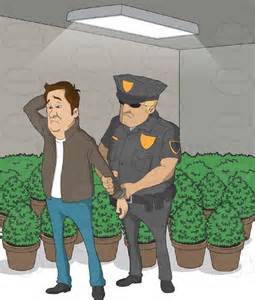
Suspects cannot be questioned (interrogated) until they are informed of their rights (right to remain silent, right to an attorney, etc.)

a)

Brown v Board of Education

b)

Miranda v Arizona

c)

Tinker v Des Moines

d)

Bush v Gore

90.

Established “Separate but Equal”, which provided separate public facilities for both whites and blacks as long as they were equal.

a)

District of Columbia v Heller

b)

In Re Gault

c)

Brown v Board of Education

d)

Plessy v Ferguson

91.

A person accused of a crime no matter how poor has the right to an attorney during trial. Enforces the 6th Amendment.

a)

Tinker v Des Moines

b)

Gideon v Wainwright

c)

Miranda v Arizona

d)

United States v Nixon

92.

Ruled that “Separate but Equal” was Unconstitutional.

a)

Hazelwood v Kuhlmeier

b)

Marbury v Madison

c)

Plessy v Ferguson

d)

Brown v Board of Education

93.

What was the Supreme Court's decision in the Dred Scott case?

a)

That slavery diminished the national character.

b)

That African American rights were protected by the Constitution.

c)

That African Americans did not have the right to sue in federal court because they were not citizens

d)

That slavery should be abolished by executive order
94.

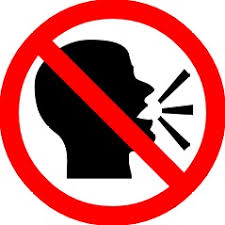
What is called when someone is being forced to testify against oneself?

a)

self-incrimination

b)

reflection

c)

self-process

d)

judicial review

95.

Engel v. Vitale (1962)

a)

1st Amendment (Freedom of Speech)

b)

1st Amendment (Free Exercise of Religion)

c)

1st Amendment (Establishment Clause)

d)

5th Amendment (Due Process Clause)

96.

Wisconsin v. Yoder (1972)

a)

First Amendment (Free Exercise of Religion)

b)

First Amendment (Freedom of Speech)

c)

10th Amendment (Reserved Powers to the States)

d)

14th Amendment (Equal Protection Clause)

97.

What is due process?

a)

people who are accused of crimes do not have to testify

b)

people who are accused of crimes must be read their rights

c)

people who are accused of crimes must be treated fairly

d)

people who are accused of crimes deserve to go to jail

98.

Which Amendment protects "other rights" that are not listed in the Constitution

a)

9th

b)

4th

c)

8th

d)

14th

e)

26th

99.
Which amendment establishes due process for the nation?
a)
5th
b)
14th
c)
10th
d)
16th
100.

The ruling of this court case ensured that people were informed of their due process rights when arrested-

a)

Miranda v. Arizona

b)

Brown v. Board of Education

c)

Plessy v. Ferguson

d)

Guzman v. STAAR

101.

__ Amendment: Right to a jury trial in civil cases

a)

3rd

b)

5th

c)

7th

d)

9th

102.

Which Amendment, changed the voting age from 21 years old to 18 years old?

a)
25th
b)
14th
c)
26th
d)
12th
103.
How long can a Justice (who upholds good behavior) serve on the U.S. Supreme Court?
a)
4 years
b)
5 years
c)
10 years
d)
Justices can serve for life
104.

How are Supreme Court members chosen?

a)

Nominated by the Senate and confirmed by the President

b)

Nominated by the President

c)

Nominated by the Senate

d)

Nominated by the President and confirmed by the Senate

105.

What role does the Constitution play in the judicial system?

a)

It provides the rules for political parties

b)

It outlines the structure and powers of the judicial branch

c)

It defines the role of the military

d)

It lists the rights of corporations