Wayground logo

Free Printable Worksheets

Font size

S
M
L
XL
Worksheets

Geo H Sem1 Review

Total questions: 230

Worksheet time: 14hrs 2mins
Name
Class
Date
1.
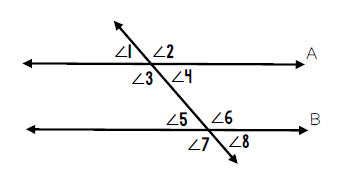
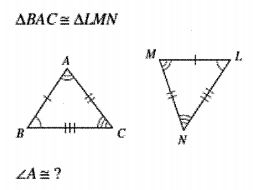
Matching angles are called
a)
Corresponding Sides
b)
Corresponding Angles
c)
The Same
d)
Congruent Angles
2.
 ∠A = ≅
a)
∠M
b)
∠N
c)
∠L
3.

Is this SSS?

a)

Yes

b)

No

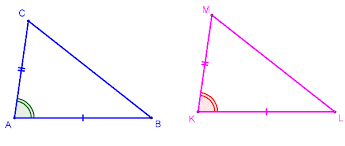
4.

Which one is this?

a)

HL

b)

SSS

c)

SAS

d)

ASA

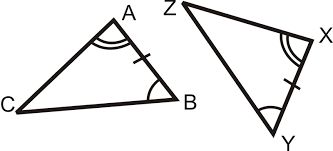
5.

a)

HL

b)

SAS

c)

SSS

d)

ASA

6.

Which postulate can be used to prove triangle GEF is congruent to triangle GJH?

a)

SAS

b)

ASA

c)

AAS

d)

Not congruent

7.

For the given picture, EF = BC and AB = DE. Which postulate can be used to prove the triangles congruent?

a)

SAS

b)

ASA

c)

AAS

d)

HL

8.

Is there enough information to prove the triangles are congruent? If so, what triangle congruency postulate can be used?

a)

SSS

b)

ASA

c)

SAS

d)

HL

e)

Not Enough Information

9.
Which triangle congruence theorem can be used to prove the triangles are congruent?
a)
SAS
b)
Not enough information
c)
SSS
d)
AAS
10.

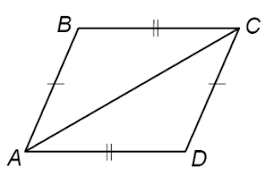
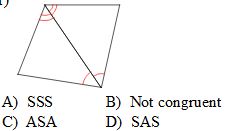
Which congruency statement can be written for the triangles pictured?

a)

ΔACB≅ΔABD\Delta ACB\cong\Delta ABD

b)

ΔBAC≅ΔBAD\Delta BAC\cong\Delta BAD

c)

ΔCAB≅ΔDBA\Delta CAB\cong\Delta DBA

d)

ΔADB≅ΔBCA\Delta ADB\cong\Delta BCA

11.

Which triangle congruence theorem can be used to prove the triangles are congruent?

a)

SSS

b)

SAS

c)

ASA

d)

NONE

12.

What additional info would prove each pair of triangles congruent by HL?

a)

AC‾≅AC‾\overline{AC}\cong\overline{AC}

b)

AD‾≅BC‾\overline{AD}\cong\overline{BC}

c)

∠B≅∠D\angle B\cong\angle D

d)

<B and <D are right angles

13.

What additional info would prove each pair of triangles congruent by HL?

a)

∠M≅∠Y\angle M\cong\angle Y

b)

LM‾≅XY‾\overline{LM}\cong\overline{XY}

c)

LN‾≅XZ‾\overline{LN}\cong\overline{XZ}

d)

∠N≅∠Z\angle N\cong\angle Z

14.
Are the triangles similar?
a)
Yes
b)
No
15.
How long is side x?
a)
2 ft
b)
3 ft
c)
4 ft
d)
6 ft
16.
Are the triangles similar?
a)
Yes
b)
No
17.
How long is side x?
a)
3
b)
1.5
c)
8
d)
2/3
18.
Find side length X.
a)
30
b)
25
c)
15
d)
40
19.
Find missing side
a)
5
b)
7
c)
9
d)
11
20.

Are the triangles similar?

a)

Yes

b)

No

21.

Which triangles are similar to triangle A?

a)

B

b)

C

c)

Both

d)

None

22.
Are the triangles similar?
a)
Yes
b)
No
23.
Are the triangles similar?
a)
Yes
b)
No
24.

Tell whether the triangles are similar. Explain.

a)

Yes because it looks like it

b)

Yes because 81 + 48 + 51 = 180

c)

No because 81 + 48 + 51 =/= 180

d)

Def not

25.

Tell whether the triangles are similar. Explain.

a)

Yes because it looks like it

b)

Yes because 36 + 72 + 33 = 180

c)

No because 36 + 72 + 33 =/= 180

d)

Def not

26.

Tell whether the triangles are similar. Explain.

a)

Yes because why not

b)

No because x = 107

c)

Yes because the triangles have at least two congruent angles.

d)

Nah

27.

Tell whether the triangles are similar. Explain.

a)

Yes because x = 31

b)

Yes because the triangles have one congruent angle

c)

No because x = 31, which means the triangles only have one congruent angle.

d)

They are both purple

28.
Are the triangles similar?
a)
Yes
b)
No
29.
Sides in similar figures must be proportional.  
a)
True
b)
False 
30.
All angles in similar figures are congruent.  
a)
True
b)
False
31.
a)
15
b)
13
c)
11
d)
17
32.
a)

28.8 feet

b)

500 feet

c)

45 feet

d)

0.002 feet

33.

If two triangles are similar their angles are______.

a)

proportional

b)

congruent

c)

supplementary

d)

complementary

34.

Two lines that are parallel will have ...

a)

Slope that is opposite reciprocals

b)

No slope

c)

Slope that is the same

d)

none of the above

35.

Two lines that are perpendicular lines have ...

a)

Slope that is opposite reciprocals

b)

No Slope

c)

Slope that is the same

d)

none of the above

36.
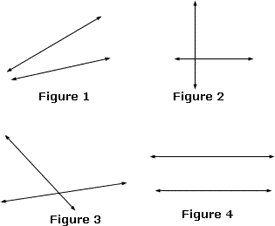
Which figure shows a set of parallel lines?
a)
Figure 1
b)
Figure 2
c)
Figure 3
d)
Figure 4
37.
Which figure shows a set of perpendicular lines?
a)
Figure 1
b)
Figure 2
c)
Figure 3
d)
Figure 4
38.
Choose the most precise answer: These roads are
a)
Intersecting
b)
Perpendicular
c)
Parallel
39.
Choose the most precise answer: These streets are
a)
Parallel
b)
Perpendicular
c)
Intersecting
40.
What slope is parallel to:  
m = 4
a)
4
b)
-1/4
c)
-4
d)
1/4
41.
What slope is perpendicular to:  
m = 5/8
a)
-5/8
b)
5/8
c)
-8/5
d)
8/5
42.
What slope is perpendicular to:  
m = 3
a)
-3
b)
-1/3
c)
1/3
d)
3
43.
A line is parallel to   y = 2x - 7.
What is it's slope?
a)
-2
b)
1/2
c)
-1/2
d)
2
44.
A line is perpendicular to    y = 2x - 7.
What is the slope of this line? 
a)
-2
b)
1/2
c)
-1/2
d)
2
45.
What does "m" represent in y=mx+b?
a)
y-intercept
b)
slope
c)
measurements
d)
nothing
46.
What does 'b" represent in y=mx+b
a)
y-intercept
b)
base
c)
nothing
d)
slope
47.
What is the slope in the equation:  y=4x+3
a)
3
b)
4x
c)
4
d)
3x
48.

Select all that are true.

a)

Parallel lines never intersect.

b)

Parallel lines intersect at a right angle.

c)

Perpendicular lines never intersect.

d)

Perpendicular lines intersect at a right angle.

49.

A figure has _______ symmetry when a line (or lines) divide the shape into two equal parts.

a)

Line

b)

Rotational

c)

Point

50.
How many lines of symmetry does the butterfly have?
a)
1
b)
2
c)
3
d)
4
51.
What is the angle of rotational symmetry when the order is 3?
a)
30°
b)
60°
c)
90°
d)
120°
52.
How many lines of symmetry does the flower have?
a)
2
b)
3
c)
6
d)
9
53.

What is the order of rotational symmetry of the following figure?

a)

1

b)

3

c)

5

d)

7

54.
Does the picture have rotational symmetry?
a)
Yes
b)
No
55.

What is the angle of rotational symmetry?

a)

360°

b)

180°

c)

120°

d)

90°

56.
What is the angle of rotational symmetry when the order is 10?
a)
18°
b)
36°
c)
45°
d)
72°
57.
How many shapes have MORE THAN ONE line of symmetry?
a)
6
b)
3
c)
4
d)
2
58.

Determine whether the figure has line symmetry, rotational symmetry, both, or neither.

a)

Rotational

b)

Reflectional

c)

Both

d)

Neither

59.
Does this image have a line of symmetry?
a)
Yes
b)
No
60.

2. How many lines of symmetry does the picture have?

a)

1

b)

2

c)

4

d)

0

61.

5. Which of the following letters does not have line symmetry, but has rotational symmetry:

a)

H

b)

Z

c)

I

d)

X

62.
How many lines of symmetry does this square have?
a)
1
b)
3
c)
4
d)
8
63.

Determine if the figure has line, point, and/or rotational symmetry. Check all that apply.

a)

Line

b)

Rotational

c)

None

64.

Determine if the figure has line, point, and/or rotational symmetry. Check all that apply.

a)

Line

b)

Rotational

c)

None

65.
How many lines of symmetry does the picture have? (bottom of part of B is bigger than the top part)
a)
0 lines of symmetry
b)
1 line of symmetry
c)
2 lines of symmetry
d)
4 lines of symmetry
66.

How many lines of symmetry does the picture have?

a)

0 lines of symmetry

b)

1 line of symmetry

c)

2 lines of symmetry

d)

3 lines of symmetry

67.
Which type of symmetry involves turning an image?
a)
Rotational Symmetry
b)
Transformation Symmetry
c)
Line symmetry
d)
Reflection Symmetry
68.
Which letter does NOT have symmetry?   G   H   O   E
a)
G
b)
H
c)
O
d)
E
69.

Which letter has line symmetry? N S Z H

a)

N

b)

S

c)

Z

d)

H

70.

Which letter has rotational symmetry? A S T W

a)

A

b)

S

c)

T

d)

W

71.

Which pair of angles are Corresponding angles?

a)

2 and a

b)

1 and c

c)

2 and d

d)

1 and 4

72.

Which pair of angles are Corresponding angles?

a)

4 and d

b)

1 and c

c)

a and c

d)

2 and d

73.

Which pair of angles are Corresponding angles?

a)

1 and b

b)

a and c

c)

2 and d

d)

3 and b

74.

Which pair of angles are Corresponding angles?

a)

4 and d

b)

2 and d

c)

1 and c

d)

1 and 4

75.

Which pair of angles are NOT corresponding angles?

a)

4 and d

b)

1 and 4

c)

3 and c

d)

2 and a

76.

Which pair of angles are NOT corresponding angles?

a)

1 and b

b)

2 and d

c)

d and 4

d)

c and 3

77.

Angles b and d are what type of angles?

a)

Supplementary

b)

Vertical

c)

Corresponding

d)

Complementary

78.

Angles y and z are what type of angles?

a)

Supplementary

b)

Vertical

c)

Corresponding

d)

Complementary

79.

Angles 1 and 4 are what type of angles?

a)

Supplementary

b)

Vertical

c)

Corresponding

d)

Complementary

80.

Angles 3 and y are what type of angles?

a)

Supplementary

b)

Vertical

c)

Corresponding

d)

Complementary

81.

Angles 1 and x are what type of angles?

a)

Supplementary

b)

Vertical

c)

Corresponding

d)

Complementary

82.

Angles 2 and x are what type of angles?

a)

Supplementary

b)

Vertical

c)

Corresponding

d)

Complementary

83.

Angles 4 and z are what type of angles?

a)

Supplementary

b)

Vertical

c)

Corresponding

d)

Complementary

84.

Angles 2 and 4 are what type of angles?

a)

Supplementary

b)

Vertical

c)

Corresponding

d)

Complementary

85.

If the measure of angle 3 is 135 degrees, what is the measure of angle w?

a)

55 degrees

b)

135 degrees

c)

45 degrees

d)

115 degrees

86.

If the measure of angle 2 is 81 degrees, what is the measure of angle z?

a)

81 degrees

b)

9 degrees

c)

99 degrees

d)

101 degrees

87.

If the measure of angle 4 is 76 degrees, what is the measure of angle y?

a)

76 degrees

b)

14 degrees

c)

114 degrees

d)

104 degrees

88.

If the measure of angle w is 155 degrees, what is the measure of angle 3?

a)

35 degrees

b)

25 degrees

c)

155 degrees

d)

130 degrees

89.

If the measure of angle z is 79 degrees, what is the measure of angle 2?

a)

101 degrees

b)

79 degrees

c)

11 degrees

d)

111 degrees

90.

Angles 1 and x are what type of angles?

a)

Supplementary

b)

Vertical

c)

Corresponding

d)

Complementary

91.

Find the midpoint of the line segment with endpoints (-2,0) & (9,-1).

a)

(1, 3)

b)

(3.5, -.5)

c)

(-.5, 3.5)

d)

(6, -.5)

92.
What is the midpoint between (-4,4) and (-2,2)?
a)
(3,2)
b)
(-3,3)
c)
(4,5)
d)
(6,7)
93.
What is the midpoint between (3, -1) and (7, -5)
a)
(5, -2)
b)
(10, -6)
c)
(5, -3)
d)
(2, -2)
94.
Find the midpoint of the segment with the endpoints:(6, 7) and (6, -5) 
a)
(0, -1)
b)
(6, 1)
c)
(1, 6)
d)
(0, 1)
95.
Find the midpoint of the segment with the endpoints:(1, 7) and (9, 0) 
a)
(4, 3.5)
b)
(3.5, 5)
c)
(3.5, 4.5)
d)
(5, 3.5)
96.
Find the midpoint of the segment with the endpoints:(-7, -8) and (4, 7) 
a)
(-5.5, -7.5)
b)
(-1.5, -0.5)
c)
(-3, -1)
d)
(0.5, 1.5)
97.
Find the midpoint of the segment with the endpoints:  (-2, 6) and (-3, 7)   
a)
(0.5, 0.5)
b)
(6.5, -2.5)
c)
(-1.5, 7)
d)
(-2.5, 6.5)
98.
Find the midpoint of the segment with the endpoints:(4, 12) and (-6, 14)
a)
(-1, 13)
b)
(13, 1)
c)
(13, -1)
d)
(5, 13)
99.
What is the midpoint between (3, -1) and (8, -6)
a)
(11, -7)
b)
(-5.5, -3.5)
c)
(5.5, -3.5)
d)
(2, -2)
100.
Find the distance between (-12, 1) and (12, -1).
a)
24.05
b)
24.06
c)
24.07
d)
24.08
101.
Find the distance between (-5, -8) and (-1, -16).
a)
8.9
b)
9.8
c)
10.3
d)
11
102.
Find the distance between (3, 24) and (7, 56).
a)
32.1
b)
32.2
c)
32.3
d)
32.4
103.
Find the distance between (-4, 5) and (7, 18).
a)
15.96
b)
16.08
c)
16.23
d)
17.03
104.
What is the distance between (2,9) and (1,5)?
a)
15
b)
17
c)
4.12
d)
3.87
105.
Find the distance between (-4, 5) and (7, 18).
a)
15.96
b)
16.08
c)
16.23
d)
17.03
106.

Find the midpoint of the line segment with endpoints (-2,0) & (9,-1).

a)

(1, 3)

b)

(3.5, -.5)

c)

(-.5, 3.5)

d)

(6, -.5)

107.
What is the midpoint between (-4,4) and (-2,2)?
a)
(3,2)
b)
(-3,3)
c)
(4,5)
d)
(6,7)
108.
What is the midpoint between (3, -1) and (7, -5)
a)
(5, -2)
b)
(10, -6)
c)
(5, -3)
d)
(2, -2)
109.
Find the midpoint of the segment with the endpoints:(6, 7) and (6, -5) 
a)
(0, -1)
b)
(6, 1)
c)
(1, 6)
d)
(0, 1)
110.
Find the midpoint of the segment with the endpoints:(1, 7) and (9, 0) 
a)
(4, 3.5)
b)
(3.5, 5)
c)
(3.5, 4.5)
d)
(5, 3.5)
111.
Find the midpoint of the segment with the endpoints:(-7, -8) and (4, 7) 
a)
(-5.5, -7.5)
b)
(-1.5, -0.5)
c)
(-3, -1)
d)
(0.5, 1.5)
112.
Find the midpoint of the segment with the endpoints:  (-2, 6) and (-3, 7)   
a)
(0.5, 0.5)
b)
(6.5, -2.5)
c)
(-1.5, 7)
d)
(-2.5, 6.5)
113.
Find the midpoint of the segment with the endpoints:(4, 12) and (-6, 14)
a)
(-1, 13)
b)
(13, 1)
c)
(13, -1)
d)
(5, 13)
114.
What is the midpoint between (3, -1) and (8, -6)
a)
(11, -7)
b)
(-5.5, -3.5)
c)
(5.5, -3.5)
d)
(2, -2)
115.
Find the distance between (-12, 1) and (12, -1).
a)
24.05
b)
24.06
c)
24.07
d)
24.08
116.
Find the distance between (-5, -8) and (-1, -16).
a)
8.9
b)
9.8
c)
10.3
d)
11
117.
Find the distance between (3, 24) and (7, 56).
a)
32.1
b)
32.2
c)
32.3
d)
32.4
118.
Find the distance between (-4, 5) and (7, 18).
a)
15.96
b)
16.08
c)
16.23
d)
17.03
119.
What is the distance between (2,9) and (1,5)?
a)
15
b)
17
c)
4.12
d)
3.87
120.
Find the distance between (-4, 5) and (7, 18).
a)
15.96
b)
16.08
c)
16.23
d)
17.03
121.
a)
8
b)
12
c)
-4
d)
-8
122.
Let B be between A and C.
a)
7
b)
24
c)
13
d)
14
123.
Find ST.
a)
11
b)
12
c)
13
d)
14
124.
Solve
a)
x = 6
b)
x = 7
c)
x = 12
d)
x = 144
125.
Solve 
a)
x = 5
b)
x = 11
c)
x = 33
d)
x = 55
126.
Solve 
a)
x = 5
b)
x = 11
c)
x = 33
d)
x = 55
127.
Solve
a)
50°
b)
58°
c)
115°
d)
226°
128.
Find DE
a)
5
b)
6
c)
20
d)
21
129.
Use the figure to write and solve an equation for x.
a)
5
b)
6
c)
7
d)
8
130.
Now that you know the value of x, find AB and BC.
a)
AB = 11 and BC = 22
b)
AB = 11 and BC = 17
c)
AB = 11 and BC = 27
d)
AB = 11 and BC = 21
131.
Use the figure to write and solve an equation for x.
a)
11
b)
19
c)
33
d)
57
132.
Now that you know the value of x, find AB and AC.
a)
AB = 78 and AC = 60
b)
AB = 60 and AC = 78
c)
AB = 66 and AC = 78
d)
AB = 72 and AC = 78
133.
Find the value of ∠A.
a)
39 degrees
b)
49 degrees
c)
51 degrees
d)
59 degrees
134.
A single angle that measures between 0 and 90 degrees.
a)
Obtuse Angle
b)
Acute Angle
c)
Right Angle
d)
Adjacent Angles
135.
A single angle that measures between 90 and 180 degrees.
a)
Obtuse Angle
b)
Acute Angle
c)
Right Angle
d)
Linear Pair
136.
A single angle that measures exactly 90 degrees.
a)
Obtuse Angle
b)
Acute Angle
c)
Right Angle
d)
Supplementary Angles
137.
Identify the transformation from ABCD to A'B'C'D'.
a)
Translation
b)
Reflection across the x-axis
c)
Reflection across the y-axis
d)
90o counter clockwise rotation
138.
Identify the transformation from ABC to A'B'C'.
a)
(x+8, y+4)
b)
(x-8, y-4)
c)
(x+4, y+8)
d)
(x-4, y-8)
139.
Identify the transformation from ABC to A'B'C'.
a)
90o clockwise rotation
b)
90o counter clockwise rotation
c)
Reflection across the y-axis
d)
Reflection across the x-axis
140.
Identify the transformation from ABCD to A'B'C'D'.
a)
Translation
b)
Reflection across the y-axis
c)
Reflection across the x-axis
d)
90o counter clockwise Rotation
141.
Which rule would result in a translation of 2 units left and 3 units up?
a)
(x, y) → (2x, 3y)
b)
(x, y) → (x - 2, y + 3)
c)
(x, y) → (-x, -y)
d)
(x, y) → (x + 2, y - 3)
142.
Which algebraic rule will produce a translation that is 5 units to the right?
a)
(x, y)  --> (  x ,  y + 5)
b)
(x, y)  --> (  x-5 ,  y + 5)
c)
(x, y)  --> (  x-2 ,  y + 5)
d)
(x, y)  --> (  x+5 ,  y)
143.
Determine how to translate triangle A'B'C' to triangle ABC.
a)
right two, down five
b)
right two, down 9
c)
left two, down 9
d)
left two, down 5
144.
Reflections over the x-axis change the sign of the ____-__________. 
a)
y-coordinate
b)
x-coordinate
c)
y-axis
d)
x-axis 
145.
Reflecting over the y-axis changes the sign of the ____-_____________. 
a)
x-axis
b)
x-coordinate
c)
y-coordinate
d)
none of the above
146.
∆QRS contains the points: Q(4, 2) R(5, 1) S(3,7). If the triangle is reflected across the y-axis, what will S' be?
a)
S'(3, 7)
b)
S'(-3, 7)
c)
S'(-3, -7)
d)
S'(3, 7)
147.
The point that is to be transformed is called the:
a)
Pre-Image
b)
Image
c)
Post-Image
d)
Triangle
148.
After being transformed the new point is called a(n):
a)
Pre-Image
b)
Post Image
c)
Alternate Image
d)
Image
149.
When you translate, you ______ a number to x and y.
a)
Add or subtract
b)
Multiply or divide
c)
Add or multiply
d)
Subtract or divide
150.

The centroid is the 3 ____ of a triangle intersect.

a)

Medians

b)

Midsegments

c)

Perpendicular Bisectors

d)

Angle Bisectos

151.

The point where the 3 perpendicular bisectors of a triangle cross is called the ___?

a)

Midsegment

b)

Incenter

c)

Circumcenter

d)

Centroid

152.
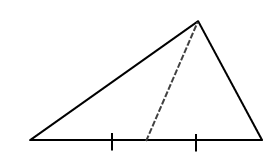
The figure is an example of a(n) ...
a)
angle bisector
b)
perpendicular bisector
c)
median
d)
midsegment
153.
The figure is an example of a(n) ...
a)
angle bisector
b)
midsegment
c)
altitude
d)
median
154.
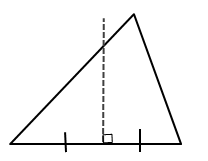
The figure is an example of a(n) ...
a)
altitude 
b)
perpendicular bisector
c)
midsegment
d)
angle bisector
155.
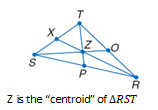
If Z is the centroid, what type of segments are drawn?
a)
angle bisectors
b)
perpendicular bisectors
c)
altitudes
d)
medians
156.
The centroid cuts each median into two segments.  The shorter segment is ___________ the length of the entire segment.
a)
one third
b)
two thirds
c)
three fourths
d)
one half
157.
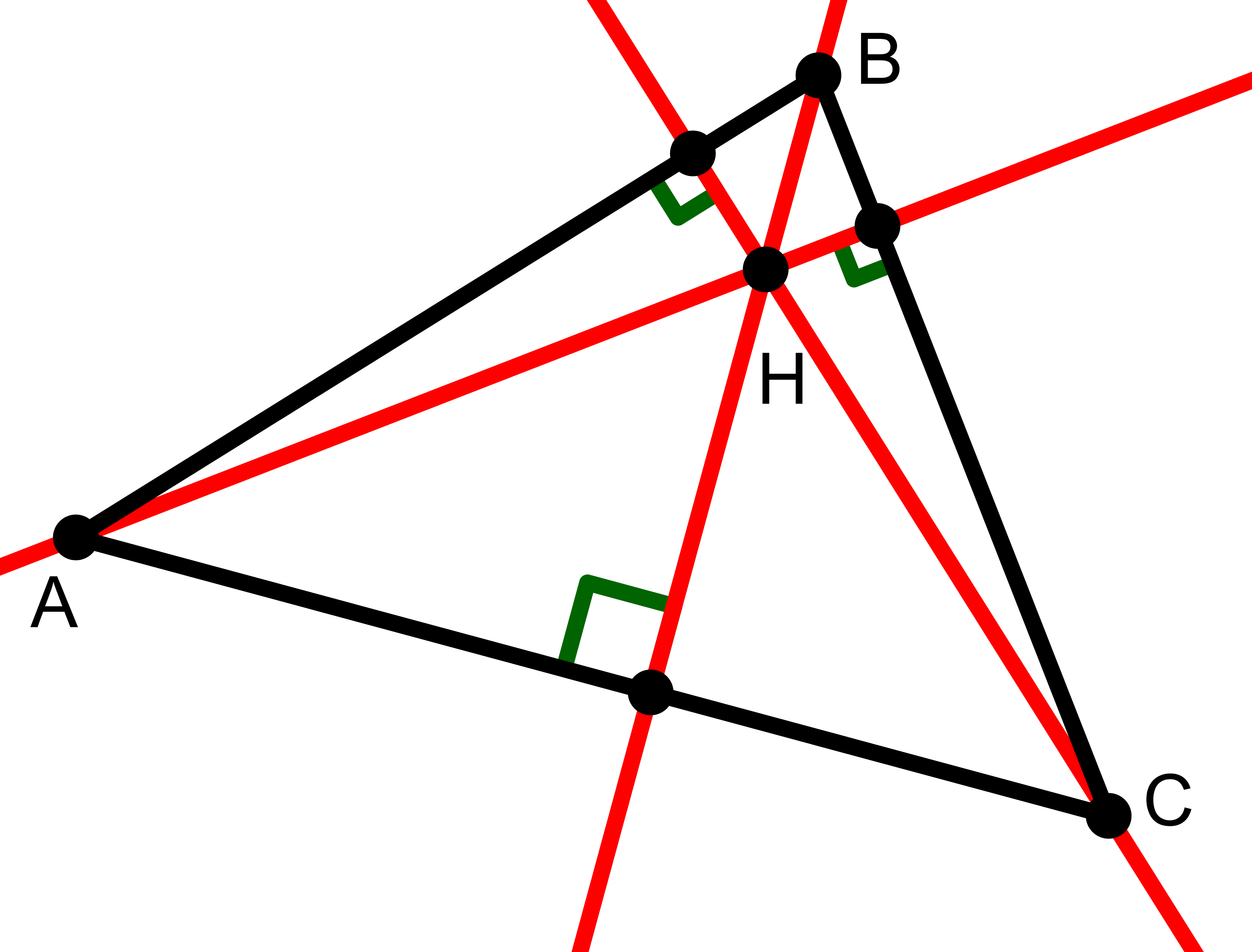
The altitudes of a triangle intersect at the _________________________.
a)
Centriod
b)
Circumcenter
c)
Incenter
d)
Orthocenter
158.

The union of three angle bisectors is the

a)

circumcenter

b)

incenter

c)

centroid

d)

orthocenter

159.

This center is created by the union of three perpendicular bisectors

a)

incenter

b)

circumcenter

c)

orthocenter

d)

centroid

160.

The circumcenter is equidistant from each ______________ of the triangle

a)

vertices

b)

sides

c)

median

d)

altitude

161.

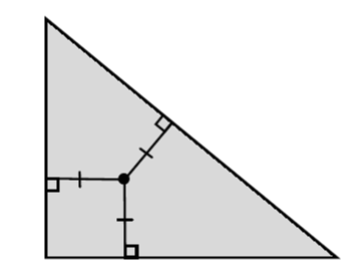
The incenter is equidistant from each __________ of the triangle.

a)

vertices

b)

sides

c)

median

d)

altitude

162.

A segment joining a vertex to the midpoint of the opposite side.

a)

altitude

b)

median

c)

perpendicular bisector

d)

angle bisector

163.

A segment joining a vertex to the opposite side so that is perpendiuclar to that side.

a)

perpendicular bisector

b)

angle bisector

c)

median

d)

altitude

164.

This center has medians that are proportional

a)

circumcenter

b)

centroid

c)

incenter

d)

orthocenter

165.
If Z is the centroid, what type of segments are drawn?
a)
angle bisectors
b)
perpendicular bisectors
c)
altitudes
d)
medians
166.
Find the value of x
a)
x=28
b)
x=14
c)
x=23
d)
x=46
167.

Identify the center.

a)

Circumcenter

b)

Incenter

c)

Centroid

d)

Orthocenter

168.

Identify the center.

a)

Circumcenter

b)

Incenter

c)

Centroid

d)

Orthocenter

169.

Identify the center.

a)

Circumcenter

b)

Incenter

c)

Centroid

d)

Orthocenter

170.

Identify the center

a)

Circumcenter

b)

Incenter

c)

Centroid

d)

Orthocenter

171.
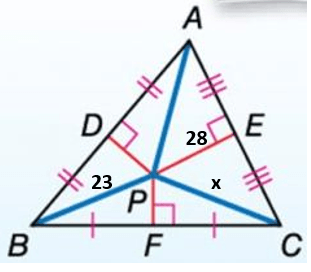
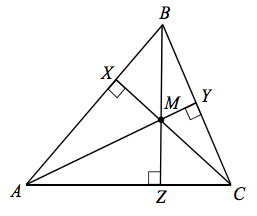
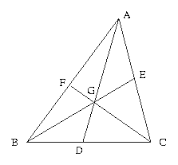
CF, BE, and AD are the medians of the triangle. If BF =10, find AF.
a)
20
b)
10
c)
5
d)
Not Enough Information
172.
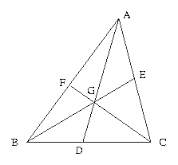
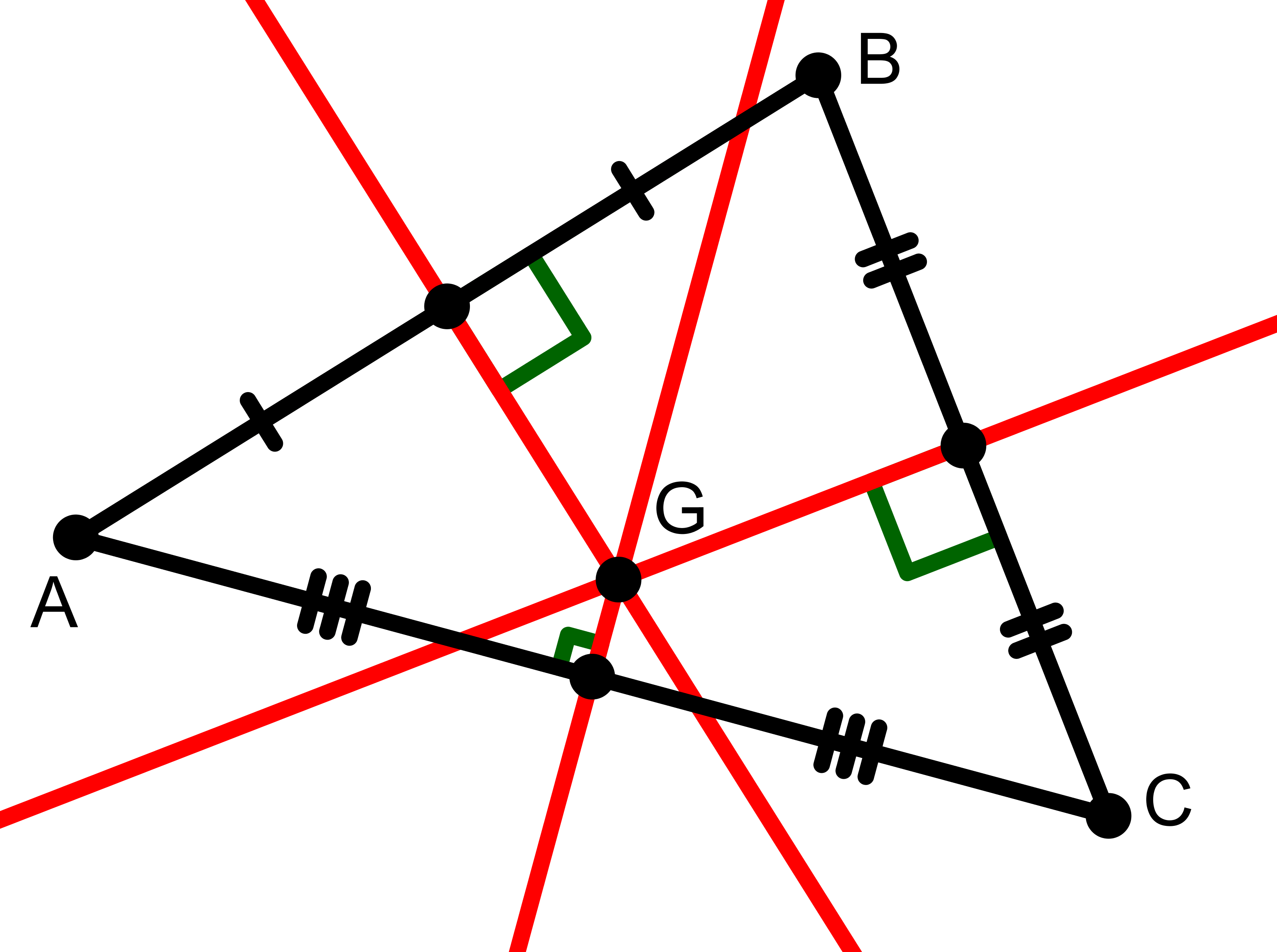
If G is the centroid of triangle ABC and BE= 18. Find the length of BG.
a)
6
b)
12
c)
18
d)
Not Enough Information
173.
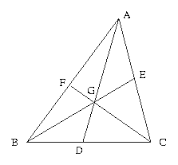
If G is the centroid of triangle ABC and GE= 7. Find the length of BE.
a)
7
b)
14
c)
21
d)
Not Enough Informaion
174.
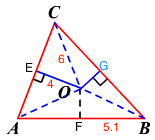
Point O is the circumcenter of the triangle. Find OB
a)
OB = 4
b)
OB = 6
c)
OB = 5.1
d)
Not enough information
175.
ED is the midsegment of triangle ABC. Find BC
a)
10.2
b)
12.5
c)
20.4
d)
22.7
176.
What is true about the midsegment EF?
a)
EF = 1/2 AB
b)
EF // AB
c)
EF = 1/2 AC
d)
none of these are true
177.
The mid segment of the triangle is 5x-1. Find the value of x.
a)
x = 6
b)
x = 7
c)
x = 11.8
d)
x = 12.4
178.
Find the measure of the indicated angle. 
a)
34
b)
46
c)
62
d)
36
179.
Find the measure of the indicated angle. 
a)
145 degrees
b)
24 degrees
c)
20 degrees 
d)
21 degrees
180.

The figures above are examples of ...

a)

altitudes

b)

perpendicular bisectors

c)

medians

d)

angle bisectors

181.

Which center of a triangle is shown in the picture below?

a)

Circumcenter

b)

Orthocenter

c)

Incenter

d)

Centroid

182.

Which center of a triangle is shown in the picture below?

a)

Circumcenter

b)

Orthocenter

c)

Incenter

d)

Centroid

183.

Which center of a triangle is shown in the picture below?

a)

Circumcenter

b)

Orthocenter

c)

Incenter

d)

Centroid

184.

Which center of a triangle is shown in the picture below?

a)

Circumcenter

b)

Orthocenter

c)

Incenter

d)

Centroid

185.

The circumcenter and orthocenter can be outside the triangle if the triangle is ...

a)

obtuse

b)

acute

c)

iscolese

d)

right

186.
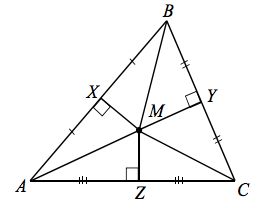
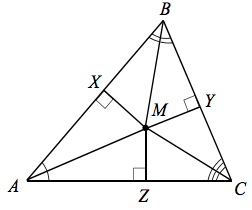
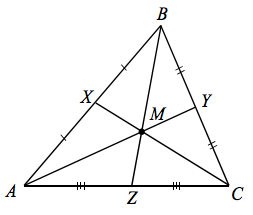
Name the point of concurrency shown.
a)
Circumcenter
b)
Incenter
c)
Neither
d)
Center-center
187.
Where can the centroid be located on a right triangle?
a)
Outside
b)
Always inside
c)
On the hypotenuse
188.

The circumcenter of a triangle is equidistant from the _______ of the triangle.

a)

vertices

b)

sides

c)

center

d)

midsegment

189.
The circumcenter is always inside the triangle.
a)
true
b)
false
190.
State if the two triangles are congruent.  If they are, state how you know.
a)
A
b)
B
c)
C
d)
D
191.
State if the two triangles are congruent.  If they are, state how you know.
a)
A
b)
B
c)
C
d)
D
192.
State if the two triangles are congruent.  If they are, state how you know.
a)
A
b)
B
c)
C
d)
D
193.
State if the two triangles are congruent.  If they are, state how you know.
a)
A
b)
B
c)
C
d)
D
194.
What additional information is required for the 2 triangles to be congruent by ASA?
a)
A
b)
B
c)
C
d)
D
195.
PICK THE CORRECT CONGRUENCE STATEMENT
a)
∆TUV ≅ ∆EUV
b)
∆VUT ≅ ∆UVE
c)
∆TUV ≅ ∆UEV
d)
∆UTV ≅ ∆EUV
196.
Use the congruence statement to find the missing part of the statement
a)
WV
b)
WU
c)
VU
d)
WB
197.
What does CPCTC stand for?
a)
Corresponding Parts of Corresponding Triangles are Congruent
b)
Congruent Parts of Corresponding Triangles are Congruent
c)
Corresponding Parts of Congruent Triangles are Congruent
198.
What are the 2 missing pieces of information?
a)
Transitive Property, SAS(Side-Angle-Side)
b)
Reflexive Property, SAS(Side-Angle-Side)
c)
Transitive Property, SSS(Side-Side-Side)
d)
Reflexive Property, SSS(Side-Side-Side)
199.

What is #3 Reason?

a)

Same Line

b)

Perpendicular Lines

c)

Segment Bisector

d)

Reflexive Property

200.

ΔABC ≅Δ?\Delta ABC\ \cong\Delta?  

a)

ΔEFD\Delta EFD  

b)

ΔDFE\Delta DFE  

c)

ΔDEF\Delta DEF  

d)

ΔFED\Delta FED  

201.

Which symbol means congruent?

a)

≈\approx  

b)

≅\cong  

c)

==  

d)

≠\ne  

202.

What type of angles are ∠1\angle1  and ∠3\angle3  ?

a)

Complementary Angles

b)

Supplementary Angles

c)

Vertical Angles

203.

What postulate or theorem proves ∠A≅∠A\angle A\cong\angle A  ?

a)

Transitive Property of Congruence

b)

Reflexive Property of Congruence

c)

Symmetric Property of Congruence

d)

Vertical Angle Theorem

204.

RS‾≅UT‾\overline{RS}\cong\overline{UT}  and  ∠RSV≅∠UTV\angle RSV\cong\angle UTV What else is congruent?

a)

no other congruent parts

b)

∠SVR≅∠TVU\angle SVR\cong\angle TVU  ; vertical angles

c)

RV‾≅UV‾\overline{RV}\cong\overline{UV}  ; Shared side/reflexive

205.

Which is not a postulate to prove triangle congruence?

a)

AAA

b)

ASA

c)

SSS

d)

SAS

206.
What is always the 1st statement in reason column of a proof?
a)
Prove
b)
Given
c)
Reason
d)
Statement
207.
Angles  e and d are what type of angles?
a)
Vertical Angles
b)
Corresponding Angles
c)
Alternate Interior Angles
d)
Alternate Exterior Angles
208.

Which of the following is a correct statement and reason for the proof shown?

a)

FG‾≅FG‾\overline{FG}\cong\overline{FG} ; Midpoint Theorem

b)

FG‾≅FG‾\overline{FG}\cong\overline{FG} ; Reflexive

c)

DG‾≅GE‾\overline{DG}\cong\overline{GE} ; Midpoint theorem

d)

DF‾≅FE‾\overline{DF}\cong\overline{FE} ; Definition of a Bisector

209.

What is the justification?

a)

Definition of congruence

b)

Reflexive Property of Congruence

c)

Segment Addition Postulate

d)

Definition of Midpoint

210.

Find x

a)

95

b)

85

c)

35

d)

45

211.

Find x

a)

10

b)

50

c)

55

d)

90

212.

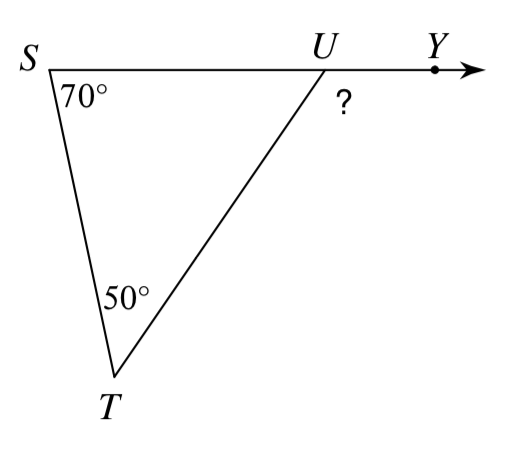
Find the missing interior angle measure.
a)
140°
b)
130°
c)
50°
d)
90°
213.

What is the value of the exterior angle?

a)

90

b)

100

c)

20

d)

120

214.

What is the value of the missing exterior angle?

a)

105

b)

80

c)

55

d)

25

215.

Find the measure of the exterior angle.

a)

55

b)

65

c)

75

d)

85

216.

Find x.

a)

109

b)

99

c)

180

d)

71

217.

Find n.

a)

75

b)

180

c)

105

d)

100

218.

Find the measure of the exterior angle.

a)

122

b)

10

c)

120

d)

50

219.

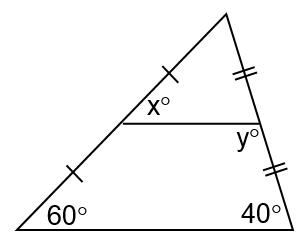
Set up an equation to find x.

a)

42 + 8x = 2 + 12x

b)

2 + 12x + 42 = 8x

c)

42 + 8x + 2 + 12x = 180

d)

42 + 8x = 180

220.

Find the measure of the exterior angle

a)

150°

b)

10°

c)

9°

d)

135°

221.
What is the measure of angle X?
a)
60
b)
40
c)
140
d)
100
222.
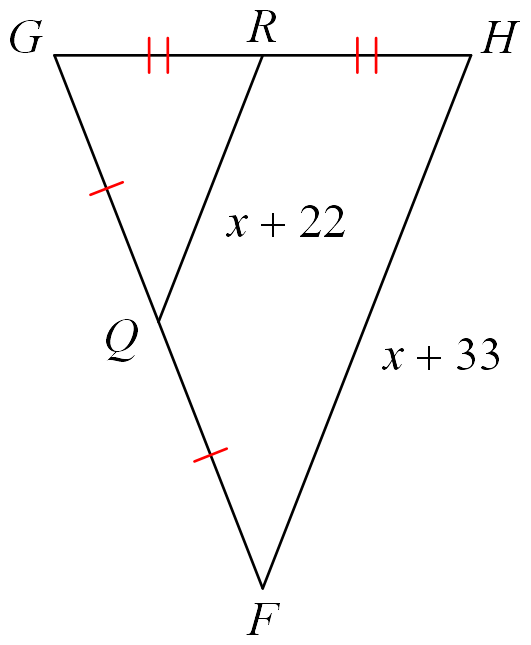
QR is a midsegment of triangle FGH. Solve for the value of x?
a)
5.5
b)
11
c)
-5.5
d)
-11
223.
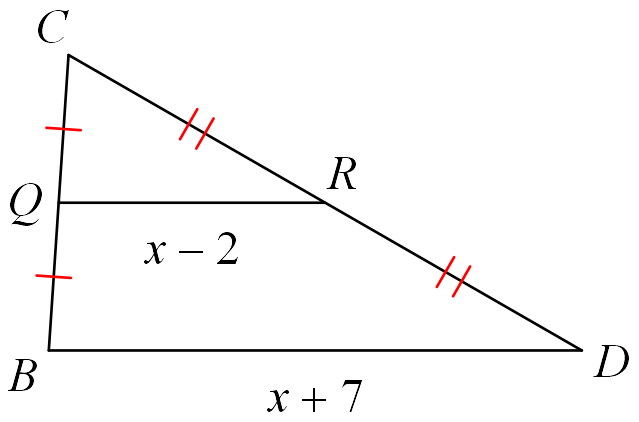
QR is a midsegment of triangle BCD. Solve for the value of x.
a)
11
b)
18
c)
9
d)
-7
224.
KJ is a midsegment of WXV. What is the length of segment VX?
a)
6
b)
12
c)
9
d)
-2
225.

Angle 1 and Angle 5 are examples of which type of angle pair?

a)

Alternate exterior angles

b)

Alternate interior angles

c)

Vertical angles

d)

Corresponding angles

226.

Find the value of x if the  m∠1 = 11x − 9°m\angle1\ =\ 11x\ -\ 9\degree and the  m∠5 = 7x +9°m\angle5\ =\ 7x\ +9\degree .

a)

-4.5

b)

4.5

c)

1

d)

0

227.
Find HG.
a)
8
b)
9
c)
10
d)
11
228.
Find KL.
a)
18
b)
15
c)
6
d)
20
229.
Solve for x
a)
x = 2
b)
x = 4
c)
x = 6
d)
x = 8
230.
Find the value of r
a)
46
b)
44
c)
43
d)
47