
 Worksheets
Unit 3 (CH 6-8) (AOC & US Constitution)
Total questions: 89
Worksheet time: 3hrs 47mins
We supported removing some power from the states & giving more to a national government.
Federalists
Anti-Federalists
We thought the Constitution needed a list of protected rights for U.S. citizens.
Federalists
Anti-Federalists
What is the introduction to the Constitution called?
The Declaration Proclamation
The Preamble
The Declaration of Independence
The Articles of the Confederation
What is the only court mentioned in the U.S. Constitution?
The Supreme Court
Court of Appeals
City Courts
Tax Court

What was a major weakness of the Articles of Confederation?
Britain still controlled America.
There was no federal government.
The states were given so much power and autonomy that the federal government had too little authority over states to address national problems.
The federal government was too powerful and limited the authority and autonomy of states

The principle of Limited Government states that the
government branches can limit each branch’s power.
federal government limits each state’s power.
the president can limit the power of the American people.
American people can limit the government's power.

This picture best describe which Constitutional Principle?
Separation of Powers
Federalism
Popular Sovereignty
Checks and Balances

This picture best describe which Constitutional Principle?
Separation of Powers
Federalism
Checks and Balances
Popular Sovereignty
What is the U.S Constitution?
A declaration of war
A document that says how the U.S government runs. It is the highest law of the land.
A peace deal
Is a document that says how mayors and governors should act.
What is an amendment?
An amendment is a change in the Constitution. It takes a lot for Congress to make a change or add to the constitution.
An amendment declares war.
It is a peace deal.
The Constitution can never be changed.
Why did the founders of the Constitution create a separation of powers between the three branches?
So that one branch of government would not have too much power.
So that everyone could be equal.
So that people could vote.
So that the president could have all the power
What are the first 10 amendments to the U.S Constitution called?
Declaration of Independence
Bill of Rights
The First 10 Amendments
Preamble
Who makes up the Judicial Branch?
Congress
President
The Supreme Court-9 Judges chosen by the President
Vice president
What are the 2 houses of the Legislative Branch
The Senate and House of Representatives
The Senate and Supreme Court
House of Representatives and President
Senate and President
The executive branch of government is run by...
Congress
The President
Supreme Court
House of Representatives
What is the job of the Supreme Court
To decide if laws or court case decisions are unconstitutional
To decide who should be president
To decide who is elected in Congress
To make new laws

The (a) Branch Makes the Laws

Which branch of the U.S. government interprets the laws?
Executive
Legislative
Judicial
Theocratic
Congress makes up the (a) or lawmaking body of the government
The counting of enslaved people for the purposes of determining representation was the main issue of which compromise? (a)
The three-fifths compromise sought to prevent
states with high slave population fro domination the House of Representatives
the Senate from becoming too powerful within the bicameral system
the Constitution from ultimately being ratified
Antifederalists from winning the debate over federalism

Which principle of U.S. government is illustrated in the sequence shown?
Judicial Review
Checks and Balances
Popular Sovereignty
Federalism
the system that allows each branch of government to limit the powers of the other two branches
federalism
checks and balances
limits and supports
constitutionality
This document provided individual rights for Americans -
Process of Ratification
Separation of Power
Preamble
The Bill of Rights
1st Amendment- "Congress shall make no law respecting an establishment of religion, or prohibiting the free exercise thereof; or abridging the freedom of speech, or of the press; or the right of the people peaceably to assemble, and to petition the Government for a redress of grievances."
What does the first amendment do?
Outlaws religion and exercise
Establishes freedom of religion, freedom of speech, freedom of the press, and freedom to peacefully protest and petition the government
protects citizens rights to carry a firearm and vote
It prevents Congress from passing any laws
Who are the Federalists?
People who supported the Constitution
People who were against the Constitution
People who wanted to add the Bill of Rights to the Constitution
People who supported the Articles of Confederation
Federalists wanted....
a weak central (national) government
a strong central (national) government
a Bill of Rights
strong state government
The Antifederalists wanted
a strong central (national) government
weak state government
weak central (national) government
to deny the Bill of Rights
Which party fought to protect the common man's rights and insisted on the Bill of Rights be added?
Federalists
Anti-federalist
Wanted strong, centralized government. Proponents of "BIG GOVERNMENT"
Federalists
Anti-federalists

Americans initally believed that the central government needed to be extremely...
strong
neutral
weak
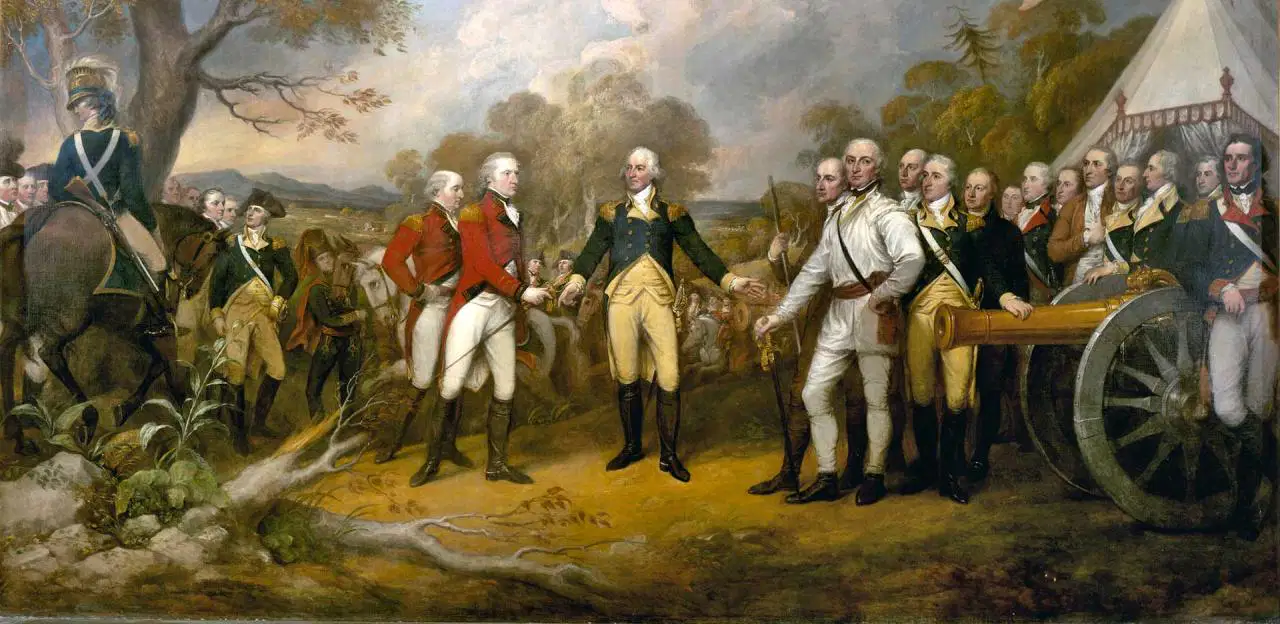
Under the AOC, the central government did have the power to declare war.
True
False

Under the AOC, the central government could NOT tax the states.
True
False

Under the AOC, the central government could NOT control trade bewteen the states.
True
False
In order to amend (change) the Articles of Confederation, all 13 states had to agree.
True
False
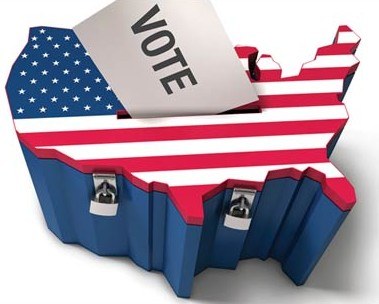
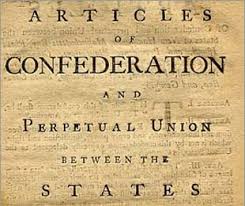
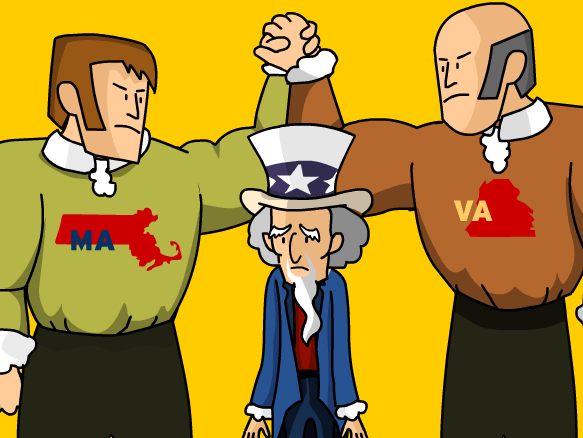
Why was this first U.S. government so weak?
King George III was still in charge of USA
Americans were afraid to give their new government too much power
The American army did not win their independence from Great Britain and King George III
Because of the Declaration of Independence
What is the name of the first written plan of government for the new United States
Constitution
Treaty of Paris
Declaration of Independence
Articles of Confederation
Because of the Articles of Confederarion the national government could NOT control ______ among the states.
food quality
animals
travel
commerce (trade)
What is one reason Americans wanted to change the Articles of Confederation?
They opposed the Land Ordinance of 1785.
They didn't want the government to have only 1 branch.
States were not working together and there was no leader.
State government was weak and unsuccessful.
States were still independent under the Articles.
True
False
Farmers rebelled and shut down the courts because
they did not want to lose their farms
they wanted to rewrite the constitution
One result of the Shay rebellion was the realization that the federal government needed more control over the states
true
false

Why were farmers in Massachusetts so upset in 1786 and 1787?
The US was getting ready to go to war with France and they'd have to be soldiers again
The national government kept raising taxes on farmers to pay off the war debt
They were losing their farms because they could not afford the taxes on them because they were not paid
No one would buy their crops because they were over priced
to give official approval or vote yes on something
repeal
ratify
confederate
appeal
a group united in an alliance
ratify
division
confederate
confederation
The USA's first plan for the government that was ratified by all 13 colonies in 1781.
Declaration of Independence
US Constitution
Articles of Confederation
Magna Carta
Under the Articles of Confederation, who had more power?
State Government
Federal Government
president
governors
Which event exposed the weaknesses of the Articles of Confederation?
the first presidential election
the Boston Tea Party
the 2nd gathering of the Continental Congress
The Lost State of Franklin
Which event exposed the weaknesses of the Articles of Confederation?
the second presidential election
the Boston Tea Party
The Ratification of Land Ordinance of 1784
Shays' Rebellion
After congress denied their request for statehood, they essentially became their own nation with their own set of laws and constitution. Eventually the nation-state failed...
North Carolina
Tennessee
State of Franklin
Northwest Territory
a farmer who fougth for the Continental Army in the Revolutionary War. He retired from the military in 1780 but was never paid for his military service and was saddled with debts and taxes he couldn't pay.
Daniel Shays
George Washington
Alexander Hamilton
John Franklin
What was the reason for Shays' Rebellion?
they revolted because their presidential candidate wasn't elected
their request for statehood was denied by congress
American Revolution veterans weren't paid for their service and were being imprisoned for not paying taxes and debts
they wanted the federal government to have more power than the states.
Where was the lost state of Franklin?
In an unclaimed and unexplored region west of the Northwest Territory
North Carolina and Tennessee
South Carolina and North Carolina
Northwest Territory
an order or decree, usually legally binding and referring to a law or body of laws
repeal
ratify
ordinance
confederation
Mostly unsettled land bordered by the Ohio River, Appalachian Mountians, and Mississippi River.
Ohio River Valley
Northwest Territory
Proclamation Line
Florida
How did Alexander Hamilton feel about the Articles of Confederation?
he believed it gave too much power to the federal government
he believed it gave too little power to the federal government
he thought British Rule was a better form of government
he believed it did an excellent job of balancing state and federal powers
Why did George Washington create cabinet member positions?
to serve as advisors to the president
to help form political parties
to create a design for Washington D.C.
to weaken the central government
How did the First National Bank that was established during the Washington administration help stabilize the economy?
It paid off the government’s debts from the Articles of Confederation period
It used tax dollars to pay for items citizens needed that were not provided by the government
It made loans to the government and provided a place for the government to deposit tax dollars.
It created a new currency that could be used across the nation.
Why was Thomas Jefferson against the bill that established the First National Bank?
He thought that the government should be providing economic services rather than a bank.
He thought that Alexander Hamilton gave too much power to the states to run the bank.
He thought it would hurt the economy since it did not have enough power to provide the services needed.
He thought it would expand the powers of the national government beyond the limits outlined in the Constitution.
Why did the Whiskey Rebellion begin?
Wealthy Easterners felt that a prohibition against drinking whiskey was unfair.
Farmers in Western Pennsylvania felt that a tax on whiskey was unfair.
Farmers in Western Pennsylvania felt that a prohibition against drinking whiskey was unfair.
The government seized shipments of whiskey from Pennsylvania merchants and distributed amongst American soldiers.
How did Washington set a precedent in his response to the Whiskey Rebellion?
He used federal troops to aid those in rebellion.
He refused to pass a law that many people disliked.
He refused to involve the national government in local matters
He used federal troops to enforce the law.
How did Washington set a precedent when he left office?
He stated in his farewell address that he would start a new political party.
He stated in his farewell address that the United States should build permanent foreign alliances.
He only served two terms and refused to run again.
He only served four terms and refused to run again.
More sympathetic to Great Britain than France because the United States had a strong trade relationship with Great Britain
Alexander Hamilton
Thomas Jefferson
both
Believed the United States should remain neutral in war between Great Britain and France
Alexander Hamilton
Thomas Jefferson
both
Supported a strong central government
Alexander Hamilton
Thomas Jefferson
both
Thought state governments should have more power
Alexander Hamilton
Thomas Jefferson
both
More sympathetic to France than Great Britain because the United States had a prior treaty with France and it was moving toward democrac
Alexander Hamilton
Thomas Jefferson
Was part of Washington’s cabinet
Alexander Hamilton
Thomas Jefferson
both
Why did France seize and search U.S. ships in the Caribbean during the Adams administration?
France was at war with Great Britain and thought the United States had spies called X, Y, and Z who were working for the British.
France was at war with Great Britain and was angry at the United States because it supported Great Britain in the XYZ Affair.
France was at war with Great Britain and was angry that this war caused the United States to refuse to meet with their diplomats
France was at war with Great Britain and was angry that the United States had signed a trade treaty with Britain during the Washington administration.
Why did the United States and France fail to reach agreement in the XYZ Affair?
The French diplomats refused to meet with the United States.
The French diplomats refused to pay a bribe to the United States.
The United States refused to meet with the French diplomats.
The United States refused to pay a bribe to the French diplomats.
Why did John Adams support the Alien and Sedition Acts?
He feared the United States would be in a war with Great Britain soon and wanted to eliminate any internal threats.
He feared the other political party was out to get him after they passed the Virginia and Kentucky Resolutions and wanted to eliminate any internal threats
He feared the United States would be in a war with France soon and wanted to eliminate any internal threats.
He feared the other political party would attack him for his handling of the XYZ Affair and wanted to eliminate any internal threats
Why did the Democratic-Republicans oppose the Alien and Sedition Acts? (Choose 2)
The Sedition Act was used to arrest those who disagreed with Adams’ policies toward France.
Some of the Acts targeted those from France and Ireland who tended to support Democratic-Republicans.
The Sedition Act was used to target those who had been part of the XYZ Affair.
The Acts made it illegal to support Democratic-Republican candidates
The Acts were a response to the Virginia and Kentucky Resolutions.
Why would the Sedition Act be harmful and unconstitutional?
It directly went against first amendment rights like freedom of speech and freedom of the press.
It essentially made it a crime to criticize the government and the sitting president
It targeted Adam's political opponents and suppressed their speech
It took away the voting rights of Democratic-Republicans

