
 Worksheets
Biology Semester 1 Exam 2025 - Unit 1: Ecology
Total questions: 88
Worksheet time: 44mins
Which of the following would be considered part of an ecosystem?
water
plants
climate
all of these
A biologist observing the reproduction rate of all the deer living in an area would be studying at which level of ecological organization?
Organism
Community
Population
Ecosystem
Energy flows through an ecosystem from the sun to
producers, then consumers
primary consumers
consumers, then producers
secondary consumers

Which of the organisms is (are) producers?
plant
grasshopper
mouse and snake
grasshopper, mouse, snake

Which organism is in the second trophic level?
plant
grasshopper
mouse
snake

Which organism is the primary consumer?
plant
grasshopper
mouse
Snake

The snake eats the mouse. The hawk eats the snake. This is an example of
commensalism
parasitism
predation
competition

If the population of mice doubles, which of the following will probably happen?
the population of grasshoppers will increase
the population of grasshoppers will decrease
the population of grasshoppers will remain the same
the population of grasshoppers and snakes will increase

What would be the correct order of events if the grasshopper population was reduced due to pesticides?
The mouse and snake populations would increase and the plant population would decrease.
The plant population would increase and the mouse and snake population would decrease.
The plant population would increase and the mouse and snake population would increase.
Mutant grasshoppers would grow out of control and take over the known world thus destroying biodiversity.
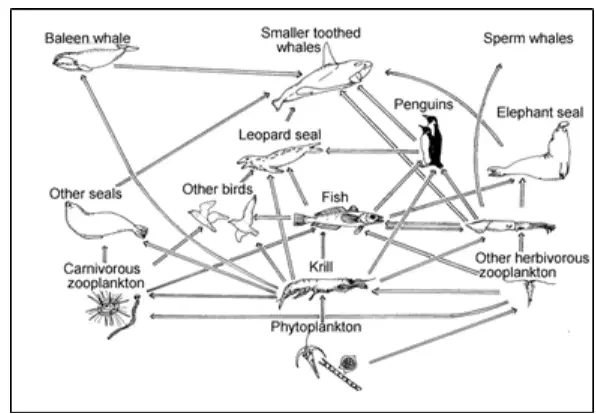
The diagram above is known as a
habitat
food chain
food web
food net
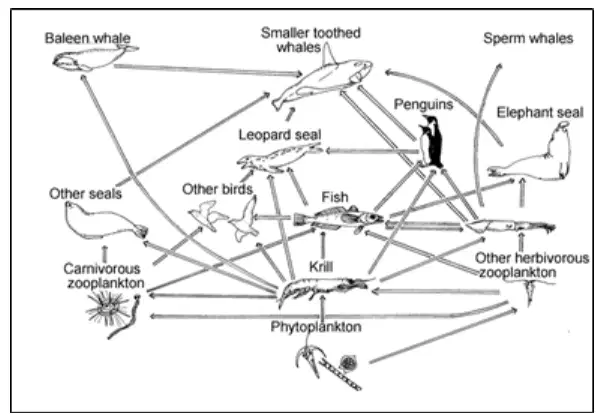
The photosynthetic phytoplankton are
producers
consumers
parasites
decomposers

Leopard seals are
producers
omnivores
herbivores
carnivores
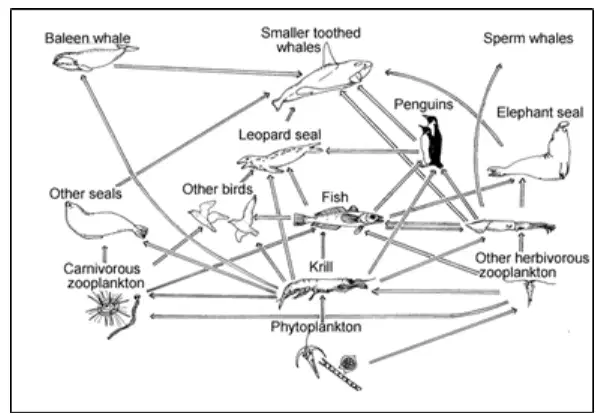
Which of the following is a tertiary consumer?
phytoplankton
krill
elephant seal
zooplankton
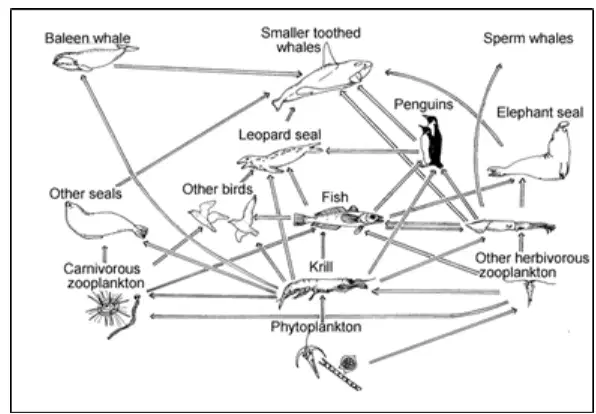
How many communities are shown in the diagram above?
1
4
13
0

Which trophic level would have the largest population size?
A
B
C
D
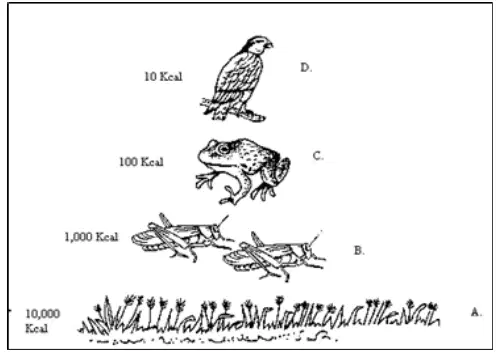
Level "B" is made up of
carnivores
omnivores
producers
herbivores
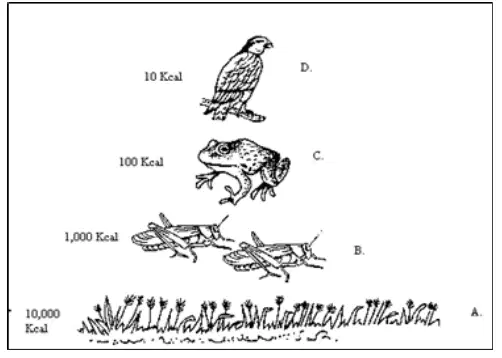
How much energy is available to organisms at level "C"
all of the energy at level "A" plus the energy at level "B"
all of the energy at level "A" minus the energy at level "B"
10 percent of the energy at level "B"
90 percent of the energy at level "B"

During which of the following years was the rabbit population at its largest size?
Year 5
Year 12
Year 32
Year 3
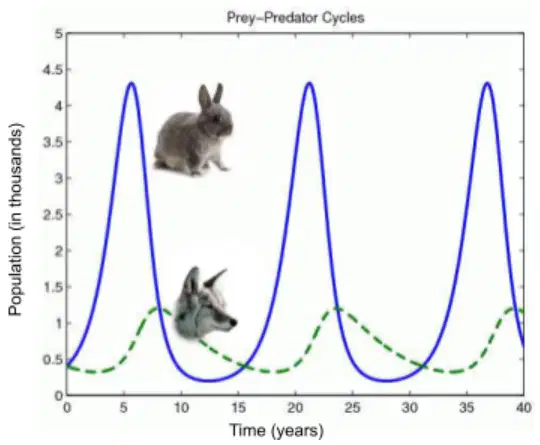
How many wolves were present in year 5?
1000
500
3000
4.5
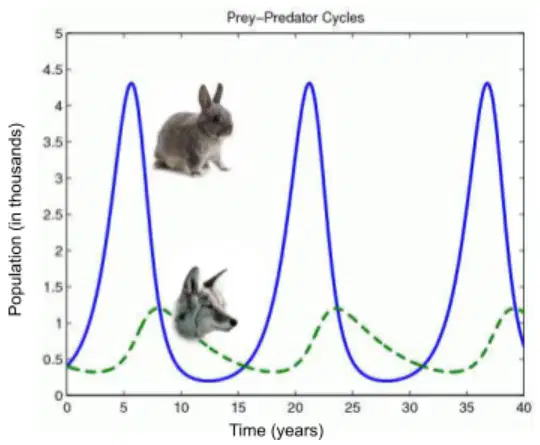
According to this graph, how do the changes in the population of the rabbit affect the changes in the population of the wolves?
When the rabbit population increases, the wolf population increases in the following years.
When the rabbit population increases, the wolf population decreases in the following years.
The rabbit and wolf population sizes are independent (unrelated to) of each other.
When the rabbit population decreases, the wolf population increases in the following years.
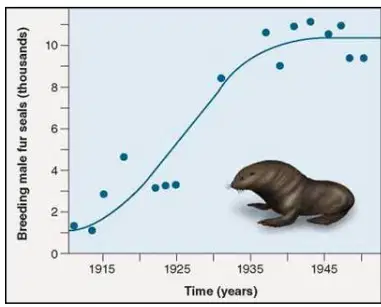
The leveling off the population shown in the graph means
A population of seals can never rise above 10,000
After 1945 days no seals were born or died
There were only enough resources in this habitat to support 10,000 male fur seals
After 1940, the population of seals did not go below 10,000
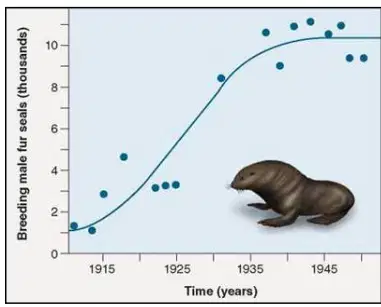
Use the graph on the right to answer the following questions. The point at which the population growth levels off is called the
carrying capacity
maxing capacity
exponential growth
limiting factor
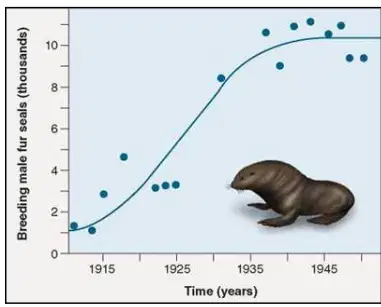
Use the graph on the right to answer the following questions. A hurricane washes away the habitat of the fur seals. The hurricane is a limiting factor that is
a. biotic; density dependent
b. abiotic; density independent
c. biotic; density independent
d. abiotic; density dependent
A bacterial infection causes many of the fur seals to die. The bacterial infection is a limiting factor that is
biotic; density dependent
abiotic; density independent
biotic; density independent
abiotic; density dependent
What structure do all cells have that controls what enters and leaves the cell?
Cell wall
Cell membrane
Nucleus
Ribosomes
What organelle is responsible for energy production in eukaryotic cells?
Nucleus
Membrane
Mitochondria
ribosome
Where is the DNA found in an Eukaryotic cell?
Cell Membrane
Mitochondria
Nucleus
Chloroplast
Which organelle gives plant cells their green color?
Mitochondria
Chloroplast
Cell Membrane
Cell Wall
Which organelle gives plant cells their structure?
Cell Wall
Cell membrane
Chloroplast
Mitochondria

Which student identified a bacteria cell?
Student 1
Student 2
Student 3
None of them
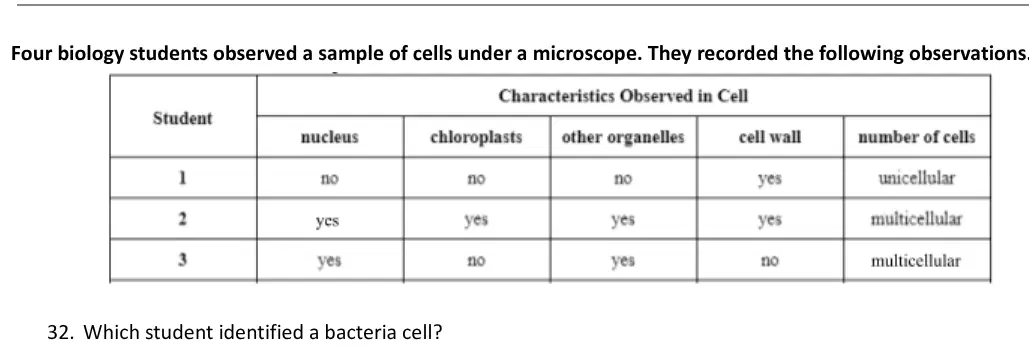
Which student identified a plant cell?
Student 1
Student 2
Student 3
None of them
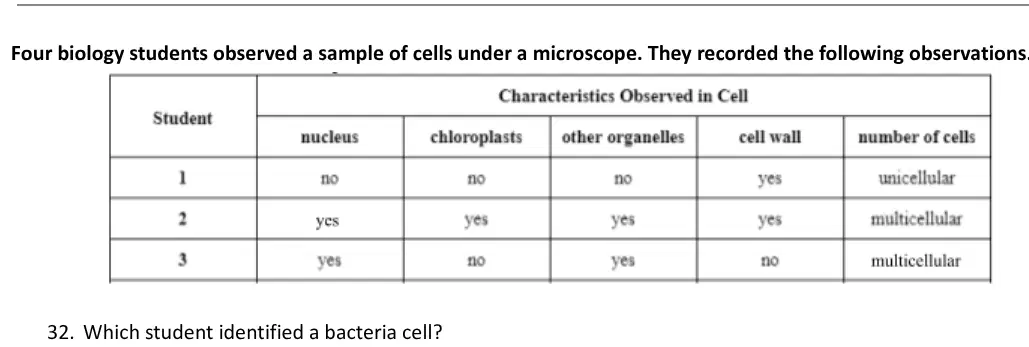
Which student identified an animal cell?
Student 1
Student 2
Student 3
None of them
The most basic unit of life:
Tissues
Cells
Organs
Organ Systems
Groups of similar cells that work together to perform a specific function:
Tissues
Cells
Organs
Organ Systems
Different types of tissues working together to carry out a particular job:
Tissues
Cells
Organs
Organ Systems
Which of the following shows the correct order from smallest to largest level of organization?
Organ system → Organ → Tissue → Cell → Organism
Cell → Tissue → Organ → Organ system → Organism
Organism → Organ system → Organ → Tissue → Cell
Tissue → Cell → Organ → Organ system → Organism
The lungs work together with the trachea, diaphragm, and other structures to bring oxygen into the body. This is an example of a(n):
Tissue
Organ
Cells
Organ System
Autotrophs are organisms that
produce food using sunlight
survive without energy
do not need cellular respiration
consume other organisms for energy
Heterotrophs are organisms that
produce food using sunlight
survive without energy
do not need cellular respiration
consume other organisms for energy
Photosynthesis and cellular respiration form a cycle of matter because:
the products of one process are the starting material (reactants) for the other
oxygen, the product of cellular respiration, is the starting material for photosynthesis
carbon dioxide, the product of photosynthesis, is the starting material for cellular respiration
both photosynthesis and cellular respiration use the same starting materials
What is the goal of photosynthesis?
to transform the chemical energy of glucose to the energy of ATP
to transform the energy of ATP to the light energy of the sun
to transform the light energy of the sun to the energy of ATP
to transform the light energy of the sun to the chemical energy of glucose
Photosynthesis requires each of the following EXCEPT
light
carbon dioxide
water
oxygen
The organelle where photosynthesis takes place is the
mitochondria
nucleus
stomata
chloroplasts
What is the pigment responsible for absorbing the light energy for photosynthesis?
chloroplast
chlorophyll
catalyst
chloroform
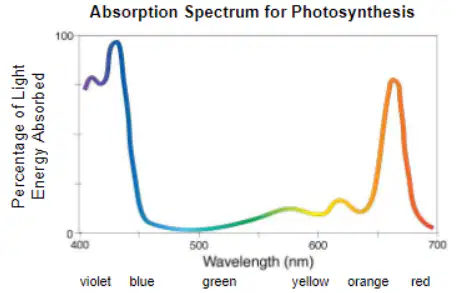
What wavelength of light is absorbed the most for photosynthesis?
410 nm
430 nm
500 nm
660 nm
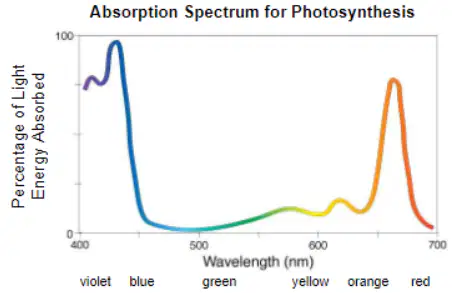
Leaves appear green because
blue light is mostly absorbed by chlorophyll
green light is mostly absorbed by chlorophyll
red light is mostly absorbed by chlorophyll
green light is mostly reflected by chlorophyll

A student measured the growth of peanut plants under four different colors of light. The plants were provided the same amount of fertilizer, water and time under the lamps. Light Color | Growth of Peanut Plants (cm) A | 66 B | 58 C | 9 D | 60 49. What is the independent variable in this experiment?
light color
plant growth
type of plant
amount of time

What is the dependent variable in this experiment?
light color
plant growth
type of plant
amount of time

Which of the following is NOT a constant in this experiment?
plant growth
amount of water
type of plant grown
amount of time

Based on the student's data, which light color is most likely blue?
A
B
C
D

Based on the student's data, which light color is most likely green?
A
B
C
D
Which of the following is an acceptable justification for the data above?
green light is highly absorbed and therefore produces a high rate of photosynthesis and plant growth
green light is highly reflected and therefore produces a high rate of photosynthesis and plant growth
green light is highly absorbed and therefore produces a low rate of photosynthesis and plant growth
green light is highly reflected and therefore produces a low rate of photosynthesis and plant growth

The graphs below show the effect of light (1) and the effect of temperature (2) on the rate of photosynthesis. Graph 1 shows that the rate of photosynthesis:
decreased in response to increasing light intensity
increases in response to increasing light intensity
increases in response to decreasing light intensity
is unaffected by changes in light intensity
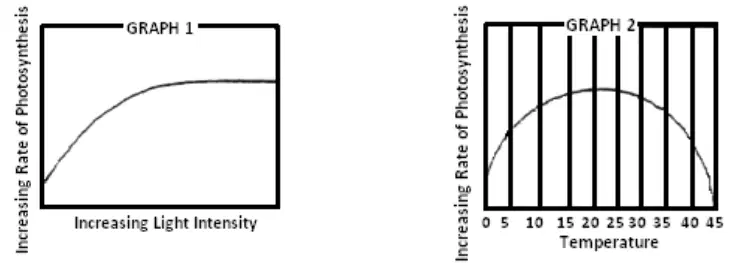
Graph 2 shows that the temperature with the highest rate of photosynthesis is
45°C
5°C
20°C
30°C
What types of organisms must carry out cellular respiration for survival?
animals only
all organisms except autotrophs
all heterotrophs
all living organisms
Cellular respiration is an important process because it creates ______, the only form of energy the cell can use.
ATP
sugar
DNA
Fat
The organelle where cellular respiration takes place is the
mitochondria
nucleus
stomata
chloroplasts
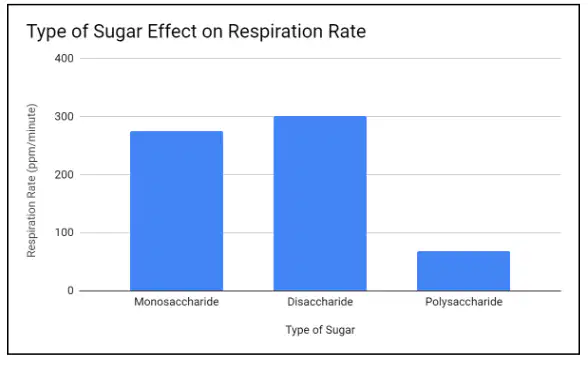
A group of students designed an investigation to find out which type of sugar was best for cellular respiration. They tested a monosaccharide, a disaccharide, and a polysaccharide. The students mixed 1 mL of yeast with 1 mL of sugar solution. They used a gas sensor to measure the amount of gas given off over 10 minutes and calculated the rate of respiration. Their data is shown in the graph shown. What is the independent variable for this experiment?
time
respiration rate
type of sugar
amount of yeast
What is the dependent variable in this experiment?
time
respiration rate
type of sugar
amount of yeast
The rate of cellular respiration was calculated by measuring the amount of gas given off by the yeast in 10 minutes. What was that gas?
Oxygen because it is a product of cellular respiration
Carbon dioxide because it is a product of cellular respiration
Oxygen because it is used in cellular respiration
Carbon dioxide because it is used in cellular respiration
Which of the following is true about sugar molecules?
Carbohydrates bond together to make sugars.
Monosaccharides are made up of many polysaccharide molecules.
Two monosaccharides bond together to make a disaccharide.
Polysaccharides consist of two disaccharide molecules.
Which of the following is the most appropriate claim for the guiding question in this experiment?
Monosaccharides produced the most gas during cellular respiration.
Disaccharides are the largest sugars.
Glucose is used in cellular respiration.
Disaccharides produced the highest rate of cellular respiration in yeast.
Which of the following best explains the results of this experiment?
The polysaccharide had the lowest rate of respiration because it takes too long to break down.
The disaccharide provides more sugar molecules than the monosaccharide and therefore produces a higher rate of cellular respiration.
All sugars are used equally in cellular respiration.
Statements A and B are both true.
The yeast in the experiment are performing anaerobic respiration. Anaerobic respiration differs from aerobic cellular respiration in that
requires oxygen
produces more ATP
does not require oxygen
happens only in animals
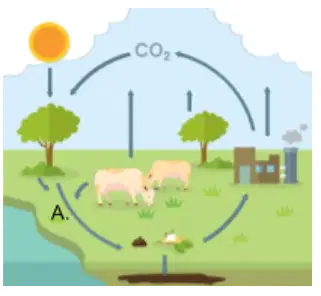
What is the name of the process labeled A that moves carbon to the soil?
Cellular respiration
Combustion
Photosynthesis
Decomposition
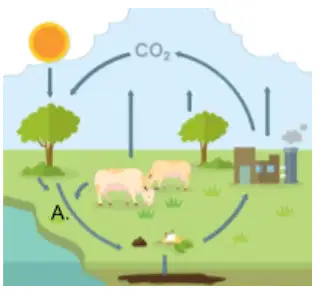
What process moves carbon (CO2) from the atmosphere into living things?
Cellular respiration
Combustion
Photosynthesis
Decomposition

The diagram traces the flow of energy in an ecosystem. Each ARROW refers to a PROCESS that occurs. Each BOX refers to a FORM OF ENERGY. Match the terms to their correct position in the diagram above.
ATP
D
Cellular respiration
C
Glucose
B
Photosynthesis
A

What kind of organisms perform process A?
autotrophs
heterotrophs
decomposers
all organisms

What kind of organisms perform process C?
autotrophs
heterotrophs
decomposers
all organisms
Homeostasis in the human body can best be described as:
The body's attempt to maintain a constant or stable internal environment.
A constant state of being maintained by living and nonliving organisms.
Bodily adaptations evolved over time to changes in the external environment.
Processes that occur as a result of diseases and trauma.
How does your body maintain a constant temperature when it is cold outside?
The kidneys and bladder remove excess water from the body
The muscles start shaking
Skin cells sweat to evaporate water from the body
The liver releases more sugar into the bloodstream
How does your body maintain a constant water level when you drink too much water?
The kidneys and bladder remove excess water from the body
The muscles start shaking
Skin cells sweat to evaporate water from the body
The liver releases more sugar into the bloodstream

Which graph correctly shows how your body maintains normal blood sugar levels?
A
B
C
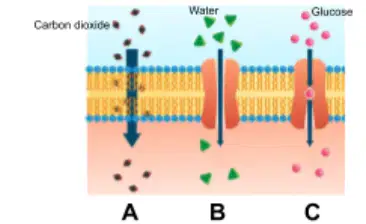
What structure is illustrated on the right?
mitochondria
cell membrane
nucleus
cell wall
The structures labeled B, D, and E are
lipids
carbohydrates
proteins
nucleic acids
The ability of this structure to allow only certain molecules to pass in or out of the cell is known as
facilitated diffusion
selective permeability
osmosis
active transport
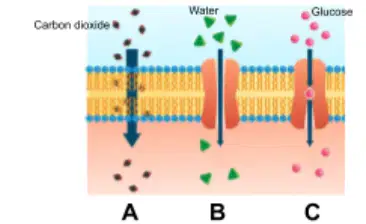
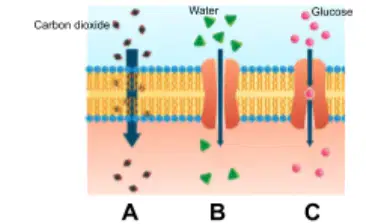
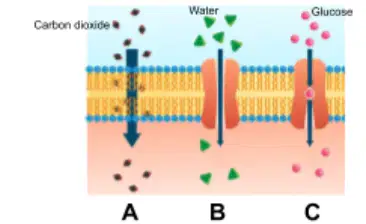
In each of these processes, molecules move from
High concentration to low concentration
Hypertonic concentration to a hypotonic concentration
Low concentration to high concentration
Equal concentration to different concentration
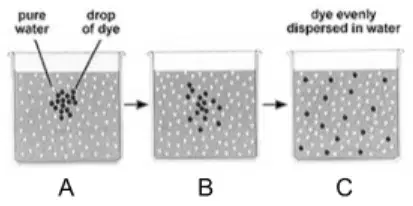
Which of the beakers above illustrates equilibrium?
Beaker A
Beaker B
Beaker C
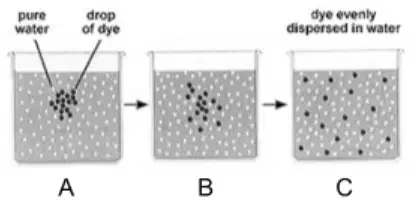
The dye and the water create a solution. The dye is dissolved in the water and represents what part of the solution?
solute
solvent
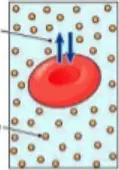
Which picture shows a cell in a hypertonic solution?
(Red blood cell with water leaving)
(Red blood cell with water entering)
(Red blood cell with no net movement)
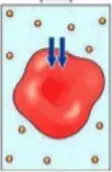
Which picture shows a cell in a hypotonic solution?
(Red blood cell with water leaving)
(Red blood cell with water entering)
(Red blood cell with no net movement)
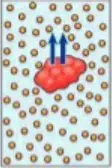
Which picture shows a cell in an isotonic solution?
A. (Red blood cell with water leaving)
B. (Red blood cell with water entering)
C. (Red blood cell with no net movement)
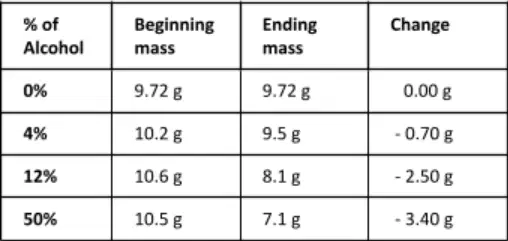
A student filled model cells made of dialysis tubing with 10 mL of distilled water and placed them in 100 mL of alcohol solutions with increasing concentrations of alcohol. Alcohol is a solute and the model cell is impermeable to the alcohol. The student weighed the model cells, soaked them in the alcohol solutions for 24 hours, and weighed the cells again. She recorded her data in the table below. What is the independent variable of this experiment?
alcohol concentration
amount of time
dialysis tubing
water content
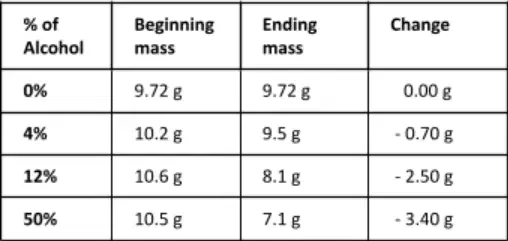
A student filled model cells made of dialysis tubing with 10 mL of distilled water and placed them in 100 mL of alcohol solutions with increasing concentrations of alcohol. Alcohol is a solute and the model cell is impermeable to the alcohol. The student weighed the model cells, soaked them in the alcohol solutions for 24 hours, and weighed the cells again. She recorded her data in the table below. What is the control trial in this experiment?
water content of cells
the 0% alcohol solution
time
10 mL of water in each cell

A student filled model cells made of dialysis tubing with 10 mL of distilled water and placed them in 100 mL of alcohol solutions with increasing concentrations of alcohol. Alcohol is a solute and the model cell is impermeable to the alcohol. The student weighed the model cells, soaked them in the alcohol solutions for 24 hours, and weighed the cells again. She recorded her data in the table below. Which of the following is a true statement?
The mass of the cell changed because alcohol moved into the bag
The mass of the cell changed because alcohol moved out of the bag
The mass of the cell changed because water moved into the bag
The mass of the cell changed because water moved out of the bag
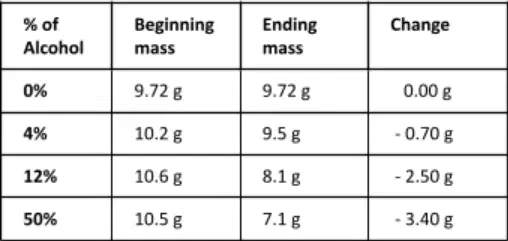
A student filled model cells made of dialysis tubing with 10 mL of distilled water and placed them in 100 mL of alcohol solutions with increasing concentrations of alcohol. Alcohol is a solute and the model cell is impermeable to the alcohol. The student weighed the model cells, soaked them in the alcohol solutions for 24 hours, and weighed the cells again. She recorded her data in the table below. Which of the following would be the most appropriate claim based on this experiment?
As the concentration of alcohol increases, the water content of a cell decreases.
As the concentration of alcohol increases, the water content of a cell increases.
As the weight of the cell decreases, the alcohol concentration increases.
As the weight of the cell decreases, the alcohol concentration decreases.
The diffusion of water is called
active transport
osmosis
facilitated diffusion
protein pump
Which of the following correctly explains why this occurred?
The concentration of water was higher inside the bag than outside the bag.
The concentration of water was lower inside the bag than outside the bag.
The concentration of alcohol was higher inside the bag than outside the bag.
The concentration of water and alcohol was equal inside and outside the bag.

