
 Worksheets
Printing and Publication Design
Total questions: 25
Worksheet time: 13mins
Who is credited with inventing the movable-type printing press in Europe around 1440?
William Caxton
Johannes Gutenberg
Bi Sheng
Aldus Manutius
The earliest known form of movable-type printing originated in which country?
India
Egypt
China
Persia
Which was the book that was printed for the very first time?
The Canterbury Tales
Gone With Wind
The Bible
Music of the Gods
Which printing principle relies on the image area being raised above the non-image area?
Planography
Gravure
Relief
Stencil
Lithography is based on which fundamental principle?
Oil and water immiscibility
Ink viscosity differences
Electrostatic attraction
Capillary action
In gravure printing, the image is formed by:
Wooden surfaces pressed onto the substrate
the Doctor Blade that removes excess ink
Ink-filled recessed designs etched into a rotary plate
Digital processes
Which principle is used in screen printing?
Relief
Planography
Gravure
Stencil
Which of these printing methods are used on fabric?
Screen Printing
Planography
Linoleum Printing
Relief Printing
Letterpress printing is a form of:
Gravure
Planography
Relief
Stencil
Aniline Printing was primarily used for printing on:
High-quality art books
Flexible packaging and labels
Currency notes
Ceramic tiles
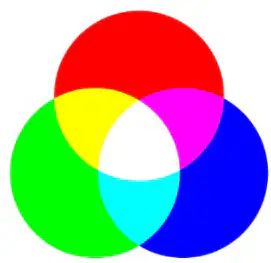
The picture shows the ____ Colour model
Subtractive
Monochrome
Additive
Pantone
Which printing method is best suited for short-run, on-demand, variable-data jobs?
Gravure
Offset
Letterpress
Digital printing
Choose the odd one out:
Magenta
Cyan
Red
Brown
Choose the element that does not belong
A) Squeegee
B) Mesh
C) Doctor Blade
D) Photo-emulsion
In screen printing, the mesh refers to:
Number of squeegee passes
The screen fabric
Ink viscosity level
Number of colours in the design
The standard four-colour printing process uses which set of inks?
Red, Green, Blue, Black
Cyan, Magenta, Yellow, Black
Red, Yellow, Blue, White
Cyan, Red, Yellow, Black
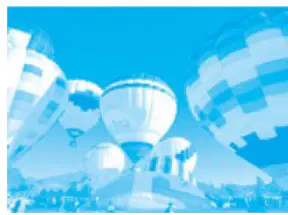
In the picture, according to the subtractive colour model, the two colours that have been reflected and the one absorbed are ___, ____ and ___
Red, Blue and Yellow
Green, Blue and Red
Magenta, Yellow and Black
Blue, Yellow and green
Colour separation is the process of:
Mixing inks manually
Dividing a full-colour image into its CMYK components
Calibrating monitor colours
Removing colour casts from photos
Which term describes adjusting images to ensure accurate colour reproduction on press?
Rasterizing
Proofing
Colour correction
Screening
Digital printing allows economical print runs of just 1 copy.
True
False
In digital printing, "VDP" stands for:
Variable Data Printing
Very Detailed Print
Virtual Design Process
Verified Document Production
Which colour model is used for on-screen displays like monitors, TVs, and smartphones?
CMYK
Pantone
RGB
RYB
In the CMYK colour model, what does the "K" stand for?
Khaki
Key
Cyan
Kraft
What happens when you mix 100% Cyan and 100% Yellow ink in CMYK printing?
Red
Blue
Green
Purple
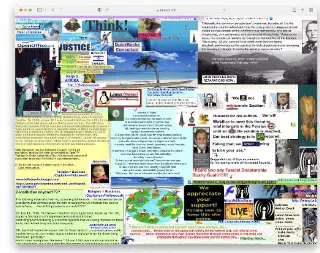
In this layout of a website, what are the elements that need to be changed?
Reduce the information
Add Margin space
Improve Visual Hierarchy
All of the above

