
 Worksheets
1st Semester Biology Review
Total questions: 52
Worksheet time: 1hrs 12mins
_______________ are the monomers of carbohydrates.
Monosaccharides
Polymers
Complex sugars
Fructose
The monomer of proteins is...
Polymers
Monosaccharides
Fatty Acids
Amino Acids
What is the main function of the cell membrane in animal cells?
Store energy for the cell
Produce hormones for the body
Regulate the movement of substances in and out of the cell, and provide structural support and protection
Help the cell move and travel

Identify the structure that is labeled "C" in the image.
(Hint: An organelle that captures energy from the sunlight in order to use it to produce food in plant cells)
central vacuole
nucleus
chloroplast
mitochondria
cell membrane
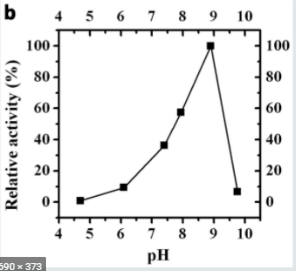
What is the optimal pH for this enzyme?
6
10
9
7
Enzymes are _______________ that _____________________ chemical reactions by ____________ the amount of activation energy required to start the reaction.
carbohydrates, slow down, lowering
proteins, speed up, increasing
lipids, speed up, lowering
proteins, speed up, lowering
Cell membranes are described as selectively permeable.
Four students were asked to explain what this means. Which one is correct?
Student 1: Cell membranes prevent all materials from entering the cell.
Student 2: Cell membranes only provide structural support for the cell.
Student 3: Cell membranes regulate which substances can enter and exit the cell.
Student 4: Cell membranes allow water and water-soluble substances to enter the cell.
The movement of molecules from an area of high concentration to an area of low concentration is
Diffusion
Passive Transport
Osmosis
All of the above

This red blood cell swell and burst in a ....solution
hypotonic
isotonic
elektronic
hypertonic


This is the equation is for? 6Co2 + 6H2O ----> C6 H12 O6 6O2
photosynthesis
cellular respiration
What is the overall purpose of photosynthesis?
To convert sunlight, water, and carbon dioxide into glucose (energy) and oxygen.
To convert moonlight, water, and oxygen into glucose (energy) and carbon dioxide.
To convert sunlight, oxygen, and glucose into water and carbon dioxide.
To convert sunlight, water, and carbon dioxide into ATP and carbon dioxide.
Cellular Respiration takes place in the
Mitochondria
Chloroplast
Granules
Nucleus

The process of DNA replication is called semi-conservative because it creates what?
none of these
two DNA molecules, one with two original strands and one with two new strands
two identical molecules, each with two new strands
two identical molecules, each with one original strand and one new strand.


The molecule pictured is a building block of _______.
a lipid

AATCATGGA

The picture below shows the steps of DNA replication beginning with step one and ending with step three.
Because you are reusing the old, or parent, DNA strand DNA replication is said to be
Semi- Conservative
Semi-discontinuous
Continuous
Fully-Conserveative
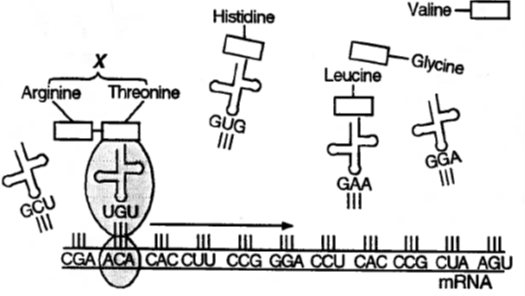

What process is happening in the diagram?
transcription
translation
dna replication
mitosis
The main function of mRNA is to
Copy DNA in the nucleus and carries the information to the ribosomes
Bring amino acids from the cytoplasm to the ribosomes
String together complementary RNA and DNA strands
Form a portion of ribosomes

What type of mutation is shown in the diagram?
alteration
deletion
insertion
rearrangement
What type of gene mutation has occurred here?
T-G-A-C-C-A
T-G-A-C-C-A-A
Rearrangement
Deletion
Insertion
Alteration
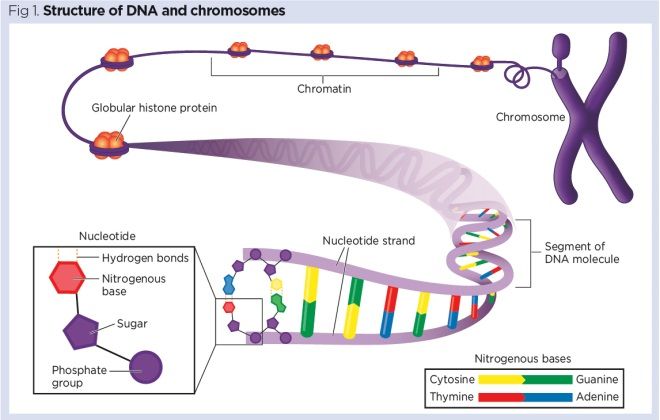
The portion or segment of the DNA strand that codes for a particular protein is called a _____________________.
gene
chromosome
codon
anticodon

Mutations that effect gametes and that will be passed on
to the next generation
Genetic change
Protein synthesis
Apoptosis
Cell membrane

Failure of homologous chromosomes
to separate during meiosis.
Results in gametes with either one extra or one missing chromosome.
Translocation
Nondisjunction
Replication
Transcription

Which suspect left the blood stain?
Bob
Sue
John
Lisa
A gene found in naturally occurring soil bacterium, Bacillus thuringiensis (Bt), contains a protein that kills certain insects. Scientists have genetically modified certain organisms such as corn, potatoes, and cotton by introducing the Bt gene into their DNA in order for these plants to have this desired trait. Which describes a benefit of this technology?
Farmers can produce more nutritional crops.
Farmers can use less insecticides on their crops.
Farmers can reduce the amount of fertilizers they apply to the soil for their crops.
Farmers can reduce the amount of land needed to grow their crops.
What is the primary reason for using gene editing techniques to modify crops?
To make the crops grow faster.
To make the crops taste better.
To make the crops resistant to pests and diseases.
To change the color of the crops.
What is the main difference between mitosis and meiosis?
Mitosis results in four identical daughter cells, while meiosis results in two non-identical daughter cells with half the number of chromosomes.
Mitosis results in two identical daughter cells, while meiosis results in four non-identical daughter cells with half the number of chromosomes.
Mitosis results in two non-identical daughter cells, while meiosis results in four identical daughter cells with double the number of chromosomes.
Mitosis results in four non-identical daughter cells, while meiosis results in two identical daughter cells with the same number of chromosomes.
What is the significance of mitosis in somatic (body) cells?
Mitosis results in the production of gametes for sexual reproduction.
Mitosis is responsible for growth, repair, and general maintenance of the body.
Mitosis increases the genetic diversity in the body cells.
Mitosis has no role in body cells.

The process on the right is:
Right: meiosis
Right: cloning
Right: meiosis
Right: mitosis


What is a possible result of non-disjunction?
Increased intelligence
Cancer
Cells break apart and are destroyed
Genetic Disorders

What are some advantages of asexual reproduction are: (select all that apply - there are 3)
it only requires one organism
it takes less energy than sexual reproduction
offspring are already well-adapted for the environment
there is a lot of genetic variety
One gene for the type of earlobes a person will have will be in each gamete.
Law of Dominance
Law of Independent Assortment
Law of Segregation
What is a gamete? (Select all that apply)
Haploid
Diploid
Egg cell
Skin cell
Sperm cell


Objective #13
This is a pedigree that follows blue eyes which is a recessive trait. What is the genotype of the mother (circle) in generation 1?
Aa
AA
aa
A?


