
Font size
S
M
L
XL
 Worksheets
Diagnostic Medicine Final Exam Fall 25
Total questions: 55
Worksheet time: 28mins
Name
Class
Date
1.
What does HIPAA stand for?
a)
Health Information Privacy and Authorization Act
b)
Health Insurance Portablility and Accountability Act
c)
Healthcare Information Protection and Accountability Act
d)
Health Insurance Privacy and Authorization Act
2.
When was HIPAA signed into law?
a)
1991
b)
1992
c)
1994
d)
1996
3.
Which of the following is NOT an example of PHI?
a)
Address
b)
Driver's License
c)
High School transcripts
d)
Social Security Number
4.
How long is PHI protected after a person dies?
a)
1 year
b)
10 years
c)
25 years
d)
50 years
5.
Personnel responsible for accurately positioning patients and ensuring quality diagnostic images are produced.
a)
Radiologic technologist
b)
Radiologist
c)
Medical Lab technologist
d)
Robotics engineer
6.
Medical devices that are intended for use outside of a medical facility.
a)
At home testing kit
b)
Portable diagnostic equipment
7.
Select all the answer choices that are examples of a portable diagnostic device.
a)
Pulse Oximeter
b)
Thermometer
c)
Pregnancy Test
d)
Glucometer
8.
What is the most common cause of inaccurate results when using a portable diagnostic equipment?
a)
Batteries are dead
b)
User Error
c)
Device is broken
d)
Device is expired
9.
Who discovered X-rays for medical use?
a)
Wilhelm Roentgen
b)
Willem Einthoven
c)
Rene Laennec
d)
Frederick Hopkins
10.
What has replaced invasive exploratory surgeries?
a)
PET scans
b)
Advanced diagnostic imaging
c)
Robotics
d)
CT angiography
11.
All of the following are limitations of telemedicine EXCEPT
a)
Technical difficulties
b)
Concerns about HIPAA compliance
c)
Reduced travel time for patients
d)
May not be covered by insurance
12.
Antibiotics are used to treat which of the following
a)
Viruses
b)
Bacteria
c)
Fungi
13.
The smallest microbe
a)
Bacteria
b)
Viruses
c)
Spores
d)
Parasites
14.
Prevents reinfection of the patient
a)
Universal Precautions
b)
Medical Asepsis
c)
Surgical Asepsis
d)
Disinfection
15.
Disinfectant agents are meant to be used on human skin
a)
True
b)
False
16.
Infections that patients get while receiving medical care
a)
Healthcare associated infections
b)
Healthcare aquired infections
17.
Which of the following is the correct order of donning.
a)
Hand hygiene, gloves, gown, mask, goggles
b)
Hand hygiene, gown, mask, gloves, googles
c)
Hand hygiene, goggles, gown, mask, gloves
d)
Hand hygiene, gown, mask, goggles, gloves
18.
Which of the following is the correct order of doffing
a)
Mask, goggles, gown, gloves, hand hygiene
b)
Goggles, gloves, mask, gown, hand hygiene
c)
Gloves, goggles, gown, mask, hand hygiene
d)
Gown, gloves, goggles, mask, hand hygiene
19.
Safe disposal of human waste, access to clean drinking water, and proper management of industrial or hazardous materials.
a)
Disinfection
b)
Universal Precautions
c)
Sanitation
d)
Sterilization
20.
Which of the following requires a host (select all the correct answers).
a)
Bacteria
b)
Viruses
c)
Parasites
d)
Fungi
21.
Which plane divides the body into front and back sections?
a)
Sagittal plane
b)
Frontal plane
c)
Transverse plane
d)
Coronal plane
22.
What term describes body parts located near the middle or midline of the body?
a)
Lateral
b)
Medial
c)
Proximal
d)
Distal
23.
What term is used to describe lying face down?
a)
Supine
b)
Prone
c)
Lateral
d)
Medial
24.
Which term describes body parts located away from the midline or middle of the body?
a)
Medial
b)
Lateral
c)
Proximal
d)
Distal
25.
The shoulders are ________ to the spine.
a)
Medial
b)
Lateral
c)
Anterior
d)
Posterior
26.
Film x-rays can be magnified
a)
True
b)
False
27.
Imaging that allows providers to see processes in real time.
a)
X-ray
b)
CT
c)
MRI
d)
Fluroscopy
28.
What setting is C-arm most commonly used?
a)
Emergency room
b)
Operating room
c)
Imaging center
d)
Patient room
29.
What type of apron is worn to protect against ionizing radiation?
a)
Cooking apron
b)
Lead apron
c)
Steel apron
d)
Dissection apron
30.
Which of the following radiologic tests is the safest?
a)
MRI
b)
Mammogram
c)
CT
d)
Ultrasound
31.
Materials dense enough to resist x-rays shining through them.
a)
Radiolucent
b)
Radiopaque
32.
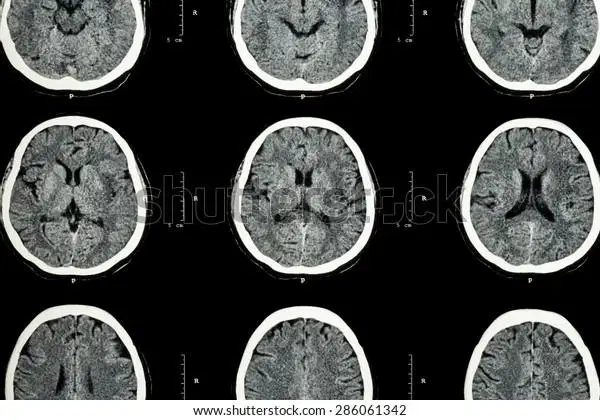
Identify the type of imaging
a)
CT
b)
MRI
c)
X-ray
d)
Fluoroscopy
33.
Dysphagia means
a)
Difficulty breathing
b)
Difficulty speaking
c)
Diffculty swallowing
d)
Difficulty writing
34.
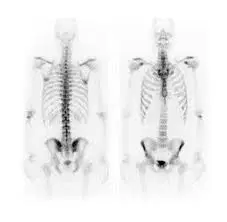
What type of radiology is pictured below?
a)
X-ray
b)
PET Scan
c)
CT
d)
Bone Scan
35.
What portion of the retina allows you to see color?
a)
Cones
b)
Rods
c)
Macula
d)
Optic disc
36.
The inner layer of the eye contains
a)
Sclera
b)
Cornea
c)
Retina
d)
Pupil
37.
The mucous membrane that covers the surface of the eye and lines the eyelids.
a)
Cornea
b)
Conjunctiva
c)
Iris
d)
Sclera
38.
The window of the eye
a)
Cornea
b)
Conjunctiva
c)
Pupil
d)
Lens
39.
Which of the following is NOT a function of the cardiovascular system?
a)
Gas exchange
b)
Maintaining homeostatic balance
c)
Absorption of nutrients
d)
Pumping blood to the body's tissues
40.
Which circuit pumps blood to and from the lungs?
a)
Pulmonary circuit
b)
Systemic circuit
41.
Which vessel carries blood away from the heart?
a)
arteries
b)
veins
c)
capillaries
42.
Name the right AV valve
a)
Mitral valve
b)
Tricupsid valve
43.
Which side of the heart is more muscular?
a)
Right
b)
Left
44.
Tendinous fibers that attach to the AV valves.
a)
Papillary muscles
b)
Trabeculae carneae
c)
Chordae tendineae
d)
Pectinate muscle
45.
Contains hemoglobin
a)
Platelets
b)
White blood cells
c)
Plasma
d)
Red Blood Cells
46.
What is the primary function of platelets?
a)
To carry oxygen
b)
Fight infections
c)
Blood clotting
d)
Transport hormones
47.
The natural pacemaker of the heart
a)
AV node
b)
SA node
c)
Bundle of His
d)
Purkinje fibers
48.
Veins contain __________ that help prevent backflow of blood during lower pressures.
a)
Cilia
b)
Valves
c)
Alveoli
d)
Septa
49.
Which layer of the blood vessel is first affected in atherosclerosis?
a)
Tunica Intima
b)
Tunica Media
c)
Tunica Externa
d)
Tunica Adventitia
50.
Which component of blood is a straw-colored liquid containing water, proteins, and electrolytes?
a)
Plasma
b)
Platelets
c)
White Blood Cells
d)
Red Blood Cells
51.
In radiology positioning deals with
a)
The patient
b)
The equipment
52.

Name the type of image below
a)
x-ray
b)
MRI
c)
CT
d)
Fluoroscopy
53.

Name the condition of the eye in the picture below.
a)
Conjunctivitis
b)
Blepharitis
c)
Cateracts
d)
Glaucoma
54.

Identify the type of imaging in the picture
a)
x-ray
b)
CT
c)
MRI
d)
Ultrasound
55.
The term subjective best describes
a)
Signs
b)
Symptoms
Reset

