
 Worksheets
Practice Questions 2025
Total questions: 72
Worksheet time: 36mins
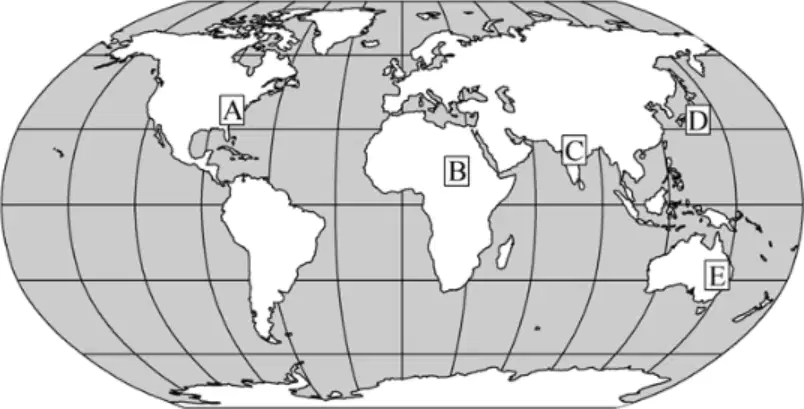
On the map above, which one of the following boxes is in an area where the population density is high and the level of economic development is low?
A
B
C
D
E
According to the theory of environmental determinism, which of the following areas would have the most productive settlements?
Tropical regions
Temperate regions
Mountainous regions
Arctic regions
Arid regions
A country at the end of the demographic transition usually has which of the following?
High birth and low death rates
A high infant mortality rate
A high crude birth rate
Low birth and death rates
High population density
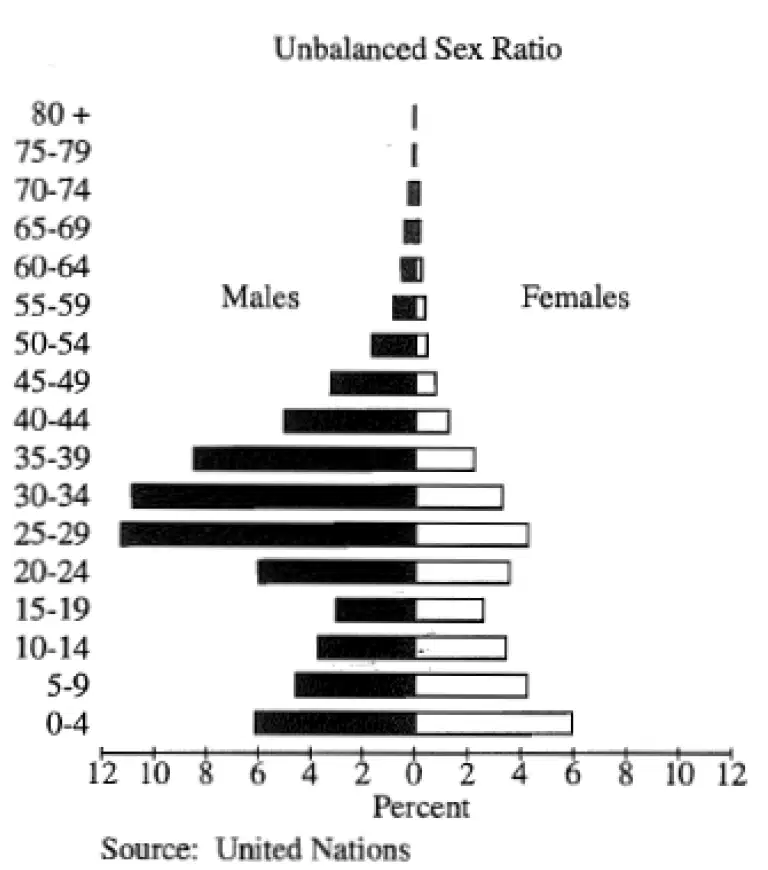
The sex ratio represented in the age-sex graph above for Country X is most likely the result of
high infant mortality
undercounting of females
an epidemic with high mortality
a period of war
a large guest-worker population
A country in the first stage of the demographic transition demonstrates which of the following?
An old population age structure
High birth rates, but low death rates
Low birth rates, low death rates, and low rates of population growth
High birth rates, high death rates, and low rates of population growth
High birth rates, high death rates, and high rates of population growth
A formal region defines an area in which
a core dominates its surrounding hinterland
a transportation network links different types of land use
there is uniformity in one or more physical or human characteristics
there are significant geographic variations in physical or human characteristics
a unified government system has been established
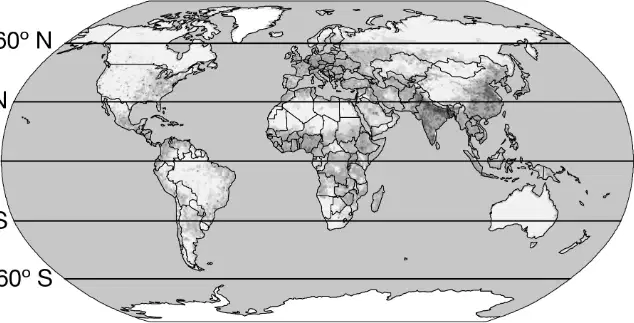
The map shows the number of people per unit of land. Which of the following types of data are shown in the map?
Arithmetic density
Physiological density
Agricultural density
Urban density
Suburban density
An ethnic neighborhood is best described as which of the following?
An involuntary community where people with similar values reside
A rural community where people with similar backgrounds are required to live
A voluntary urban community where people of similar origin reside
An area in the inner city where certain groups are forced to live
A city neighborhood that is undergoing population change due to immigration
Assuming a world population of 5,700,000,000 and an annual growth rate of 1.6 percent, how many people will be added to the world's population in the next year?
912,000
9,120,000
91,200,000
912,000,000
9,120,000,000
There has been an increase in asylum seekers from Syria to the European Union in recent years. Which of the following best describes the reason for this migration?
A large rural-to-urban population shift within Syria
A continuing rise in employment for asylum seekers in the European Union
A continuing issue of conflict and political unrest within Syria
The tightening of asylum policies by the European Union
The tightening of guest-worker policies by the European Union
Which of the following is the primary assumption of environmental determinism?
Human destiny is controlled by the cultural environment.
The physical environment has little influence on humans.
Humans have complete control over the physical environment.
Many human adaptations are possible within a specific physical environment.
The physical environment controls human culture.
A student who lives in Minneapolis chooses to spend her spring break in Florida rather than in Jamaica because Florida is closer and the plane fare is cheaper. This type of decision-making best illustrates the concept of
human capital
time space compression
intervening opportunities
the rank size rule
central place theory

Based on the data shown (Country, Female Life Expectancy, Male Life Expectancy, Percent Over Age 65 for Germany, Italy, Japan), which of the following describes the most likely population context for the countries listed?
High youth dependency ratio and a lack of economic resources to provide for large families
Rapid population growth in cities as people migrate from rural to urban areas for industrial jobs
Shortage of arable land on which to raise crops and other food products to support the population
Unstable food supply due to a rapidly growing population
Stage five of the demographic transition model due to very low birth rates
The measure of the average number of children who are born to women of childbearing age in the population is called the
actual birth rate
crude birth rate
total fertility rate
adjusted birth rate
net reproduction ratio
Which of the following is a correct statement about the demographic transition model?
It is applicable only to eighteenth-century Europe.
It predicts the growth of population in Russia reasonably well.
It divides the demographic changes of a country into two stages of slow growth and high growth.
It supports the idea that technology can remove or extend the limits of food production.
It is characterized by relatively low growth rates at stage 1 and stage 4.
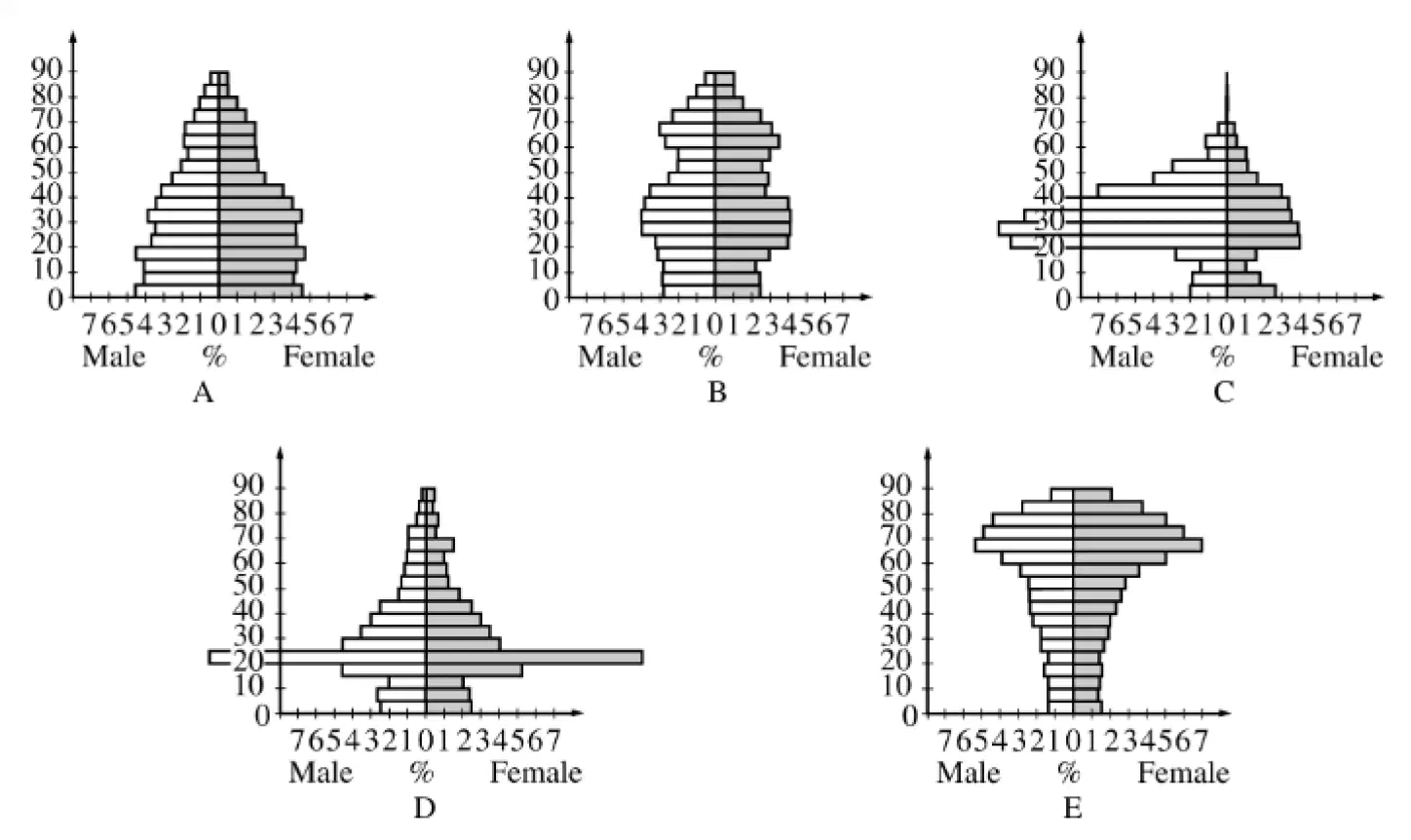
Which population pyramid shown best represents a college town?
A
B
C
D
E

Which population pyramid shown best represents a town with a military base?
A
B
C
D
E
Cultural landscape can be defined as...
the types of art, music, dance, and theater practiced in a particular region
the ways that people in differing cultures perceive the environment
the forms superimposed on the physical environment by the activities of humans
the diversity of distinctive cultures within a particular geographic area
a particular area within a geographic region dedicated to cultural activities
Which of the following is an example of a cultural landscape?
Coastal wetland
Cloud forest
Stand of mangrove trees
Eroded shoreline
Adobe ruins
Country A is a more developed country with a low birth rate, a low total fertility rate, a high life expectancy, and a high percentage of urban population. Based on this information, which of the following outcomes is most likely to occur in Country A?
Guest workers from less developed countries are needed to fill the labor shortages in urban areas.
Falling birth rates and declining youth populations result in an increase in school construction in urban areas.
Pressures on pension and social security programs are at critical levels as the number of elderly increases.
Provincial and national politicians must tailor their political campaigns to appeal to rural voters.
Suburban house construction declines as elderly populations downsize and seek to be closer to urban amenities.
Which of the following groups is most likely to be classified as a dependent in a population pyramid?
female
male
over the age of 15
under the age of 15
receiving adequate medical care
In the nineteenth and early twentieth century, the demographic transition in Europe was best characterized by
a shift in the composition of national populations toward greater ethnic balance
a net population decline resulting from an excess of deaths over births
migration between European countries
large-scale population movements following periods of war or widespread civil unrest
urbanization and falling birth rates

Which of the following statements explains the regional location in the United States where the figures shown in the image are most likely part of the cultural landscape?
The Northeast, because residents are influenced by British Protestantism.
The Southeast, because residents are influenced by traditional religions from West Africa.
The Great Plains, because residents are influenced by Native American traditional religions.
The Southwest, because residents are influenced by Spanish Catholicism.
The Northwest, because residents are influenced by Russian Orthodoxy.
Which statement best describes population growth patterns in the world today?
In the world as a whole, women have an average of five or more children, leading to Malthusian crises.
Fertility rates in low- and middle-income countries worldwide are higher now than 25 years ago.
In the world as a whole, fertility rates have fallen in the last 25 years.
In sub-Saharan Africa, South Asia, and the Pacific, fertility rates have doubled in the last 25 years.
Fertility rates in most high-income countries have risen in the last 25 years.
During the nineteenth and twentieth centuries, which of the following types of intraregional migration was the most prominent worldwide?
Rural to urban
Urban to suburban
Inland to coastal
Highland to lowland
Urban to rural
The nineteenth-century emigration of a large number of Swedes from a particular region of Sweden to Isanti County, Minnesota, as a result of communications from friends and relatives who preceded them there is an example of
brain drain
chain migration
net migration
internal migration
counterurbanization

Refer to the population pyramid for Japan 2019 and the estimated population trends for Japan table. Which of the following best explains a possible limitation of the trends assumed from the population pyramid and estimates in the data table?
A period of war followed by a baby boom, similar to that of the 1940s and 1950s, is likely to occur within a generation, increasing the youth-aged cohorts.
Modernization of health-care systems may result in improvements in women’s health and pregnancy and result in more children being born, increasing the youth-aged cohorts.
Labor shortages may cause the government to reduce the legal barriers to immigration, and immigrant populations could increase the working-age cohorts.
Production efficiencies gained from computerization and robotization of manufacturing may free parents from long work hours and result in more time to have additional children, increasing the youth-aged cohorts.
Decreasing populations may cause an economic decline, prompting many citizens to emigrate to other more developed countries and decreasing the working-age cohorts.

What changes could local governments, businesses, and corporations make to reverse Japan’s national birth patterns?
Decreasing transportation costs to allow workers to commute from locations farther outside of densely populated urban centers
Adding low-cost or zero-cost infant daycare and preschool centers to make larger family sizes more affordable
Reducing the length of maternity leave to incentivize women to return to paid employment
Enforcing a strict antinatalist policy that provides incentives for families to have fewer children
Increasing access to family planning clinics and making doctor’s office visits free for women patients

The likely impact of the numerical change by 2050 of the total population on the eventual shape of Japan’s population pyramid is:
It will become more top-heavy, indicating an aging population.
It will become more bottom-heavy, indicating a younger population.
It will remain unchanged, with a balanced age distribution.
It will show a significant increase in the youth population.
In descriptions of interaction between people and the environment, the term “environmental determinism” implies that
the physical environment exclusively shapes humans and their actions
humans by their actions and technologies alter the physical environment to suit their needs
determination of environmental limitations is a primary task of geographers
capitalist economies do not contribute to global environmental degradation
there exists no interacting relationship between people and their surrounding physical environment
Which of the following is an example of an ethnic religion?
Islam
Mormonism
Buddhism
Judaism
Roman Catholicism
Every map projection has some degree of distortion because
a curved surface cannot be represented on a flat surface without distortion
parallels and meridians never cross at right angles on a globe
the grid system is two-dimensional, while the real world is three-dimensional
Earth is not a perfect sphere
latitude lines are shorter than meridian lines
Which of the following terms best describes regions that make up the political geographic divisions within a country?
Cultural
Perceptual
Vernacular
Physical
Formal
Which of the following is most accurate with regard to food preferences and taboos?
Food preferences are stronger than taboos as seen by the high consumption of beef on the Deccan Plateau.
Food preferences and taboos have little influence on the diet in Arabia and Southeast Asia.
Some foods are avoided for religious or cultural reasons even at the expense of a balanced diet.
Food preferences and taboos show little variability between cultures.
Low hog production in China demonstrates an avoidance of pork by the Chinese.
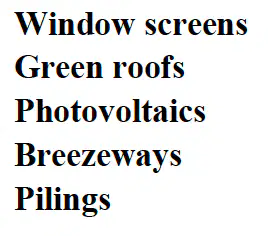
All of the terms listed could be used to illustrate what concept?
Folk cultures responding to physical geography
Diffusion of cultural traits from Asia
Architectural adaptations to the natural environment
Elements of cultural identity
Innovation without diffusion
If four languages have similar words for numbers and the names of fish, but different names for a certain disease, what might be concluded about the time at which the disease first diffused?
The disease spread among a population that later divided and evolved into four different languages.
The population divided and evolved into the four different languages, and then the disease spread.
The disease spread to two different populations that later divided into two different languages.
The disease and language spread to four different regions at the same time at the same rate.
There can be no conclusions drawn about the initial diffusion of the disease based on language.
Which of the following would be most likely to increase life expectancy in a less developed country, resulting in an aging population in that country?
An increase in the country’s birth rate
Rural-to-urban migration within the country
Improvements in transportation and communication networks
Improvements in access to health care and sanitation
A decrease in the country’s total fertility rate
Which factor is most responsible for the increase in Japan’s dependency ratio?
An increase in life expectancy
An increase in the death rate
An increase in the rate of natural increase
A decrease in the doubling time
An increase in the total fertility rate
Latitude and longitude may be used to determine which of the following characteristics of a place?
Its site features
Its absolute location
Its relative location
Its situation
Its elevation
Which of the following map scales would be most useful for studying the details of geographic features in the landscape of a farming community?
1:3,000,000
1:1,000,000
1:750,000
1:125,000
1:10,000
Which of the following characteristics applies to more-developed countries?
Early stages of epidemiological transition
Long life expectancies
High total fertility rates
Rapid population growth
Early stages of the demographic transition
One would expect to find a population with a relatively young age structure in
less developed countries
highly developed countries
countries with a low death rate
countries with a low fertility rate
countries with a high standard of living
Physiological population density differs from crude population density in that physiological density
examines only the population of cities, while crude density includes the population of cities and rural areas
is a measure of how density is perceived, while crude density is a measure of specific density
explains density in terms of people per arable square land unit, while crude density explains density in terms of people per total square land unit
explains the density of a single housing unit while crude density explains the density of a group of
houses
is the number of people per housing unit, while crude density is the number of people per square mile
Physiological population density is viewed as a superior measure of population density for which of the following reasons?
It is more reflective of population pressure on arable land.
It yields the average population density.
It is more reflective of the world’s largest population concentrations.
It measures the average by dividing total land area by total number of people.
It best reflects the percentage of a country’s population that is urbanized.
The ability of a resource base to sustain a population is known as its
support ratio
carrying capacity
subsistence limit
basic employment
population pressure
Which of the following originated in South Asia and subsequently spread throughout much of Southeast and East Asia?
Hinduism
Christianity
Buddhism
Sikhism
Confucianism
Which of the following is a term used in the study of place names?
Isonyms
Phenonyms
Acronyms
Toponyms
Loconyms
The dependency ratio is most useful for indicating the
reliance of a country on imported fossil fuels
degree of gender equality within a country
relationship between the total fertility rate and the infant mortality rate
percentage of foreign ownership within the secondary sector of a country’s economy
relationship between the potential labor force and the remainder of a country’s population
The Gullah language is spoken in African-American communities of the coastal southeastern United States, particularly in South Carolina, Georgia, and northeastern Florida. It is a combination of Elizabethan English and African dialects. One can describe Gullah as a
creolized language
lingua franca
Sino-Tibetan dialect
language family
linguistic branch of the Niger-Congo family
The Malthusian view of the world argues that
the contemporary problem of famine in developing countries is a result of the colonial legacy
the problem of population growth is a result of economic underdevelopment
one way to solve population growth in developing countries is to reduce their foreign debt
famine in developing countries can be explained by examining their patterns of population growth
population growth is helpful to developing countries because it provides a larger rural workforce
Which of the following does NOT act as a centrifugal force for a state?
Uneven development
Substate nationalism
Linguistic homogeneity
A fragmented territorial base
A strong tradition of local governance
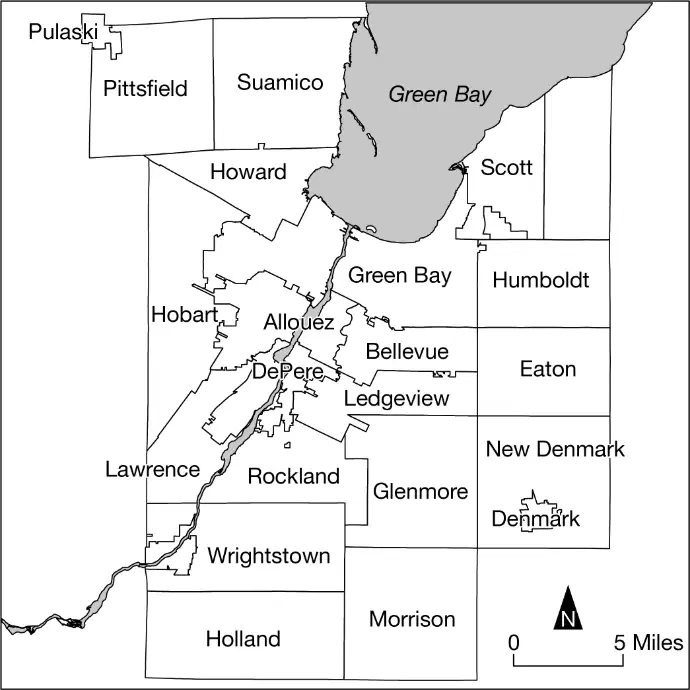
Which of the following scales is represented in the map shown?
Local, showing the towns and township areas in a county
Regional, showing the states or provinces in one part of a country
State or province, showing the counties or parishes
Neighborhood, showing the block along street boundaries
Block, showing the property lines and names of owners
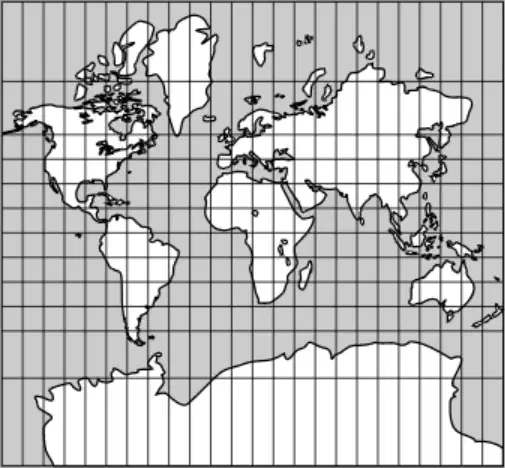
The map above represents what kind of projection?
A Mercator projection with distorted land areas
A planar projection with diverging lines at the poles
A homolosine projection with continuity of landmasses
A Robinson projection with distortions at the equator
A gnomonic projection with distortions of bodies of water
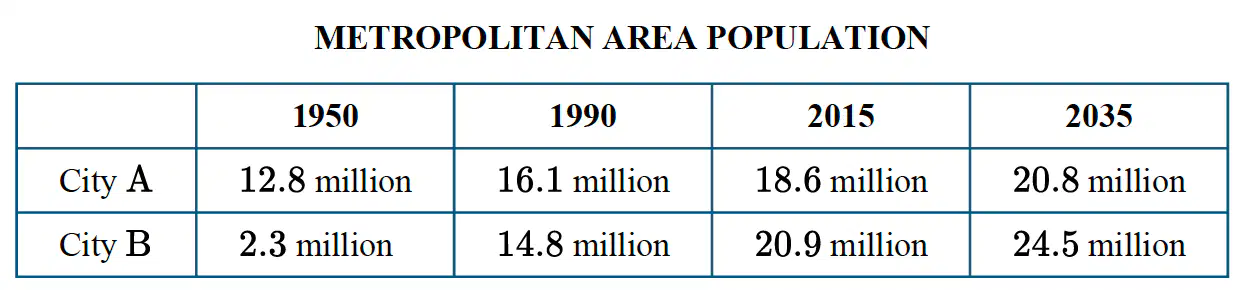
Which of the following explains the pattern of growth in City B relative to City A?
City B is located in a less developed country and has high rates of rural-to-urban migration, whereas City A is located in a more developed country and has low rates of rural-to-urban migration.
City A is located in a less developed country and has high rates of rural-to-urban migration, whereas City B is located in a more developed country and has low rates of rural-to-urban migration.
City B is located in a less developed country and has a well-developed transportation system, whereas City A is located in a more developed country and has a limited transportation system.
City A is located in a less developed country and has a well-developed transportation system, whereas City B is located in a more developed country and has a limited transportation system.
City B is located in a more developed country and has a high number of urban amenities, whereas City A is located in a less developed country and has a limited number of urban amenities.
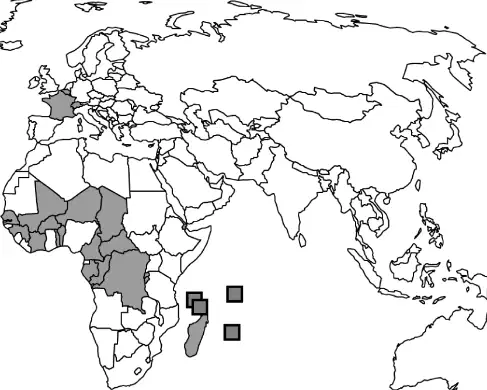
How does the map illustrate global diffusion of the French language from its cultural hearth in Paris?
The map shows how French-language movies, music, and literature dominate global entertainment media.
The map shows how France was an ancient-culture hearth from which the French language spread through expansion diffusion.
The map shows how in many areas of the former French empire the language persists despite the independence of former colonies.
The map shows how French civil servants established schools in many parts of the French colonial empire.
The map shows how people’s love of French food has facilitated the spread of the French language to many parts of the world.
In which of the following contexts could a neo-Malthusian perspective most successfully explain population characteristics?
A country experiencing population decline, where birth rates are low
A country with a low rate of natural population increase, where a small percentage of citizens work in agriculture
A country with a high rate of natural population increase, where food supplies are at risk
A country experiencing significant out-migration, where economic conditions lead many job seekers to move to other countries
A country recovering from an environmental disaster, where infrastructure must be rebuilt
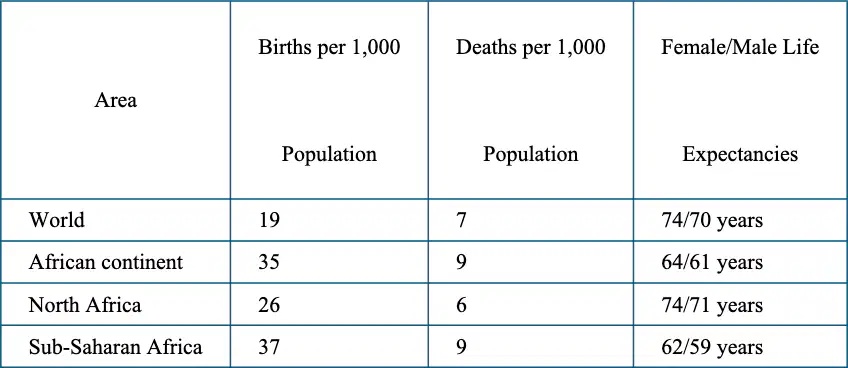
Which of the following best explains the significant difference in North Africa’s demographic data from the rest of the African continent and North Africa’s closer similarity to global demographic data?
North African improvements in nutrition, health care, and sanitation have reduced birth and death rates as well as improved life expectancies over time.
North African declines in nutrition, health care, and sanitation have resulted in higher birth rates but have not affected death rates or life expectancies over time.
North African investment in transportation and energy sectors has reduced birth and death rates as well as improved life expectancies over time.
Foreign investment in North Africa’s transportation and energy sectors has resulted in higher birth rates but have not affected death rates or life expectancies over time.
North African business losses in transportation and energy sectors have resulted in higher birth rates but have not affected death rates or life expectancies over time.
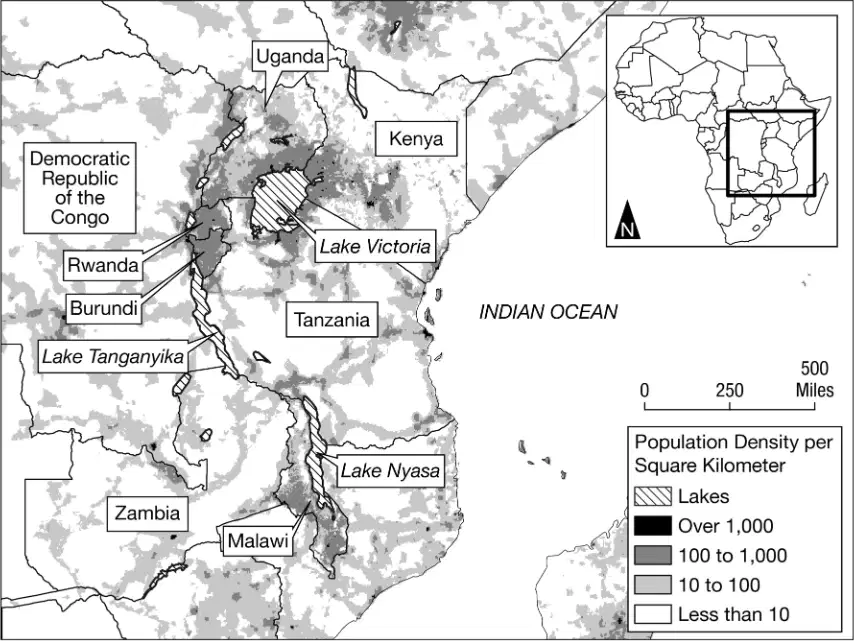
Refer to the map showing the Eastern Great Rift Valley and population density per square kilometer. Which of the following best identifies the data for the Eastern Great Rift Valley, shown on the map?
High arithmetic density
Low arithmetic density
Low carrying capacity
High total fertility rate
Low total fertility rate
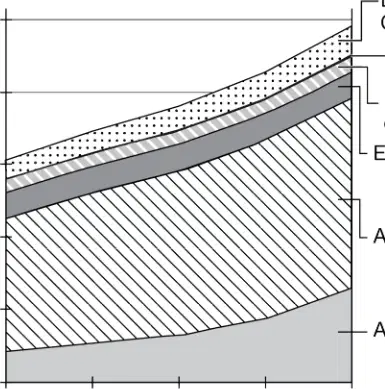
Based on the graph, predicted population growth in which of the following regions is explained by a high total fertility rate?
Asia
Africa
Latin America and Caribbean
Europe
United States and Canada
A pull factor that explains why a large number of migrants from Afghanistan and Iraq applied for asylum in the European Union in 2018 is:
Better economic opportunities in the European Union
Conflict and violence in Afghanistan and Iraq
Strict immigration policies in the European Union
Natural disasters in the European Union
Which of the following is a pull factor that explains the movement of people from the Middle East to Europe?
A high rate of natural increase in the Middle East, leading to overpopulation
Armed conflict, driving many people from their home regions in the Middle East
Drought and food shortages in the Middle East, leading many people to search for food security
Immigration reforms and fenced borders around Europe, controlling the flow of migrant workers
Economic growth and employment opportunities in Europe, attracting immigrant workers
Which of the following global trends best exemplifies the concept of sustainability?
An increase in the use of agricultural pesticides, because farms using agricultural chemicals produce more food.
An increase in the use of electric vehicles, because their reduced emissions result in less environmental pollution.
A decrease in the amount of polar sea ice, because it opens more sea lanes for shipping.
An increase in the number of people living in coastal areas, because residents will feel more connected to nature.
A decrease in the practice of slash-and-burn agriculture, because large irrigated farms produce food more efficiently.
The increasing percentage of urban dwellers in more-developed countries is best explained by
greater access to job opportunities, resources, and facilities
a critical need for workers in the primary economic sector
an abundance of arable land for agricultural use
a desire for more living space and a slower lifestyle
inadequate health care and few educational resources
Which of the following types of countries are most likely challenged with the problems associated with a large youth-dependent population, such as providing public primary education for all children?
More developed countries
Less developed countries
Free market countries
Landlocked countries
Island countries
The early United States population was predominantly Protestant. In the nineteenth century, urban populations became increasingly Roman Catholic, especially in the cities of the Northeastern United States. This shift in the pattern of religion was caused by
internal rural-to-urban migration from farming areas of the eastern United States
transnational migration from Ireland, southern Germany, and Italy
transnational migration from Latin America and the Caribbean
religious conversion of urban residents
out-migration of Protestants to rural farming areas of the Midwestern United States
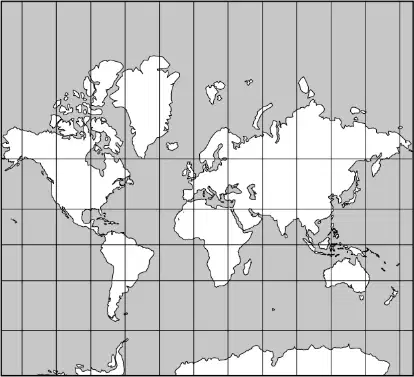
Which of the following is a characteristic of the Mercator projection?
The size and shape of countries in the higher latitudes are greatly exaggerated.
The size of all countries is accurate, but the shape is distorted.
Countries near the Equator appear 50 percent larger than countries in the middle latitudes.
The projection is designed to maintain undistorted outlines of landmasses.
Distances on the Mercator projection are real and accurate.
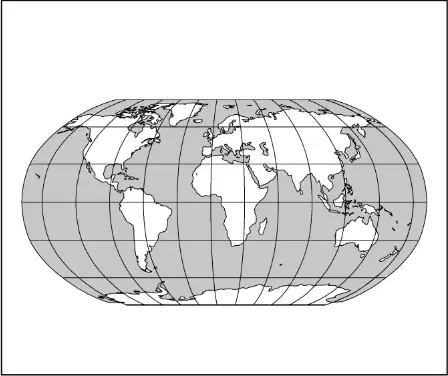
Which of the following statements about the Robinson projection is correct?
It is more useful for long-distance navigation than the Mercator projection.
It is better for making topographical maps than the Mercator projection.
It is more accurate than the Mercator projection in showing the sizes of countries in higher latitudes.
It is more useful for showing the distribution of human populations than the Mercator projection.
It is better for estimating territorial waters in lower latitudes than the Mercator projection.
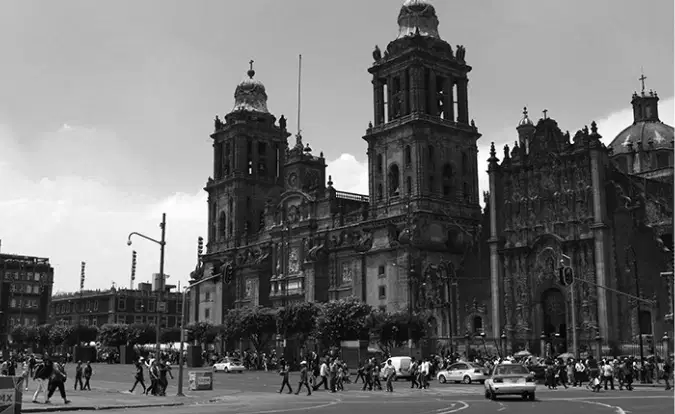
The image shows a religious structure in Mexico City. Which of the following conclusions can be drawn based on the image?
Social class divisions determined by the Spanish aristocracy are evident in Latin American cities.
Socialist planning resulted in segregation of Mexico City.
Gentrification of the central market area of an urbanized zone led to an increase economic development.
Spanish colonialism influenced architecture of the cultural landscape.
Mass transportation systems were designed to alleviate traffic congestion.
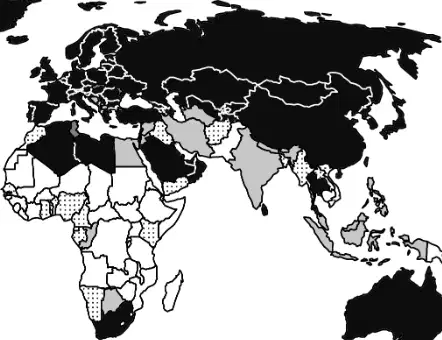
Refer to the map titled 'SECONDARY SCHOOL ENROLLMENT PERCENT, 2016 (PERCENT OF ELIGIBLE AGE GROUP ENROLLED)'. Which of the following spatial patterns accurately describes the data presented in the map?
Most continents have countries with secondary school enrollments below 75 percent.
There are no countries in Africa with secondary school enrollments above 90 percent.
The majority of countries with less than 70 percent secondary school enrollment are in sub-Saharan Africa.
The secondary school enrollment is proportional to population density.
Landlocked countries have secondary school enrollments above 90 percent.
The demographic transition is a general model that seeks to explain
the relationship between the size of age cohorts and natural population change
how variations in population size and food supply can lead to periods of crisis
the effects of changes in population size on the gross domestic product
variations in population size, population migration rates, and the rate of natural increase
how differences in birth and death rates result in natural population change
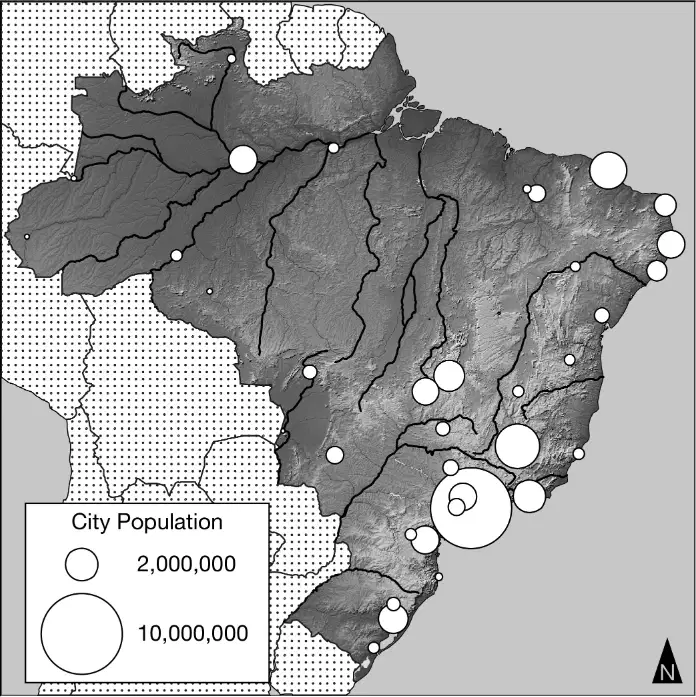
Which of the following describes information a geographer could identify from the map of urban populations in Brazil?
Urban areas with rapid population growth
Distribution of high and low incomes
Areas with negative population growth
Patterns of arithmetic density within specific regions
Urban areas most at risk for overpopulation
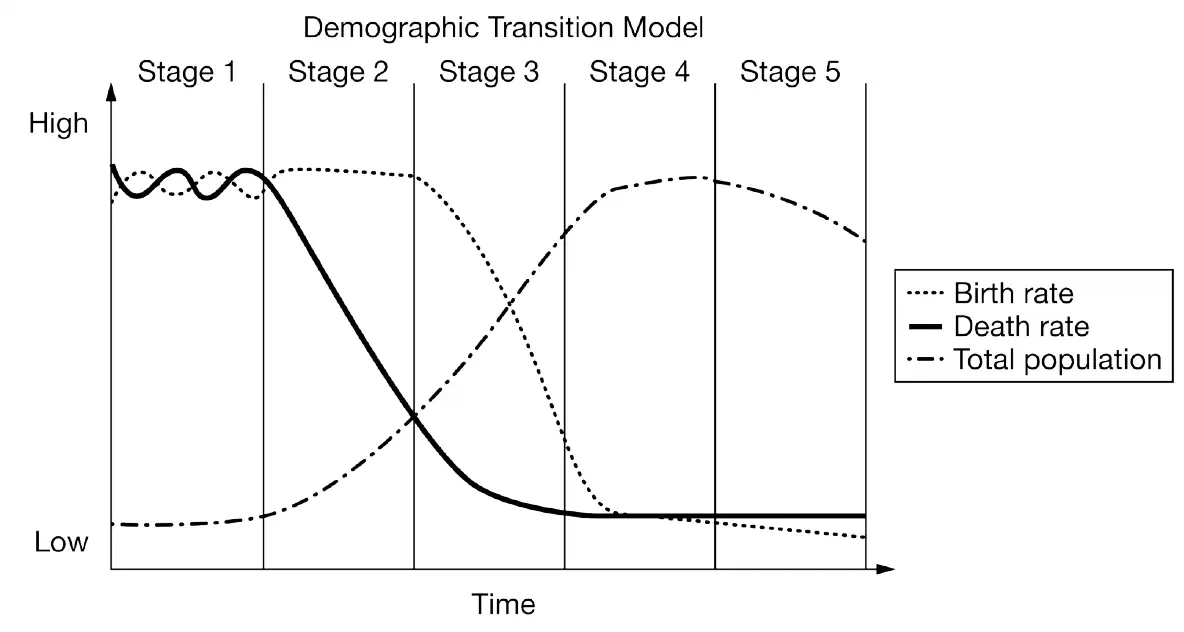
Which of the following statements best describes how the epidemiologic transition affects the demographic transition?
The epidemiologic transition occurs in stage 1 of the demographic transition, causing a fluctuation in birth and death rates.
Improvements in nutrition, sanitation, and health care cause death rates to fall in stage 2 of the
demographic transition.
Improvements in nutrition, sanitation, and health care cause birth rates to fall in stage 3 of the
demographic transition.
The epidemiologic transition occurs in stage 4 of the demographic transition, causing a slowing of the rate of natural increase.
The epidemiologic transition occurs in stage 5 of the demographic transition as famines and wars cause a total population decline.

