
Font size
 Worksheets
Quiz T11:L4 (Russian Revolution)
Total questions: 40
Worksheet time: 20hrs 0mins

The government and economy of Russia were controlled by nobles, priests, and an autocratic ____ in 1914.
Kaiser
Count
King
Duke
Tsar

After suffering huge losses during the first year of the Great War, the Russian czar, Nicholas II, went to the front to lead his military. He left his wife, czarina Alexandra, in charge of domestic affairs. In turn, she relied on the advice of the 'mad monk', Gregory _______.
Ivanov
Dmitriev
Petrov
Sokolov
Rasputin

_____ refers to when protests over food shortages boiled over into riots and revolution. This prompted Czar Nicholas II to abdicate as emperor in 1917.
The October Revolution
The Russian Civil War
World War I
The February Revolution
Sunday, Bloody Sunday

In St. Petersburg (Petrograd) and other cities, revolutionaries set up councils of workers and soldiers. These councils were known as ________. These bodies led workers, organized strikes, and fought the government of the Russian Empire politically and militarily.
Collectives
Assemblies
Commune
Duma
Soviets

At first, the Soviets worked democratically. But before long, the _______, a radical socialist group, took charge, led by Vladimir Lenin.
Social Democrats
Mensheviks
Anarchists
Bolsheviks
Cadets

The brother of _____ _____ was arrested and hanged for plotting to kill the tsar when he was 17. This resulted in his family being branded a threat to the state and this young man hating the government.
Nikolai Lenin
Sergei Petrov
Dmitri Romanov
Alexander Ulyanov
Vladimir Lenin

As Russia stumbled into revolution, the government of the country of (a) saw a chance to weaken its enemy by helping Lenin return home after a decade of self-imposed exile in Western Europe.

In November 1917, squads of ____ _____ (armed factory workers), representing Lenin and the Bolsheviks, joined mutinous sailors from the Russian fleet in attacking the provisional government. In just a matter of days, the government was overthrown.
Red Guards
Green Brigade
Black Hundreds
White Guards
Red Army

After the Bolsheviks seized power in 1917, they ended _____ ______ of land and distributed land to peasants. Workers were given control of factories and mines. A new red flag with an entwined hammer and sickle symbolized the union between workers and peasants.
state control
collective farming
land leases
government ownership
private ownership

What contributed to the unpopular opinion of Empress Alexandra Feodorovna among Russians?
Her popularity as a fashion icon among the elite.
Her strong advocacy for Russian culture and traditions.
Her close friendship with Russian military leaders.
Her German heritage and association with Rasputin.

A weakness of the Russian military during World War I was ____. Select all the correct answers.
a shortage of rifles, ammunition, and artillery shells
ethnic diversity and a lack of nationalization
a lack of trains to provide the warfront with reinforcements and supplies
incompetent officers and generals
domestic unrest and uprisings due to forced conscription
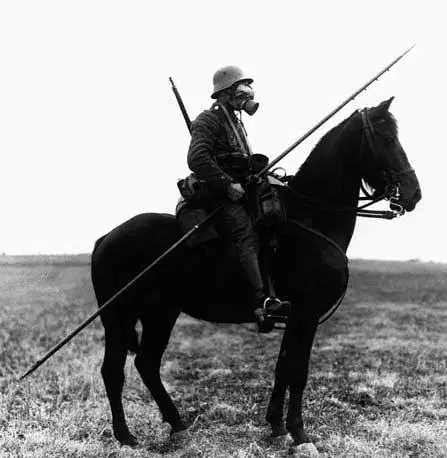
In response to a lack of equipment, the Russian War Ministry considered arming military units with long-handled axes.
True
False
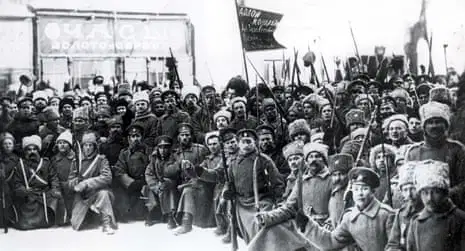
The two rival powers left in Russia after Czar Nicholas abdicated in 1917 were ______ and _______?
Mensheviks and White Army
Red Army and Black Hundreds
Soviets and Tsarists
Anarchists and Social Revolutionaries
the Duma and the more right-wing Petrograd Soviet, representing the Bolsheviks
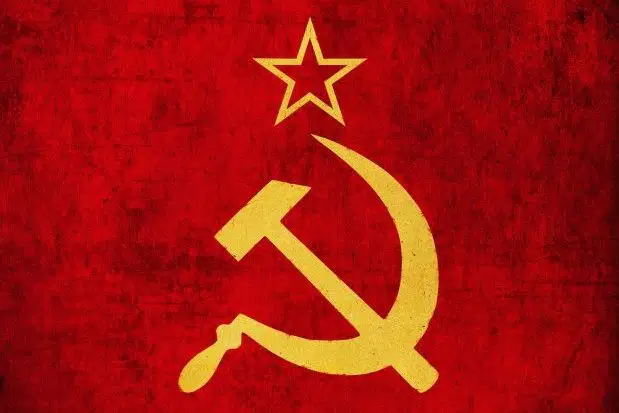
Lenin and the Bolsheviks gave land to peasants and factories to workers as they instituted ______ ideology.
Communism
Capitalism
Fascism
Monarchy
Socialism

What is a Soviet?
a communist Russian
Lenin's political party
a person in the Soviet Union
a council made up of soldiers, farmers, and workers

Which Marxist term refers to the poorest social class?
Bourgeoisie
Proletariat
Bolshevik
Duma
Socialist
What event marked the end of Romanov rule and the creation of the Russian Republic under a Provisional Government?
February Revolution
October Revolution
July Days protests
Kornilov coup
Bloody Sunday
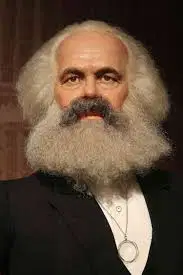
Who invented communism?
Adam Smith
John Locke
Thomas Hobbes
Karl Marx
Vladimir Lenin
___ are the people in a society who own the 'means of production', according to Marxist Communism.
the tsar
the bourgeois
proletariat
the communist leaders
Mr. Evans

Which of the following was not a cause of the Russian Revolution?
Breakup of the proletariat
Russia's defeat in the Russo-Japanese War
Massacre of hundreds during Bloody Sunday
Russia's involvement in WWI
Czarina Alexandra's relationship with Rasputin
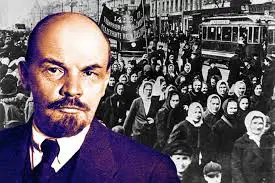
____ was the leader of the revolutionary Bolsheviks (Communists) and is credited with founding the Soviet Union.
Lenin
Putin
Hitler
Peter
Stalin

The major result of the February (March) Revolution was _____.
The royal family being exiled
Nicholas II abdicating his throne
Lenin becoming dictator
The formation of the USSR
The intervention of the United States
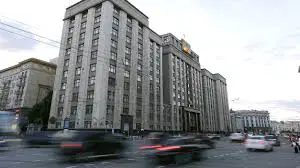
What is a Duma?
a disease that the tsar's son suffered from
the leader of the White Army
the leader of the Red Army
a type of legislature
an early form of Hip Hop dance

According to Marxist philosophy, ____ refers to the members of society whose economic value is their labor power (their capacity to work).
landowners
entrepreneurs
bourgeoisie
capitalists
proletariat

The Bolsheviks later renamed themselves as?
The Communist Party
The Fascist Party
The Socialist Party
The Democratic Party
The Unitarian Party

This form of government is described as having no private ownership, no class system, and no religious organizations. Everything is distributed equally.
Democracy
Federation
Theocracy
Communism
Socialism
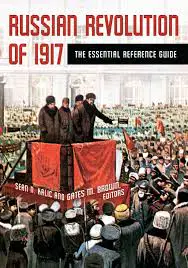
The Bolshevik Revolution of 1917 was a major turning point in history because...
Russia became the first nation with a Communist economic system
It was the last revolution in the 20th century
Russia ceased to be an important force in world affairs
The royal family was exiled to Mexico
Russia sold the Alaskan territory to the United States.

A call for ______ was a major reason many Russian people supported the Bolsheviks in the November 1917 revolution.
the reestablishment of the oligarchy
a heavy investment in industry
the collectivization of agriculture
the abolition of all religion
an immediate peace settlement with Germany
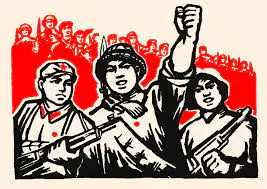
"... The replacement of the bourgeois by the proletarian state is impossible without a violent revolution ..."
— V. I. Lenin, State and Revolution, 1917
This quotation is associated with the principles of...
imperialism
capitalism
communism
militarism
fascism
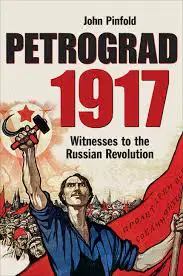
Which group of people revolted against the Russian Revolutionary Provisional Government in 1917?
the clergy and religious congregation
the Czarists
the nobility
the Bolsheviks
the Anarchists
According to Marxist philosophy, _______ is the capitalist class who own most of society's wealth and means of production.
bourgeoise
proletariat
socialist
communist
fascist

Whom did the White Army represent during the Russian Civil War?
Anarchist groups opposing all forms of government.
Peasant uprisings against the government.
Foreign interventionists supporting the Bolsheviks.
Anti-Bolshevik forces, including monarchists, right-leaning, and conservative Russian officers.
Pro-Bolshevik forces, including socialists and communists.
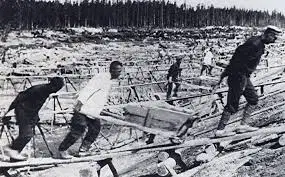
What is the name of the Russian labor camps created by Lenin?
Internment Camps
Reeducation Centers
Siberian Ice Box
Guantanamo
Gulag
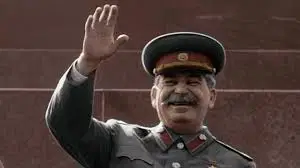
Who ruled Russia as a dictator after Lenin?
Mikhail Gorbachev
Joseph Stalin
Vladimir Putin
Leon Trotsky
Nikita Khrushchev

___ were a socialist revolutionary group who staged a coup and overthrew the Russian provisional government in 1917. This group became the Communist Party.
Anarchists
Social Revolutionaries
Mensheviks
Tsarist Loyalists
Bolsheviks
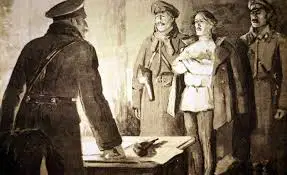
___ was the secret police of the Bolsheviks in the early Soviet Union. They policed labor camps, conducted requisitions of food, and put down rebellions by workers and peasants.
Stormtroopers
Red Guard
Cheka
NKVD
KGB
The Russian Civil War involved the intervention of ____ different foreign nations.
13
3
20
5
10
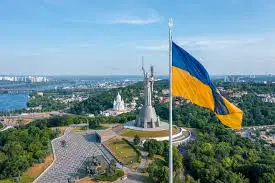
The Soviet Russian army successfully occupied and gained control of ___ after World War I.
Finland
Scandinavia
Ukraine
Estonia
Lithuania

___ refers to an economic policy applied by the Bolsheviks during the Russian Civil War. It involved the expropriation of private businesses, the nationalization of industry, and the forced requisition of food products from the peasantry.
Collectivization
War Socialism
War Communism
State Capitalism
New Economic Policy

It is estimated that Russian efforts to modernize farming through 'collectivization' resulted in approximately ___ deaths due to mismanagement and famine, violent reprisals for non-compliance, and purges during the early years of 'communism'.
1 to 2 million
10 to 12 million
8 to 9 million
5 to 7 million
3 to 4 million

