
Font size
S
M
L
XL
 Worksheets
Environmental Science Review
Total questions: 34
Worksheet time: 17mins
Name
Class
Date
1.
Match each level of organization with the correct example.
a)
Organism
1.
A single frog living in a pond
b)
Population
2.
A group of frogs living together in a pond
c)
Community
3.
Frogs, fish, and plants living together in a pond
d)
Ecosystem
4.
A pond with all its living and non-living components
2.
Which trophic level contains the greatest amount of available energy?
a)
Top carnivores
b)
Primary carnivores
c)
Herbivores
d)
Producers
3.
What happens to most energy as it moves through trophic levels?
a)
It is recycled
b)
It increases
c)
It is destroyed
d)
It is lost as heat
4.
When an organism eats food, what happens to the food’s mass and energy?
a)
Both are destroyed
b)
All mass becomes energy
c)
Mass is used for growth or waste; energy is used or lost as heat
d)
Energy is stored permanently
5.
Which human activity most increases atmospheric carbon dioxide?
a)
Photosynthesis
b)
Burning fossil fuels
c)
Nitrogen fixation
d)
Weathering of rocks
6.
If deforestation continues, which change in the carbon cycle is most likely?
a)
Increased photosynthesis
b)
Stable CO₂ levels
c)
Decreased carbon sinks and increased atmospheric CO₂
d)
Increased oxygen storage
7.
Nitrogen becomes usable to plants through lightning or which organisms?
a)
Consumers
b)
Predators
c)
Producers
d)
Bacteria
8.
Which organisms are most important for recycling nitrogen in ecosystems?
a)
Producers
b)
Consumers
c)
Parasites
d)
Decomposers
9.
Plants in deserts and tundras often have waxy leaves because they:
a)
Increase sunlight absorption
b)
Trap heat
c)
Reduce water loss
d)
Increase oxygen intake
10.
An estuary is best described as:
a)
Deep ocean water
b)
Coral reef ecosystem
c)
Where freshwater mixes with saltwater
d)
A cold upwelling zone
11.
Low dissolved oxygen (DO) levels in water are most likely to cause:
a)
Increased biodiversity
b)
Fish kills and population decline
c)
Faster reproduction
d)
Increased photosynthesis
12.
Milankovitch cycles explain:
a)
Plate tectonics
b)
Daily weather
c)
Long-term climate change patterns
d)
Ocean tides
13.
Every 41,000 years, Earth’s tilt alternates between:
a)
17.5°–19.5°
b)
19.5°–21.5°
c)
21.5°–24.5°
d)
Exactly 21.5°
14.
El Niño occurs when:
a)
Trade winds strengthen
b)
Ocean currents stop
c)
Trade winds weaken, changing weather patterns
d)
Polar ice melts rapidly
15.
An increase in greenhouse gases causes:
a)
Lower global temperatures
b)
Decreased humidity
c)
More heat trapped in the atmosphere
d)
Reduced solar radiation
16.
Deforestation increases atmospheric levels of which gas?
a)
Methane
b)
Nitrous oxide
c)
Oxygen
d)
Carbon dioxide
17.
Which type of species is the first to colonize a bare area after a disturbance?
a)
Invasive species
b)
Climax species
c)
Secondary species
d)
Pioneer species
18.
As forests mature through succession, shrub populations often:
a)
Increase indefinitely
b)
Stay the same
c)
Decrease due to reduced space and sunlight
d)
Replace trees
19.
Increased biodiversity generally results in:
a)
Less ecosystem stability
b)
Fewer species interactions
c)
Greater ecosystem stability
d)
Higher extinction rates
20.
Which energy source is renewable and produces no harmful emissions?
a)
Coal
b)
Natural gas
c)
Solar energy
d)
Petroleum
21.
Which is a major drawback of hydroelectric dams?
a)
Increased fossil fuel use
b)
Reduced recreation
c)
Displacement of human communities
d)
Increased air pollution
22.
Harvesting wood for fuel can lead to:
a)
Increased soil fertility
b)
Reduced erosion
c)
Habitat destruction and soil erosion
d)
Increased biodiversity
23.
After 2040, global energy use is expected to:
a)
Increase coal use
b)
Stay unchanged
c)
Increase fossil fuel dependence
d)
Increase renewables and nuclear while fossil fuels decline
24.
Which factors influence future energy consumption trends?
a)
Availability only
b)
Technology only
c)
Environmental pressure only
d)
Availability, technology, economics, politics, and environment
25.
The BEST way to reduce air pollution before it begins is to:
a)
Install scrubbers
b)
Enforce emission standards
c)
Reduce car use
d)
Use renewable energy sources
26.
Groundwater contamination can result from:
a)
Acid rain only
b)
Agricultural runoff only
c)
Wastewater only
d)
All of these
27.
Which scenario represents an unintended environmental impact?
a)
Creating wildlife preserves
b)
Migratory birds harmed by wind turbines
c)
Replacing fossil fuels
d)
Recycling programs
28.
Developed countries generally have:
a)
High population growth
b)
Low income
c)
Lower population growth and more waste
d)
Higher infant mortality
29.
Match the following population pyramid bases with their corresponding population characteristics.
a)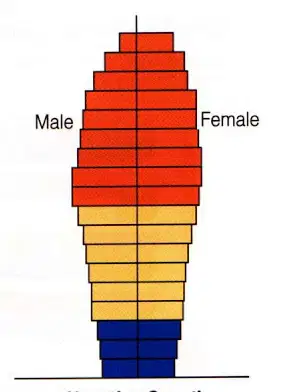
1.
Declining/negative population growth
b)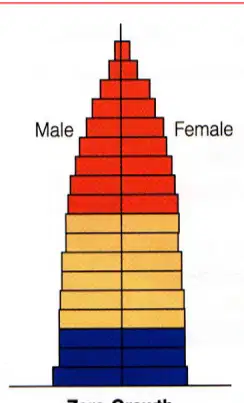
2.
Zero population growth
c)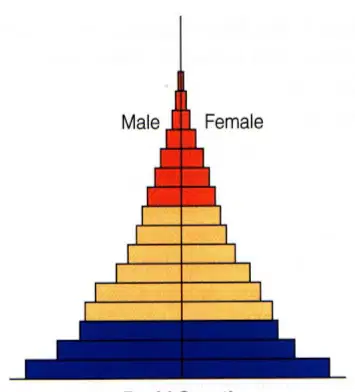
3.
Rapid population growth
d)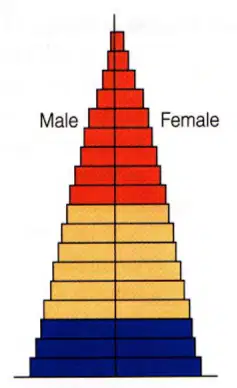
4.
Steady population growth
30.
Biotechnology can negatively impact ecosystems by:
a)
Increasing crop yield
b)
Reducing pests
c)
Harming beneficial insects
d)
Increasing food supply
31.
Opponents of hydraulic fracturing (fracking) would MOST likely argue that it:
a)
Increases seismic activity
b)
Contaminates groundwater
c)
Reduces air quality
d)
Increases fuel recovery
32.
Which action most reduces an individual’s carbon footprint when commuting short distances?
a)
Driving at non-peak times
b)
Taking a train
c)
Buying an electric car
d)
Biking
33.
Human population growth increases food demand, which can lead to:
a)
Decreased food shortages
b)
Stable food supply
c)
Food shortages without innovation
d)
Reduced agriculture
34.
One solution to increasing food demand caused by population growth is:
a)
Urbanization
b)
Reduced farming
c)
Genetically engineered high-yield crops
d)
Limiting transportation
Reset

