wayground logo

Free Printable Worksheets

Font size

S
M
L
XL
Worksheets

Day 1 Review

Total questions: 94

Worksheet time: 8hrs 38mins

Name
Class
Date
1.

Which subatomic particles has a negative charge?

a)

Electrons

b)

Neutrons

c)

Protons

d)

Quarks

2.

Which subatomic particle has a positive charge?

a)

neutrons

b)

atomic mass

c)

protons

d)

isotopes

3.
Subatomic particles that are neutral in charge
a)
Neutrons
b)
Protons
c)
Nucleus 
d)
Electrons
4.

What are atoms of the same element with a different number of neutrons?

a)

Ion

b)

Gluons

c)

Isotope

d)

Quarks

5.
The smallest particle of an element that shows all the properties of that element.
a)
Subatomic Particles
b)
Atom
c)
Quarks
d)
Gluons
6.

What is a tiny but very dense, positively charged portion of the atom that holds most of the atomic mass.

a)

Electron Shells

b)

Orbitals

c)

Electron Cloud

d)

Nucleus

7.

Which scientist discovered the nucleus contains positively charged protons through the Gold Foil Experiment.

a)

Rutherford

b)

Chadwick

c)

Thomson

d)

Dalton

8.

Which scientist proposed the Atomic Theory that stated, atoms of the same element are identical to each other.

a)

Bohr

b)

Rutherford

c)

Dalton

d)

Thomson

9.

How many protons does an oxygen atom have?

a)

8

b)

24

c)

16

d)

When is lunch?

10.
An atom is said to be neutral if it has the same # of electrons and ________. 
a)
thing-ons 
b)
electrons 
c)
neutrons 
d)
protons 
11.
What electrical charge does a proton have?
a)
+1
b)
0
c)
-1
d)
+2
12.
The total number of protons and neutrons in an atom is called the...
a)
Atomic number
b)
Proton number
c)
Mass number
d)
Weight number
13.

Who is the first scientist to propose that the atom was the smallest unit of matter?

a)

J.J. Tomson

b)

Ernest Rutherford

c)

John Dalton

d)

Democritus

14.

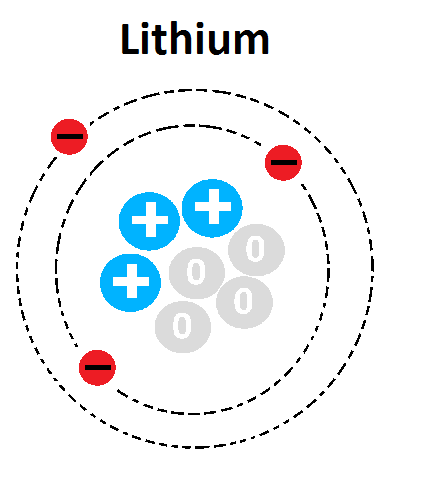
What is the mass number of this atom?

a)

1

b)

3

c)

4

d)

7

15.
Who discovered the nucleus of an atom?
a)
JJ Thomson
b)
Ernest Rutherford
c)
John Dalton
d)
Democritus
16.

What is the atomic number of an element that has 9 protons, 9 electrons, and 10 neutrons?

a)

9

b)

10

c)

19

d)

28

17.

What is the mass number of an element that has 18 protons, 18 electrons, and 19 neutrons?

a)

12.5

b)

13

c)

25

d)

37

18.

What is the calculation used to find the number of neutrons in an atom?

a)

Atomic Mass - Atomic Number

b)

Atomic Number - Atomic Mass

c)

Atomic Mass - Electrons

d)

none of these

19.
Which two subatomic particles make up the nucleus of an atom?
a)
Protons and Electrons
b)
Neutrons and Electrons
c)
Electrons and Protons
d)
Protons and Neutrons
20.

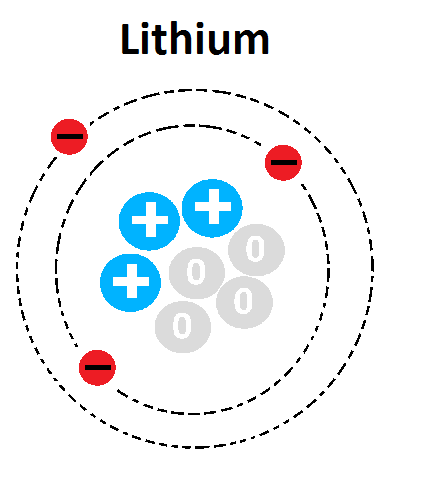
What is the atomic number of this atom?

a)

1

b)

3

c)

4

d)

7

21.
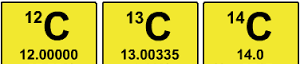
What do these isotopes of carbon all have in common?
a)
neutrons & mass number
b)
atomic number and neutrons
c)
atomic number and electrons
d)
protons, atomic number, and mass number
22.

Isotopes are atoms of the same element with different #’s of __________ & therefore different __________.

a)

neutrons ; atomic numbers

b)

protons ; atomic numbers

c)

electrons ; mass numbers

d)

neutrons ; mass number

23.
How many neutrons does an atom of the isotope Neon-22 have?
a)
12
b)
10
c)
22
d)
20
24.
Two isotopes of carbon are carbon-12 and carbon-14.  These isotopes differ from one another by two protons.
a)
true
b)
false
25.
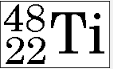
How many protons does this isotope of titanium have?
a)
48
b)
22
c)
26
d)
70
26.
How many neutrons does the isotope of lithium have?
a)
8
b)
3
c)
4
d)
5
27.

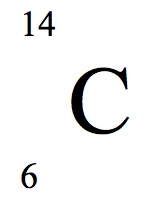
The photo above shows the isotopic notation for which isotope?

a)

Carbon 12

b)

Carbon 13

c)

Carbon 14

d)

Carbon 15

28.
How many neutrons does a Sodium 24 isotope have?
a)
12
b)
13
c)
14
d)
15
29.
How many neutrons does a Calcium 48 isotope have?
a)
16
b)
20
c)
28
d)
12
30.
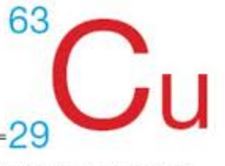
What is the name of the pictured isotope?
a)
Copper-29
b)
Copper-63
c)
Copper-34
d)
CopperWopperHopperBopper
31.
How many electrons does a Copper atom have?
a)
63
b)
29
c)
92
d)
34
32.
Found in the nucleus of the atom
a)
electrons only
b)
protons only
c)
neutrons and protons
d)
neutrons and electrons
33.
An element is defined by its number of 
a)
protons
b)
electrons
c)
neutrons
d)
protons + electrons
34.
Which of the subatomic particles is the lightest
a)
all have the same mass
b)
protons 
c)
neutrons 
d)
electrons
35.
Which of the subatomic particles is the heaviest?
a)
electrons 
b)
protons 
c)
neutrons 
d)
protons and neutrons have equal mass
36.
The relative mass of an electron is...
a)
1
b)
2
c)
0
d)
3
37.
The relative mass of a proton/neutron is.....
a)
0
b)
1
c)
2
d)
3
38.
Where are electrons of an atom found?
a)
Nucleus
b)
Electron Cloud
c)
Some are in the nucleus and some in the electron cloud.
d)
They are moving everywhere.
39.
An atom with atomic number 6 would have how many protons?
a)
6
b)
12
c)
3
d)
cannot be determined 
40.
Most of an atom's mass is found in the
a)
electrons.
b)
nucleus.
41.
In a stable atom the amount of electrons is electron is equal to
a)
neutrons
b)
protons
c)
atomic mass
d)
neutrons + protons
42.

Nitrogen has two isotopes. One isotope has a mass of 14.003 amu and a relative abundance of 99.63%, while the other has a mass of 15.000 amu and a relative abundance of 0.37%. What is the average atomic mass for nitrogen?

a)

14.993 amu

b)

14.456 amu

c)

14.778 amu

d)

14.007 amu

43.

Calculate the atomic mass of silicon. The three silicon isotopes have atomic masses and relative abundances of 27.9 amu (92.2%), 28.9 amu (4.7%) and 29.9 amu (3.1%). Round your answer to 3 sig figs and only type a #.

(a)  

44.

Calculate the average atomic mass of the following element:

25Y (11%), 32Y (39%), 29Y (22%), 30Y (28%)

a)

32.0

b)

30.0

c)

29.0

45.
What atom matches this electron configuration?
1s22s22p63s23p64s23d10
a)
Zinc
b)
Copper
c)
Nickel
d)
Germanium
46.
What electron configuration matches an oxygen atom?
a)
1s22s22p63s2, 3p64s23d104p5
b)
1s22s22p4
c)
1s22s22p6
d)
1s22s22p63s23p64s23d1
47.

How many electrons can the d sublevel (the d orbitals) hold?

a)

14

b)

10

c)

2

d)

6

48.

Choose the correct shortcut configuration for iodine.

a)

[Ar]4s24d104p5

b)

[Kr]5s24d105p5

c)

[Xe]5s25d105p5

d)

none of the above

49.

Each row on the periodic table represents:

a)

an energy level

b)

a sublevel

c)

an electron

d)

an orbital

50.

Which area on the periodic table represents the electrons in the "d" sublevel (d orbitals)?

a)

representative elements

b)

columns 3-8

c)

rare earth elements

d)

transition elements

51.

Which periodic table family below has their last, most energetic electron in their electron configuration in the s-block?

a)

Alkaline Earth

b)

Halogens

c)

Noble Gases

d)

Transition Metals

52.
How many electrons can the first energy level hold?
a)
1
b)
2
c)
8
d)
0
53.

Each orbital can hold how many electrons?

a)

5

b)

4

c)

8

d)

2

54.
How many half-filled orbitals would silicon contain?
a)
0
b)
2
c)
1
d)
3
55.

What is incorrect about this orbital diagram?

a)

Both arrows in the 2p box should be pointing up

b)

There is nothing incorrect with this diagram

c)

In the 2p box there should only be 1 electron in the first 2p box and one in the 2nd 2p box pointing in the same direction.

d)

All the arrows should be pointing up.

56.

In an electron configuration, what follows 4s?

a)

4p

b)

3d

c)

4s

d)

2f

57.
What's a valence electron?
a)
electrons in the second energy level
b)
electrons in the outermost energy level
c)
the atomic number
d)
electrons in the first level
58.
What is the noble gas configuration for beryllium?
a)
[He]1s2
b)
[He]2s2
c)
[Li]2s1
d)
[Li]2s2
59.
What is the abbreviated electron configuration for barium?
a)
[Xe] 6s2
b)
[Rn] 6s2
c)
[Ar] 4s2 3d10 4p5
d)
[He] 2s2 3p1
60.
What is the noble gas configuration for Neon?
a)
[Ne]
b)
[He]2s22p6
c)
[F]2p1
d)
[Ne]2s21p6
61.

Choose the Noble Gas that you would use to begin the shorthand configuration of the following element.

Iron

a)

[He]

b)

[Ne]

c)

[Ar]

d)

[Kr]

62.

Choose the Noble Gas that you would use to begin the shorthand configuration of the following element.

Plutonium (Pu)

a)

[Xe]

b)

[Ne]

c)

[Rn]

d)

[Kr]

63.

What is the shorthand configuration for Tin?

a)

[Xe]5s24d105p2

b)

[Xe]5s24d105p2

c)

[Kr]5p2

d)

[Kr]5s24d105p2

64.

What is the shorthand configuration for Lead?

a)

[Xe]6s24f145d106p2

b)

[Xe]6s25d106p2

c)

[Rn]6s25d106p2

d)

[Rn]6s24f145d106p2

65.

who discovered the first scientific and systematic periodic table

a)

Henry Mosley

b)

Dmitri Mendeleev

c)

John Dalton

d)

sir Isaac Newton

66.

alkali metals are kept in ........

a)

IIA

b)

IIIA

c)

IA

d)

0

67.

which group has the strong electronegative character

a)

alkali metal

b)

lanthanides

c)

inert gases

d)

halogens

68.

choose the metalloid element

a)

Alumunium

b)

Germanium

c)

Silver

d)

Helium

69.

Sulphur is........

a)

Non metal

b)

Metal

c)

Metalloid

d)

Inert gases

70.

Which one is correct ?

a)

for electronegative elements, reactivity increases with decrease in atomic size in same group

b)

for electropositive elements, reactivity decreases with decrease in atomic size in same group

c)

for non metals, reactivity increases with decrease in atomic size

d)

all of the above

71.

what happens when we move from top to bottom in group

a)

valency decreases

b)

atomic radius increases

c)

atomic radius decreases

d)

valence electrons increases

72.

The vertical (up and down) columns in the Periodic Table are called

a)

groups

b)

towers

c)

periods

d)

atomic numbers

73.
Sodium (Na) is found in period 
a)
3
b)
2
c)
4
d)
1
74.

The horizontal (side to side) rows in the Periodic Table are called

a)

groups

b)

families

c)

periods

d)

atomic numbers

75.

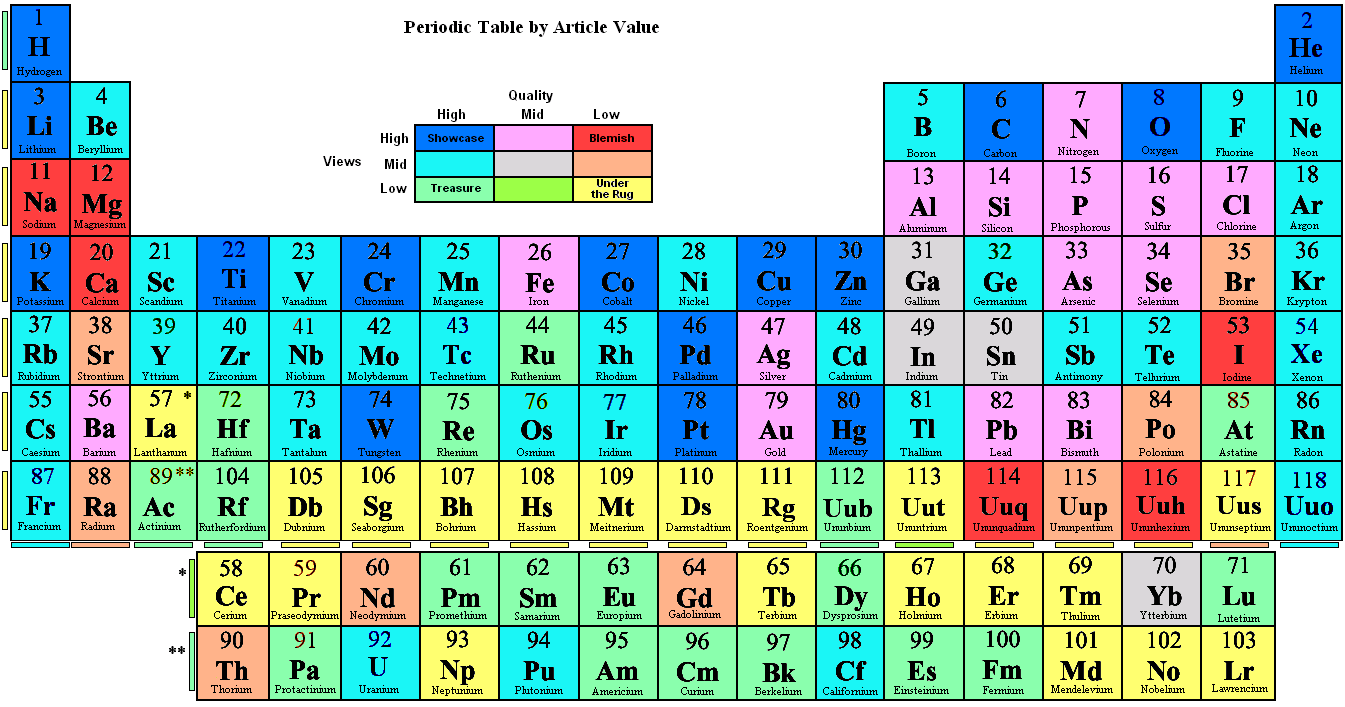
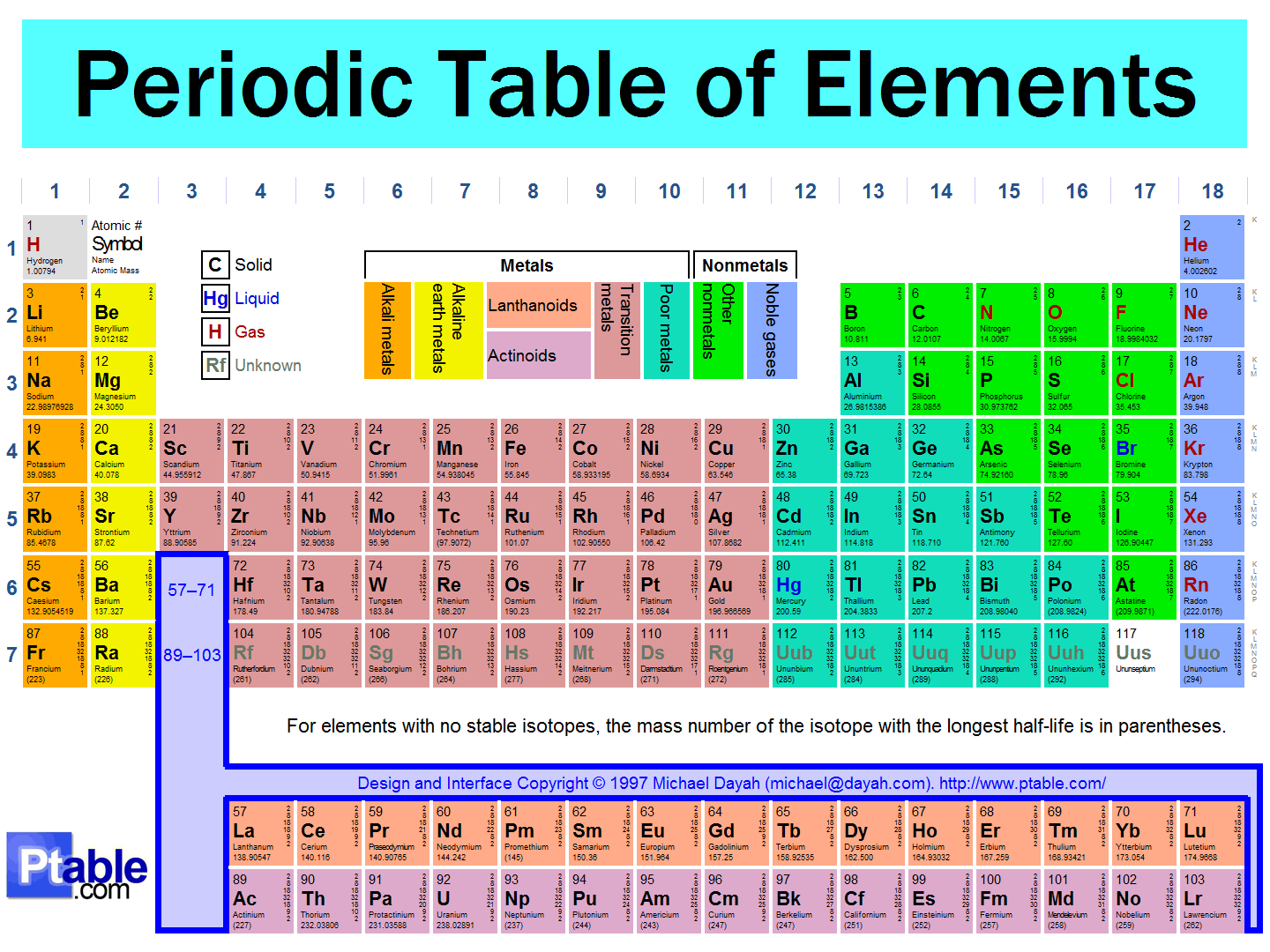
Which color on the image of the periodic table corresponds with the noble gases.

a)

red

b)

black

c)

blue

d)

orange

76.

Which color on the image of the periodic table corresponds with the transition metals.

a)

red

b)

black

c)

blue

d)

orange

77.

Which color on the image of the periodic table corresponds with the metalloids.

a)

bright yellow

b)

gold

c)

teal

d)

light blue

78.

Which color on the image of the periodic table corresponds with the alkaline earth metals.

a)

yellow

b)

dark yellow

c)

blue/green

d)

teal

79.

Most metals share four common physical characteristics. Which of the options is not one of the four?

a)

Luster

b)

Conductivity

c)

Ductility

d)

Malleability

e)

Reactivity

80.
Which of the following is not a property of metals?
a)
brittle
b)
malleable
c)
lustrous
d)
conductive
81.
Which of the following will have a larger radius than Zinc?
a)
Gallium
b)
Aluminum
c)
Magnesium
d)
Strontium
82.
As you move down a group, atomic radius increases because - 
a)
you add more and more neutrons
b)
you add more and more protons
c)
you add more and more shells (energy levels)
d)
you add more atomic mass
83.
Francium (Fr) has the lowest ionization energy in Group 1 because - 
a)
it has the smallest number of valence electrons
b)
it has the greatest atomic mass
c)
it has the greatest number of protons, so it attracts its electrons the strongest
d)
its 1 valence electron is very far from the nucleus, so little energy is needed to remove it
84.
Which of the following will have a lower ionization energy than Scandium (Sc)?
a)
Helium (He)
b)
Titanium (Ti)
c)
Calcium (Ca)
d)
Magnesium (Mg)
85.
Electronegativity is...
a)
the ability of an atom to attract/ accept electrons
b)
the ability of an atom to lose electrons
c)
the energy required to remove an electron from a specific atom
d)
how easy it is to make friends. 
86.
Which has the greater Electronegativity: 
N or C?
a)
C
b)
N
87.
As atoms of elements in group 16 are considered in order from top to bottom, the electronegativity of each successive element....
a)
decreases
b)
increases
c)
remains the same
d)
none of the above
88.
As you move across the periodic table atoms tend to get smaller because, ______________.
a)
the atoms have more mass.
b)
the atoms have less mass
c)
the atoms have more protons.
d)
the atoms have less electrons.
89.
As atoms of elements in group 16 are considered in order from top to bottom, the electronegativity of each successive element....
a)
decreases
b)
increases
c)
remains the same
d)
none of the above
90.

Are anions typically smaller or bigger than their parent atom?

a)

smaller

b)

bigger

91.

_________ are typically smaller than their parent function

a)

atoms

b)

anions

c)

elements

d)

cations

92.

Is Cs+1 smaller or larger than its parent atom and why?

a)

smaller because it loses a valence electron(s)

b)

larger because it gains a valence electron(s)

c)

larger because it loses a valence electron(s)

d)

smaller because it gains a valence electron(s)

93.
Elements closer to the noble gases have stronger attraction for electrons.
a)
True
b)
False
94.
What creates a SHIELDING EFFECT by interfering with the attractive forces between the protons and the electrons.
a)
nucleus
b)

valence (outer) electrons

c)

core (inner) electrons

d)
protons