
 Worksheets
Chem Semester 2 Final Exam Review #1
Total questions: 90
Worksheet time: 2hrs 15mins

What is the correct Lewis structure for NH3?


Which is the correct Lewis structure for carbon dioxide?


Metals make _____ ions.
positive
negative
neutral
Nonmetals will make _____ions.
positive
negative
neutral

Why is this Lewis Structure incorrect? Select all that appy.
There should be a single bond between H and C.
There should be a triple bond between C and N.
Carbon has too many bonds around it.
Hydrogen needs more electrons.
Covalent bonding is between a
nonmetal and nonmetal
metal and nonmetal
metal and metal
It depends on the situation
Predict the bond between Mg and Cl
covalent
ionic
metallic
none of the above

What is a valence electron?
electron found in a middle shell
electron found in outermost shell
electron found in innermost shell
electron not found in a shell

ionic
covalent
metallic
acid


Refer to the image. Which diagrams correctly represent the transfer of electrons in ionic bonding?
Diagram 3 and 4
Diagram 1 and 2
Diagram 1 and 4
Diagram 2 and 3

Which of the following diagrams correctly represents the
formation of a compound consisting of magnesium and fluorine?
A
B
C
D
Al3+ O2-
What is the charge of Lead in the formula PbO2?
+2
+1
+4
(II)
Which of the following compounds contains both ionic and covalent bonds?
NaCl
CO2
CuC2H3O2
Fe3O2
what is the name of CCl4?
carbon tetrachloride
monocarbon tetrachloride
tetracarbon monochloride
carbon chloride
Name this formula:
KNO3
Potassium Nitrogen Oxide
Potassium Nitride
Potassium Nitrate
Potassium (I) Nitrite
What is the name of the compound SO2
Monosulfate oxide
Sulfur Dioxide
Monosulfur dioxide
What is the name for MgF2 ?
magnesium fluoride
manganese Phosphide
magnesium(III) fluoride
magnesium fluoride(II)
Name the compound CuO
copper (II) oxide
copper oxide
copper (I) oxide
carbon uranium oxide
What is the name of NH3?
Ammonium
Trinitrogen Hydride
Ammonia
Nitrogen Hydride
What are the seven diatomic elements?
H2, Cl2, Br2, O2, N2, I2, F2
H2, Cl2, I2, F2, Hg2, Br2, Fe2
H2, Cu2, Ni2, B2, O2, I2, Fe2
What are diatomic elements?
Elements that form two-atom molecules when not combined in a compound.
Two elements that combine with one atom from each element.
Elements that are always in pairs no matter what.
What number do the diatomic elements form on the periodic table?
7
1
2


How many sigma bonds are in the following molecule?
0
4
8
12
16
(beware!)
18.998 g/mol
38.00 g/mol
19.00 g/mol
18 g/mol
116.89 g/mol
35.45 g/mol
22.99 g/mol
58.44 g/mol
62.44g/mol
116.40g/mol
133.33g/mol
97.89g/mol
24 molecules
180 molecules
180 g
6.022 x 10²³ molecules
11.9%
41.1%
47.1%
What is the electronic geometry for two electron domains?
linear
trigonal planar
tetrahedral
trigonal bipyramidal
octahedral
What is the ideal bond angle between two electron domains?
90
109.5
120
180
What is the electronic geometry for three electron domains?
linear
trigonal planar
tetrahedral
trigonal bipyramidal
octahedral
What is the ideal bond angle between three electron domains?
90
109.5
120
180
What is the molecular geometry for two bonded domains with one lone pair?
linear
trigonal planar
bent
tetrahedral
trigonal pyramidal
What is the electronic geometry for four electron domains?
linear
trigonal planar
tetrahedral
trigonal bipyramidal
octahedral
What is the ideal bond angle between four electron domains?
90
109.5
120
180
What is the molecular geometry for three bonded domains with one lone pair?
linear
trigonal planar
bent
tetrahedral
trigonal pyramidal
What is the molecular geometry for two bonded domains with two lone pairs?
linear
trigonal planar
bent
tetrahedral
trigonal pyramidal

How many electron domains are in the partial Lewis structure?
2
4
6
3

How many electron domains are in the partial Lewis structure?
2
4
6
3

How many electron domains are in the partial Lewis structure?
2
4
6
3

How many electron domains are in the partial Lewis structure?
1
5
2
3

How many electron domains are in the partial Lewis structure?
1
5
2
3

How many electron domains are in the partial Lewis structure?
1
5
2
3

What molecular geometry will this molecular structure have?: H2S
bent
tetrahedral
linear
trigonal pyramidal
What two types of atoms make a covalent bond?
2 Nonmetals
1 Nonmetal and 1 Metal
2 Metals
2 Noble Gases

Choose the correct molecular geometry for this molecule:
Trigonal planar
Trigonal pyramidal
Tetrahedral
Linear

Choose the correct molecular geometry for this molecule:
Trigonal planar
Trigonal pyramidal
Bent
Tetrahedral

Choose the correct molecular geometry for this molecule:
Tetrahedral
Trigonal pyramidal
Bent
Trigonal planar
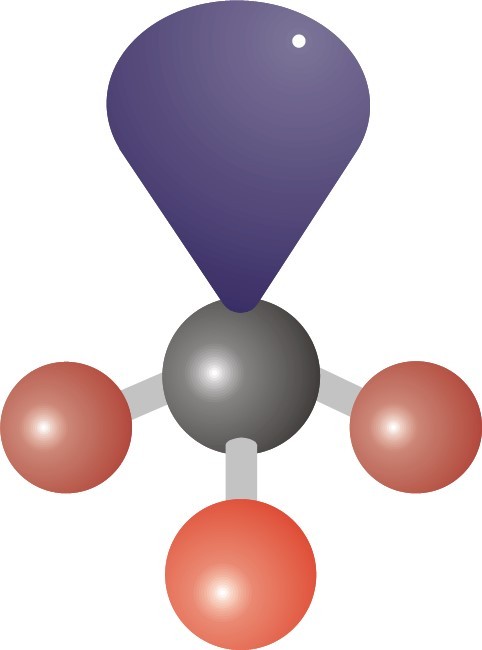
What molecule could this be? (The purple cloud represents a lone pair of electrons.)
H2O
NH3
CO2
CH4
The geometry of a molecule with 3 bonded pairs of electrons and 0 lone pairs of electrons on the central atom
Tetrahedral
Trigonal Planar
Bent
Trigonal Pyramidal
Linear
What is the molecular geometry of CO2?
Bent
Trigonal planar
Trigonal pyramidal
Linear

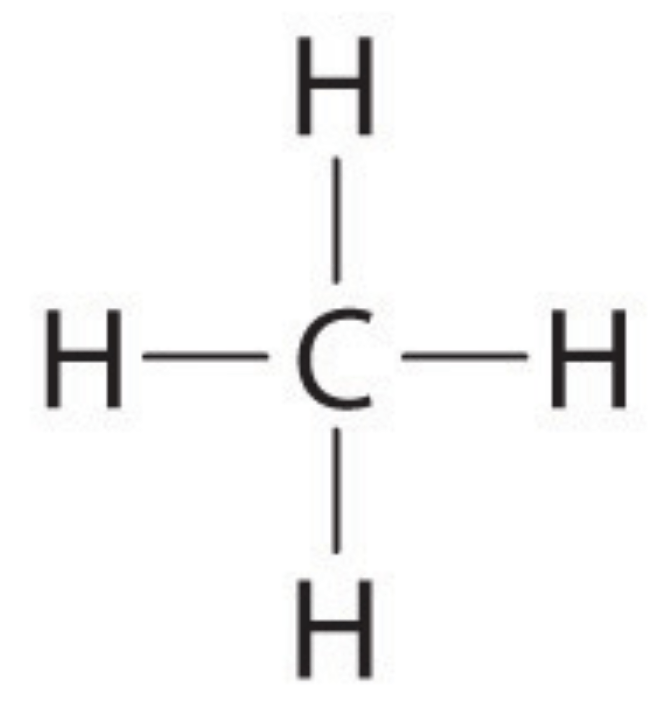
Classify the following molecule.
polar
nonpolar
The electronegativity difference in the bonds of CCl4 (carbon tetrachloride) is:
0.4
0.61
0.51
6.1

When you have Li-O, what is the polarity?
nonpolar
polar
ionic
When you have Si-O, what is the polarity?
nonpolar
polar
ionic
When you have F-F, what is the polarity?
nonpolar
polar
ionic
Which molecule has a non-polar covalent bond?
H2
NH3
H2O
HCl

Is this a polar or nonpolar molecule?
Polar
Nonpolar

Is this a polar or nonpolar molecule?
Polar
Nonpolar

Is this a polar or nonpolar molecule?
Polar
Nonpolar

Is this a polar or nonpolar molecule?
Polar
Nonpolar
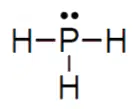
Is this a polar or nonpolar molecule?
Polar
Nonpolar

Is this a polar or nonpolar molecule?
Polar
Nonpolar

Which atom has the negative dipole in this molecule?
Hydrogen
Fluorine
Neither

In this bond, we should label the S end of the bond with...


electrons are less attracted to F than H
Nothing, they make a nonpolar bond

In this bond, we should label the Cl end of the bond with...
electrons are less attracted to F than H
Nothing, they make a nonpolar bond

In this bond, we should label the P end of the bond with...
electrons are less attracted to F than H
Nothing, they make a nonpolar bond

