
 Worksheets
QCE Chemistry Unit 2 MegaQuiz
Total questions: 90
Worksheet time: 1hrs 25mins
What pH is the strongest base?
1
7
4
14
pH is the measure of the concentration of ______.
Acids
H+ ion
OH- ion
Bases
According to Arrhenius, what is the definition of an ACID?
a substance that contains hydroxide and ionizes to produce OH-
a substance that contains hydrogen and ionizes to produce H+
a substance that contains hydrogen and ionizes to produce OH-
a substance that contains hydroxide and ionizes to produce H+
Which of the following is an Arrhenius Acid?
LiOH
CO32-
OH-
H3PO4
NaOH is:
an Arrhenius base
an Arrhenius acid
neither an acid nor a base
both an acid and a base
Which of the following is a strong acid?
oxalic acid
nitric acid
carbonic acid
acetic acid
Neutral solutions have a pH of
pH of 2
pH of 0
pH of 7
A neutral solution does not have a pH
What is true when acids and bases neutralize each other.
The concentration of H+ and OH- is the same
Salt Water is produced
[H+] = [OH-]
[H+] > [OH-]
Which of the following is the correct definition for a strong acid?
Partially dissociates into ions when dissolved in water and the change is not reversible
Fully dissociates into ions when dissolved in water and the change is not reversible
Fully dissociates into ions when dissolved in water and the change is reversible
Partially dissociates into ions when dissolved in water and the change is reversible
Which of the following is the correct balanced equation showing the dissociation of sulfuric acid into ions?
H2SO4 (aq) → H+ (aq) + SO4–(aq)
H2SO4 (aq) ⇌ 2H+ (aq) + SO42- (aq)
HSO4 (aq) → H+(aq) + SO4–(aq)
H2SO4 (aq) → 2H+ (aq) + SO42- (aq)
Which of the following statements is true?
If the H+ ion concentration in a solution increases by a factor of 10, the pH of the solution increases by 1
If the H+ ion concentration in a solution increases by a factor of 10, the pH of the solution decreases by 1
Weak acids and bases...
do not break apart into ions (non-electrolyte)
partially break apart into ions (weak electrolyte)
completely break apart into ions (non-electrolyte)
completely break apart into ions (strong electrolyte)
For a solution, pH + pOH =
7
14
1.0 x 10⁻¹⁴
-log (1.0 x 10 -14)
What is the pH of a solution that has a [H+] of 2.5 x 10⁻⁵?
4.60
2.5
5.0
7
If the [H3O+] of a solution is 1 x 10⁻³ M, the pH is
11
-3
3
1
The pH of a solution is 8.43. What is the [H3O+]concentration?
3.7 x 10 -9
1.0 x 10-8.43
2.7 x 10⁻⁶
1.0 x 10⁻¹⁴
HCl + Zn --> ZnCl2 + H2
Sulphuric acid + sodium carbonate
-->
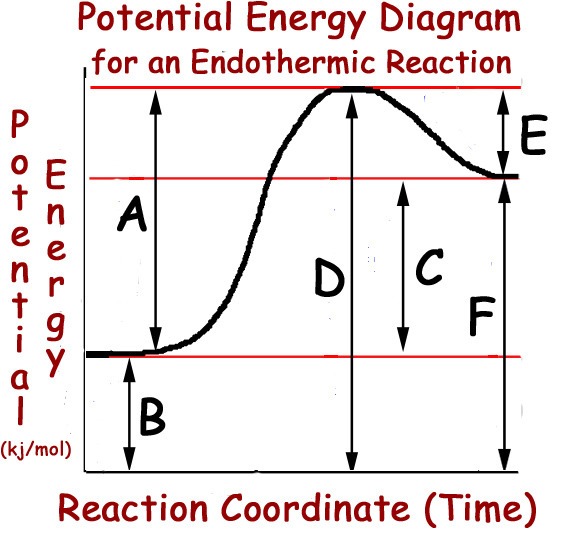

List four factors that affects the rate of a reaction
temperature
concentration
surface area
volume
catalysts
Which is FALSE about catalysts?
They increase the speed of the reaction
They provide an alternate reaction pathway which lowrrs the activitation energy
They produce more net product
They are not consumed in the reaction
Which is the second strongest intermolecular force, after hydrogen bonding?
dipole-dipole attraction
Van der Waals/Dispersion forces
________________________ have the strongest intermolecular forces of attraction.
Dipole- Dipole
Dispersion
Hydrogen Bonds

When you have Br-Br, what is the polarity?
Polar
nonpolar
Ionic

When you have H-Cl, what is the polarity?
nonpolar
polar
ionic

When you have F-F, what is the polarity?
nonpolar
polar
ionic
When you have C-H, what is the polarity?
nonpolar
polar
ionic
What would solubility look like for polar covalent bond in water?
soluable
nonsoluable
What would solubility look like for nonpolar covalent bond in water?
soluable
nonsoluable


The geometry of a molecule with 4 bonded pairs of electrons and 0 lone pairs of electrons, AB4
Tetrahedral
Trigonal Planar
Bent
Trigonal Pyramidal
Linear


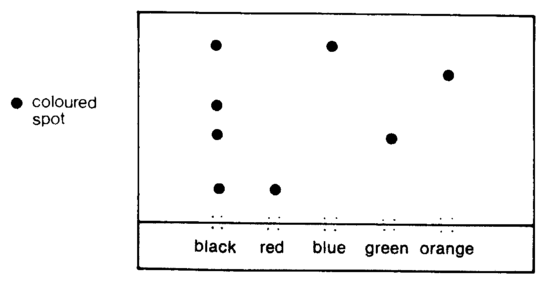
Ink can be separated by a method of -----------------------------------------------
distillation
filtration
chromatography
sedimentation
Concentration is
the amount of solute in the solvent
the amount of solvent in the solute
density
particle size
Which solution is more concentrated?
Solution 1:
500 mL of water
100 g of salt
Solution 2:
500 mL of water
90 g of salt
Solution 1
Solution 2
They have the same concentration
I have no idea
Which of the following best describes a precipitate?
an insoluble solid
a soluble solid
a soluble gas
an insoluble liquid
AB (aq) + CD (aq) → AD (aq) + CB(s)
Which substance is the precipitate in the reaction above?
AB
CD
AD
CB
According to the solubility rules (chart), compounds containing Ammonium cations, NH4+ are:
Not Soluble
Sometimes Soluble
Always Soluble
Always insoluble

