
 Worksheets
TEST: Bonding/VESPER/Inter& Intramolecular forces
Total questions: 89
Worksheet time: 1hrs 15mins

This could be the dot diagram of
Mg
Cl
C
O
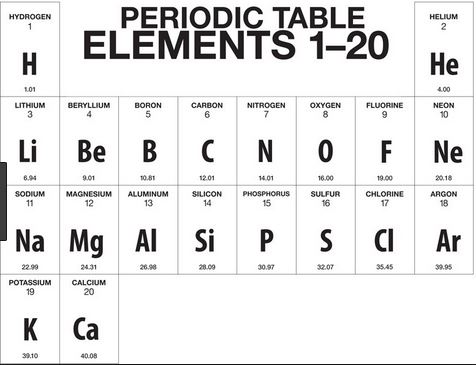
How many valence electrons does Aluminum Have?
1 Valence electron
2 Valence electron
3 Valence electron
4 Valence electron
5 Valence electron
What is the goal of the Lewis Dot Structure?
To determine the electron position.
To show the element's valence electrons & bonding capabilities.
To find the atomic mass of an element.
To search for the number of electrons in an individual atom.
How many electrons should Boron have around its Lewis dot model?
1
2
3
4

Which of the following would be the Lewis Dot Diagram for an ATOM of Aluminum?


Which diagram shows an ion that will form from an atom with a neutral electron configuration of 2-8-6?


What is the correct Lewis Dot Structure for ammonia NH3


Why is this Lewis Structure incorrect? Choose all that apply.
There are too many bonds around Si.
There should only be single bonds in this Lewis Structure.
The Structure is missing a triple bond.
Chlorine only has 6 electrons surrounding it.

Covalent Bonds
metal with nonmetal
nonmetal with nonmetal
When an atom loses an electron, it becomes a
positive ion
negative ion
neutral ion
neutral atom
What would be the charges on each atom of Calcium Sulfide? (CaS)
Ca-2 S+2
Ca+2 S-2
Ca+1 S-1
Ca-1 S+1


Is this compound ionic or covalent?
Ionic
Covalent

Is this compound ionic or covalent?
ionic
covalent

What type of bond is shown in the image?
Hydrogen
Ionic
Covalent

What type of bonds are shown between the water molecules in the image?
Covalent bonds
Ionic bonds
Hydrogen bonds

The following properties are all characteristics of ionic compounds EXCEPT
solid at room temperature
soft
crystal lattice structure
conduct electricity when dissolved in water
Molten or dissolved compound conducts electricity.
ionic compound
covalent compound
Why are metals malleable?
They are shiny
The electrons are held tightly within the lattice structure making it strong
The electrons are delocalized and able to move between the atoms
The electrons are shared between two metal ions and this holds the atoms together
What is the name of the three-dimensional pattern that forms when ions bond?
a crystal lattice
a chemical compound
an ionic bond
an ionic chalice
Why do metals conduct electricity?
They are shiny
The electrons are delocalised and able to move
The electrons are held tightly within the lattice
The electrons are shared between two metal ions
Which of these are considered properties of metals? (choose ALL that apply)
brittleness
low melting point
luster (shininess)
malleability
ductility

What do we call electrons that move freely in a metallic bond?
sea of electrons
lone electrons
unpaired electrons
covalent electrons

What property of metals is being shown in figure 1(b) in the image?
malleable (bend without breaking)
ductile (stretched into a wire)
conductive (can conduct electricity)
shiny

In the picture shown, #2 is likely __________.
Carbon
Magnesium
Nitrogen
Oxygen

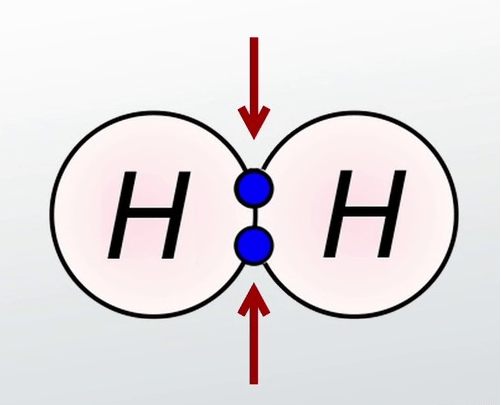
In covalent bonds electrons are:
shared
transferred
mobile
If the difference in electronegativity between two bonding atoms is less than 1.7 but greater than .03 the bond is
ionic
polar covalent
metallic
nonpolar covalent
Molecular compounds are made up of
metals
metals and nonmetals
nonmetals and nonmetals
only covalent bonded atoms
What is a coordinate covalent bond?
type of covalent bond in which one of the atoms provided both of the electrons in a shared pair
type of covalent bond in which two atoms provide the electrons in a shared pair
type of covalent bond in which three atoms provided the electrons in a shared pair
Fluorine is the most electronegative element. When bonding atoms that are very electronegative with atoms that are not so electronegative, what tends to happen to the electrons?
The electrons tend to stay closer to the more electronegative atom
The electrons tend to stay closer to the less electronegative atom
The electrons are equally shared by both atoms
With ionic bonding atoms exchange electrons to bond. How do covalent bonds occur?
by exchanging electrons.
by sharing pairs of electrons
by exchanging protons
by exchanging neutrons

What name is given to the shape shown in the picture?
bent
trigonal planar
triangular
trigonal pyramidal
Which pairs of electrons around a central atom in a molecule have the greatest repulsion?
lone pair to lone pair
lone pair to bond pair
bond pair to bond pair
bond pair to lone pair

Intermolecular force present in HCl?
dipole dipole
Van der Waals
H-bond
ionic
What name is given to the shape with 2 bonding pairs of electrons and 2 lone pairs of electrons
linear
tetrahedral
trigonal pyramidal
bent
SiCl4
tetrahedral
trigonal planar
trigonal pyramidal
V-shaped
Which of the following ordered pairs of elements has the highest difference in electronegativity?
Li and Be
Li and F
O and F
F and F

The figure above shows the different types of bonds that could result when two atoms are bonded. What kind of bond would be formed between an atom of H and an atom of F?
Metallic
Ionic
Covalent
Polar Covalent
As you look down a group, ionization energy and electronegativity
increases
decreases
As you look from left to right across a period, ionization energy and electronegativity both
increase
decrease
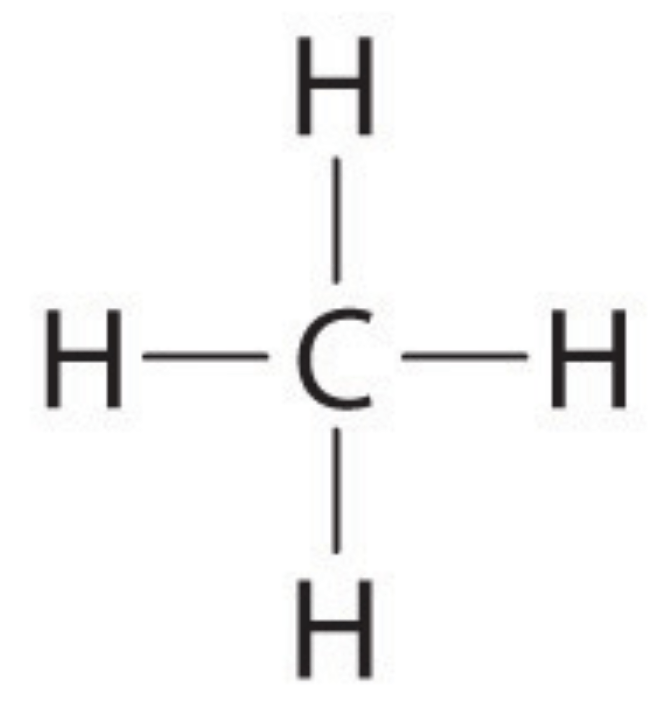
Classify the following molecule.
polar
nonpolar
Classify the following molecule as polar or nonpolar: NCl3
polar
nonpolar

Is the following molecule polar or nonpolar?
polar
nonpolar

Is the following molecule polar or nonpolar?
polar because there are different types of elements bonded to the central atom
nonpolar because the central atom has no lone pairs of electrons
polar because the central atom has a lone pair of electrons
nonpolar because there are no lone pairs on the central atom and the atoms bonded to the central atom are all the same


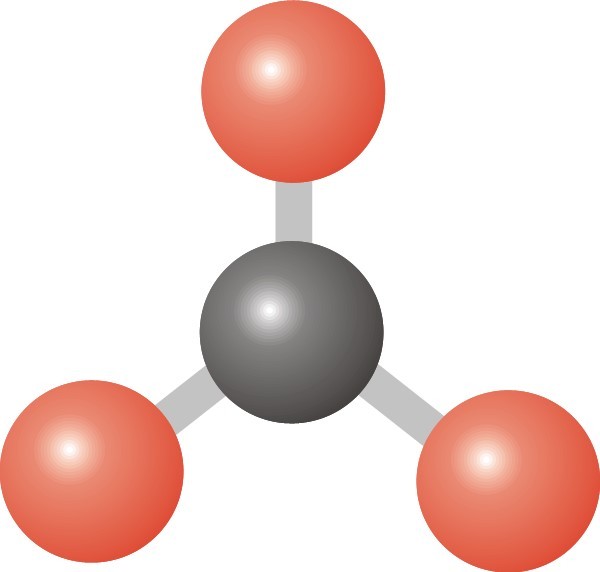


When you have H-Cl, what is the polarity?
nonpolar
polar
ionic

When you have Li-O, what is the polarity?
nonpolar
polar
ionic

Which of the following are Intermolecular forces?
Covalent Bond
Dispersion Force
Dipole-Dipole
Ionic Bond
Hydrogen Bond

Which statement is correct regarding the picture below?
The type of bond between H and Cl covalent is intermolecular and the bond between HCl and HCl is intramolecular.
The type of bond between H and Cl covalent is intramolecular and the bond between HCl and HCl is intermolecular.
The type of bond between H and Cl ionic is intramolecular and the bond between HCl and HCl is intermolecular.
The type of bond between H and Cl ionic is intramolecular and the bond between HCl and HCl is intermolecular.
Which of these is the weakest intermolecular force?
Dipole-dipole
Hydrogen bonding
London dispersion forces

Which type of intermolecular force does this molecular drawing best represent?
dipole-dipole forces
hydrogen bonding
London dispersion forces
Which substance has the weakest intermolecular forces?
Substance A, boiling point of 75 °C
Substance C, boiling point of 25 °C
Substance B, boiling point of 105 °C
Substance d, boiling point of 45 °C

