wayground logo

Free Printable Worksheets

Font size

S
M
L
XL
Worksheets

Chemistry Exam A

Total questions: 85

Worksheet time: 2hrs 44mins

Name
Class
Date
1.

What is the definition of matter?

a)

Anything that has mass and takes up space

b)

A substance that is liquid, solid, or gas

c)

Anything that is pure

d)

Anything that you can see or hold

2.

What is the study of matter and how matter changes?

a)

Physical Science

b)

Chemistry

c)

Biology

d)

Matterology

3.

What term means "take up space"

a)

Volume

b)

Matter

c)

Mass

d)

Substance

4.

What term refers to a single kind of matter that is pure?

a)

Solution

b)

Mixture

c)

Substance

d)

Matter

5.

What term refers to "two or more substances combined physically, but are still able to be separated?"

a)

Mixture

b)

Solution

c)

Matter

d)

Combination

6.

A row on the Periodic Table of Elements

a)

family

b)

period

c)

row

d)

isotope

7.

What is the name of group number 1?

a)

halogens

b)

noble gases

c)

alkali metals

d)

alkaline earth metals

8.

What is the name of group number 2?

a)

transition metals

b)

halogens

c)

metaloids

d)

alkaline earth metals

9.

where are the metaloids found

a)

far left, vertical

b)

stair step/diagonal

c)

far right horizontal

d)

at the bottom

10.

What group number are the halogens found?

a)

18 (8A)

b)

1

c)

2

d)

17 (7A)

11.

Periodic law states that the elements are arranged according to their atomic ________ so that elements with similar chemical properties are in the same ________ and properties repeat periodically.

a)

numbers, rows

b)

masses, rows

c)

masses, column

d)

numbers, column

12.

A grouping of elements based on similar chemical properties, arranged by columns in the periodic table; also known as a group

a)

family

b)

period

c)

row

d)

isotope

13.

A row on the Periodic Table of Elements

a)

family

b)

period

c)

row

d)

isotope

14.

Subatomic particles with a negative charge

a)

Electrons

b)

Neutrons

c)

Protons

d)

Quarks

15.
Subatomic particles with a positive charge
a)
neutrons
b)
atomic mass
c)
protons
d)
isotopes
16.
Value representing the number of protons in an element
a)
Atomic Mass
b)
Mass Number
c)
Valence Electrons
d)
Atomic Number
17.
Subatomic particles that are neutral in charge
a)
Neutrons
b)
Protons
c)
Nucleus 
d)
Electrons
18.
Which two subatomic particles make up the nucleus of an atom?
a)
Protons and Electrons
b)
Neutrons and Electrons
c)
Electrons and Protons
d)
Protons and Neutrons
19.
Where are the Electrons found in the structure of an atom?
a)
In the nucleus
b)
In spaces around the nucleus
20.

What is the mass number?

a)

the number of protons in the nucleus

b)

the number of protons and neutrons in the nucleus

c)

the number of neutrons in the nucleus

d)

the number of protons and electrons in the atom
21.
In order for an atom to be neutral what has to be true?
a)
The atom has more protons than neutrons
b)
The atom has more neutrons than protons
c)
The atom has the same number of protons and neutrons
d)
The atom has the same number of protons and electrons
22.
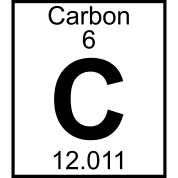
What does the C represent?
a)
atomic mass
b)
atomic number
c)
element name
d)
chemical symbol 
23.

What does the 6 represent?

a)

Atomic mass

b)

atomic number

c)

chemical symbol

d)

element name

24.
How is the number of neutrons in the nucleus of an atom calculated?
a)
Add the number of e- and p+ together
b)
Subtract the number of e- from p+
c)
Subtract the number of p+ from the mass number
d)
Add the mass number to the number of e-
25.

An atom has 10 protons, 15 neutrons and 10 electrons what is its mass number.

a)

20

b)

10

c)

35

d)

25

26.
Rutherford's gold foil experiment provided evidence that...
a)
Negative and positive charges are spread evenly throughout the atom.
b)
Alpha particles have a positive charge.
c)
Gold is not a dense as previously thought.
d)
There is a dense positively charged nucleus at the center of an atom.
27.
What contribution did John Dalton make to atomic theory? 
a)
He discovered that every atom was positively charged. 
b)
He discovered that every element consisted of one type of atom.  
c)
He discovered that atoms had nuclei. 
d)
He discovered that atoms could be divided into smaller parts. 
28.
What scientist first developed 4 rules for atomic theory, and helped kick start modern chemistry?
a)
J.J. Thomson
b)
Ernest Rutherford
c)
John Dalton
d)
Democritus
29.
What scientist is best known for his "Plum Pudding" model of the atom?
a)
J.J. Thomson
b)
Ernest Rutherford
c)
John Dalton
d)
Democritus
30.
Who stated that all atoms of the same element are exactly alike?
a)
Democritus
b)
Dalton
c)
Thomson
d)
Borh
31.
Ernst Rutherford discovered which part of the atom through the use of gold foil?
a)
Proton
b)
Neutron
c)
Electron
d)
Orbitals
32.
Niels Bohr suggested that electrons.......
a)
are found in specific orbits
b)
electrons are scattered throughout the atom
c)
electrons move according to their energy level
d)
electrons are positive
33.
J.J. Thomson provided evidence that an atom...
a)
is the smallest particle of matter
b)
contains negatively charged particles
c)
has an overall negative charge
d)
has an overall positive charge
34.
The word atom comes from a Greek word "atomos" that means
a)
Invisible
b)
Indivisible
c)

Divided

d)

Destroyed

35.
John Dalton stated:
a)
elements are made of atoms
b)
atoms of a given element are identical
c)
atoms cannot be subdivided, created, nor destroyed
d)
all of the above
36.

Isotopes of an element have a different number of...

a)

Protons

b)

Neutrons

c)

Electrons

d)

Mass

37.

Potassium-39 has how many neutrons?

a)

19

b)

18

c)

20

d)

21

38.

12 protons and 13 neutrons

a)

Mg-12

b)

Mg-13

c)

Mg-25

d)

Mg-24.305

39.

Rubidium has two common isotopes, 85Rb and 87Rb. If the abundance of 85Rb is 72.2% and the abundance of 87Rb is 27.8%, what is the average atomic mass of rubidium?

a)

85.468 amu

b)

37 amu

c)

85.6 amu

d)

86.4 amu

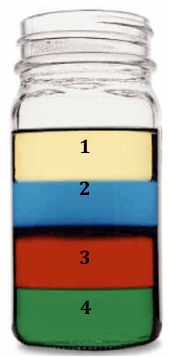
40.
Put the liquids in order from most dense to least dense?
a)
4, 3, 2, 1
b)
1, 2, 3, 4
c)
3, 4, 2, 1, 
d)
4, 3, 1, 2
41.

Rank the objects from MOST dense to LEAST dense.

a)

left, center, right

b)

right, center, left

c)

left, right, center

d)

right, left, center

e)

center, left, right

42.
What is the formula for density?
a)
density = mass x volume
b)
density = mass / volume
c)
density = mass + volume
d)
density = mass - volume
43.
Jack has a rock. The rock has a mass of 14g and a volume of 2cm3. What is the density of the rock?
a)
7 mL
b)
7 g/cm3
c)
28 g/cm3
d)
1/7 g/cm3
44.
What is the measuring unit for mass?
a)
centimeter 
b)
millimeter 
c)
grams 
d)
pounds
45.
Which units of measurement are used for volume?
a)
grams
b)
centimeters
c)
grams/milliliter
d)
milliliter
46.
What is this tool to get volume?
a)
triple beam balance
b)
ruler
c)
thermometer
d)
graduate cylinder
47.

Which has the greatest density?

a)

A

b)

B

c)

C

d)

All the same density

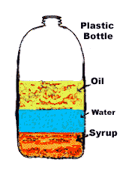
48.
Which liquid is the least dense?
a)
oil
b)
water
c)
syrup 
d)
plastic bottle
49.
What element is this?
a)
Helium
b)
Hydrogen
c)
Argon
d)
Silver
50.
How many electrons does potassium K contain? (click to see image)
a)
19
b)
39
c)
20
d)
40
51.
What's a valence electron?
a)
electrons in the second energy level
b)
electrons in the outermost energy level
c)
the atomic number
d)
electrons in the first level
52.
How many dots would a Lewis Dot structure of Helium have?
a)
1
b)
2
c)
8
d)
0
53.
How many valence electrons are in Phosphorus?
a)
15
b)
4
c)
5
d)
31
54.
?
a)
Lithium
b)
Boron
c)
Carbon
d)
Neon
55.
How many electrons should Hydrogen have around its Lewis dot model?
a)
1
b)
2
c)
7
d)
8
56.
a)

Ring Stand

b)

Iron Ring

c)

Metal Rack

57.
a)

Beaker Tongs

b)

Crucible Tongs

c)

Test Tube Tongs

58.
a)

Erlenmeyer Flash

b)

Florence Flalsh

c)

Volumetric Flask

d)

Flask Flask

59.
a)

Wire Gauze

b)

Wire Mesh

c)

Wire Cover

60.
a)

Graduated Cylinder

b)

Test Tube

c)

Buret

61.
a)

Test Tubed Holder

b)

Test Tube Clamp

c)

Test Tube Rack

62.

Name the object.

a)

Test tube rack

b)

Test tube clamps

c)

Goggles

d)

Petri dish

e)

Ring stand

63.
Name this item. 
a)
hot plate
b)
electronic balance
c)
bunsen burner
d)
scales
64.

These items are used to protect your hands and considered PPEs (personal protective equipment)

a)

Safety glasses

b)

Safety gloves

c)

Safety net

d)

Safety beakers

65.

Name this safety equipment.

a)

smock

b)

apron

c)

cover up

d)

goggles

66.

What piece of equipment is this?

a)

Flask

b)

Bunsen Burner

c)

Test Tube

d)

Striker

67.

What piece of equipment is this?

a)

Graduated Cylinder

b)

Test Tube

c)

Beaker

d)

Pipette

68.

What piece of equipment is this?

a)

Microscope

b)

Magnifying Glass

c)

Googles

d)

Lab Coat

69.
a)

scoopula

b)

dropper

c)

crucible tongs

d)

glassware tongs

70.
a)

beaker

b)

graduated cylinder

c)

Erlenmeyer flask

d)

test tube

71.

Color is what type of property?

a)

Physical

b)

Chemical

72.

Reactivity is what type of property?

a)

Physical

b)

Chemical

73.

What is a sign of a physical change?

a)

Bubbles forming

b)

Color changing

c)

Stretching

d)

Producing heat

74.

What is a sign of a chemical change?

a)

Stretching

b)

Tearing

c)

Compressing

d)

Bubbles

75.

Which of the following changes is a physical change of matter?

a)

water evaporating

b)

paper burning

c)

a nail rusting

d)

a silver spoon tarnishing

76.

Which of these observations would likely be an indication of a chemical change?

a)

A change in odor when two substances are mixed

b)

A change in temperature when a hot substance is left standing in air

c)

A change in volume as a substance is heated

d)

The disappearance of a liquid as it boils

77.

You mixed two liquids and a precipitate formed, what kind of change occured?

a)

Physical

b)

Chemical

78.

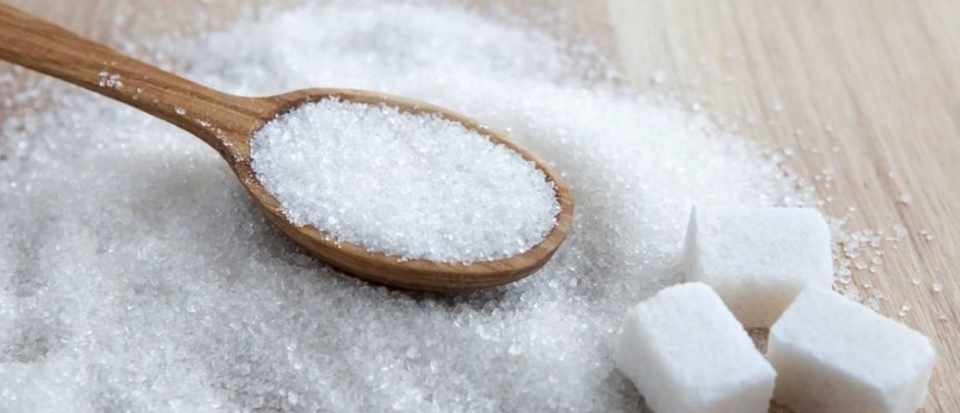
What happens when sugar dissolves in water?

a)

Physical change because a new substance is formed

b)

Chemical change because a new substance is formed

c)

Physical change because the sugar is just getting smaller

d)

Chemical change because the sugar is just getting smaller

79.

Signs of a physical change:

a)

Compress

b)

Shatter

c)

Tear

d)

Precipitate

80.

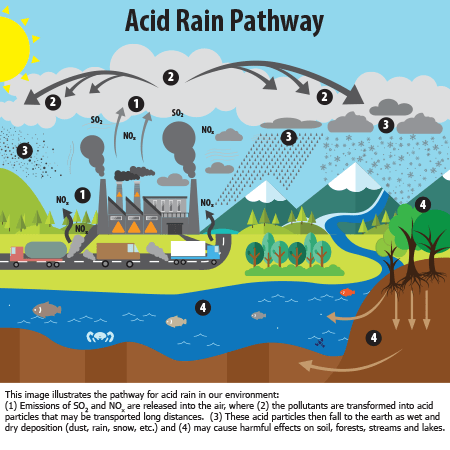
Acid Rain

a)

Physical Change

b)

Chemical Change

81.

Priya is measuring a piece of ribbon for a craft project. The ribbon is 25.0 cm long. How many meters is this?

a)

25

b)

2.5

c)

0.0025

d)

0.25

82.

Convert 3.5 kg to grams.

a)

35

b)

3500

c)

350

d)

35,000

83.

Avery, James, and Abigail are conducting a science experiment. They have 500 mL of a chemical solution. How many liters of solution do they have?

a)

5

b)

50

c)

5000

d)

0.5

84.

Convert 2.5 hours to seconds.

a)

9000

b)

90000

c)

900000

d)

900

85.

How many minutes are in a school year, 187 days?

a)

269,280 min.

b)

16, 200 min.

c)

16, 156 min.

d)

269,000 min.