wayground logo

Free Printable Worksheets

Font size

S
M
L
XL
Worksheets

3RD 9 WKS IPC FINAL

Total questions: 90

Worksheet time: 2hrs 34mins

Name
Class
Date
1.

If a neutrally charged atom has 3 electrons, how many protons does it have?

a)
1
b)
2
c)
4
d)
3
2.
Basic unit of matter - the smallest piece of matter known
a)
Element 
b)
Atom
c)
Molecule
d)
Compound
3.
Particles in an atom that are neutral and have no charge are 
a)
negatrons 
b)
electrons 
c)
neutrons 
d)
protons 
4.
The smallest particle of any particular type of matter is known by which of the following terms?
a)
Compound
b)
Atom
c)
Chemical
d)
Element
5.
all matter is made of what 
a)
energy 
b)
atoms 
c)
electrons 
d)
compounds 
6.
If the number of protons equal the number of _____, the atom will have no charge
a)
protons
b)
neutrons
c)
electrons
d)
nucleus
7.
The subatomic particle with a negative charge is the
a)
electron
b)
proton
c)
neutron
d)
nucleus 
8.
What is the atomic number?
a)
the number of protons
b)
the number of protons and neutrons
c)
the number of neutrons
d)
the number of protons and electrons
9.
What is the mass number?
a)
the number of protons
b)
the number of protons and neutrons
c)
the number of neutrons
d)
the number of protons and electrons
10.
An atom with an unequal number of protons and electrons is said to have (a) ___.
a)
no charge
b)
balance
c)
charge
d)
unbalance
11.
Signs that a chemical change has occurred include
a)
a change in color
b)
the release of bubbles
c)
the production of an odor
d)
all of the above
12.
A substance that is made up for one type of atom is called an:
a)
atom
b)
element
c)
compound
d)
mixture
13.
All matter is made of what 
a)
energy 
b)
atoms 
c)
electrons 
d)
compounds 
14.
H2
a)
Element
b)
Compound
15.
CO2
a)
Element
b)
Compound
16.
CaCo3
a)
Element
b)
Compound
17.
H2O
a)
Element
b)
Compound
18.
Where are electrons of an atom found?
a)
Nucleus
b)
Electron Cloud
c)
Some are in the nucleus and some in the electron cloud.
d)
They are moving everywhere.
19.
A negatively charged particle that moves around the nucleus is a(n)
a)
proton
b)
neutron
c)
electron
d)
quark
20.
How many protons does Carbon have?
a)
3
b)
4
c)
5
d)
6
21.
Burning a piece of paper 
a)
Chemical Change 
b)
Physical Change 
22.
Melting Ice 
a)
Chemical Change 
b)
Physical Change 
23.
How many ATOMS are in the following compound:  C2H4O2
a)
3
b)
8
c)
1
d)
6
24.
What is the symbol for chlorine?
a)
C
b)
Ch
c)
Ce
d)
Cl
25.
How many protons does Carbon have?
a)
3
b)
4
c)
5
d)
6
26.
Negatively charged part of an atom located in levels outside the nucleus
a)
Proton
b)
Neutron
c)
Electron
d)
Neutron
27.
In a liquid, the molecules have a definite shape and a definite volume
a)
True 
b)
False
28.
Mixing salt and water 
a)
Chemical Change 
b)
Physical Change 
29.
Melting Ice 
a)
Chemical Change 
b)
Physical Change 
30.
Milk turning sour
a)
Chemical Change
b)
Physical Change 
31.
What is the symbol for chlorine?
a)
C
b)
Ch
c)
Ce
d)
Cl
32.
Which of these elements has a symbol which DOES NOT include a letter from its name?
a)
iron
b)
helium
c)
magnesium
d)
zinc
33.
What is the symbol for the element Neon?
a)
Na
b)
Ne
c)
He
d)
N
34.
Which of the following is NOT a mixture? 
a)
NaCl + H2O
b)
C6H12O6 + H2O
c)
C6H12O6
d)
SiO2 +H2O
35.
Salt Water 
a)
Compound 
b)
Mixture 
36.
A bar of gold is made of only one ______
a)
Plasma 
b)
Mixture 
c)
Element 
d)
Compound
37.
If the number of electrons in an element changes, a new element is formed 
a)
True 
b)
False 
38.
How many ATOMS are in the following compound:  C2H4O2
a)
3
b)
8
c)
1
d)
6
39.
On Periodic Table, how are elements ordered?
a)
color
b)
shape
c)
atomic number
d)
alphabetically
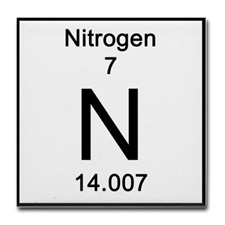
40.
What is the number of protons that the element in this image contain?
a)
14
b)
7
c)
15
d)
18
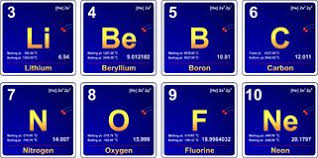
41.
What is the atomic mass of "F"
a)
9
b)
18
c)
17
d)
19
42.
What is the number 22?
a)
APE number
b)
Atomic Mass
c)
Element Name
d)
Chemical Symbol
43.
The positive particles of an atom are 
a)
electrons 
b)
positrons 
c)
neutrons 
d)
protons 
44.
the central region of an atom where its neutrons and protons are is its 
a)
nucleus 
b)
electron cloud
c)
core 
d)
center 
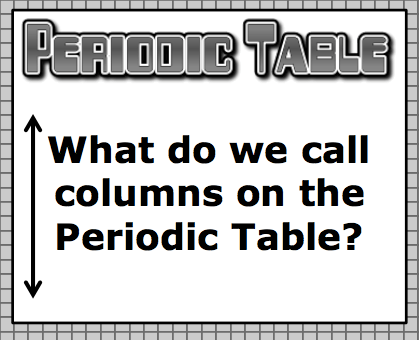
45.
A "group" is a ____________ on the periodic table.
a)
column
b)
row
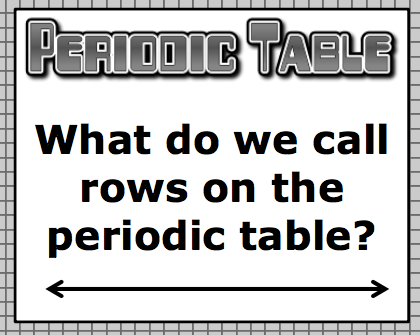
46.
A "period" is a ____________ on the periodic table.
a)
column
b)
row
47.
Helium, neon, argon, krypton, xenon, and radon are known as  _____________.
a)
halogens
b)
noble gases
c)
metalloids
d)
transition elements
48.
How many elements are represented in the compound?
Na2CO3
a)
1
b)
2
c)
3
d)
4
49.
Is salt (NaCI) a compound or a element
a)
Compound
b)
element
50.
Is melting butter for popcorn a chemical or physical change?
a)
chemical
b)
physical
51.
Is burning wood a chemical or physical change?
a)
chemical
b)
physical
52.
When you break a cracker into pieces it is a 
a)
Chemical change
b)
Physical change
c)
Chemical Weathering
d)
Physical Weathering
53.
Which is a chemical change?
a)
freezing fruit juice
b)
slicing a potato
c)
boiling water
d)
copper metal turning green
54.

How many atoms of Hydrogen are in this compound

a)

1

b)

2

c)

3

d)

4

55.
How many elements are in the this compound?
H2CO4N5
a)
11
b)
4
c)
12
d)
5
56.
a)
Periods
b)
Groups
57.
a)
Periods
b)
Groups
58.
A proton has a positive charge and a mass of ____ amu.
a)
0
b)
1
c)
.5
d)
2
59.
A neutron has a negative charge and a mass of ____ amu.
a)
0
b)
1
c)
2
d)
.5
60.
An electron has a negative charge and a mass of ___ amu.
a)
0
b)
1
c)
.5
d)
2
61.
The number of protons in an element can be found by:
a)
looking up the group the element is in.
b)
subtracting the atomic mass from atomic number
c)
looking up the atomic mass
d)
looking up the atomic number
62.
Which particles are in the nucleus?
a)
Protons
b)
Neutrons
c)
protons and electrons
d)
protons and neutrons
63.
How do you calculate the charge of an atom?
a)
protons - electrons = charge
b)
protons - neutrons = charge
c)
its equal to the number of electrons = charge
d)
protons = charge
64.
In a stable atom the amount of electrons is electron is equal to
a)
neutrons
b)
protons
c)
atomic mass
d)
neutrons + protons
65.
Where is the neutron located?
a)
In the loose nucleus with the electron
b)
In the dense nucleus with the protons
c)
In the electron cloud
d)
The nucleus floats on orbitals
66.
How many neutrons does oxygen have?
a)
16
b)
15.99
c)
8
d)
Doesn't contain any neutrons
67.
How many neutrons does the an element with an atomic number of 3 and a mass of 6.9 contain?
a)
6.9
b)
4
c)
3
d)
7
68.
An atom with 19 protons, and 19 electrons and a mass of 39 has how many neutrons?
a)
19
b)
39
c)
20
d)
58
69.
Where is the proton located?
a)
In the very dense nucleus
b)
Floating around in the negative electron cloud
c)
the loose nucleus
d)
the positive electron cloud
70.
Elements can have the same number of protons?
a)
True
b)
False
71.
How many neutrons in C-14?
a)
6
b)
7
c)
14
d)
8
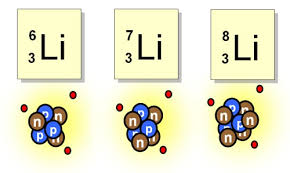
72.
which atom has  4 neutrons?
a)
Li-6
b)
Li-7
c)
Li-8
d)
they have the same # of neutrons
73.
When an atom loses a valence electron, it becomes a(n) _____________ ion.
a)
positive
b)
negative
c)
neutral
d)
polyatomic
74.
When an atom gains a valence electron, it becomes a(n) _____________ ion.
a)
positive
b)
negative
c)
neutral
d)
polyatomic
75.
Atoms that gain & lose electrons are called _________
a)
ions
b)
isotopes
c)
radioactive
d)
corrosive
76.

I understand Most of what we have learned since January

a)

true

b)

false

77.

Whose model suggested that negative particles were mixed in with positively charged material - like seeds in a watermelon?

a)

J.J. Thomson

b)

Ernest Rutherford

c)

Niels Bohr

d)

Albert Einstein

78.

Who discovered that the atom had an small, dense, positively charged center?

a)

Ernest Rutherford

b)

J.J Thomson

c)

Robert Millikan

d)

John Dalton

79.

Place the following atomic models in order, from earliest to latest:


A) Rutherford B) Thomson C) Dalton

a)

B, C, A

b)

C, A, B

c)

A, C, B

d)

C, B, A

80.
What can you conclude from the fact that scientists continue to update the atomic model?
a)
New information about atoms continues to be discovered
b)
Old information about atoms is completely useless
c)
Scientists did not have any information about atoms until a few years ago
d)
Scientists still have no idea what atoms look like
81.
Where are electrons of an atom found?
a)
Nucleus
b)
Electron Cloud
c)
Some are in the nucleus and some in the electron cloud.
d)
They are moving everywhere.
82.

Which of the following is a positively charged particle found in the nucleus of an atom?

a)

Electron

b)

Proton

c)

Neutron

d)

Quark

83.

Which particle carries no charge?

a)

Neutrons

b)

Electrons

c)

Protons

84.
Which is the smallest?
a)
electron
b)
proton
c)
atom
d)
neutron 
85.
What is in the nucleus of an atom?
a)
Neutrons and protons 
b)
Protons
c)
Protons and Electrons
d)
Electrons and Nuetrons
86.
True or False? Neutrons have a negative charge
a)
True
b)
False
87.
A particle that moves around the nucleus is a(n)...
a)
Proton
b)
Neutron
c)
Electron
d)
Quark
88.
the central region of an atom where its neutrons and protons are is its 
a)
nucleus 
b)
electron cloud
c)
core 
d)
center 
89.
The positive particles of an atom are 
a)
electrons 
b)
positrons 
c)
neutrons 
d)
protons 
90.

All matter is made of what

a)

energy

b)

atoms

c)

electrons

d)

compounds