
 Worksheets
AE SM1 Final
Total questions: 50
Worksheet time: 33mins
Which is NOT located on the wing of an aircraft?
Horizontal Stabilizer
Trim Tab(s)
Elevator
Rudder
Which is NOT a MAJOR component of an Airplane?
Fuselage
Wing
Ailerons
Empennage
What is Center of Gravity?
The center of the plane
Where the weight is evenly distributed
Is aligned with one center line
Where the mass is evenly distributed
To turn the plane left what axis will you turn on?
Longitudinal Axis
Vertical Axis
Lateral Axis
To lower the nose down or up what axis will you turn on?
Longitudinal Axis
Vertical Axis
Lateral Axis
To pivot the plane what axis will you turn on?
Longitudinal Axis
Vertical Axis
Lateral Axis
When you turn on the longitudinal axis it is called...
Roll
Pitch
Yaw
Spin
When you turn on the Lateral axis it is called...
Roll
Pitch
Yaw
Spin
When you turn on the Vertical axis it is called...
Roll
Pitch
Yaw
Spin
Which of the following are your POSITIVE forces (MULTIPLE ANSWER)
Lift
Drag
Weight
Thrust
When calculating the weight and balance of a plane which of the following are accounted for? (MULTIPLE ANSWER)
Cargo
Planes Weight
Pilot
Fuel
What is Bernoulli's Principle?
The Law of Conservation of Energy
Fluid flow accelerates over the wing
Newton's Third Law of Motion
Lift allows us to turn the aircraft
How do you accelerate the plane if it is not moving forward or backward?
Increase Thrust
Decrease Thrust
Decrease Weight
Increase Drag
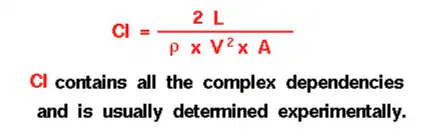
What formula is this?
Coeffect of Lift
Coeffect of Drag
Lift
Reynolds Number
Calculate Reynolds Number when
p=0.817 Kg/m^3
v=227.8 m/s
l= 1.1 m
u= 1.65*10^-5 Ns/m^2
12,408,000
8.0*10^-8
10,254,138
1,241
Control surface located on the rear of the horizontal stabilizer that controls vertical movement of the nose.
Vertical Stabilizer
Horizontal Stabilizer
Propulsion system
Elevator
Component of a wing that is located on the outside rear of each wing and is adjusted for turning.
Horizontal stabilizer
Aileron
Propeller
Flap
Airplane component that is located on the inside rear of wings and can be adjusted at takeoff and landing for additional lift.
Vertical Stabilizer
Horizontal Stabilizer
Flap
Aileron
Which of the following are not created by a physical contact between an aircraft and the air around it?
Drag
Gravity
Lift
All of the above
True or False: Some shapes experience less drag because air particles are able to flow around them more easily.
True
False
What does NM stand for?
Nautical Mile
Nautical Meter
Naval Mile
Naval Meter
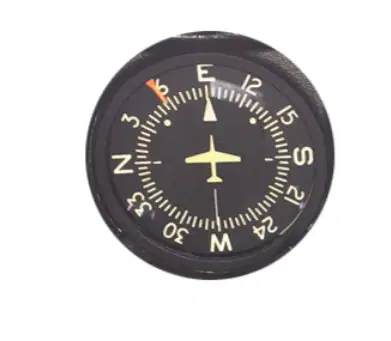
What is this?
A Compass
A VOR
An Altimeter

What does this tell you?
How far you are from your destination
How far you are from a VOR tower
How far you are from the ground
How far north you are
How does the bypass ratio affect the basic fuel consumption?
Increase in bypass ratio reduces the fuel consumption.
Decrease in bypass ratio reduces the fuel consumption.
Increase in bypass ratio increases the fuel consumption.
Decease in bypass ratio Increases the fuel consumption.
Convert 843.9 nm/h to Mach using 1 Mach = 661.47 nm/h
1.28
558,215
0.784
1.29
In a four stroke engine how many operations are completed in 2 revolutions
6
2
8
4
What vehicles can you commonly find a two stroke engine in? (SELECT ALL THAT APPLY)
Ultralight Aircraft
Lawnmower
Car
Small Aircraft
What vehicles can you commonly find a four stroke engine in? (SELECT ALL THAT APPLY)
Ultralight Aircraft
Lawnmower
Car
Small Aircraft
Given 1 nm = 1.15 statute mile = 6,076 ft convert 72,912 feet to nm:
12 nm
12 ft
10 nm
10 ft
Object in state of rest or uniform motion will continue unless acted upon by another force
Newtons Law of Inertia
Newtons Law of Acceleration
Newtons Third Law
Modulus of Elasticity
Which forces do newtons first law affect? (SELECT ALL THAT APPLY)
Lift
Drag
Gravity
Thrust
Which of the following is not a gas turbine?
Turbo Jet
Turbo Fan
Turbo Prop
Turbo Engine
When comparing two-stroke engines to four-stroke engines, which of the following is true? (Select all that apply)
Typically more powerful
Higher fuel consumption
More noise
More fuel efficient
Put these four steps of engine air intake in order from start to finish:
a. Compression
b. Power (combustion)
c. Intake
d. Exhaust
What does I.S.S stand for?
What force opposes Lift?
Weight
Drag
Gravity
Thrust
What force opposes thrust?
Lift
Weight
Drag
Gravity
Acceleration of an object is proportional to the objects:
Force
Mass
Drag
Lift
How is lift generated?
Air movement above the wings
Air movement below the wings
Decreasing the weight
Increasing the weight
What produces thrust?
Propulsion System
Lift
Pilots Inputs
Fuselage

What is the length of the line?
2.0 cm
2.3 cm
2.1 cm
3.0 cm

A kilometer is to mile as Celsius is to _______.
Fahrenheit
hot
warm
cold

What tool is used to measure length?
balance
ruler
thermometer
graduated cylinder

Which of these is not a unit for measuring volume?


The unit used to measure volume
Meters (Millimeters, Centimeters, ect.)
Liters(Milliliters ect.)
Grams
Density


These tools are called what?
Beakers
Cups
Graduated Cylinders
Thermometers


What tool is this and what is it used for?
Cup used to Drink
Beaker used for pouring
Graduated Cylinder used to Measure liquid Volume
A Science thingy


