
 Worksheets
8-21 Circuit Recap
Total questions: 52
Worksheet time: 9hrs 40mins

What resistors are in series? Select all that apply.
R1 and R3
R2 and R4
R1 and R4
None of the resistors are in series right now.
What do R1 and R2 have in common?
The have the same current
They have the same voltage
The have the same resistance
What do R3 and R4 have in common?
The have the same current
They have the same voltage
The have the same resistance
What resistors are in parallel? Select all that apply.
R1 and R2
R1 and R3
R1 and R4
R3 and R4
What is the equivalent resistance of R1 and R2?
150 Ohms
350 Ohms
71.4 Ohms
127.3 Ohms
What is the equivalent resistance of R3 and R4?
150 Ohms
550 Ohms
71.4 Ohms
127.3 Ohms
What is the total resistance of the circuit?
900 Ohms
350 Ohms
71.4 Ohms
198.7 Ohms
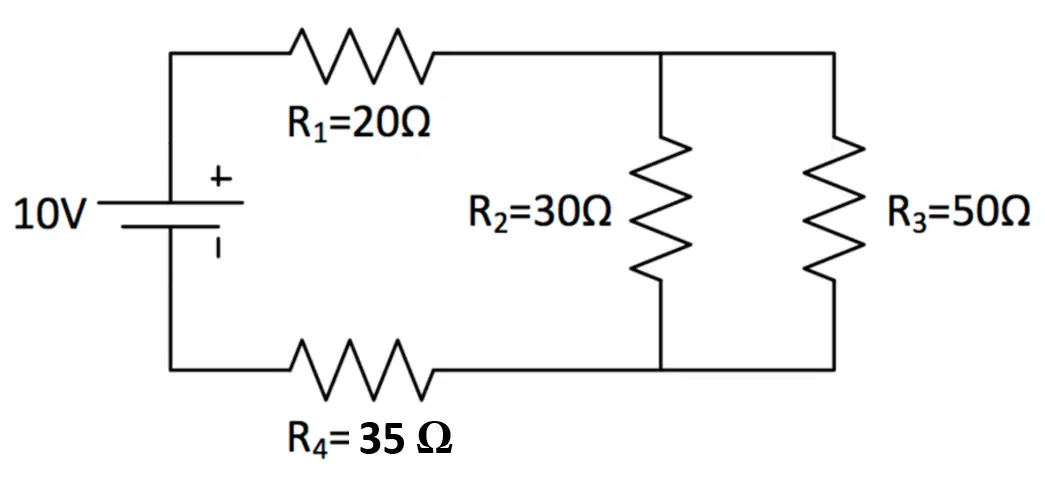
Which two resistors are in series within the circuit? Select ALL!
R1
R2
R3
R4
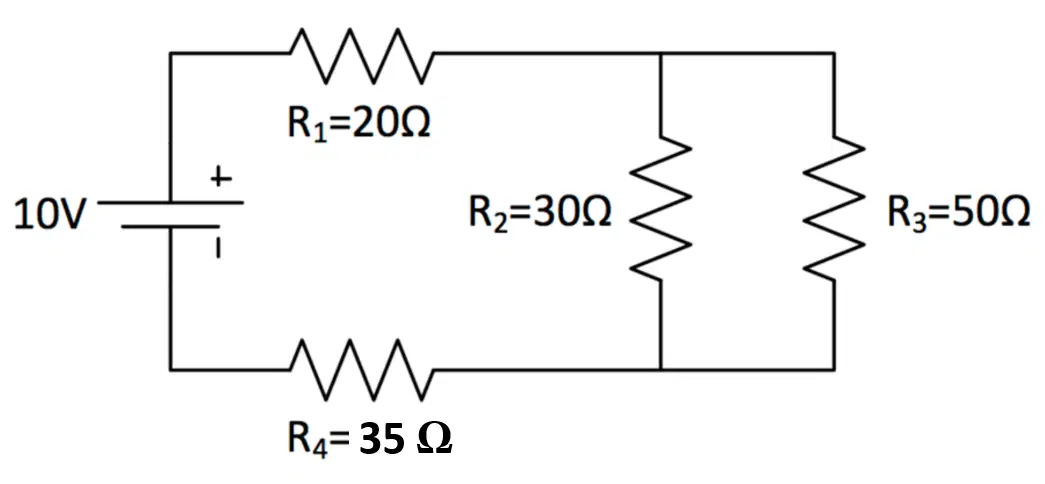
What do R1 and R4 have in common?
They have the same current.
They have the same voltage.
They have the same resistance.
They have the same power.
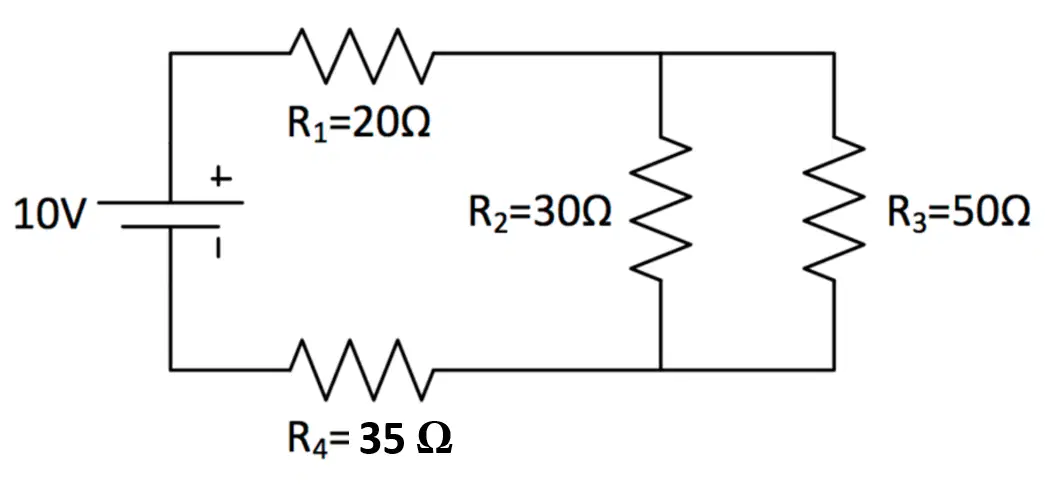
Which two resistors are in parallel within the circuit? Select ALL!
R1
R2
R3
R4
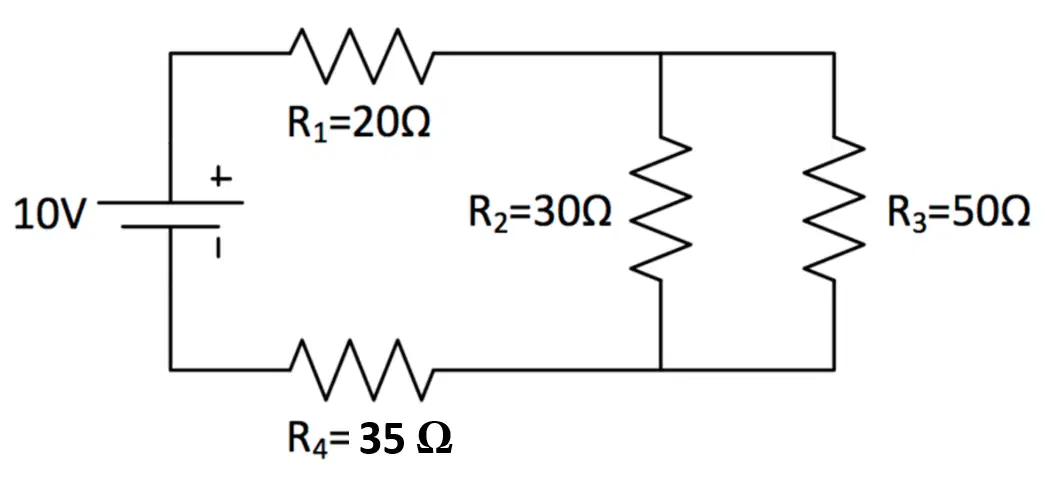
Which two resistors share the same voltage? Select all!
R1
R2
R3
R4
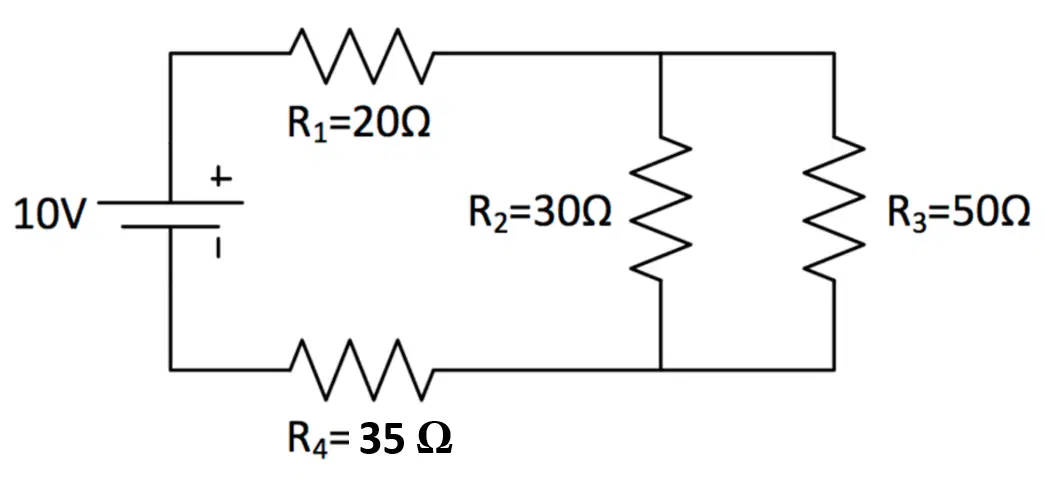
What is the equivalent resistance of R2 and R3?
15 Ohms
18.75 Ohms
21.33 Ohms
80 Ohms
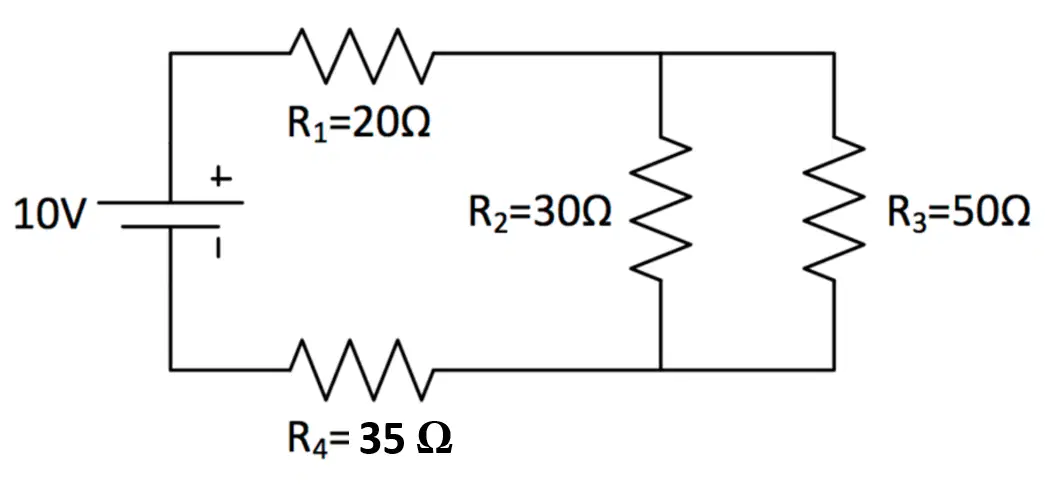
After simplifying R2 and R3, what should you do?
Find the inverse sum (1/R) of R1 and R4
Find the inverse sum (1/R) of R23 and R4
Find the sum of all three resistors (R1, R23 and R4)
Find the sum of R1 and R2 and the inverse sum of R23
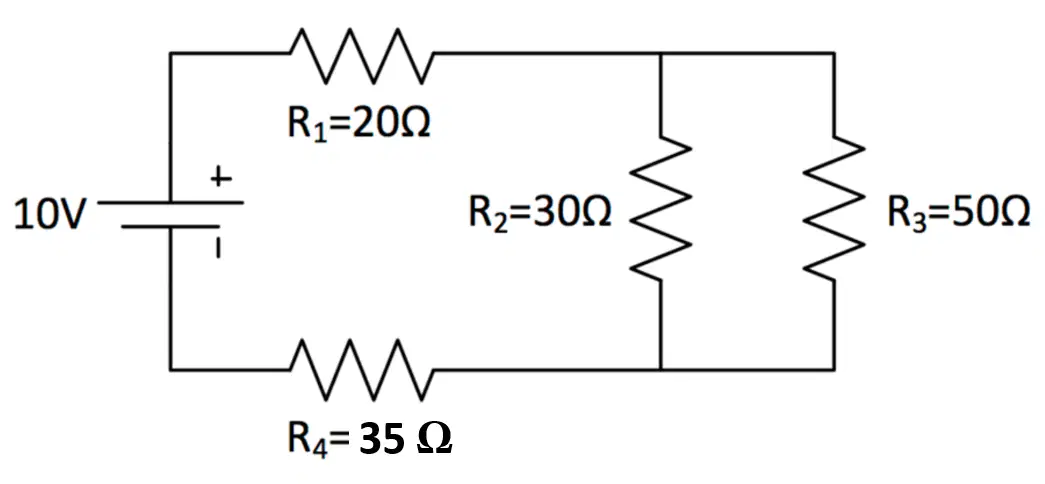
What is the total resistance of the circuit?
40 Ohms
70 Ohms
73.75 Ohms
135 Ohms
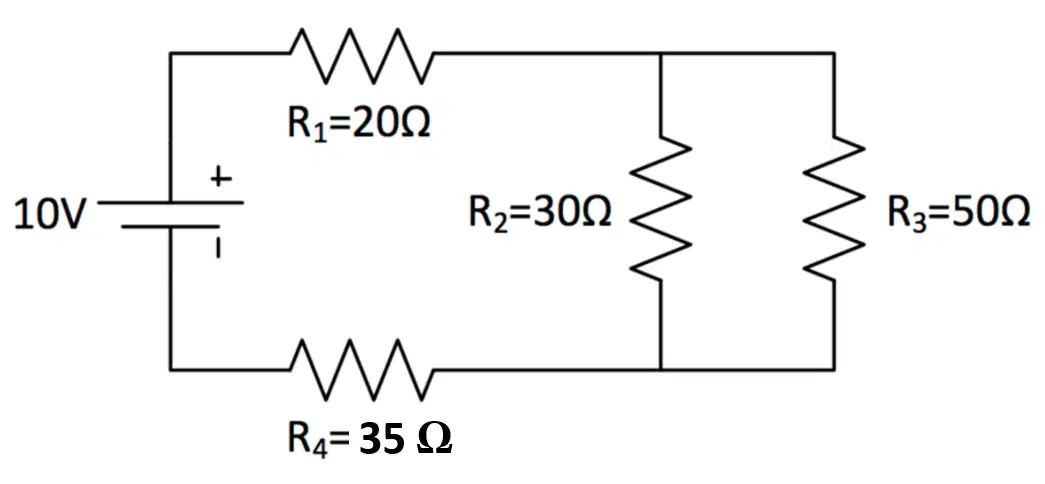
What is the current out of the battery?
0.136 A
0.425 A
5.87 A
0.252 A
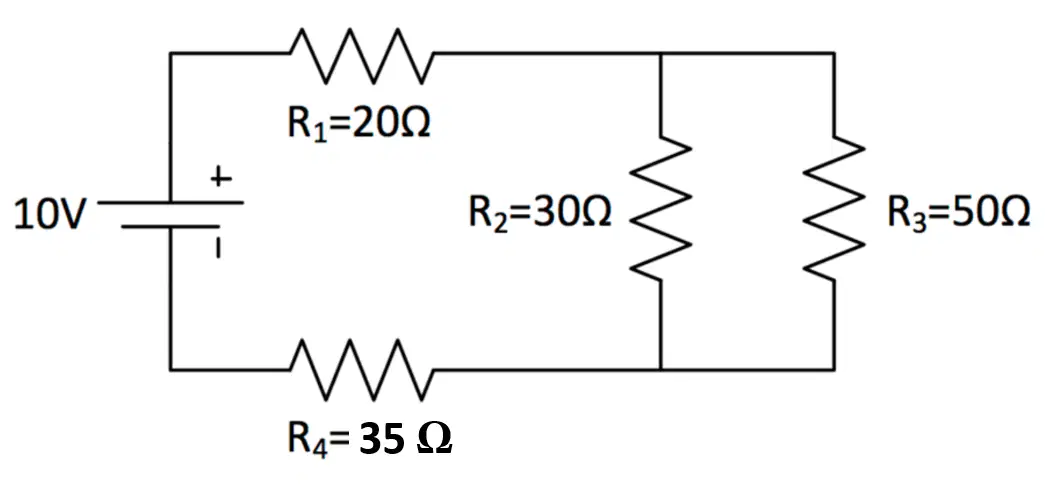
What is the current flowing through Resistor one?
0.436 A
0.136 A
154 A
77 A
What is the current flowing through Resistor four?
0.436 A
0.136 A
154 A
77 A
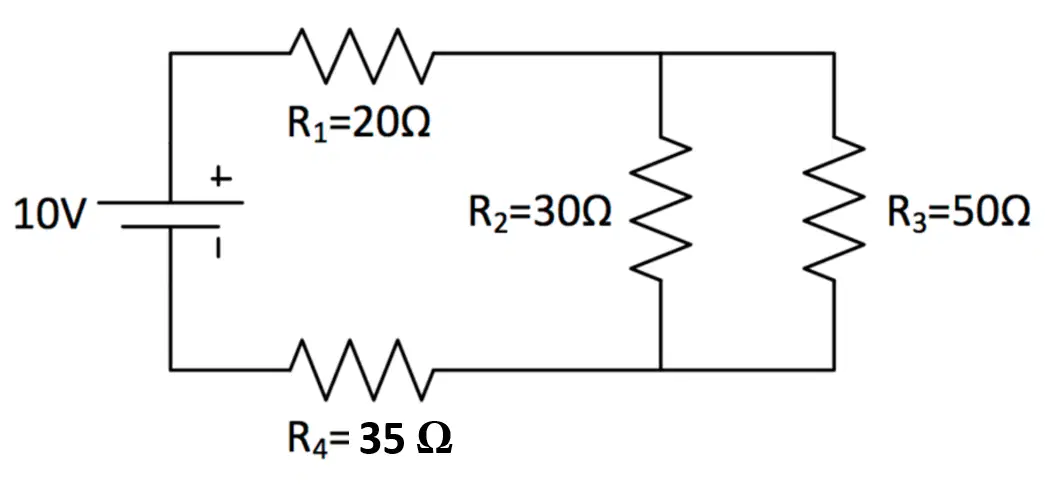
What is the voltage drop at Resistor one?
10 V
8.45 V
2.72 V
4.34 V
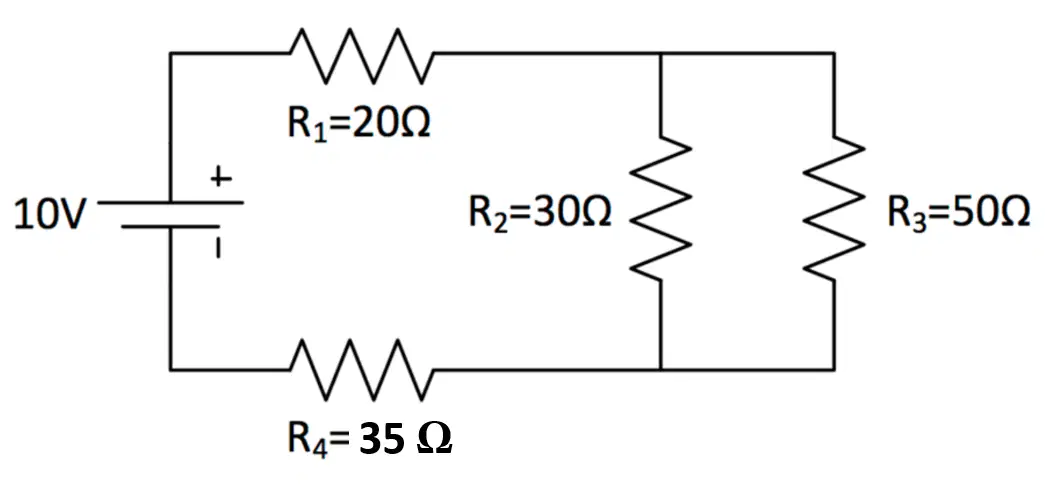
What is the voltage drop at Resistor 4?
10 V
4.76 V
2.72 V
5 V
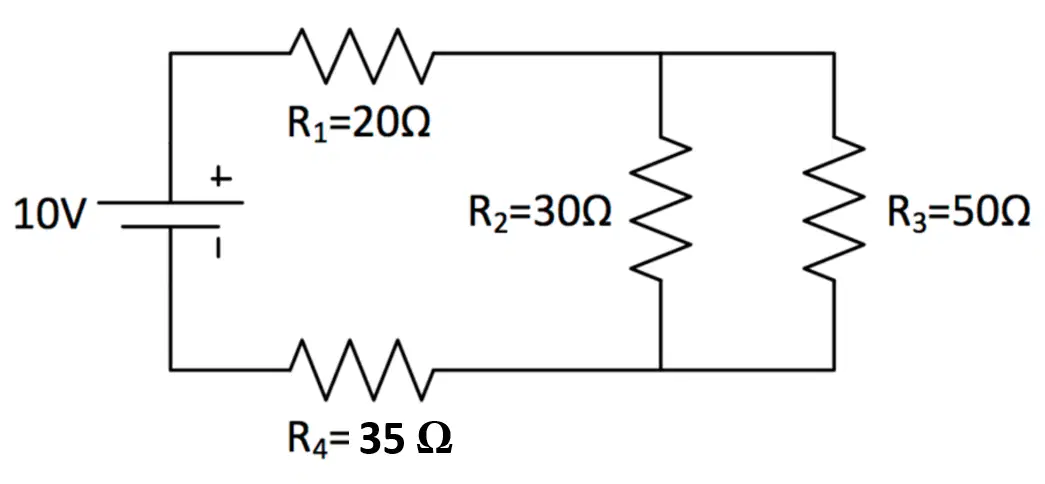
What is the voltage drop at Resistor 2?
10 V
2.52 V
2.71 V
5 V
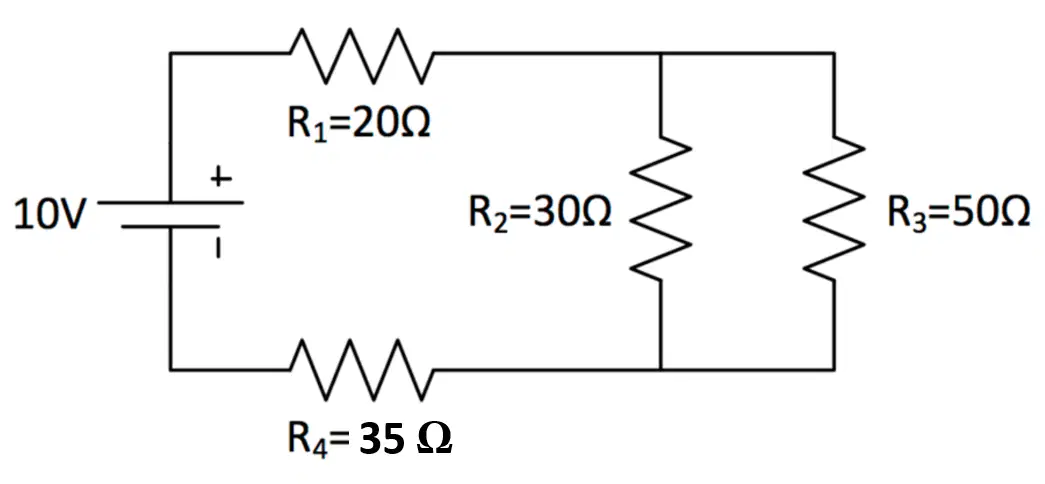
What is the voltage drop at Resistor 3?
10 V
2.52 V
2.71 V
5 V
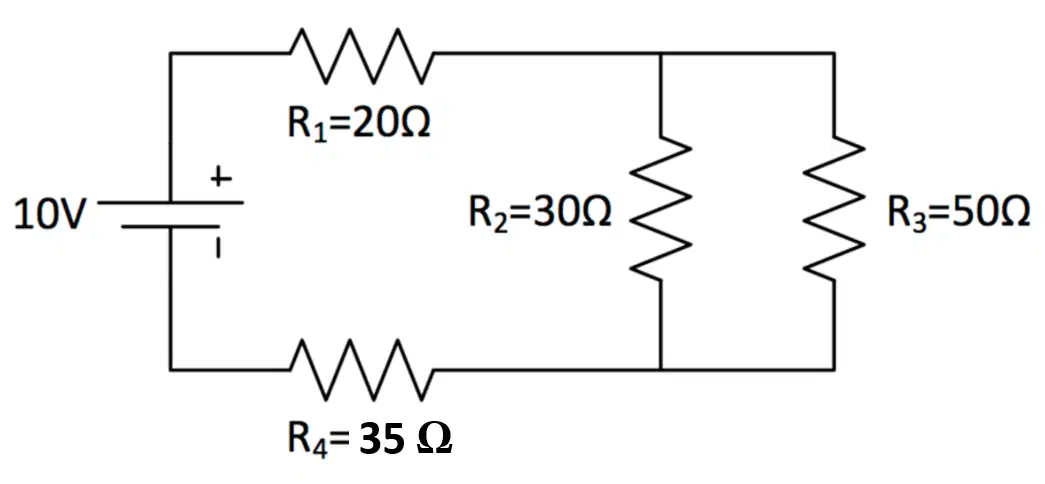
What is the current that is flowing through Resistor 2?
0.22 A
0.136 A
0.084 A
0.0506
What is the current that is flowing through Resistor 3?
0.22 A
0.136 A
0.084 A
0.0504
What does the current in R2 and R3 add up to?
0.22 A
3.4 A
0.136 A
0.0506
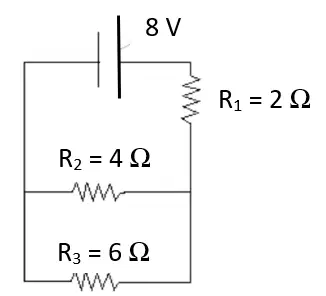
What is the total resistance in the circuit?
1.1 ohms
12 ohms
4.4 ohms
2.4 ohms
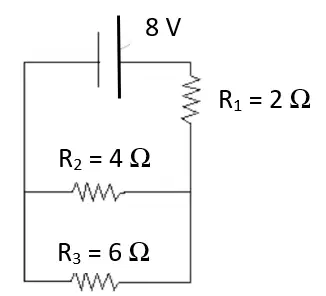
What is the total current through the battery?
0.75 A
1.82 A
3.0 A
0.33 A
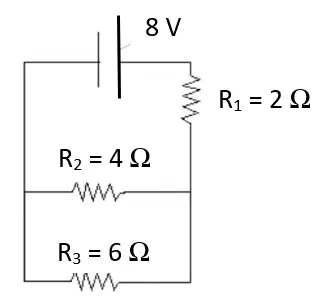
What is the current through R1?
0.73 A
1.82 A
3 A
0.33 A
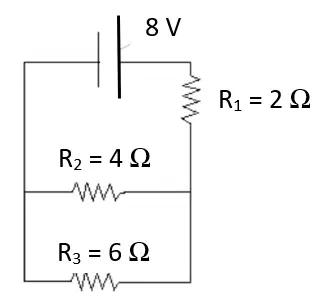
What does the current from R2 and R3 add up to?
1.82 A
4.5 A
2.2 A
0.73 A
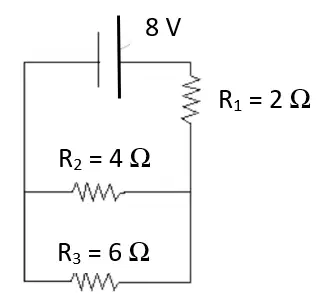
What is the voltage drop over R1?
6.1 V
3.64 V
8 V
4.3 V
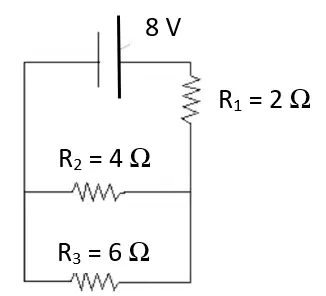
What is the voltage drop over R2?
4.36 V
3.64 V
8 V
1.3 V

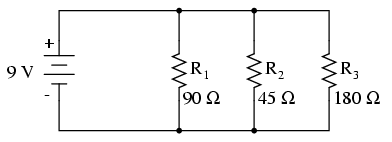
The voltage stays the same throughout the circuit.
A material in which electrons are able to move easily is a(n)
Circuit
Insulator
Resistance
Conductor
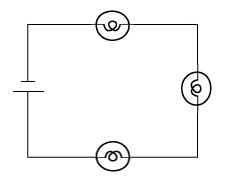
In this circuit, when one light goes out, the other lights will stay on.
When more light bulbs are added they all remain bright.

The ammeter below shows the current produced by a series of solar cells being used to power a simple series circuit. If the circuit’s resistance is 0.2 Ω, what voltage is supplied by the cells?
750 V
50 V
3 V
25 V

The diagram below represents an electric circuit consisting of four resistors and a 12-volt battery.
What is the total resistance of the circuit shown?
72 ohms
3.0 ohms
0.33 ohms
18 ohms

The diagram above represents an electric circuit consisting of four resistors and a 12-volt battery.
What is the current measured by ammeter A shown in the diagram?
4.0 A
72 A
2.0 A
0.50 A
Three resistors, 4 ohms, 6 ohms, and 8 ohms, are connected in parallel in an electric circuit. The equivalent resistance of the circuit is
more than 4 ohms
less than 4 ohms
equal to 4 ohms
equal to 18 ohms
A circuit consists of a 10.0-ohm resistor, a 15.0-ohm resistor, and a 20.0-ohm resistor connected in parallel across a 9-volt battery. What is the total current in the circuit?
1.95 amps
4.62 amps
3.34 amps
0.65 amps

The circuit diagram above represents four resistors connected to a 12-volt source. What is the total current in the circuit?
2.0 A
0.50 A
24 A
8.6 A

The diagram above represents a circuit consisting of two resistors connected to a source of potential difference.
What is the current through the 20 ohm resistor?
12 A
6.0 A
4.0 A
0.25 A
A 2.0-ohm resistor and a 4.0-ohm resistor are connected in series with a 12-volt battery. If the current through the 2.0-ohm resistor is 2.0 amperes, the current through the 4.0-ohm resistor is
1.0 A
4.0 A
2.0 A
3.0 A
A 3.0-ohm resistor and a 6.0-ohm resistor are connected in series in an operating electric circuit. If the current through the 3.0-ohm resistor is 4.0 amperes, what is the potential difference across the 6.0-ohm resistor?
12 V
24 V
2.0 V
8.0 V
A 3-ohm resistor and a 6-ohm resistor are connected in parallel across a 9-volt battery. Which statement best compares the potential difference across each resistor?
The potential difference across the 6-ohm resistor is four times as great as the potential difference across the 3-ohm resistor.
The potential difference across the 6-ohm resistor is half as great as the potential difference across the 3-ohm resistor.
The potential difference across the 6-ohm resistor is the same as the potential difference across the 3-ohm resistor.
The potential difference across the 6-ohm resistor is twice as great as the potential difference across the 3-ohm resistor.
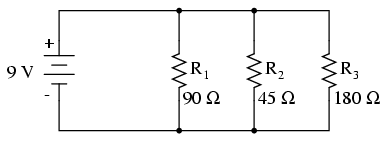
As resistors are added in parallel to a circuit, the total resistance will...

