
 Worksheets
Types of Engines Quiz
Total questions: 54
Worksheet time: 28mins
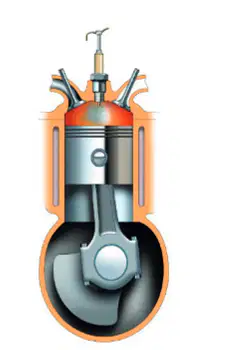
Which type of engine is represented?
Diesel engine
Four-stroke engine
Two-stroke engine
Electric engine
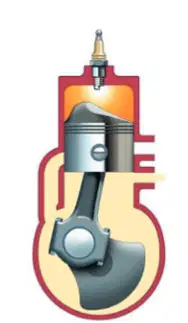
Which type of engine is represented?
Diesel engine
Four-stroke engine
Two-stroke engine
Jet engine
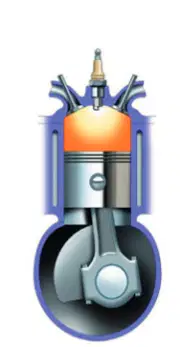
Which type of engine is represented?
Diesel engine
Four-stroke engine
Two-stroke engine
Steam engine
What is a characteristic feature of a two-stroke engine?
It completes a power cycle in two strokes of the piston.
It uses a spark plug for ignition.
It has a separate exhaust valve.
It operates on diesel fuel only.
Which engine type typically has a higher efficiency, diesel or two-stroke?
Diesel engine
Two-stroke engine
Both have the same efficiency
Neither, they are equally inefficient
What direction is the piston traveling during the Power-Stroke?
Up
Down
Left
Right
What are the two types of cooling systems?
Air and Vent
Vent and Electric
Liquid and Electric
Liquid and Air
True or False: An engine's cooling system is designed to transfer excess heat from the engine to the atmosphere.
True
False
What is one advantage of a two stroke engine compared to a four stroke engine?
Longer lifespan
More efficient fuel consumption
Simpler construction
Quieter operation
Which component is not needed in a two stroke engine?
Piston
Camshaft
Connecting rod
Crankshaft
Why do two stroke engines have a great power to weight ratio?
They burn fuel more efficiently
They have fewer components
They use heavier oil
They have more valves
What is a disadvantage of a two stroke engine?
It is heavier than a four stroke engine
It produces less power per revolution
It consumes more fuel and oil
It requires more maintenance
Which of the following is a result of the two stroke engine’s poor lubrication?
Shorter engine life
Increased pollution
Improved efficiency
Reduced noise
Why do two stroke engines produce more pollution?
They use less oil
They are quieter
They consume more fuel and oil
They have more efficient combustion
What happens when the piston reaches the bottom of its stroke?
The intake port is uncovered
The reed valve opens
The piston starts compressing fuel
The intake port closes
What is the main advantage of a 4-stroke engine over a 2-stroke engine?
Higher power output
Lower fuel consumption
Simpler design
Higher oil consumption
In a 2-stroke engine, how is the fuel-air mixture usually introduced into the combustion chamber?
Through a carburetor
Direct injection
Through transfer ports
Through intake valves
What is the primary purpose of the engine cooling system?
To increase the engine's power output
To maintain the engine at an optimal operating temperature
To reduce the weight of the vehicle
To improve fuel efficiency
What is the function of the thermostat in an engine cooling system?
To regulate the flow of coolant through the engine
To increase the coolant temperature
To pump coolant through the system
To add antifreeze to the coolant
Which component is responsible for controlling the opening and closing of intake and exhaust valves?
Crankshaft
Piston
Camshaft
Connecting Rod
What component in the engine mixes air and fuel for combustion?
Carburetor
Radiator
Muffler
Battery
Which part is responsible for timing the opening and closing of engine valves?
Flywheel
Camshaft
Crankshaft
Spark plug
Which component connects the pistons to the crankshaft?
Timing belt
Connecting rod
Valve lifter
What part of the engine ignites the air-fuel mixture?
Fuel pump
Exhaust valve
Spark plug
Piston
What is the role of an oil filter in an engine?
To mix oil with fuel
To clean the engine oil by removing contaminants
To cool the engine oil
To increase engine power
Which part cools the engine by circulating water and coolant?
Radiator
Exhaust manifold
In a four-stroke engine, which stroke is responsible for compressing the air-fuel mixture?
Intake stroke
Compression stroke
Power stroke
Exhaust stroke
What is the primary purpose of a car's transmission?
To control vehicle speed
To transfer power from the engine to the wheels
To filter the fuel
To cool the engine
Which component connects the transmission to the engine?
Clutch
Driveshaft
Differential
Axle
What does a differential do?
Controls fuel injection
Allows wheels to turn at different speeds
Controls braking power
Regulates engine temperature
In a manual transmission, which part allows the driver to engage and disengage the engine from the transmission?
Clutch
Gear stick
Differential
Flywheel
In modern vehicles, ECU stands for:
Electronic Cooling Unit
Engine Control Unit
Electric Carburetor Unit
Exhaust Control Unit
The car's electrical system operates on which voltage?
12 volts DC
24 volts AC
120 volts AC
6 volts DC
What is the purpose of a fuse in a car's electrical system?
Increase electrical flow
Distribute power evenly
Protect electrical components by breaking circuit when overloaded
Connect battery to alternator
Which of these components is NOT part of a car's electrical system?
Battery
Radiator
Alternator
Starter
What is the function of the ignition coil?
Convert low-voltage power to high voltage for spark plugs
Control fuel injection
Charge the battery
Power the headlights
The headlights and taillights are part of which car system?
Transmission
Electrical
Exhaust
Braking
What is the primary purpose of a car's brake system?
To improve fuel efficiency
To control acceleration
To slow down or stop the vehicle
To reduce noise
The function of the master cylinder is to:
Increase the power of braking force
Convert brake pedal force into hydraulic pressure
Provide electrical support to ABS
Control wheel speed
What happens to the brake fluid level when brake pads wear out?
Increases
Decreases
Stays the same
Evaporates
What type of steering system is common in modern vehicles for easy maneuverability?
Manual steering
Power steering
Chain-driven steering
Hydraulic steering
The primary function of a car's exhaust system is to:
Increase fuel efficiency
Control engine temperature
Expel gases from combustion
Provide additional power
Which component reduces harmful emissions in the exhaust system?
Muffler
Catalytic converter
Exhaust manifold
Tailpipe
The muffler in an exhaust system is primarily responsible for:
Filtering emissions
Reducing noise
Improving fuel economy
Increasing speed
Which fuel system component pumps fuel from the tank to the engine?
Fuel injector
Fuel filter
Fuel pump
What is the main purpose of an anti-lock braking system (ABS)?
Increase vehicle speed
Prevent wheel lock-up during braking
Reduce noise levels
Increase fuel efficiency
The airbags in a car are designed to deploy during:
High-speed driving
Sudden turns
A collision
Starting the vehicle
Which safety system is designed to improve traction during acceleration?
ABS
Traction Control System (TCS)
Anti-roll bar
Suspension system
The seat belt's primary purpose is to:
Prevent airbag deployment
Secure the passengers in case of a collision
Provide extra comfort
Improve fuel efficiency
The crumple zone is an area of the car designed to:
Prevent the car from accelerating
Absorb impact in a crash to protect occupants
Reduce the weight of the car
Control fuel emissions
When was the seat belt first introduced as a standard safety feature in cars?
1950s
1960s
1970s
1980s
The tire tread depth is measured to:
Determine tire width
Assess tire wear and safety
Improve fuel economy
Check air pressure
What is the purpose of the radiator fan?
Cool the brakes
Cool the radiator by drawing air through it
Increase engine power
Control tire pressure
What is the purpose of a fuel filter?
To inject fuel directly into the combustion chamber
Plastic
Under-inflated tires
Remove contaminants from the fuel

